
Add ₹999 more to unlock FREE SHIPPING!
Your sacred cart is currently empty.
Shop Photo FramesThe Vaidyanath Temple in Parli, one of the twelve Jyotirlingas, is renowned. The famous Yogeshwari Devi Temple, where Goddess Yogeshwari, who came from Konkan to visit Vaidyanath, resides, is in Ambajogai. This district is blessed with many ancient and famous temples of the Goddess. Many revered saints have performed their spiritual practices at these Shakti Peethas. The Dongar Tukai Temple, located near Parli city, is one such sacred abode. Saint Nrusimha Saraswati resided in this temple for some time, which is why this place is known as ‘Prati Ganagapur’. Devotees firmly believe that the awakened Goddess here grants their wishes.
The local priests state that this holy shrine is approximately eight hundred years old. Many rare medicinal plants are found on the hill where the temple is situated, hence the Goddess is known as ‘Aarogya Bhavani’ (Goddess of Health). A popular legend about the temple connects its origin to the Ramayana period. The story goes that after Ravana abducted Sita, Lord Rama wandered through forests and wilderness in search of her. At that time, a thought came to Parvati’s mind to test Rama. She appeared before Rama in the guise of Sita. Rama immediately recognized Parvati and asked, ‘Mother, why have you come?’ It is believed that from this question, the Goddess here came to be known as ‘Tukai’.
According to another legend, a Brahmin from Chandapur village was an ardent devotee of the Goddess. He would walk to Tuljapur for the darshan of Bhavani Mata every full moon without fail. Later, due to old age, he found it difficult to continue this pilgrimage. At that time, he requested the Goddess to come to his village. The Goddess began to follow him, saying, ‘I will follow you, but I will establish myself at the very spot where you turn back to look while walking.’ As he neared the village, the Brahmin’s patience ran out, and he looked back. At that very moment, the Goddess became स्थिर (immobile) in the form of a stone here. It is mentioned in the ‘Guru Charitra’ text that Shri Nrusimha Saraswati resided for one year in the cave in the basement of this temple in 1420 CE.
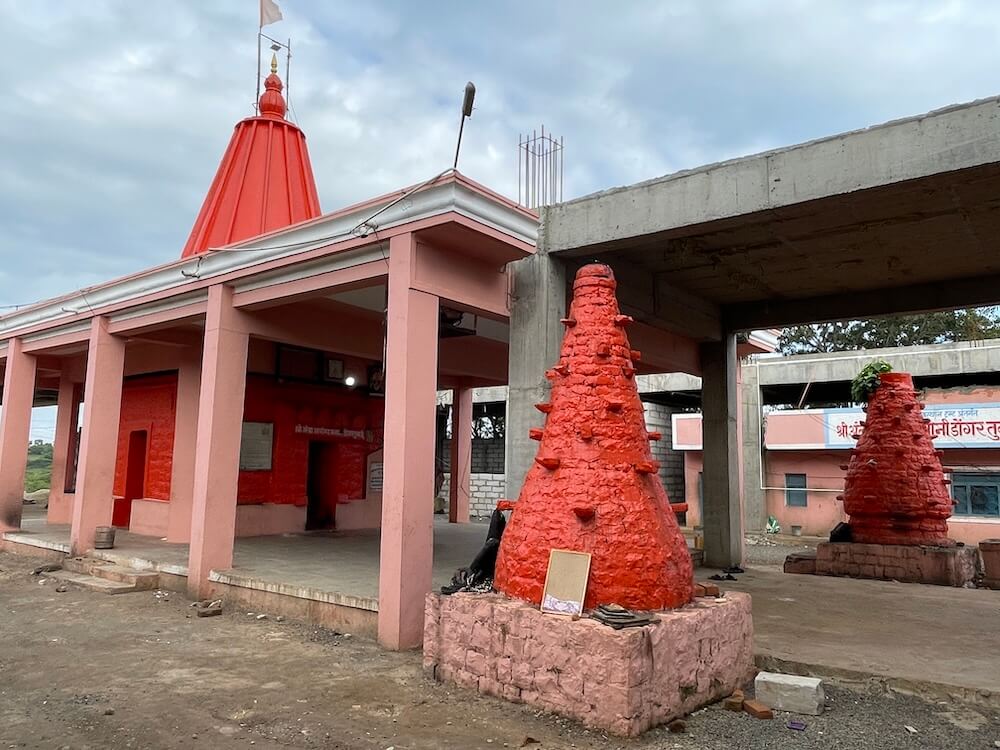
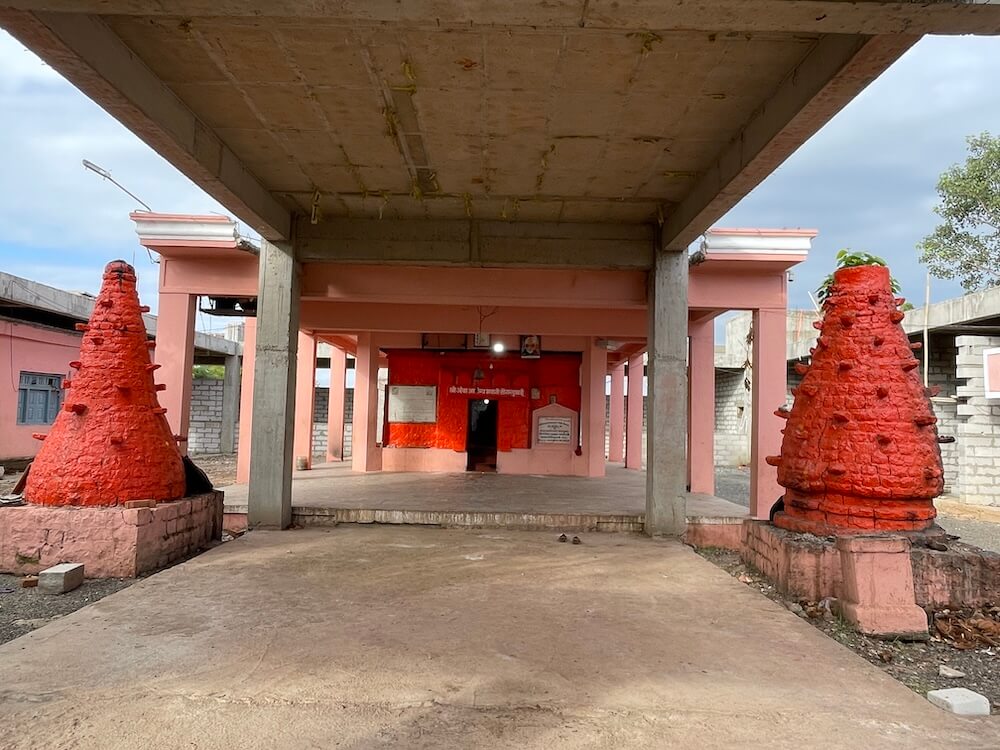
This temple is situated on a high hill on the Parli-Chandapur road, about seven kilometers from the Parli Vaidyanath Temple. There is a stepped path with about one hundred and fifty steps from the foothills to the temple. In addition, a paved road has now been constructed that leads directly to the parking area behind the temple. The temple is surrounded by a strong fortification with an entrance gate. There are seven steps at the entrance. To the left of the entrance, there is a small pond. Beside it, on a Vajra Peetha, are five stones representing local deities. The spacious temple courtyard is adorned with various types of trees. In front of the temple in the courtyard, there is a Tulsi Vrindavan. On both sides of it, there are two platforms with circular, tapering Deepmalas (lamp pillars).
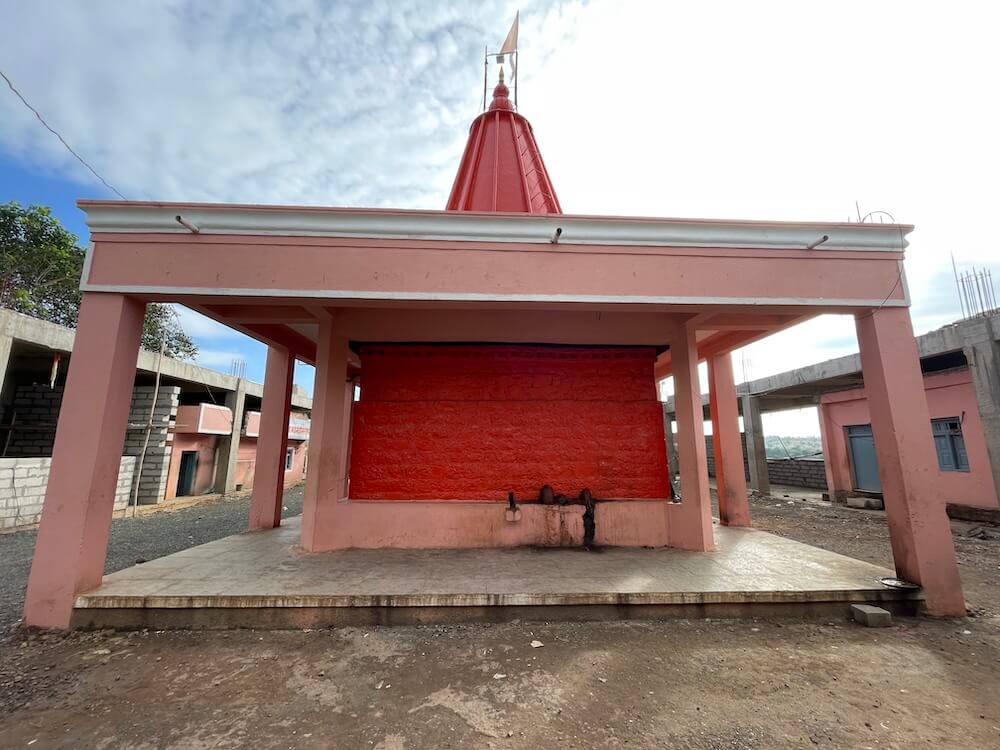
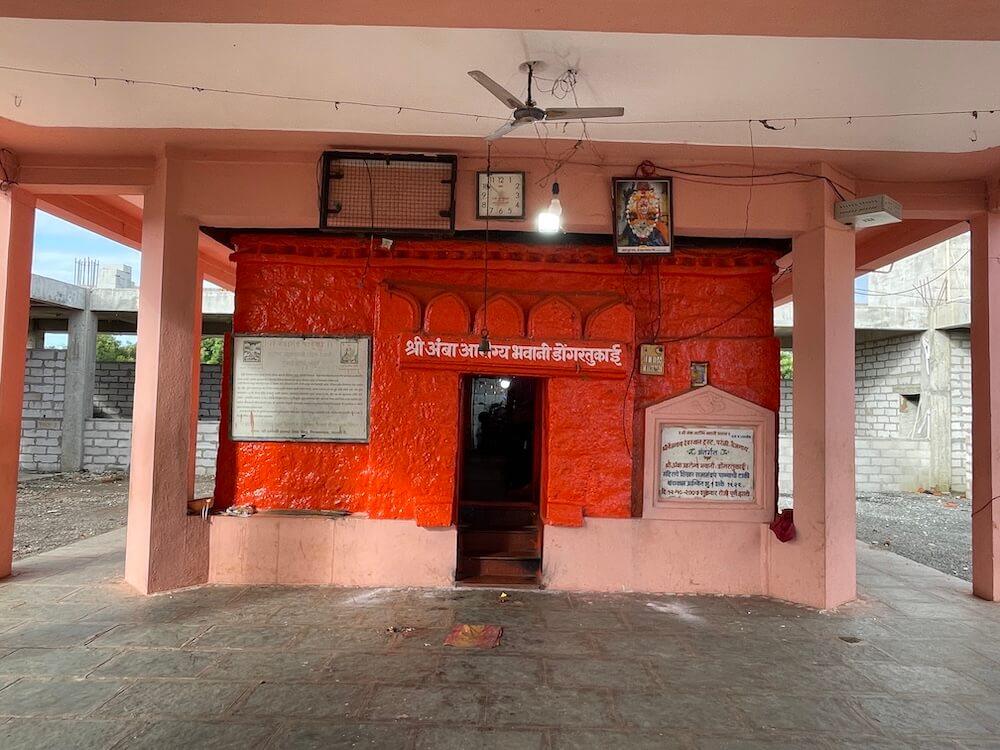
The temple’s structure comprises a Sabha Mandap (assembly hall) and a Garbhagriha (sanctum sanctorum). The Sabha Mandap, which is elevated above the courtyard, has two steps. The Sabha Mandap is semi-open and has been constructed with cement concrete in recent times. There are six square pillars on both the left and right sides of the Sabha Mandap. Further ahead is the entrance to the Garbhagriha. The stone construction of the Garbhagriha is in the Hemadpanti style. The entrance to the Garbhagriha is simple, with iron mesh shutters. There are small windows in the Garbhagriha for light and air. The octagonal ceiling of the Garbhagriha features a circular design.
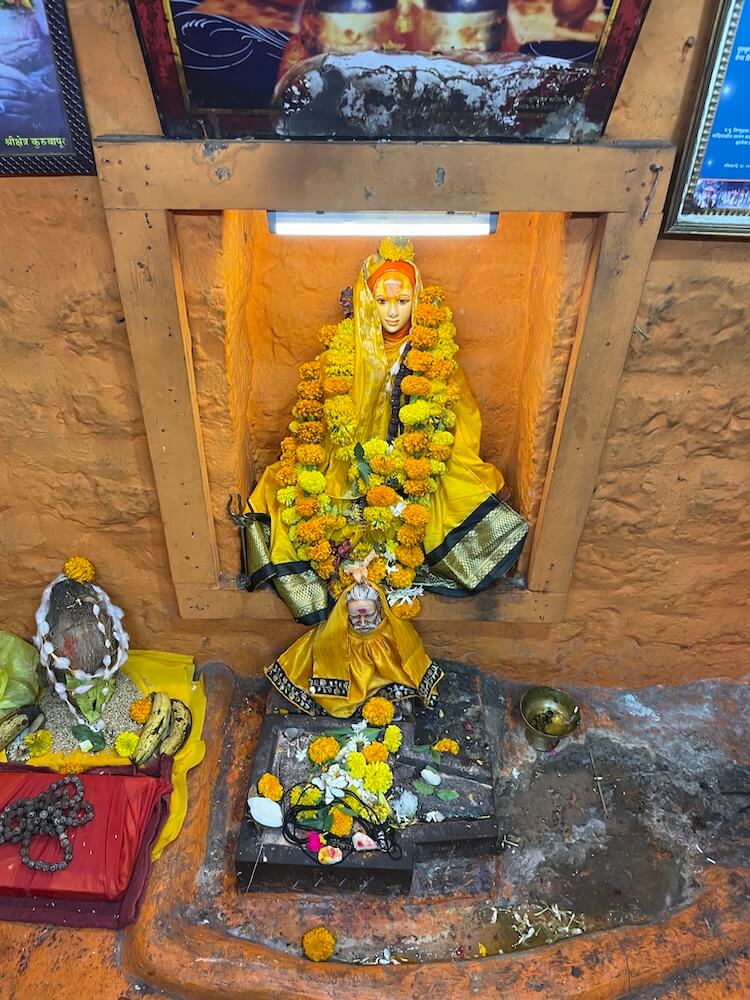
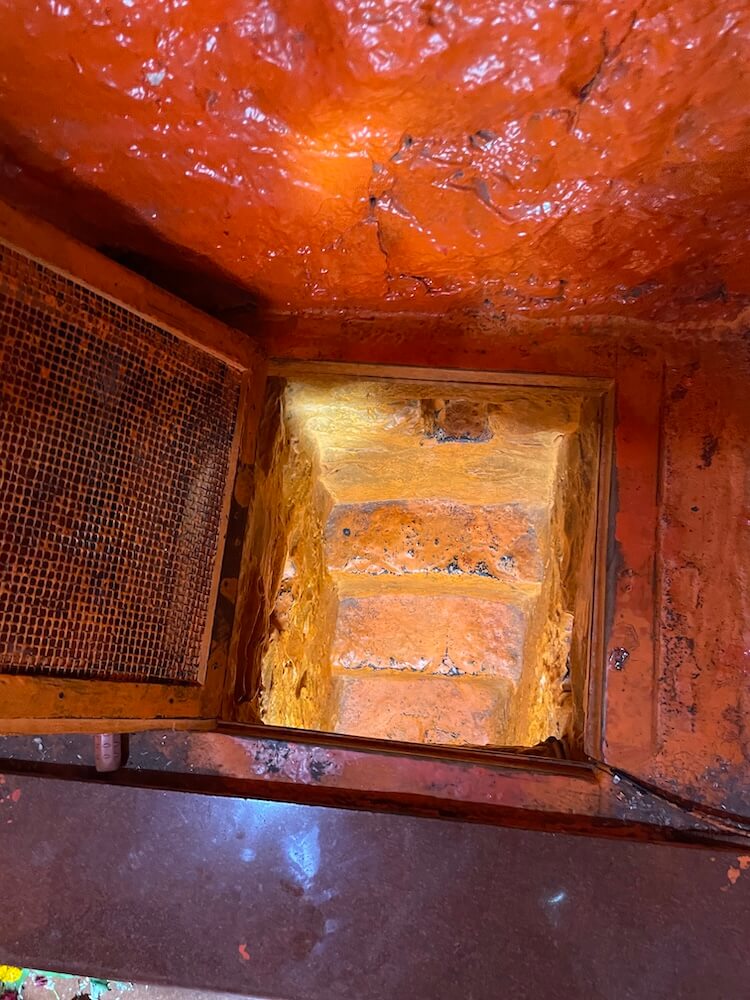
Inside the Garbhagriha, near the back wall on a Vajra Peetha, are the idols of Dongar Tukai and Aarogya Bhavani Devi. Both idols are carved from black stone. To the right side of the Garbhagriha, there is a narrow passage in the ground. This passage has steps that lead to the cave below the Garbhagriha. Only one person can descend the steps at a time. In the cave, there are the Charan Padukas (footprints) and an idol of Shri Nrusimha Saraswati. It was in this very cave that Nrusimha Saraswati resided for one year, which is why this place is known as ‘Prati Ganagapur’. There is a Pradakshina Marg (circumambulation path) outside the Garbhagriha. The roof of the Garbhagriha is topped with a square Shikhara (spire). The tapering Shikhara above has vertical ridge designs. At the apex is an Amalaka, crowned with a Kalasha. Within the temple courtyard, there are the temple office, a hall for cultural programs, and other structures.
The Sharadiya Navratri Utsav is the main annual festival here, celebrated with great enthusiasm. During this time, there is a continuous flow of devotees for darshan for ten consecutive days. The Datta Jayanti celebration is observed in the temple on Margashirsha Pournima. Thousands of devotees from across the state specifically come for the darshan of the Goddess and the Padukas of Nrusimha Saraswati. Festivals and celebrations such as Chaitra Padwa, Dussehra, Diwali, Mahashivratri, Makar Sankranti, Shravan Maas, Nagpanchami, Kojagiri Pournima, etc., are celebrated in the temple. During all these festivals, programs like Bhajan, Kirtan, Pravachan, Mahaprasad, etc., are organized in the temple.
This sacred temple stands as a testament to deep spiritual devotion, ancient architectural grandeur, and rich local cultural traditions.
The sanctum sanctorum houses the divine idol consecrated according to ancient Vedic traditions, surrounded by serene courtyards and traditional temple architecture.
Navratri, Maha Shivratri, Annual Temple Jatra & Deepotsav
Compare and book flights, secure top-rated local hotels near the temple, hire reliable guides, and rent cars instantly.
Extend your pilgrimage by visiting other highly sacred temples located nearby.

Add ₹999 more to unlock FREE SHIPPING!
Your sacred cart is currently empty.
Shop Photo FramesFill in your delivery details below to place your order.
Add comment