
Add ₹999 more to unlock FREE SHIPPING!
Your sacred cart is currently empty.
Shop Photo FramesThe city of Ambajogai, nestled in the Beed district and blessed with a rich cultural and historical heritage, is revered as the Kashi of Marathwada. This hallowed land is home to numerous ancient temples. Among these, the Amaleshwar Temple stands as a prime example of exquisite architecture and is considered a highly potent and vibrant (jagrut) shrine. This sacred edifice is predominantly built in the Hemadpanti architectural style. It is believed to date back to the 12th-13th century. Constructed from black stone, this temple is renowned for its intricate carvings and robust construction. The walls, ceilings, pillars, and plinth of this temple are exquisitely adorned with distinctive and elaborate ornamentation.
In the Sanskrit language, the word ‘mala’ denotes impurity, sin, blemish, or imperfection. That which is entirely free from any blemish, and is exceedingly pure and sacred, is known as ‘Amal’. In this light, the sacred name Amaleshwar has been formed from the union of ‘Amal’ and ‘Ishvara’. This signifies that Amaleshwar is the Lord who washes away the sins, flaws, and impurities accumulated over countless births from the minds and souls of devotees, thereby purifying them. The position of this temple on the spiritual map of Ambajogai is unshakeable. This sacred shrine, where the holy company of saints converges with the pure and virtuous presence of Mahadev, is a revered place of devotion for thousands of devotees.
Among the many renowned temples in Ambajogai city, the Amaleshwar Temple stands as the most ancient. Considering the intricate sculptures, exquisite carvings, and the distinctive architectural style of the temple, it becomes evident that it dates back to the twelfth century, as affirmed by history scholars. Adjacent to the temple, there is a large freshwater stepwell. It is believed that this stepwell was constructed in the very space created after the stones required for the temple’s construction were quarried from this site.
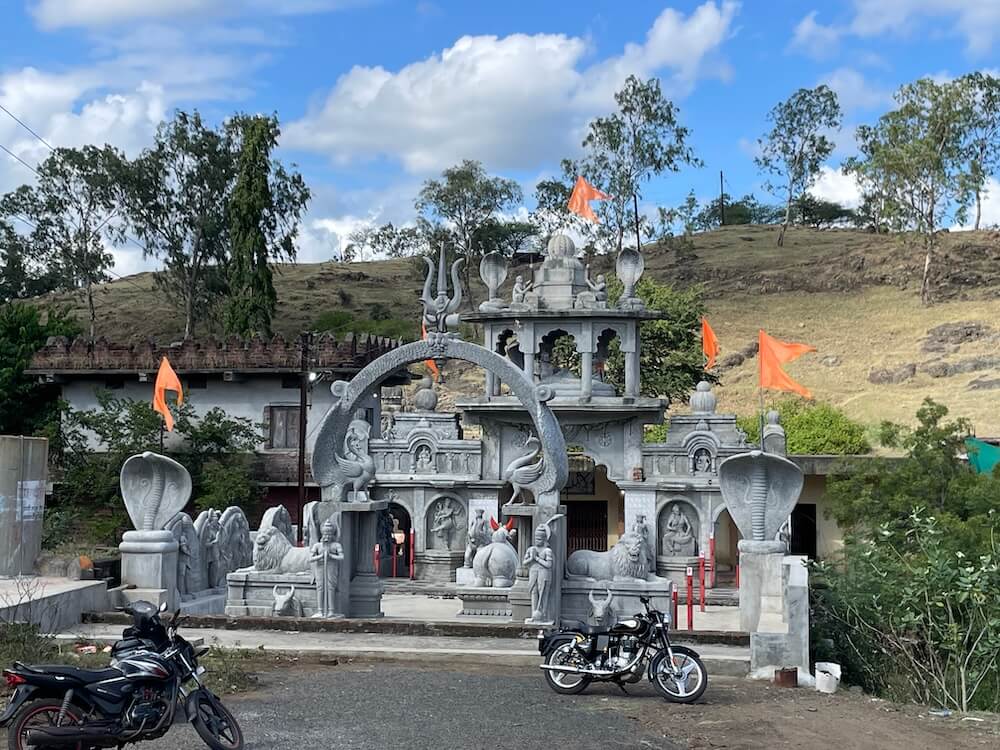
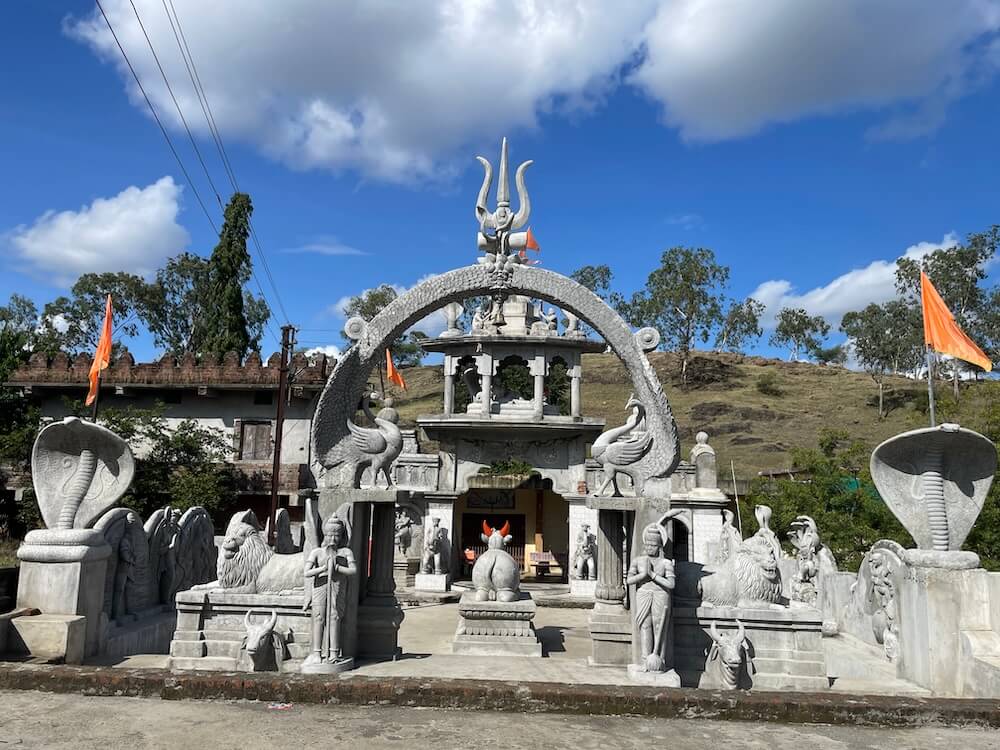
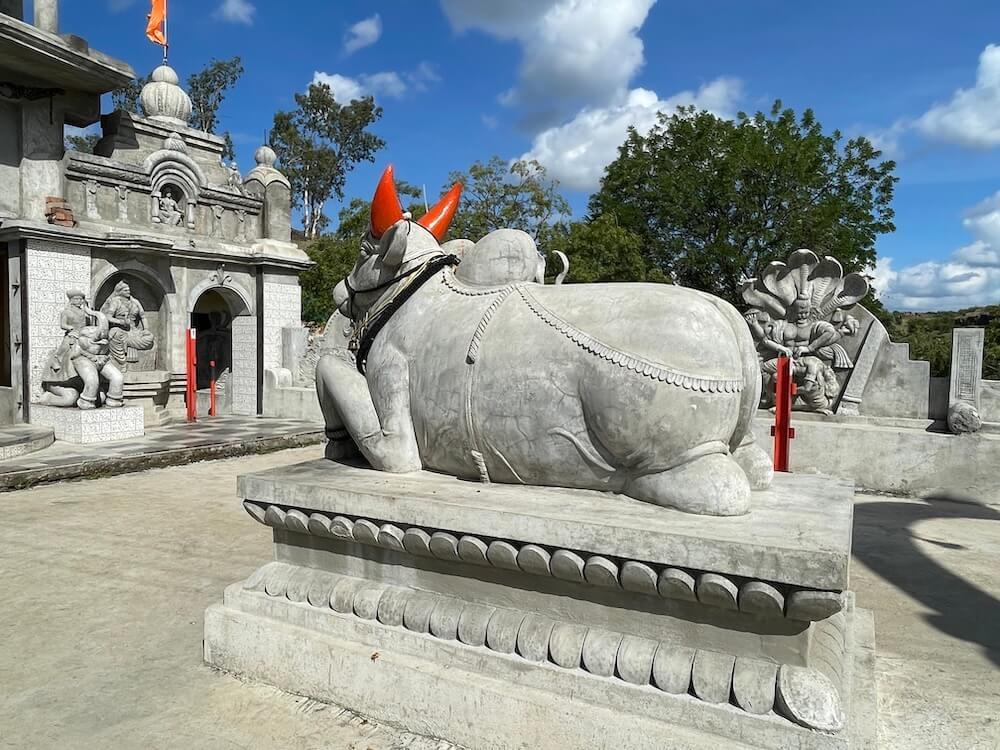
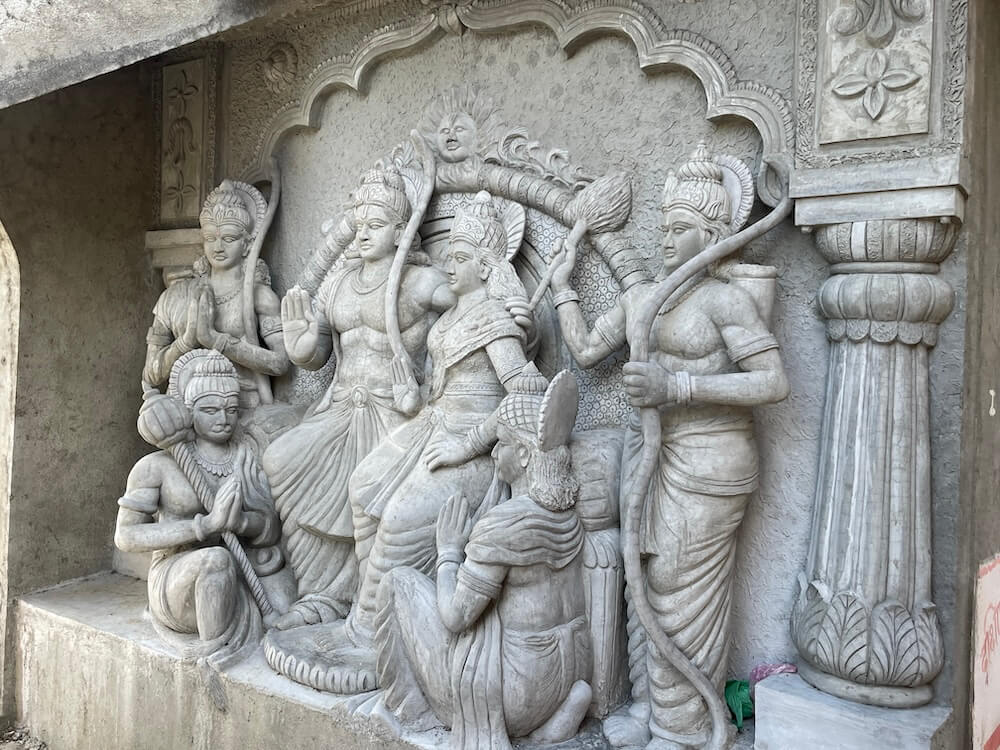
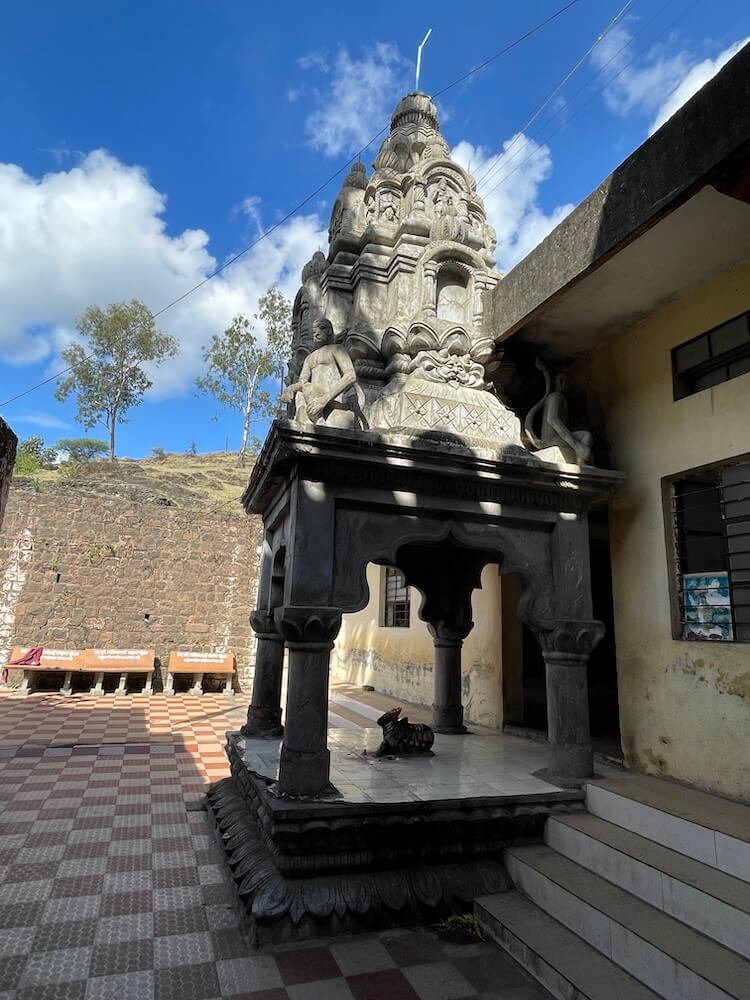
This temple is situated two kilometers from Ambajogai city. A welcome archway stands on the road leading to the temple. This archway features sculptures of Das Hanuman, monkey sculptures holding a flag at its apex, and in the center of the platform, idols of Mahadev, Parvati, and Ganesha seated upon Nandi. The temple, situated approximately one kilometer from this point, features a two-storied entrance gate. On both sides of the entrance gate are devakoshthakas (niches for deities). The devakoshthaka on the left side houses a sculpture of Nritya Mohini, while the devakoshthaka on the right side features a sculpture of Surasundari. Adjacent to the entrance gate are two platforms, featuring mahouts mounted on elephants. Furthermore, there are numerous other sculptures within these precincts. Subsidiary doorways are located beside the devakoshthakas. A crescent-shaped step lies in front of this entrance. From here, one enters the Darshan Mandap (viewing hall) and then, descending four steps, gains entry into the temple courtyard. Beside the steps stands the Nandi Mandap, a beautiful confluence of ancient and modern architectural styles. In the center of this mandap is a black stone idol of Nandi. At all four corners of the mandap are circular ornate pillars, adorned with lotus capitals, and surmounted by square pilasters. The roof is crowned with a three-tiered shikhara (spire). At the apex of the shikhara are an amalaka and a kalasha. All four sides of the shikhara are adorned with monkey sculptures, intricate pillar carvings, and devakoshthakas. All the devakoshthakas house idols of various deities.
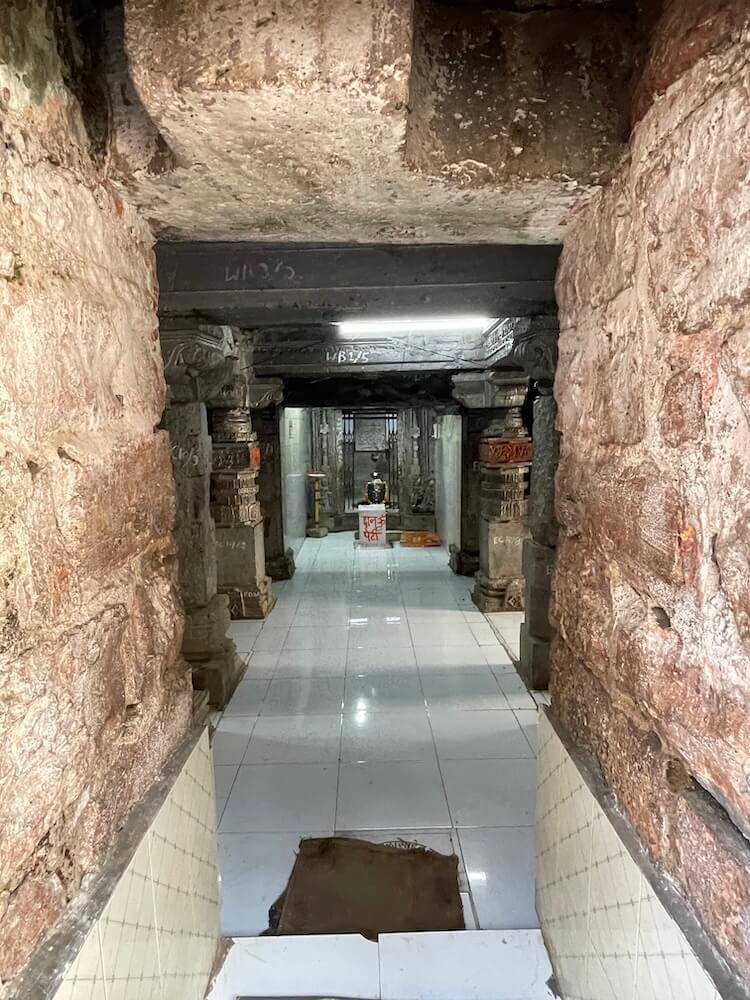
The temple’s structure comprises the Sabha Mandapa, Antarala, and Garbhagriha, situated in front of the Nandi Mandapa. The entrance to the Sabha Mandapa is rather modest. Within the Sabha Mandapa, there are four rows, each consisting of five exquisitely carved pillars. The pillars on the outer perimeter are integrated into the walls. All pillars stand upon square bases. The shafts of these pillars exhibit various geometric forms, including square, hexagonal, octagonal, and circular sections. The square panels of the pillars are adorned with intricate composite carvings and sculptures of various divine forms. At the summit of the pillars, there is a capital, and upon this capital rest the ‘hasta’ (bracket figures). The ceiling rests upon the beams supported by these ‘hasta’. The ‘hasta’, beams, and ceiling (vitana) are embellished with circular motifs, lotus flower carvings, and Kirtimukha sculptures. Scholars surmise that a ‘Rangashila’ (performance platform) might have originally been situated in the center of the Sabha Mandapa, amidst six pillars. Currently, at this very spot, an idol of Nandi Bhagavan is enshrined upon a Vajra Pitha.
In front of the Sabhamandap (assembly hall) is a narrow Antaral (vestibule). Within the Antaral, there is a tortoise sculpture seated upon a Vajrapeetha. The entrance to the Garbhagriha (sanctum sanctorum), located beyond the Antaral, is Panchashakhiya (five-branched). On its lower side are sculptures of Dwarpalas (male door guardians), Dwarpalikas (female door guardians), Goddess Ganga, and Goddess Yamuna. The entrance features Pushpashakha (floral bands), Parnashakha (foliage bands), Velbuttishakha (creeper/scrollwork bands), and Stambhashakha (pillar bands). On the Lalatabimba (lintel) is a sculpture of Lord Ganapati. At the threshold, there is a Chandrashila (moon-stone), and upon it is a Kirtimukha. In the center of the Garbhagriha, on the ground, is a Swayambhu Shivapindi. Over the Shivapindi is a brass Naag (serpent) holding a Chhatra (canopy). The copper Abhishek vessel, which is designed to pour a continuous stream of water, is suspended from the ceiling.
On the exterior of the temple, the Adhishthana features a Gajathara (frieze of elephants). The elephant sculptures within it display various expressions and moods. A considerable portion of the Adhishthana is buried underground. On the visible upper part, scenes of camel and horse battles are intricately carved. The Mandovara is adorned with pillar sculptures and Surasundari (celestial maiden) figures. These include sculptures depicting Nartaki (dancer), Shubhagāminī (auspicious lady), Mardalā (drummer), Shukasārikā (lady with a parrot), Putravallabhā (mother with child), Nritya Ganesha (dancing Ganesha), Ugra Narasimha (fierce Narasimha), and other such divine forms. On the Mandovara, there are empty Devakoshthakas (niches for deities) on the western, southern, and northern sides. A narrow path leads to the stepwell (barav) located behind the temple, and carved steps allow descent into it. This water source is said to be inexhaustible and eternal.
Mahashivratri and Shravan Maas are the principal annual festivals celebrated here with immense devotion and enthusiasm. On these auspicious occasions, thousands of devotees from the surrounding regions flock to the temple for the sacred Darshan of the Lord and to fulfill their vows. During all festivals, the temple hosts various spiritual programs such as Bhajan, Kirtan, Pravachan, devotional music, and the distribution of Mahaprasad. On revered occasions like Chaitra Padwa, Dussehra, Diwali, Kartik Pournima, and Kojagiri Pournima, the temple is graced by a multitude of devotees. Furthermore, on the monthly Pournima (full moon) and Amavasya (new moon) days, as well as during Pradosh and on Mondays, there is a notable congregation of devotees.
This sacred temple stands as a testament to deep spiritual devotion, ancient architectural grandeur, and rich local cultural traditions.
The sanctum sanctorum houses the divine idol consecrated according to ancient Vedic traditions, surrounded by serene courtyards and traditional temple architecture.
Navratri, Maha Shivratri, Annual Temple Jatra & Deepotsav
Compare and book flights, secure top-rated local hotels near the temple, hire reliable guides, and rent cars instantly.
Extend your pilgrimage by visiting other highly sacred temples located nearby.
Add ₹999 more to unlock FREE SHIPPING!
Your sacred cart is currently empty.
Shop Photo FramesFill in your delivery details below to place your order.
Add comment