
Add ₹999 more to unlock FREE SHIPPING!
Your sacred cart is currently empty.
Shop Photo FramesThe sacred shrine of Shri Bhavani Devi, the revered Gramadevatā of Rajura, a taluka town in Chandrapur district, is well-known as a जागृत देवस्थान, a living and awakened abode of the Divine Mother. The Navarātri festival celebrated at this temple boasts a tradition spanning hundreds of years, and the fair held here on the auspicious day of Dasara is considered the largest in the entire Rajura taluka. The Dandiya celebrations that grace all nine nights of Navarātri, and the Rāvaṇadahan, the burning of the effigy of Rāvaṇa, on Dasara, are the principal attractions here. For many devotees from the Koshti community, this Devi is their cherished Kuladevatā, their family deity.
In the sacred town of Rajura, the temple of Shri Bhavani Mata holds a very special place. While precise historical details regarding this holy shrine are not readily available, scholars, after studying its architecture, assert that the temple is at least four hundred years old. The area where the temple now stands was once a small village known as Rampur. At that time, this entire region was covered by dense forests and agricultural fields. With the passage of time and continuous development, the boundaries of Rajura town expanded, and the village of Rampur eventually became a part of this growing urban centre. Thus, at present, this temple is situated in the central part of the city. This Mother Bhavani, who stands by devotees in times of trouble and fulfils their heartfelt wishes, has become the principal fount of faith for the city of Rajura.
It is said that this sacred abode of the Devi has existed here since ancient times, and that the Devi Herself arrived here with Lord Someshwara (the magnificent temple of Lord Someshwara in Rajura city dates back approximately एक हजार दोनशे to एक हजार चारशे years). The Devi’s original name was Tukai, but this temple became renowned by the name Bhavani. Although it is said that the present temple was built by King Janoji Bhonsale of Nagpur, there is no official record of this.
There is a legend about the temple that long ago, a devotee of the Devi named Gadge lived in this village. Every day, he would not partake of his meal without first worshipping the Devi and offering Her naivedya. Once, during the monsoon season, the stream in front of the temple overflowed its banks. Due to this, the Devi bhakta Gadge was unable to reach the temple. Thus, the Divine Mother had to fast, for She could not come. Therefore, the Devi cursed the stream, saying, “You shall remain dry forever.” Since that time, this stream has been dry.
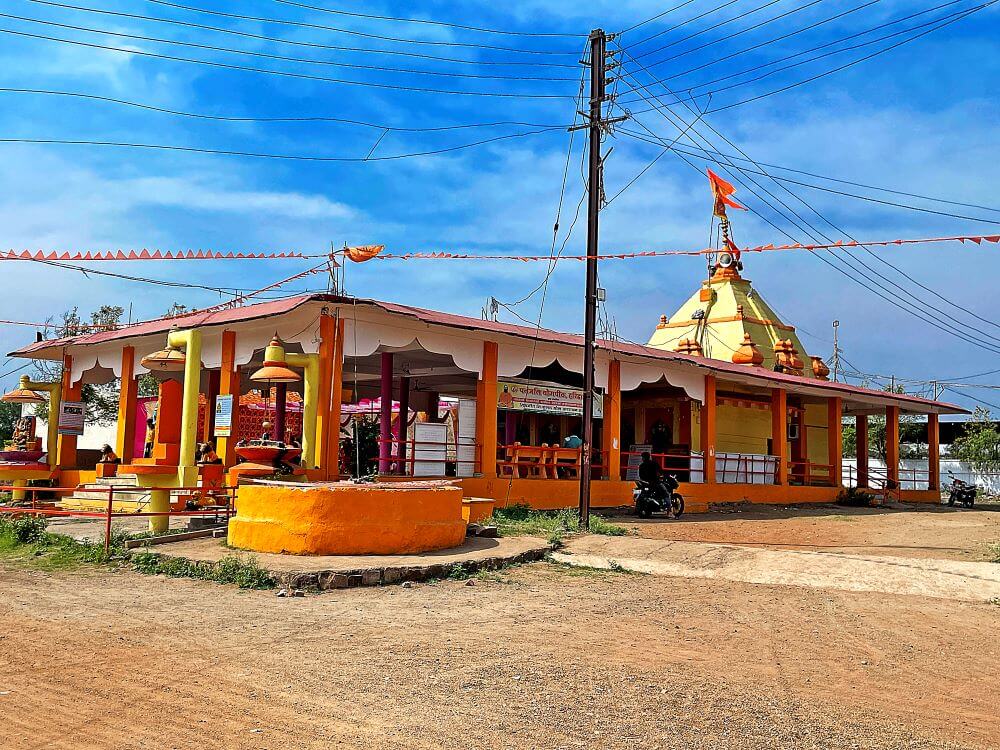
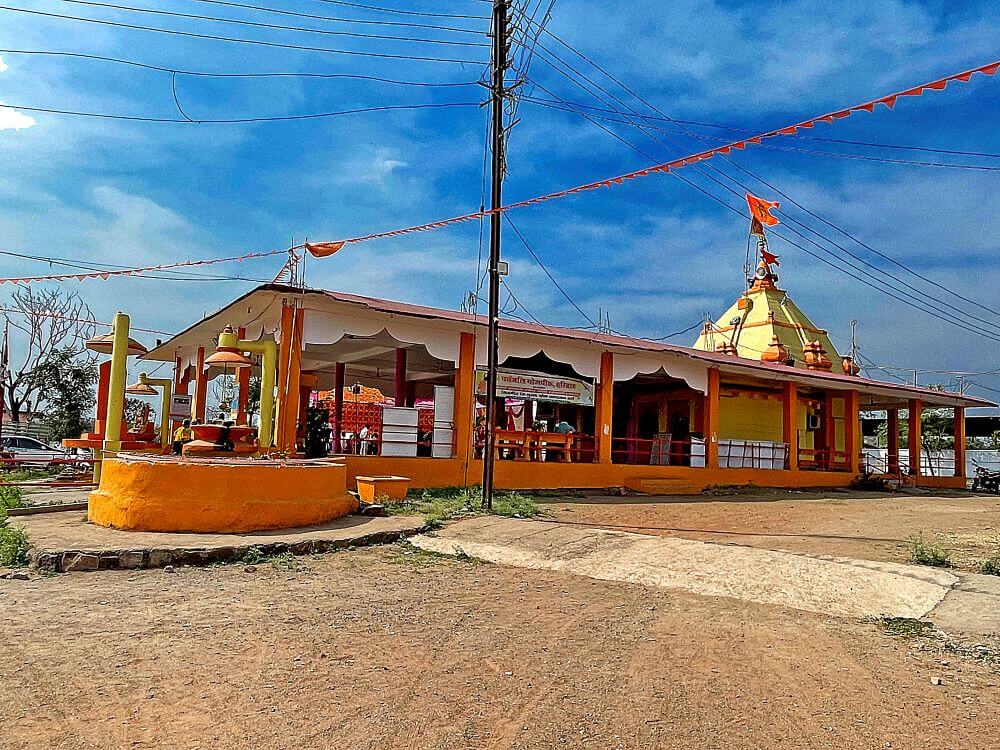
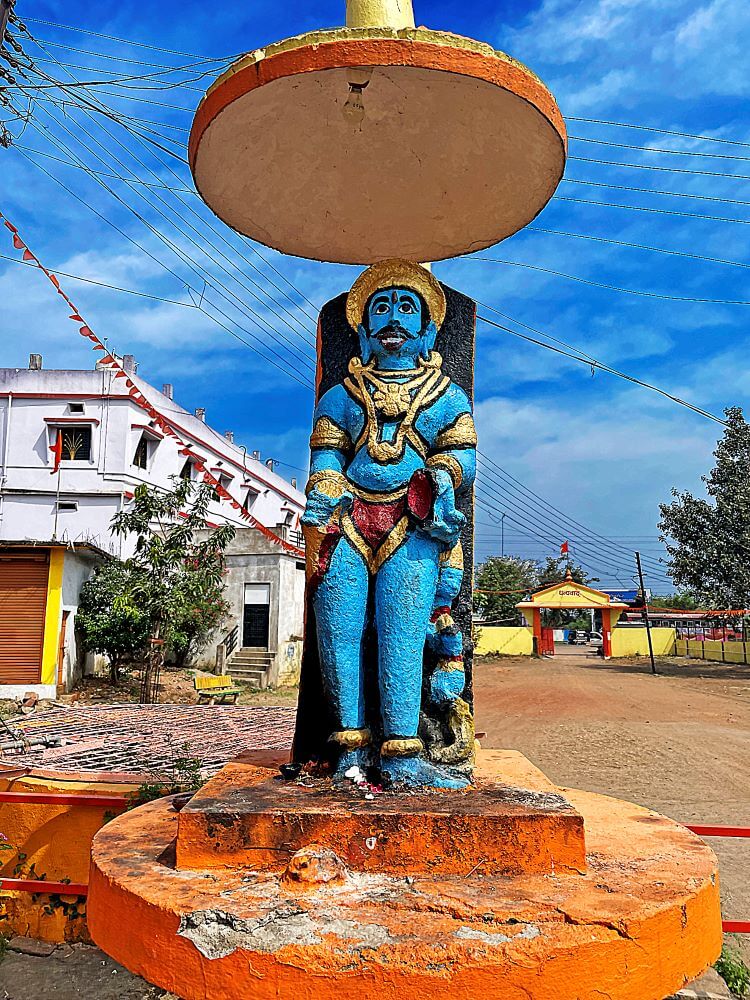
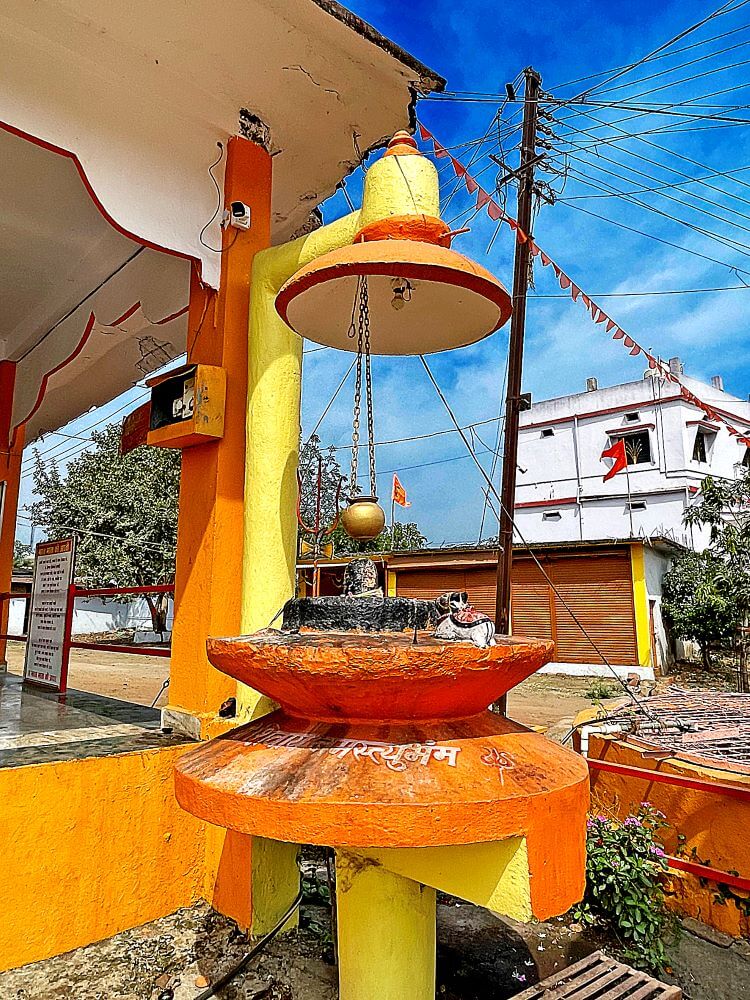
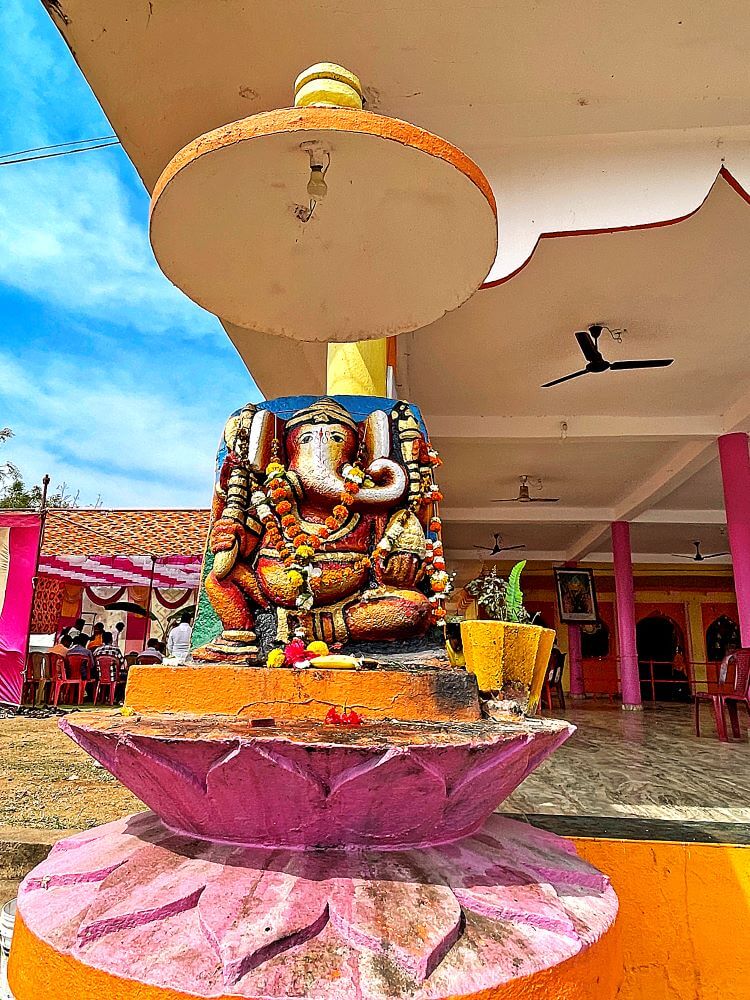
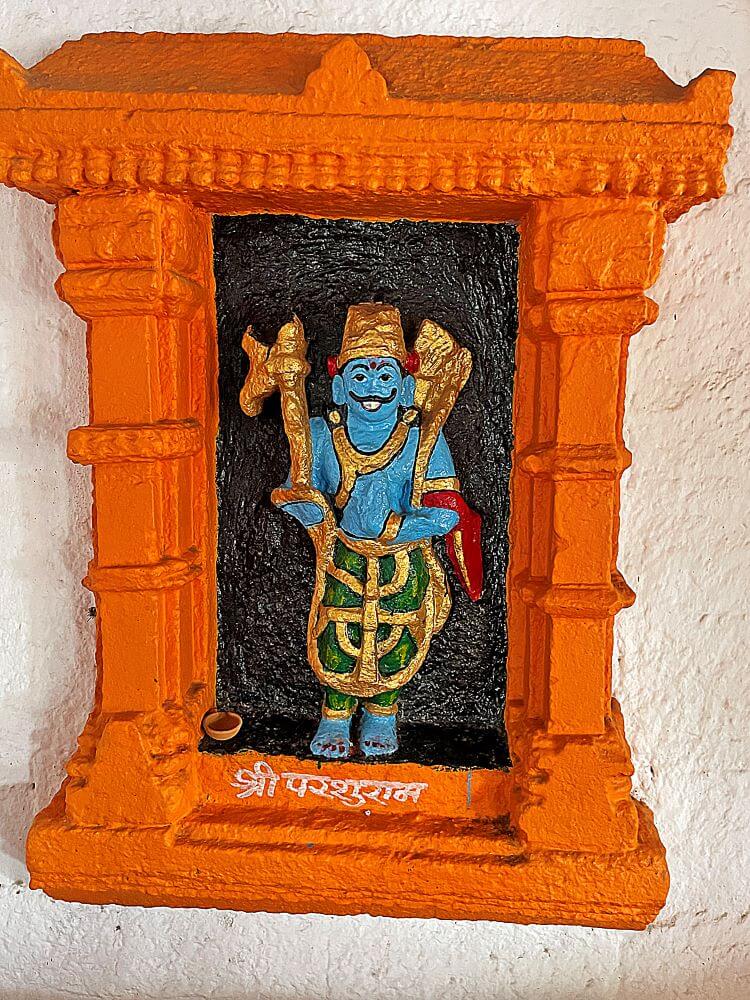
In front of the temple of Shri Bhavani Devi is a grand courtyard. Facing the main temple entrance are a Deepmal (lamp tower) and a tall Trishul (trident). The temple’s Sabhamandap (assembly hall) stands approximately five feet above ground level. To the right of the Sabhamandap, on the outer side, is an idol of Shri Ganesha, while to the left are idols of Kalbhairav and Batubhairav. This Sabhamandap was constructed in a later period and is of the ‘Ardhamandap’ type (open, without side walls). The pillars within the Sabhamandap are intricately carved, and there are idols of Shri Vishnu, Shiva and Parvati seated on Nandi, Parashuram, and Sage Jamadagni.
The Garbhagriha, situated before the Sabhamandapa, was originally the Devi’s primeval temple. Carved upon the entrance of the Garbhagriha are two divine forms: one of Balaji Padmavati and the other of Lakshmi Narayana. Within the Garbhagriha, enshrined in a beautiful makhar, is the vermillion-anointed murti of the Devi, approximately two-and-a-half feet in height. Adorned with a crown upon Her head, a nath in Her nose, various ornaments around Her neck, and a distinctively draped sari, the Devi’s form radiates with divine beauty. The Garbhagriha is square in shape, yet its ceiling is octagonal. Every morning, the Devi’s Mahapuja is performed, while Aarti is offered both in the morning and in the evening. Many devotees make it a point to be present for this āratī. On Tuesdays and Fridays, there is a large gathering for the Darśana of Devī. Additionally, a yātrā is held here during Dasrā and the Caitra Navarātrotsava. Many other festivals throughout the year are also celebrated here. The Navarātrotsava and Dasrā here feature a large-scale Rāvaṇa Dahaṇa programme. The presence of women is particularly significant in all these festivals.
Within the temple precincts, there is an octagonal well. In earlier times, there were steps leading down into it; however, for safety reasons, these have now been filled in.
Within the precincts of this temple, there is a small shrine dedicated to Śrī Hanumān-ji. Additionally, a large assembly hall has been constructed adjacent to the temple to host various programmes and events. Devotees may enter the sanctum sanctorum for darśan of the Divine Mother from seven o’clock in the morning until eight o’clock in the evening.
This sacred temple stands as a testament to deep spiritual devotion, ancient architectural grandeur, and rich local cultural traditions.
The sanctum sanctorum houses the divine idol consecrated according to ancient Vedic traditions, surrounded by serene courtyards and traditional temple architecture.
Navratri, Maha Shivratri, Annual Temple Jatra & Deepotsav
Compare and book flights, secure top-rated local hotels near the temple, hire reliable guides, and rent cars instantly.
Extend your pilgrimage by visiting other highly sacred temples located nearby.


Add ₹999 more to unlock FREE SHIPPING!
Your sacred cart is currently empty.
Shop Photo FramesFill in your delivery details below to place your order.
Add comment