
Add ₹999 more to unlock FREE SHIPPING!
Your sacred cart is currently empty.
Shop Photo FramesThe Samadhi Mandir of Shri Sadguru Janardan Swami (Maungiri) in Kopargaon is renowned for teaching the key to a successful life: the renunciation of another’s spouse, another’s wealth, another’s food, and the criticism of others. Janardan Swami, who preached religious awakening and a humanitarian perspective, is considered an incarnation of Lord Shiva. He spent the final phase of his life at Bet Kopargaon in Nagar district. Thousands of devotees visit this place daily to seek blessings at the hermitage sanctified by his presence and to see his footprints.
Janardan Swami was born on September 24, 1914, in the small village of Tapargaon in the Kannad taluka of Chhatrapati Sambhajinagar district (Aurangabad). Born into a farming family, Swami possessed deep faith in God, love for humanity, benevolence, and a forgiving nature from a young age. He chose the path of religious awakening early in life. Despite having an education only up to the second grade, Janardan Swami had memorized scriptures like the Bhagavad Gita and the Bhagavata. He explained the essence of the Vedas to the common people in simple, rural language.
During his lifetime, Swami renovated ancient Shiva temples in Andarsul, Shri Kshetra Jategaon, Verul, Trimbakeshwar, Nashik, and Bet Kopargaon, and also constructed new temples in several places. Alongside this, he made special efforts to ensure the progress of local farmers and the education of their children. He established many schools in the districts of Nashik, Nagar, and Chhatrapati Sambhajinagar. He also arranged for water to reach farmers’ fields by digging wells in many locations.
During his stay in Kopargaon, Swami lived in a hut on the farm of Vinayak Raskar (Tatya). At that time, Swami delivered discourses in many villages across the Kopargaon area. He selected a site in the Bhumi Ganga area of Bet Kopargaon to build a Kashi Vishwanath temple, receiving 26 acres of land for this purpose. In 1985, after performing the groundbreaking ceremony (Bhumipujan), Swami began the construction of the Kashi Vishwanath temple with the help of his devotees and volunteers. Thousands of devotees contributed through physical labor (Shramdaan). As the work progressed rapidly, Swami also built an ashram adjacent to the temple.
In 1986, on the auspicious day of Magh Shuddha Dashami (a Thursday), a community ritual program was organized at the Bet Kopargaon ashram. During this seven-day event, Baba initiated thousands of his disciples. Baba’s discourses were held here every morning, afternoon, and evening. An American youth participated in this ritual program and was also initiated by Swami. It is said that while Swami guided in Marathi, the youth heard it in English, allowing him to understand the discourses. At the conclusion of the program, poet Prabhakar Toke of Trimbakeshwar composed an Aarti for Janardan Swami. The Aarti, ‘Aarti Nishkam Yatiwar Maungiri Muninchi…’, composed at the Bet Kopargaon ashram, is widely known.
While the work on the Kashi Vishwanath temple in Kopargaon was underway, Swami undertook a 16-day pilgrimage to South India with hundreds of disciples in 1988, during which he performed holy baths in the sea, the Kaveri, and the Ganga. Thereafter, Baba’s work continued vigorously everywhere. After he turned 75, his disciples across the state decided to celebrate his 75th birthday. This was celebrated on September 1, 1989, at Niphad in Nashik district. On this occasion, Swami was given a ceremonial bath with water brought from holy places across the country, including golden water, water from the seven seas, seven rivers, seven lakes, and all major pilgrimage sites. This was followed by a Tulabharam (weighing ceremony) with seven types of grains.
The 75th birthday (Amrut Mahotsav) celebrated at Niphad turned out to be Swami’s last. His health subsequently declined, and he was admitted to a hospital in Nashik. However, Swami did not wish to stay in the hospital. At his insistence, he was moved to a hermitage near the Shri Sharvaeshwar Mahadev temple in Nashik, where treatment continued, but it proved ineffective. On December 10, 1989, Swami told his disciples that his work here was finished and closed his eyes forever.
According to Swami’s final wish, his funeral procession traveled from Nashik city to Kopargaon. Millions of his disciples participated in this procession. One bhajan echoed from everyone’s lips: “Heech Asha Ek Deva Punha Yala Ka Ya Gava…” (This is our only hope, O God, will you come to this village again…). The next day, on December 11, 1989, his mortal remains were placed at the site of the current temple in Kopargaon. His last rites were performed in the presence of many sages and saints. Consequently, this place in Kopargaon is considered of special significance among Swami’s devotees and disciples. It is the firm faith of all devotees that Swami resides here eternally.
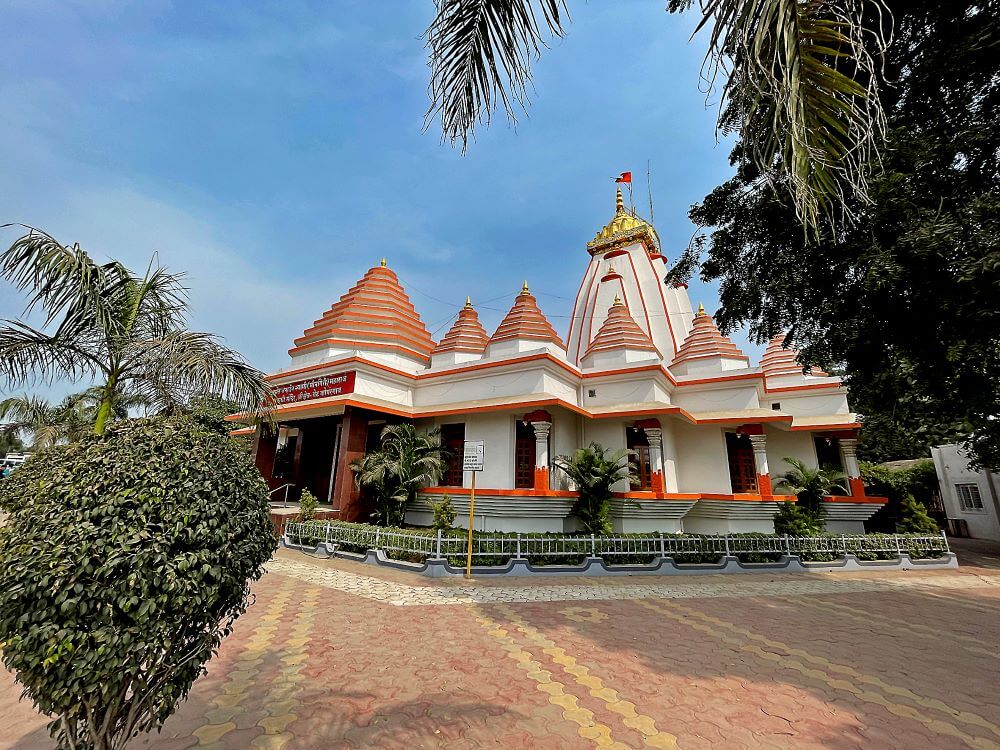
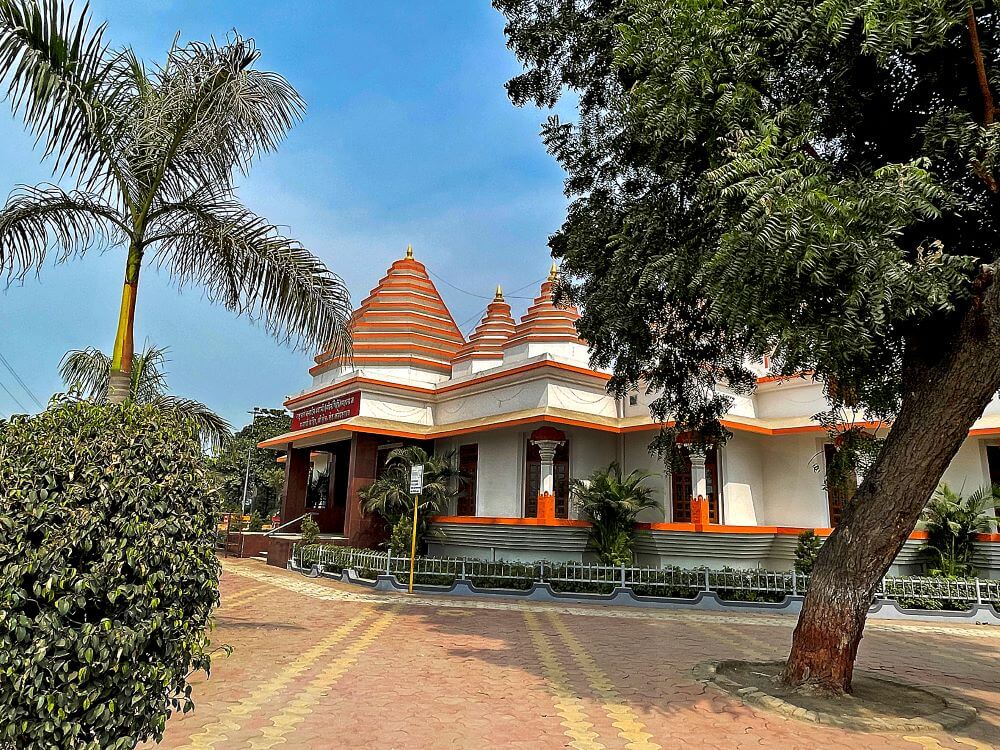
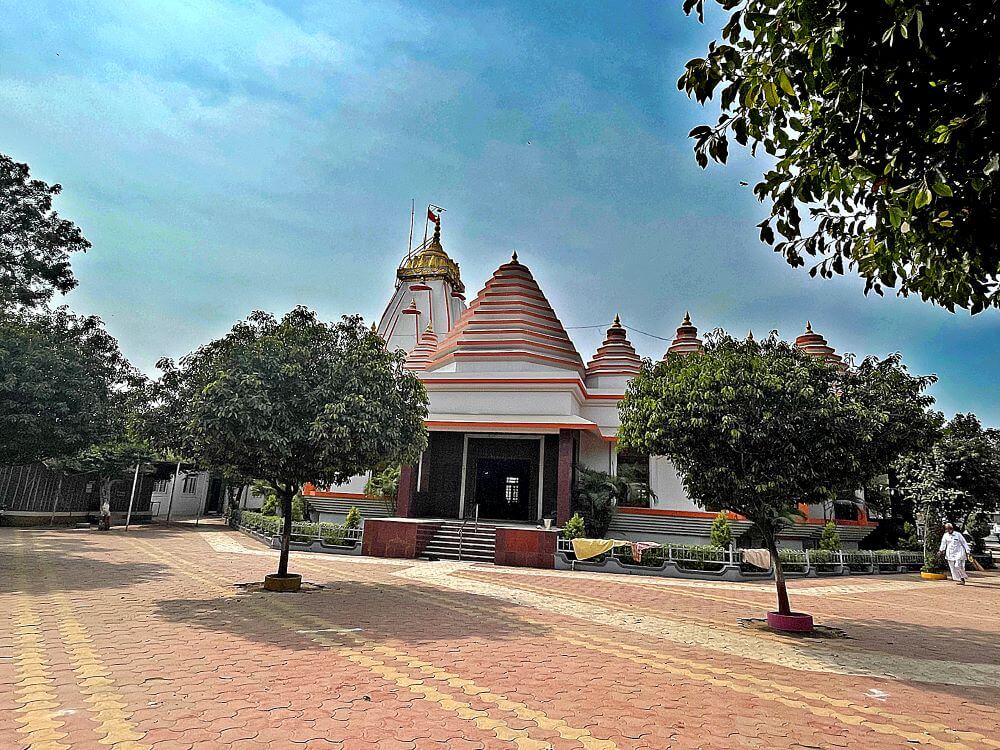
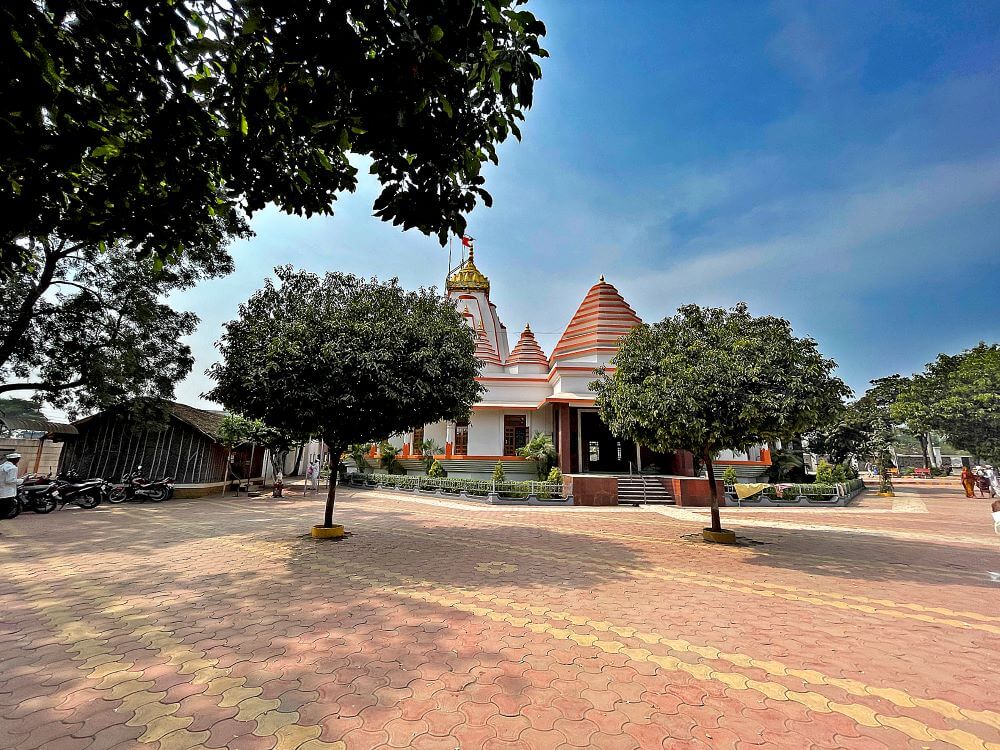
Shri Janardan Swami’s Samadhi Mandir is located at Bet Kopargaon, along the Kopargaon-Shirdi road, adjacent to the Kashi Vishwanath temple he built. This Samadhi Mandir was constructed by his disciples to ensure that his work continues even after his passing. The complex, spanning about one acre, includes Swami’s temple, the Kashi Vishwanath temple, the Narmada Devi temple, Swami’s hermitage, a dining hall (Prasadalaya), and a devotee residence (Bhakta Niwas).
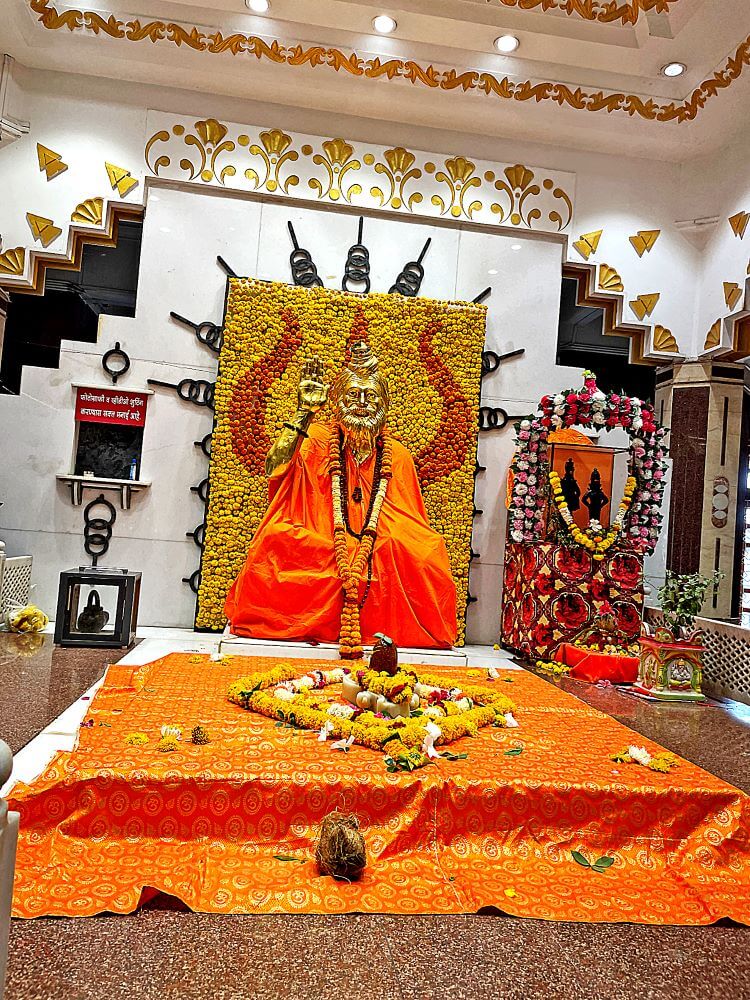
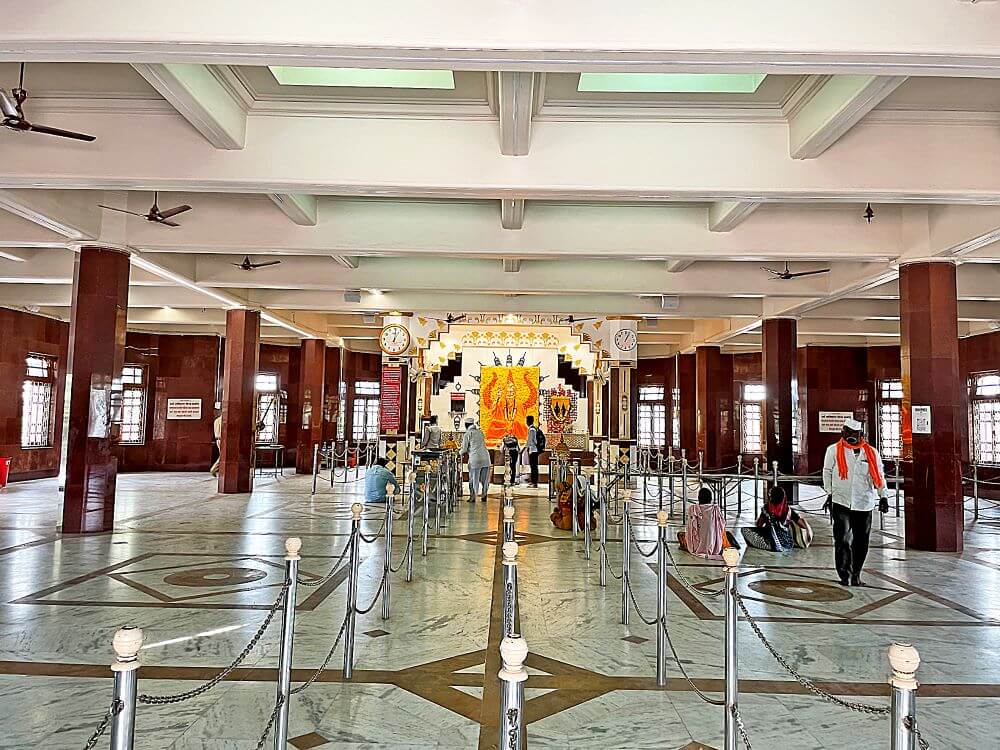
The architecture of the main Samadhi Mandir is unique. In the front of the spacious hall, a serene, seated idol of Janardan Swami, made of five metals (Panchadhatu), is installed. In front of the idol is a Shivalinga, and before that are Swami’s holy sandals (Padukas). As devotees are not permitted to enter the Samadhi platform or approach the idol directly, they worship these Padukas.
With the permission of the temple trust, rituals such as Abhishek, Puja, and Satyanarayan Mahapuja can be performed in the Samadhi Mandir. On Guru Purnima, Mahashivratri, and the days of Swami’s birth and death anniversaries, the idol is given a ceremonial bath (Abhyangsnan) and Abhishek. Swami’s daily worship rituals take place from 5:00 AM to 7:00 AM. Devotees can have Darshan of Swami in the temple from 7:00 AM to 10:00 PM.
This sacred temple stands as a testament to deep spiritual devotion, ancient architectural grandeur, and rich local cultural traditions.
The sanctum sanctorum houses the divine idol consecrated according to ancient Vedic traditions, surrounded by serene courtyards and traditional temple architecture.
Navratri, Maha Shivratri, Annual Temple Jatra & Deepotsav
Compare and book flights, secure top-rated local hotels near the temple, hire reliable guides, and rent cars instantly.
Extend your pilgrimage by visiting other highly sacred temples located nearby.

Add ₹999 more to unlock FREE SHIPPING!
Your sacred cart is currently empty.
Shop Photo FramesFill in your delivery details below to place your order.
Add comment