
Add ₹999 more to unlock FREE SHIPPING!
Your sacred cart is currently empty.
Shop Photo FramesThe rivers Rena, Wan, and Saraswati originate in the hilly regions of Beed district and flow southwards to join the Godavari. Furthermore, due to rivers like the Sindphana and Bindusara, this district was once a land of prosperity and abundance. The ancient name of Beed city, the district headquarters, was Durgavati Nagar. During the Chalukya dynasty, it became known as Champavatinagar, named after Queen Champavati. The Queen’s Champavati Fort still proudly bears the marks of history upon its structure. It is said that the famous battle between Jatayu and Ravana from the Ramayana took place in this city. In that battle, Jatayu fell in the line of duty. Legend has it that the Jatashankar Temple was built in the city to commemorate this event.
Scholars believe this temple dates back to the Chalukya era, approximately the eleventh century. The architectural style of the temple and the inscription on the entrance confirm its antiquity. The legend associated with this temple states that while Ravana was abducting Sita and flying through the sky, Jatayu attempted to stop him. During the ensuing battle, Ravana severed Jatayu’s wings. As the wounded Jatayu lay on the ground, Lord Shriram arrived. Jatayu narrated the entire incident to Rama and then breathed his last. In memory of Jatayu, Rama built a Shiva temple, which later became famous as Jatashankar.
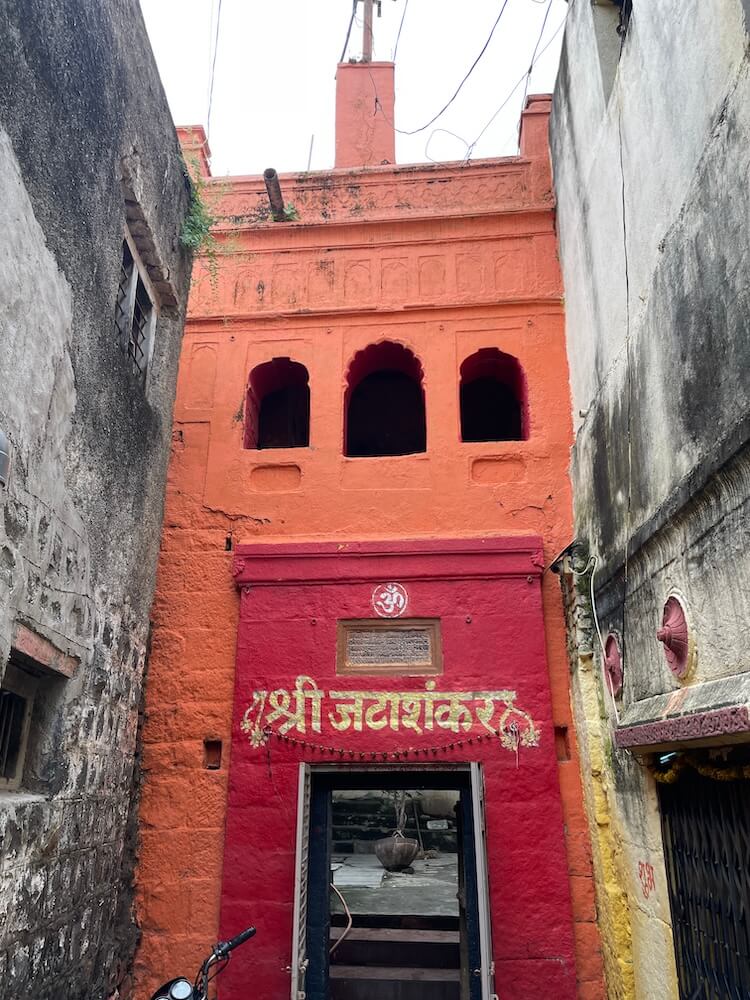
Located a short distance from the Bindusara River, this temple is situated in a very narrow alley. As there is no road for vehicles to reach the temple, one must walk to get there. The temple is enclosed by strong fortifications, with mansions and residential houses built adjacent to these walls. The temple has a two-story entrance gate, with a nagarkhana (drum house) on the upper floor. An inscription is visible on the facade wall above the entrance. The letters in the inscription are in relief style and are clearly legible. The entrance is fitted with ornate wooden doors, and there are guard rooms on both sides inside. Since the courtyard is at a higher level than the entrance, one must climb three steps to enter.
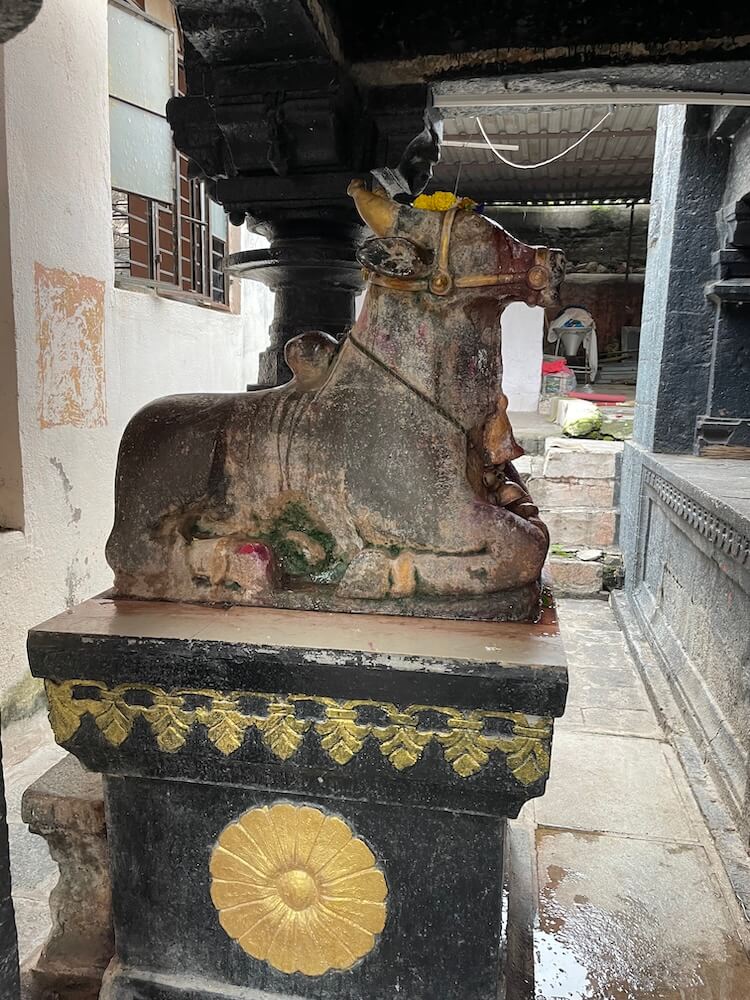
The temple structure consists of a mukhamandapa (front porch), a sabhamandapa (main hall), and a garbhagriha (sanctum sanctorum). The mukhamandapa has two ornate pillars at the front. The lower five-foot section of the pillars is square, while the upper two feet feature various geometric shapes such as hexagonal, octagonal, and circular forms. At the top of the pillars are brackets, and above them are the capitals (hastas). Naga sculptures and animal carvings are etched on all four sides of these capitals. In the mukhamandapa, a black stone idol of Nandi is seated on a vajrapitha (diamond-shaped pedestal). The pedestal is carved with wheel motifs on all four sides, along with leaf and floral creepers. The intricate details of the Nandi’s saddle, hump, and tail highlight the skill of the craftsmen.
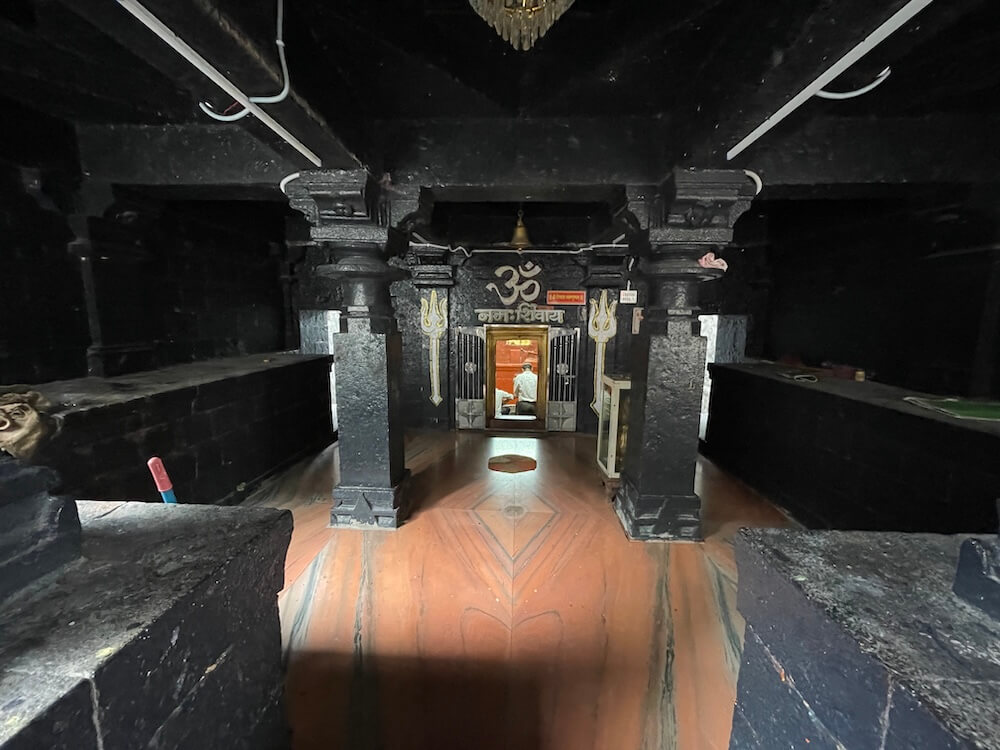
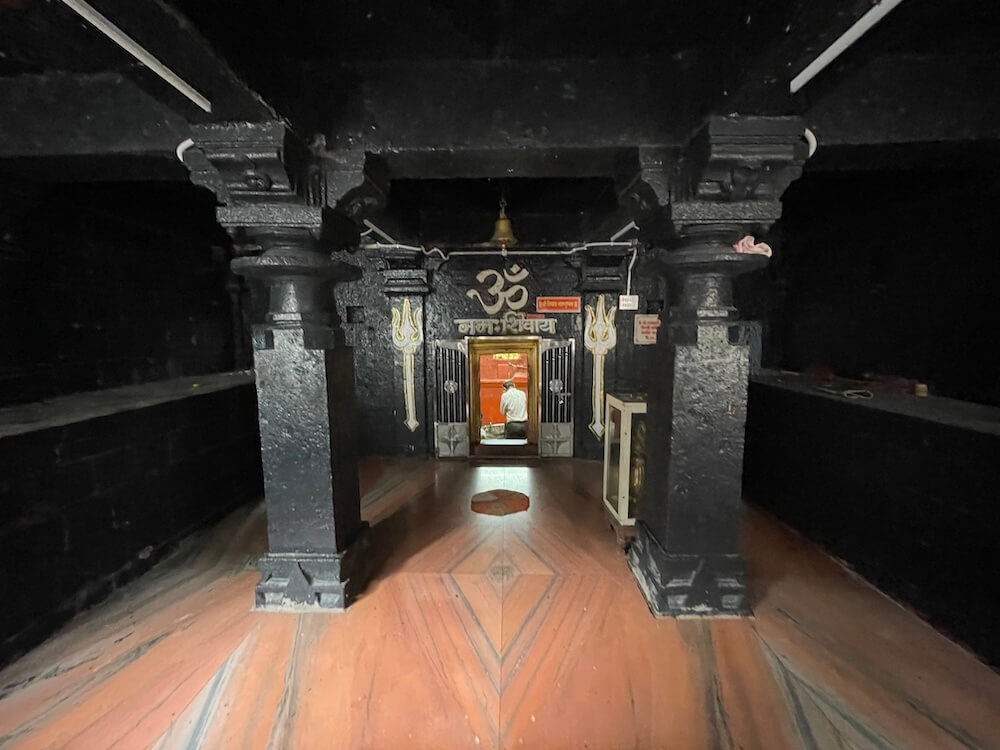
Further ahead is the sabhamandapa, which has a parapet wall. The entrance to the sabhamandapa is through this parapet. The enclosed sabhamandapa has walls on all three sides. Along the front parapet and the left and right walls, there are stone benches (kakshasanas) for devotees to sit. There are a total of ten pillars in the sabhamandapa, including those in the stone benches and walls, two of which are in the center. Naga sculptures are carved on the capitals of these pillars, which is said to be a mark of the Chalukya kings. A tortoise sculpture is carved on the floor of the sabhamandapa. There are two entrances on the left and right sides of the garbhagriha leading to the circumambulation path (pradakshina marga). The garbhagriha is a few inches higher than the sabhamandapa. Floral patterns can be seen on the door frames of the garbhagriha, which also has ornate wooden doors.
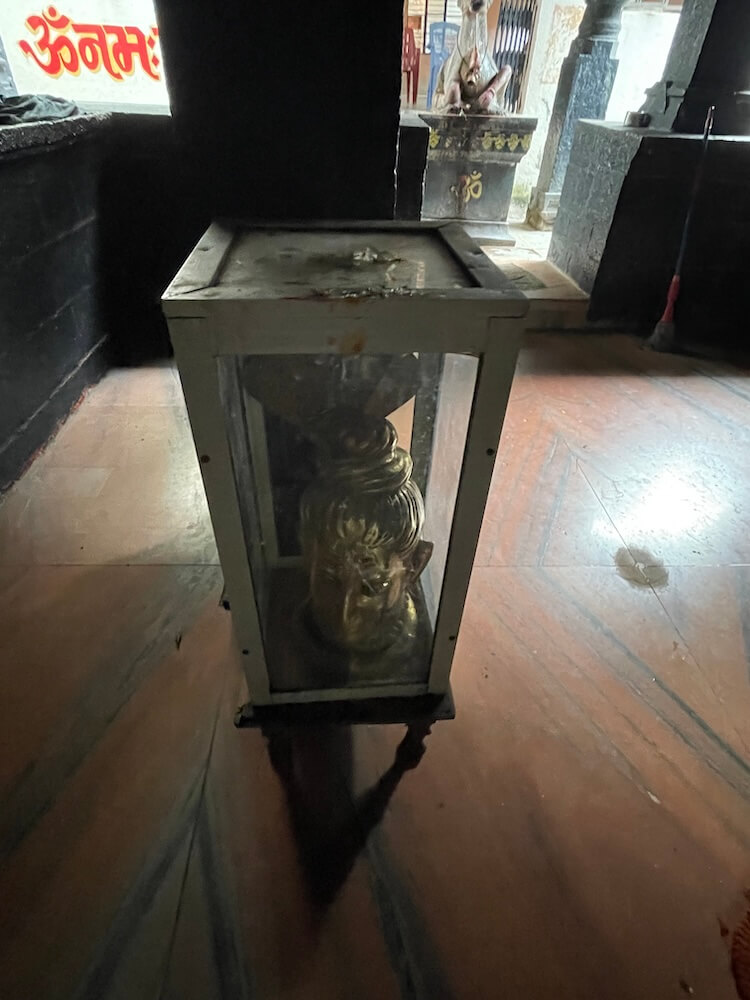
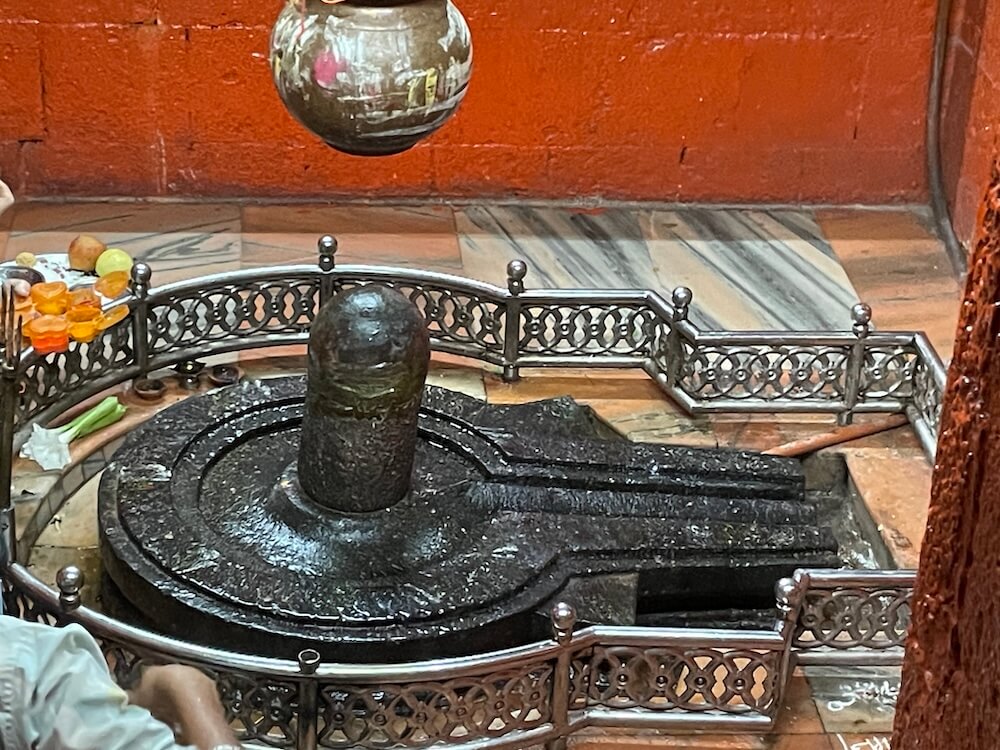
Inside the garbhagriha, there is a Shiva Linga in the center of the floor. A brass cobra holding a canopy and a copper vessel for ritual bathing (abhishek) are suspended from the ceiling above the Shiva Linga. A brass trident stands to the side. A six-inch-high ornate metal railing surrounds the Shiva Linga. Inside the garbhagriha, various idols and pictures of deities can be seen along the walls, and there is a wheel motif on the ceiling. Ventilators have been provided for light and air. There is a circumambulation path outside the garbhagriha, with niches in the walls containing idols of Ganpati, Sheshashayi Vishnu, Maruti, and other local deities.
The facade of the mukhamandapa features various sculptures. The roof is topped with a square brick shikhara (spire). Each of the four walls of the shikhara has three niches containing divine idols. At the very top of the shikhara is a large Nandi sculpture. The roof of the sabhamandapa has a safety railing on all sides. The roof of the garbhagriha features a four-tiered stepped shikhara. The lower tier is wider and contains three niches on each of the four sides, housing divine idols. This tier also features animal sculptures on all four sides. The second tier of the shikhara has niches at all four corners containing divine idols. The third and fourth tiers feature sculptures of various deities on all four walls. The fourth tier is adorned with carvings of various animals and birds on all four sides. The shikhara is crowned with an amalaka and a kalasha.
Mahashivratri is the main annual festival celebrated here. Many devotees visit to seek the blessings of the deity and fulfill their vows. On this day, various religious programs including Laghurudra, bhajans, kirtans, music, and discourses are organized. Special worship is also arranged during the month of Shravan and Adhik Maas. The number of devotees visiting the temple is significantly high on Mondays, Ekadashi, Pradosh, Purnima, and Amavasya.
This sacred temple stands as a testament to deep spiritual devotion, ancient architectural grandeur, and rich local cultural traditions.
The sanctum sanctorum houses the divine idol consecrated according to ancient Vedic traditions, surrounded by serene courtyards and traditional temple architecture.
Navratri, Maha Shivratri, Annual Temple Jatra & Deepotsav
Compare and book flights, secure top-rated local hotels near the temple, hire reliable guides, and rent cars instantly.
Extend your pilgrimage by visiting other highly sacred temples located nearby.


Add ₹999 more to unlock FREE SHIPPING!
Your sacred cart is currently empty.
Shop Photo FramesFill in your delivery details below to place your order.
Add comment