
Add ₹999 more to unlock FREE SHIPPING!
Your sacred cart is currently empty.
Shop Photo FramesIn astrology, the Sun, Moon, Mars, Mercury, Jupiter, Venus, Saturn, Rahu, and Ketu are considered the nine planets (Navagraha). Saturn resides in each of the twelve zodiac signs for two and a half years. Its influence lasts for a total of seven and a half years, consisting of two and a half years in the birth sign, and two and a half years each in the signs preceding and following the birth sign. This period is known as Shani Sade Sati. Astrology states that during this time, a person may have to endure severe hardships. To seek immediate relief from these troubles, devotees visit the three and a half Shani shrines of India. The ancient Shani temple, considered to be the half-shrine, is located in the Mondha area of Beed city. Devotees believe that by offering prayers here, one receives the grace of Shani Dev and is protected from the effects of Sade Sati.
It is believed that this temple is eight hundred to one thousand years old. According to the legend associated with the temple, after King Vikramaditya of Ujjain was afflicted by Sade Sati, he lost his kingdom. Distressed by mental and physical suffering, King Vikramaditya took up a job at the house of an oil presser in this region. During that time, the King continuously prayed to Shani Dev. Pleased by his devotion, Shani Dev resolved all the King’s troubles, and the King regained his kingdom. At that time, the King requested Shani Dev to reside here permanently and alleviate the Sade Sati of all devotees. Honoring the King’s request, Shani Dev manifested here in the form of an idol.
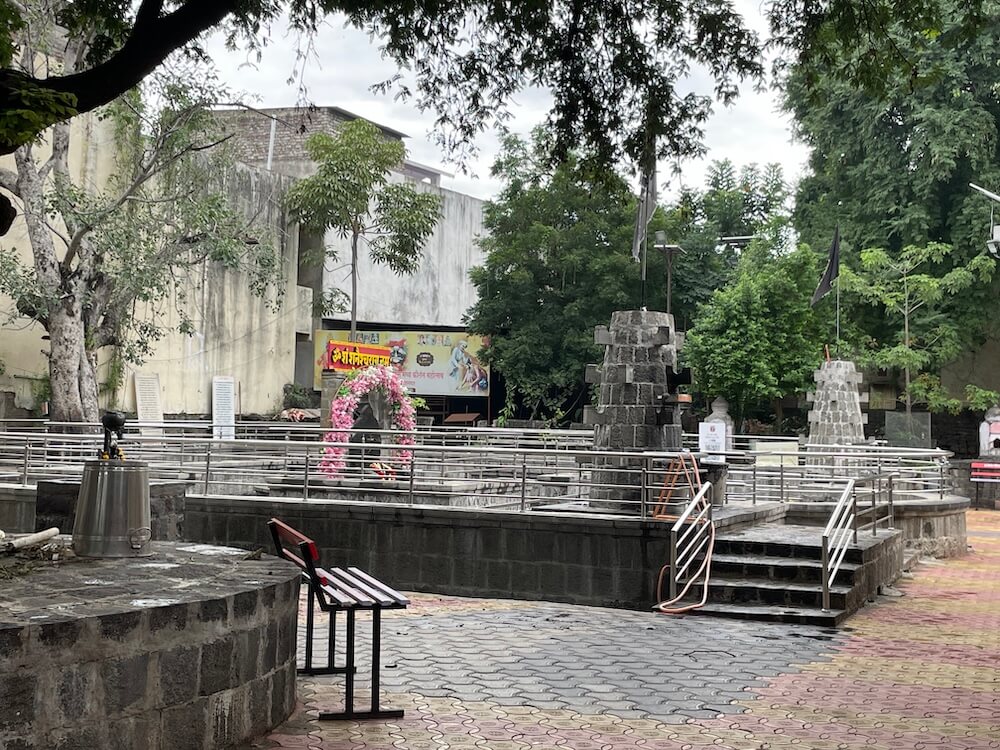
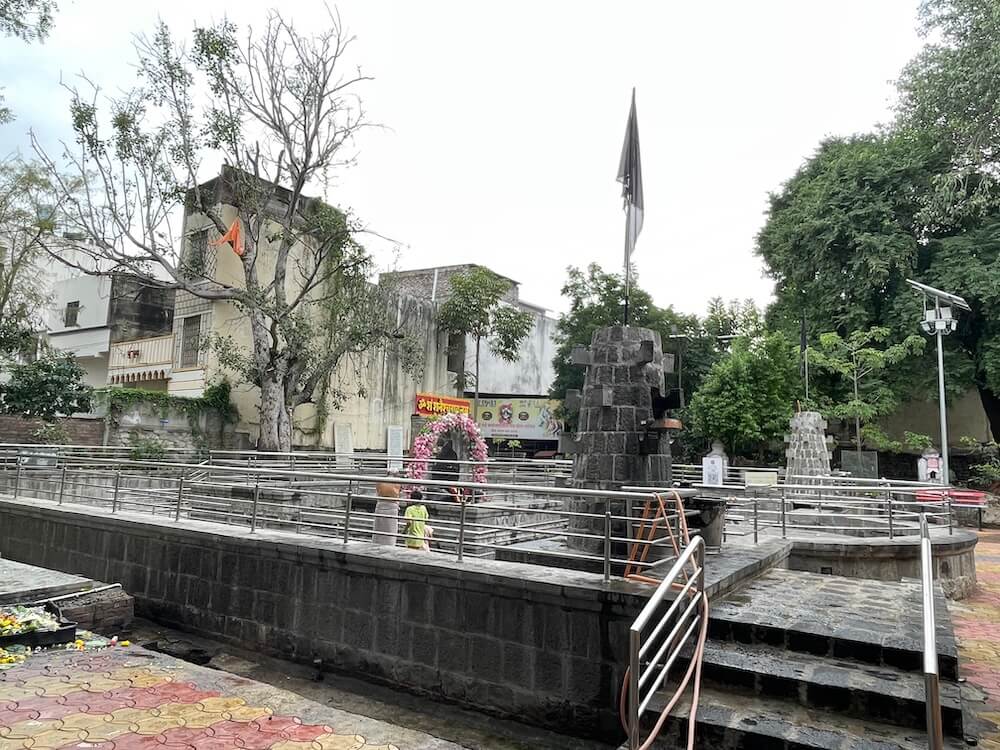
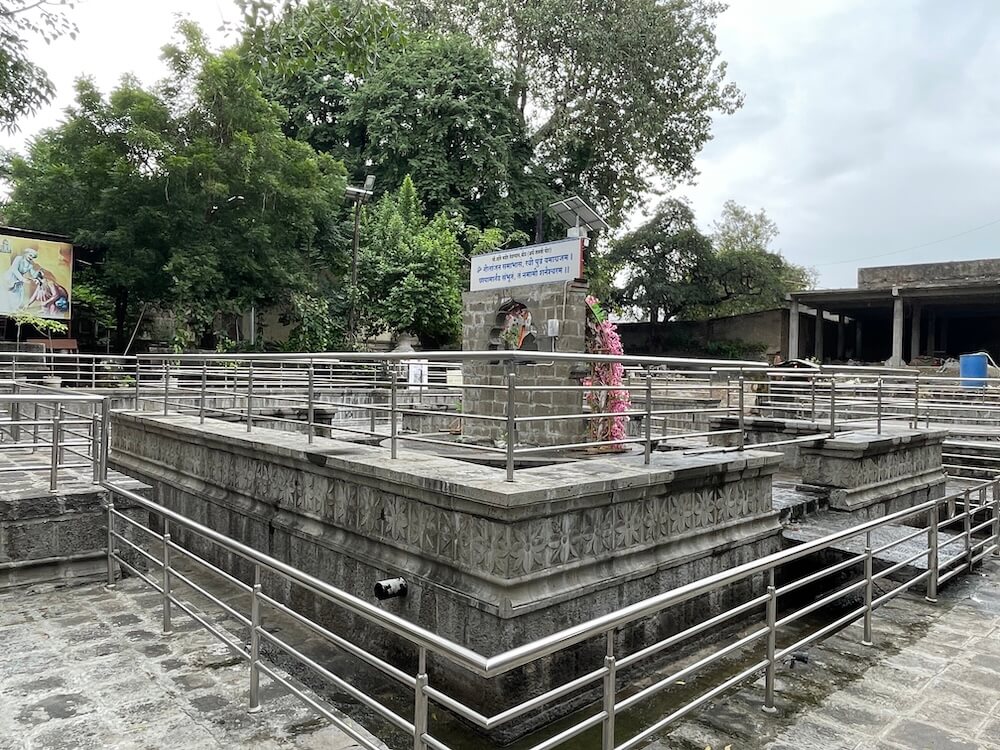
This temple is situated along the roadside. The temple complex is enclosed by a sturdy fortification wall, which features an entrance gate. The spacious courtyard of the temple contains various types of trees and seating arrangements for devotees. In the courtyard, there is an ancient well built of carved stone. It is said that the water level in this well is inexhaustible. The courtyard also houses small shrines of other deities, residences for priests, and other structures.
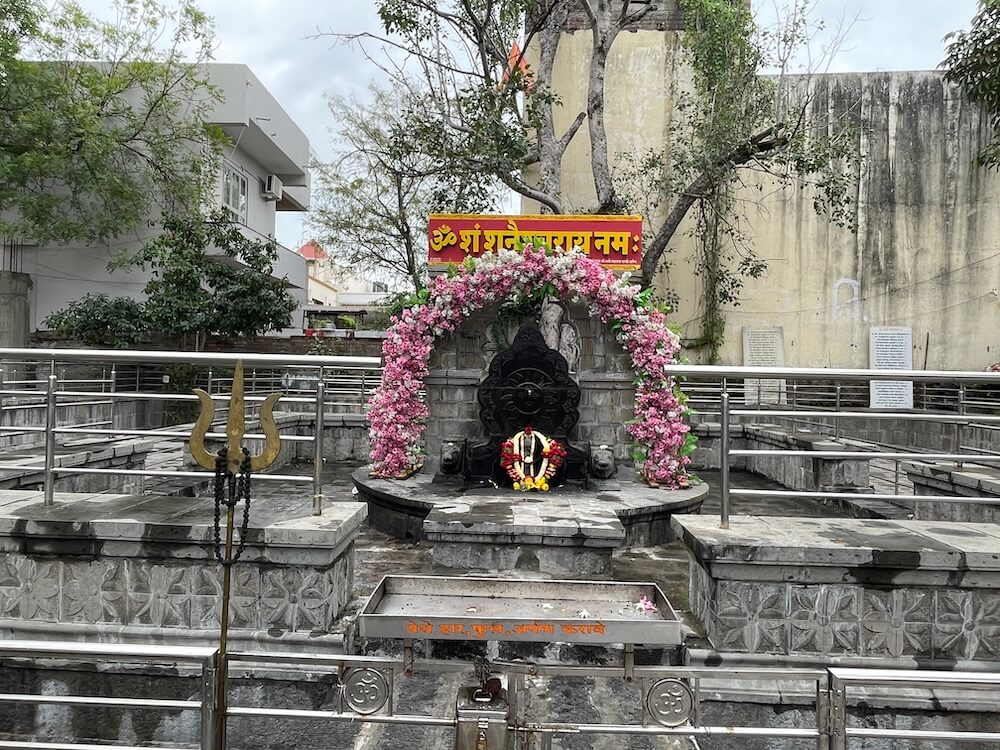
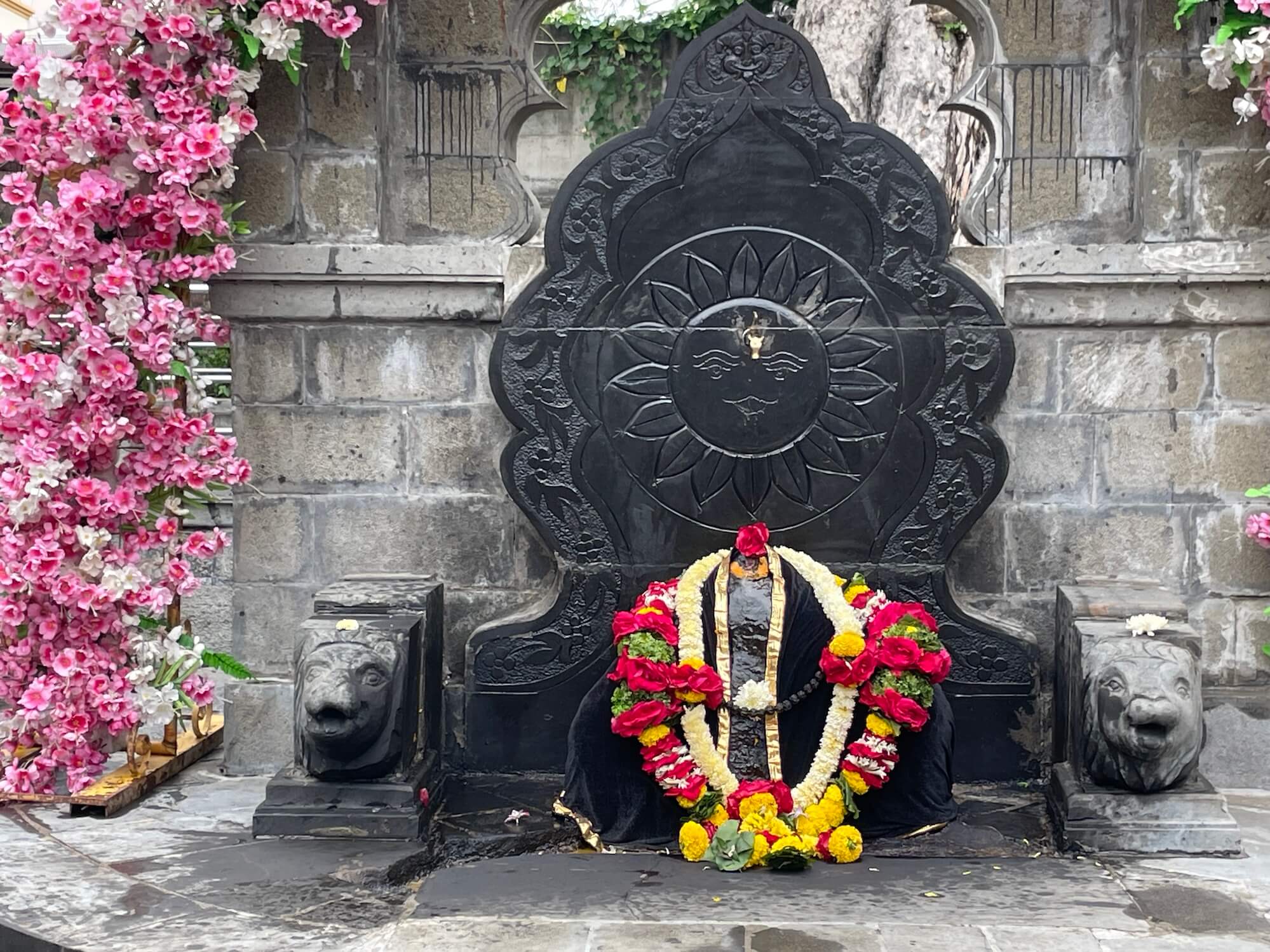
In the center of the courtyard stands the platform of Shani Dev, built of carved stone. On both sides of the front of this platform are circular lamp towers (Deepmala). A moat about two feet wide, filled with water, surrounds the platform on all four sides. A small bridge has been built over the moat in front of the entrance for devotees to access the temple. The platform has a stone railing on the outer side, upon which a stainless steel safety railing has been installed. Since the platform is elevated, there are steps to climb up. In the center of the platform, on a circular Vajra-peetha, is the self-manifested (Swayambhu) idol of Shani Dev seated on a throne. The deity’s eyes, nose, mouth, and mustache are made of silver, and there is a silver crown on the head. There are animal sculptures on both sides of the throne. This temple is completely open, without a roof or walls.
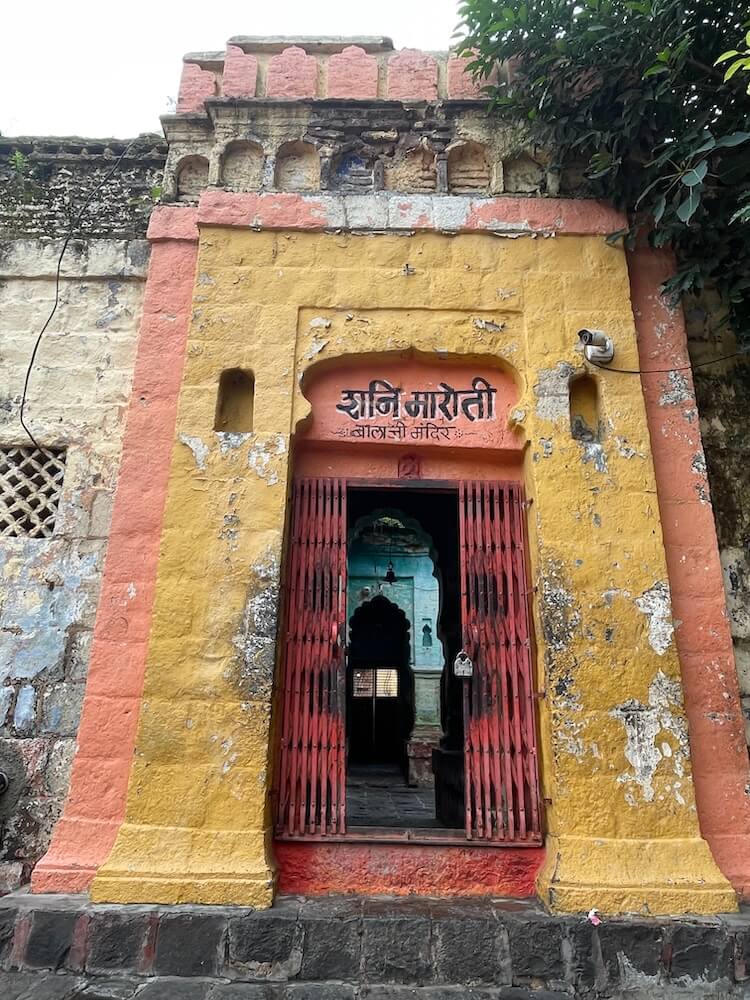
Next to the Shani temple is the Shani-Maruti temple. This temple has its own separate fortification wall. The wall features an entrance gate with lamp niches on both sides. The door frames are adorned with vertical carvings, and there is a sculpture of Lord Ganesha on the lintel. The entrance leads into an enclosed courtyard. The courtyard has pillared corridors (ovaris) along the fortification wall on three sides. One of these corridors houses a temple of Lakshmi-Narayana. The corridors contain several ancient stone sculptures. The Shani-Maruti temple is structured with a Sabha Mandap (assembly hall) and a Garbhagriha (sanctum sanctorum). The Sabha Mandap has four ornate pillars in the front. Sculptures of Maruti are carved into the pillars, which also feature lamp niches. The pillars are connected to each other by arched designs. In the Garbhagriha, on a Vajra-peetha, is the vermilion-smeared stone idol of Maruti. To its left is an idol of Lord Ganesha. The temple roof features a dome-shaped spire (Shikhara). At the top of the spire are the Amalaka and the Kalasha.
Vaishakh Amavasya, which is Shanishchar Jayanti, is the main annual festival celebrated here with great enthusiasm. During this time, many devotees from states such as Maharashtra, Karnataka, Andhra Pradesh, Telangana, Gujarat, and Madhya Pradesh come to seek the deity’s blessings and fulfill their vows. On this occasion, Maha-Abhishek, Maha-Aarti, Maha-Prasad, and other religious programs are organized at the temple. The ten-day Shani festival from Paush Shukla Pratipada to Dashami is celebrated in the temple with great devotion. During these ten days, a continuous oil anointing (Abhishek) is performed on the Shani idol. During this period, an Akhand Harinam Saptah is organized, which includes programs such as Bhajans, Kirtans, discourses, and music. The ten-day festival concludes with a Maha-Prasad. Special programs are organized on the Amavasya of every month as well as on Shani Amavasya. Every Saturday, the number of devotees visiting the temple for darshan reaches into the hundreds.
This sacred temple stands as a testament to deep spiritual devotion, ancient architectural grandeur, and rich local cultural traditions.
The sanctum sanctorum houses the divine idol consecrated according to ancient Vedic traditions, surrounded by serene courtyards and traditional temple architecture.
Navratri, Maha Shivratri, Annual Temple Jatra & Deepotsav
Compare and book flights, secure top-rated local hotels near the temple, hire reliable guides, and rent cars instantly.
Extend your pilgrimage by visiting other highly sacred temples located nearby.


Add ₹999 more to unlock FREE SHIPPING!
Your sacred cart is currently empty.
Shop Photo FramesFill in your delivery details below to place your order.
Add comment