
Add ₹999 more to unlock FREE SHIPPING!
Your sacred cart is currently empty.
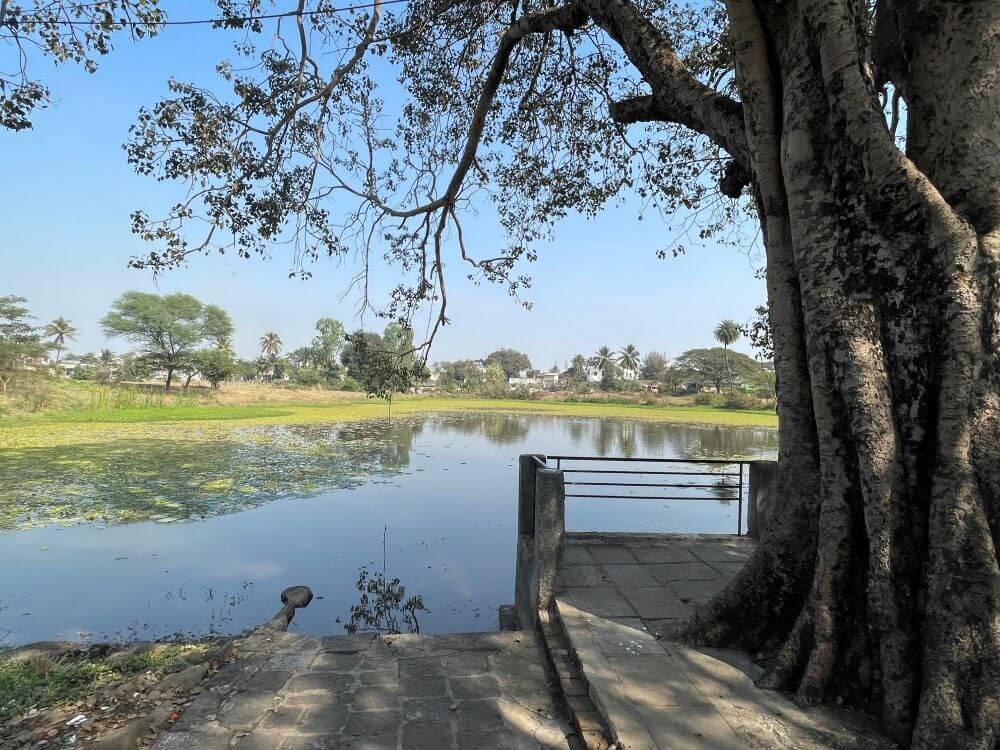
Shop Photo Frames“Greater than Kashi in the South. Thus do they call it.” The holy city of Karveer is blessed with the divine presence of various deities and numerous sacred water tanks (tirtha). Highlighting this, the author of the ‘Karveer Mahatmya’ raises a profound question: “Which is that sacred realm, endowed with all holy waters, ancient, renowned, and destroyer of sins, where Mallikarjuna graces the mountain peak?” and answers it by naming Karveer. Among these sacred spots, one of the most serene is the Lakshatirtha Lake. Situated in the northern part of Kolhapur city, the Laksheshwara Temple stands on its banks. In ancient times, this sacred spot was known as Vimuktatirtha, and the Linga here was called Vimukteshwara.
According to a legend associated with Lakshatirtha, in ancient times a demon named Kolhasura, the son of the demon Keshi, tormented the gods and goddesses in this region with his wicked deeds. Pleading for deliverance from his tyranny, all the deities sought the refuge of the Divine Mother, who then manifested in Kolhapur. Kolhasura had stationed demons named Raktalola in the east, Raktaksha in the west, Raktabhoja in the north, and Raktabija in the south of this sacred site. Attacking these realms, the Goddess vanquished these demons. At that moment, some of the asuras expressed a desire to attain liberation (mukti) at Her hands. The Goddess fulfilled their wish. Since the sacred site where demons numbering in lakhs attained liberation came to be known from that day onwards as Lakshatirtha. Devotees firmly believe that taking a holy dip in this water body cleanses one of all sins and grants liberation.
Looking at the geographical history of Kolhapur, one realizes that the city and its surroundings once housed numerous lakes and ponds. Names like Firangai, Varuntirtha, Kapilatirtha, Kumbhartale, Mahartale, Padmale, Siddhala, Rankala, Kotitirtha, and Ravaneshwara Lake are just a few of them, with Lakshatirtha being one among them. As the city expanded, these water bodies were filled up, and residential areas developed over them. This process began after the political supremacy of the British was established here, roughly after the year 1884. Today, only a few select lakes and ponds survive. Alongside Rankala and Kotitirtha, Lakshatirtha is one such surviving lake.
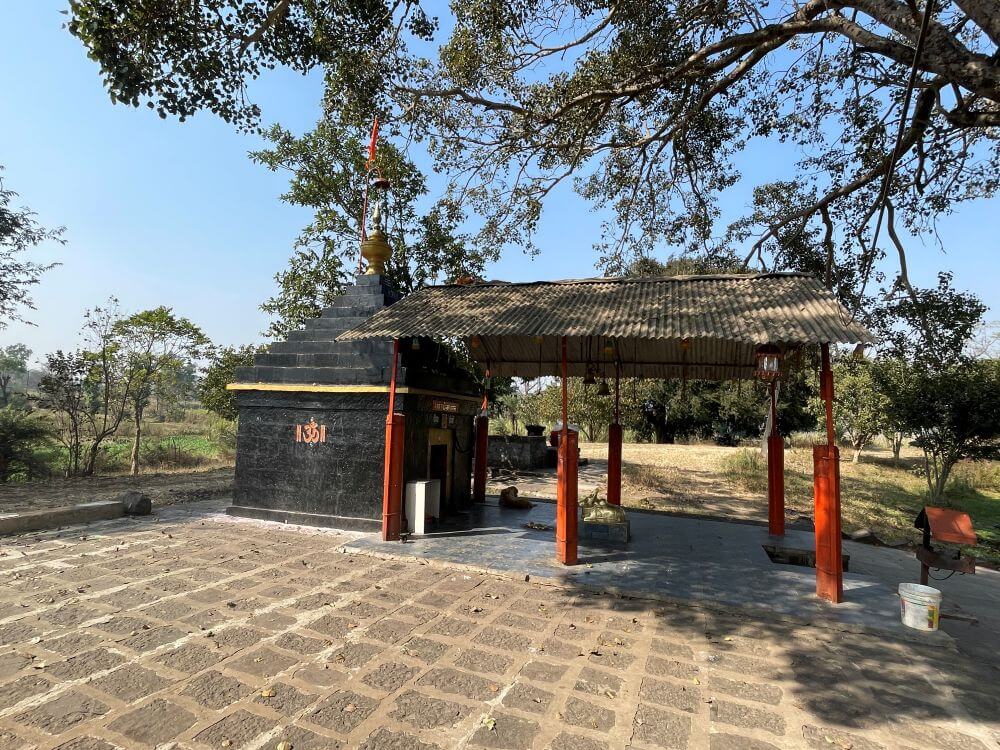
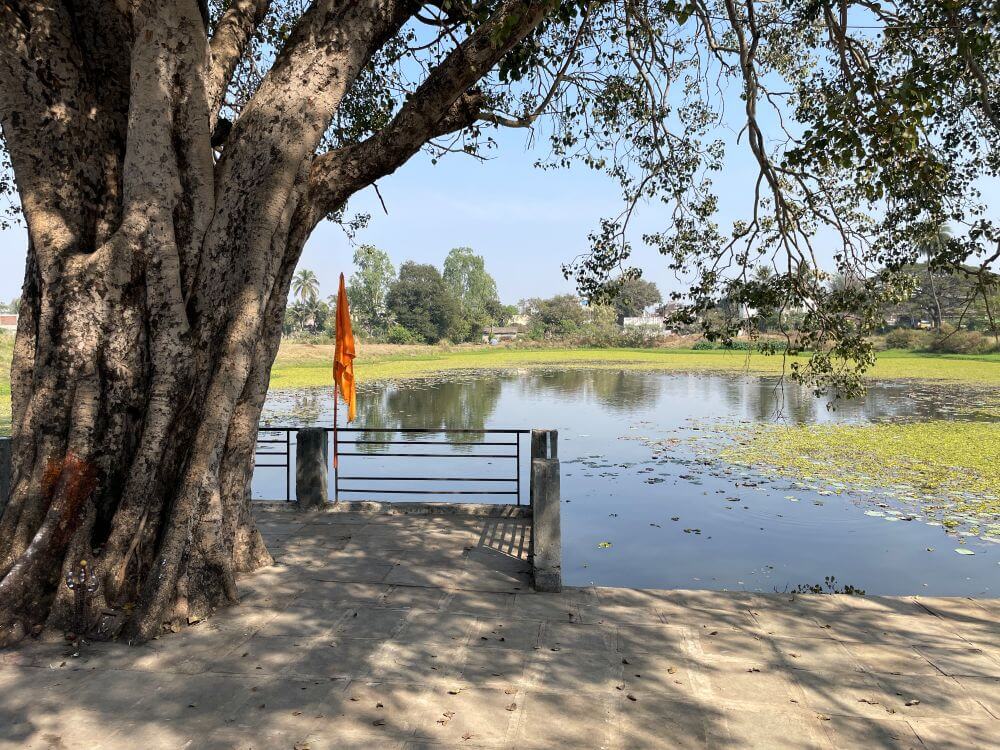
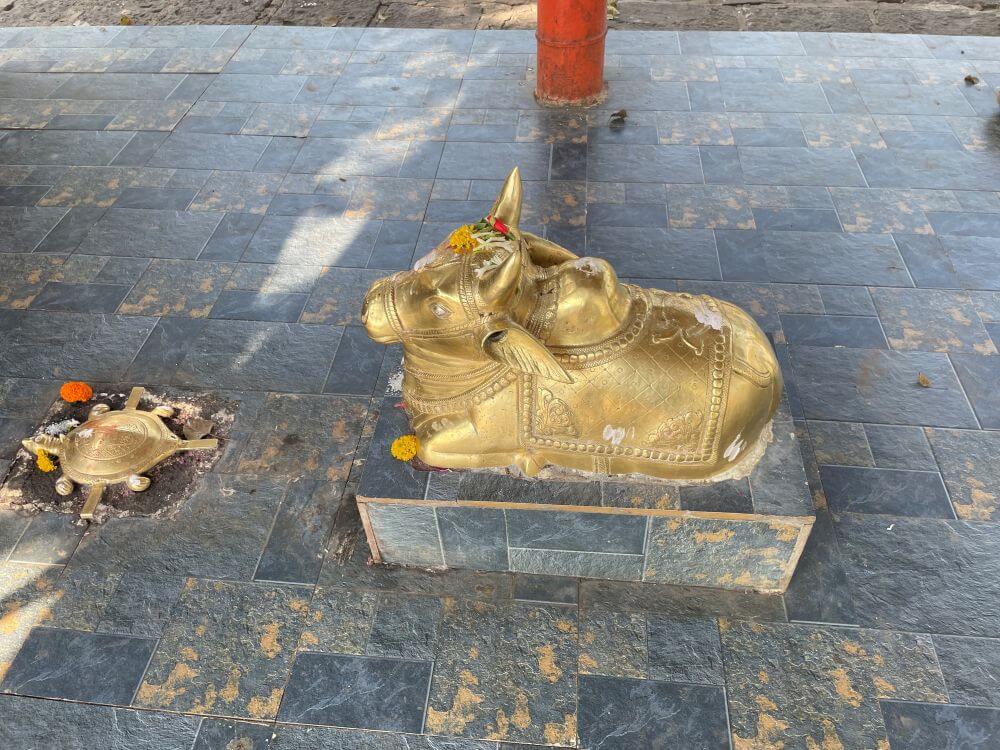
Located approximately two to three kilometers from the main city, the surroundings of Lakshatirtha are exceptionally picturesque, dotted with lush agricultural fields and trees. The lake is adorned with blooming lotus flowers. On its bank, upon a large stone platform, stands the modest temple of Laksheshwara. A tin shed has been erected in front of the temple for the convenience of devotees. Under this shed, on a stone platform facing the temple, rests a metal idol of Nandi. On the left side stands an idol of Lord Hanuman carved in black stone.
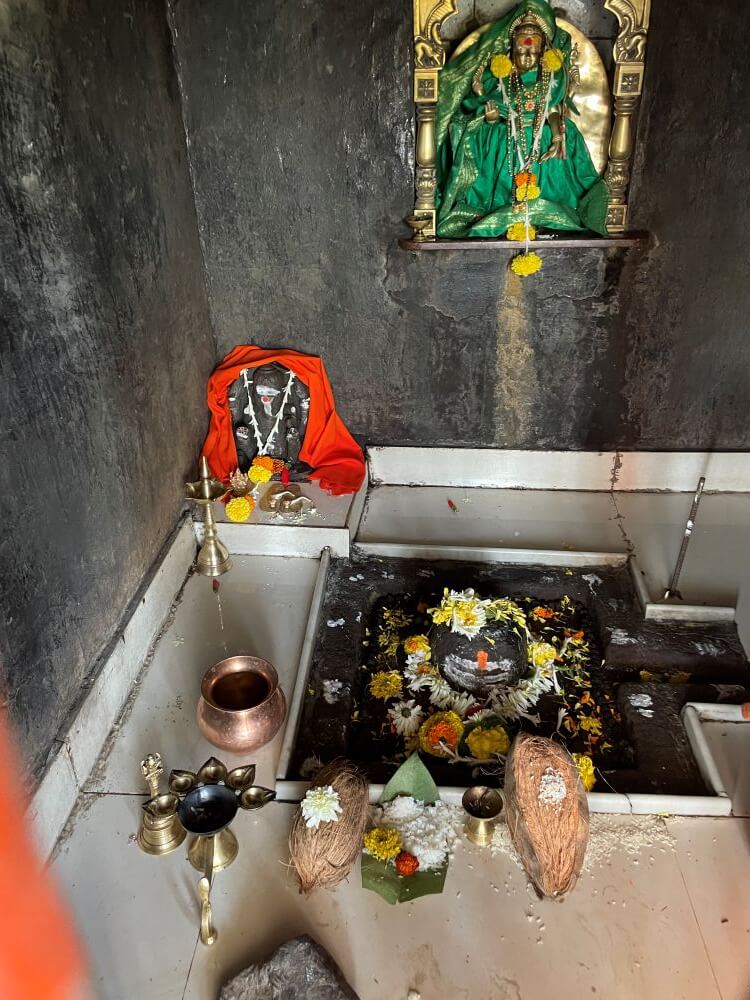
The temple is constructed of stone and features a pyramid-shaped shikhara (spire), topped with a golden amalaka and kalasha. Inside the sanctum lies the Shivalinga of Laksheshwara. The unique feature of this Linga is its quadrangular (square) shape. In the center stands a Shivalinga of black stone, adorned with a brass mask of Lord Shiva featuring a hooded serpent (nagapana). Just behind it sits a small idol of Lord Ganesha. Furthermore, towards the upper section, an idol of Goddess Parvati is enshrined within a brass devhara (altar). A large gathering of devotees visits this temple every Monday and on Mahashivratri. Situated at a distance from the bustling residential areas, the temple surroundings are deeply serene, drawing many seekers for meditation and spiritual contemplation.
Much like Laksheshwara, Kolhapur also houses an ancient temple dedicated to Sarveshwara. Devotees believe that just as bathing in Lakshatirtha of Kolhapur bestows the merit of bathing in one lakh sacred tirthas, having the darshan of Lord Sarveshwara grants the merit of visiting all the sacred tirthas in the holy city of Karveer. The legend of this temple recounts that after Lord Brahma created the universe, he chose Kolhapur to perform a grand yajna. Lord Brahma desired to visit all holy pilgrimage sites before commencing the yajna, but Brihaspati, the preceptor of the gods, advised him to create a single Shivalinga that would embody the fruit of all sacred tirthas and perform the yajna there. Obeying his guru’s command, Lord Brahma fashioned a Shivalinga, which became the sacred abode of Sarveshwara.
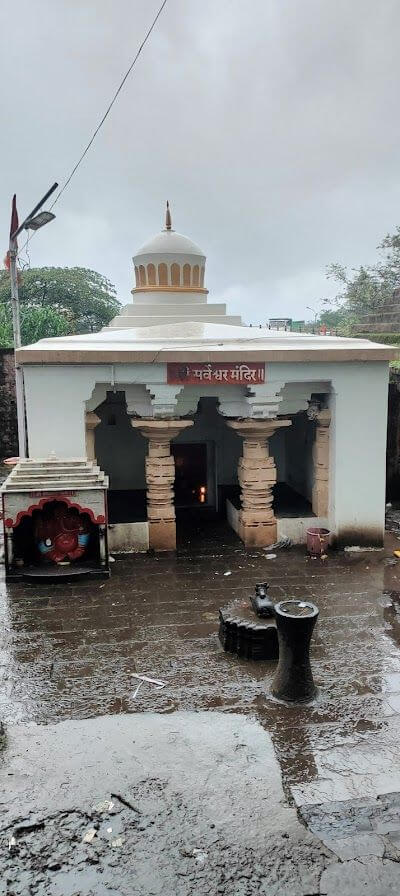
This temple of Sarveshwara is situated on the banks of the Panchganga River. Though its divine significance is immense, the temple structure itself is compact, consisting of a small mandapa and a sanctum sanctorum (garbhagriha). Directly in front of the temple, upon a distinctive stone platform, stands an ancient idol of Nandi. Upon entering, two large pillars in the mandapa immediately draw the eye, their architectural design bearing testimony to the antiquity of the temple. To the left, just outside the mandapa, a stone idol of Lord Ganesha is enshrined in a marble alcove. The entrance to the sanctum is small, housing the black stone Linga of Sarveshwara. The temple’s shikhara is equally distinctive, shaped like a squat, dome-like pavilion. To the right of the Sarveshwara Temple stands the temple of Ugra Nrisimha. A large number of devotees throng this temple for darshan every Monday.
This sacred temple stands as a testament to deep spiritual devotion, ancient architectural grandeur, and rich local cultural traditions.
The sanctum sanctorum houses the divine idol consecrated according to ancient Vedic traditions, surrounded by serene courtyards and traditional temple architecture.
Navratri, Maha Shivratri, Annual Temple Jatra & Deepotsav
Compare and book flights, secure top-rated local hotels near the temple, hire reliable guides, and rent cars instantly.
Extend your pilgrimage by visiting other highly sacred temples located nearby.


Add ₹999 more to unlock FREE SHIPPING!
Your sacred cart is currently empty.
Shop Photo FramesFill in your delivery details below to place your order.
Add comment