
Add ₹999 more to unlock FREE SHIPPING!
Your sacred cart is currently empty.
Shop Photo FramesHanuman is worshipped in society primarily as the deity of strength, intellect, wisdom, and absolute devotion. He is revered as ‘Sankatmochan’, the protector who removes all kinds of troubles, fears, and negative energies from human life. In Maharashtra, the worship of this heroic and Maharudra form of Hanuman holds special significance. Samarth Ramdas Swami, considering Hanuman as the presiding deity of strength, established Maruti idols in villages across the land. In the famous Bhimrupi Stotra composed by him, the very first line is ‘Bhimrupi Maharudra Vajrahanuman Maruti’. This line is a direct invocation of Hanuman’s Maharudra form. He popularized the method of worshipping this valiant form of Hanuman to instill strength and awakening among the youth. Among these famous temples of Hanuman, the Maharudra Hanuman Temple located in Bhogaon, Parbhani district, situated on the banks of the Godavari River, is a place of faith for thousands of devotees.
There are significant references in mythological scriptures behind Hanuman being named ‘Maharudra’. In Hinduism, ‘Rudra’ is considered the extremely radiant, powerful, and destructive form of Lord Shiva. The ‘Shatarudra Samhita’ of the Shiva Purana contains a detailed account of this story. According to it, when Lord Vishnu incarnated on Earth in the form of Shri Rama, Lord Shiva, to serve Him and destroy evil forces, took birth as Hanuman from the womb of Mother Anjani through a portion of his eleventh Rudra. Since Hanuman is considered the direct eleventh Rudravatar of Lord Shiva and possesses immense power like Rudra, he is called ‘Maharudra’ or ‘Rudravatar’.
Apart from the Shiva Purana, this Maharudra form of Hanuman has been glorified in many other scriptures. The Skanda Purana describes Hanuman as a symbol of immense valor and the Rudra power that resolves crises. Similarly, in scriptures like the ‘Ananda Ramayana’ and ‘Bhavishya Purana’, the divine birth of Hanuman is linked to the Rudra principle of Shiva. Hanuman’s immense physical strength, ability to fly, and his fierce form that manifests during times of crisis all underline the Maharudra principle within him.
There is no official history available regarding the establishment of this temple or how long it has existed. It is said that many years ago, a self-manifested (Swayambhu) idol of Hanuman was found at this spot. After the idol was found, a small temple was initially built here. The Swayambhu Hanuman here is very ‘Jagrut’ (spiritually awakened). Devotees have a firm belief that he grants wishes. As this reputation gradually spread far and wide, devotees from distant regions began coming here for darshan and to make or fulfill vows. After the renovation that took place a few years ago, the temple attained its current form.
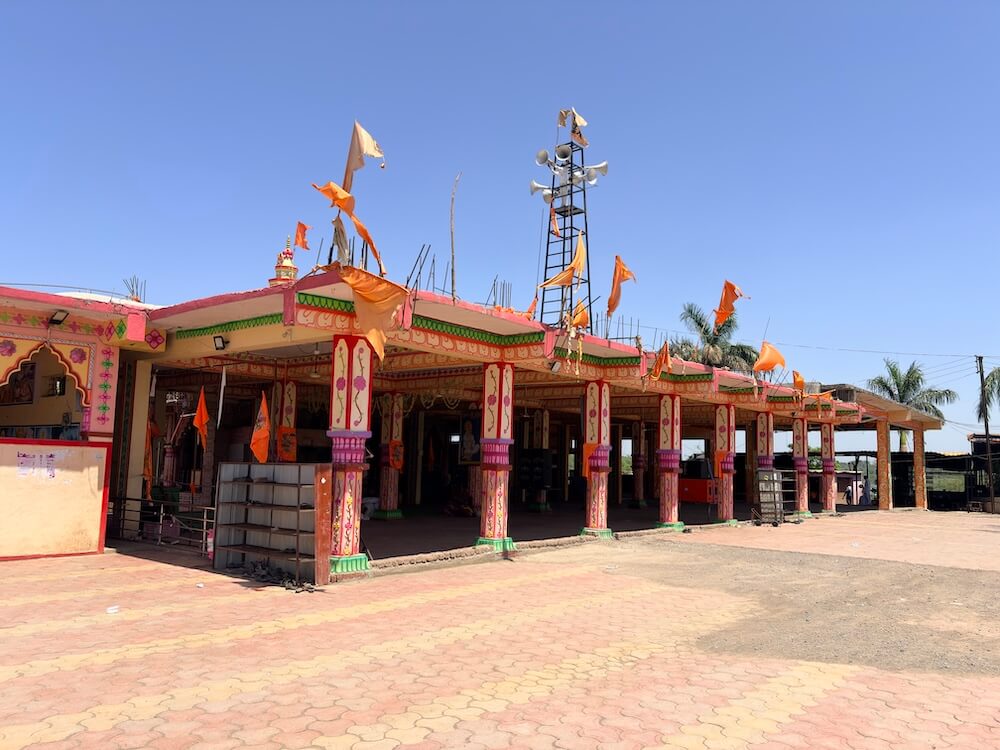
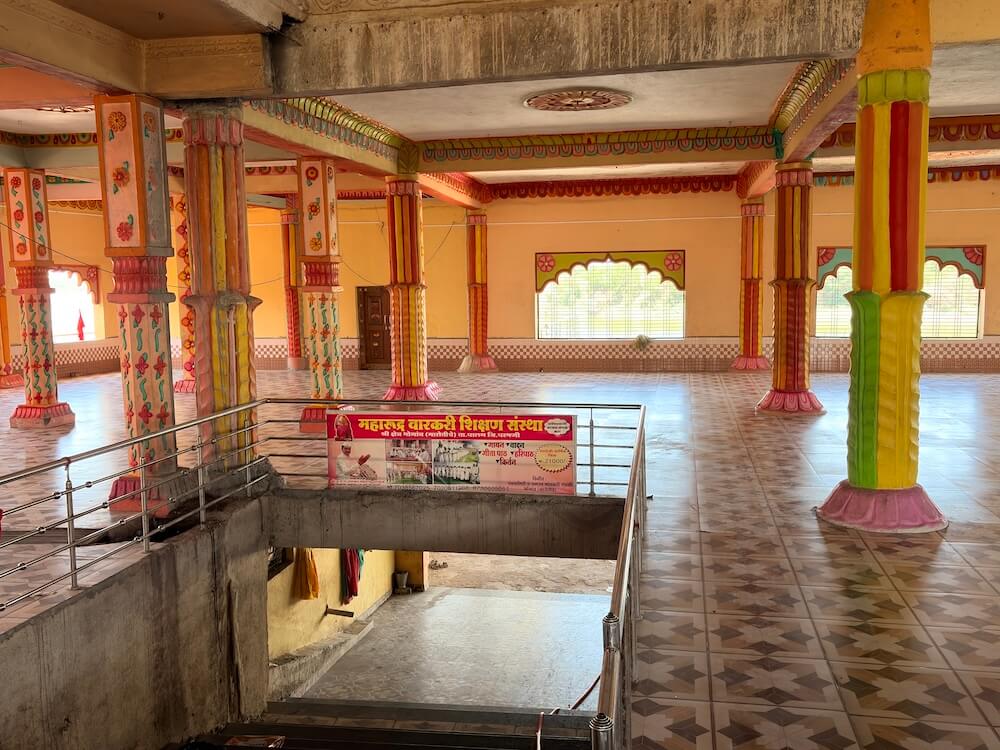
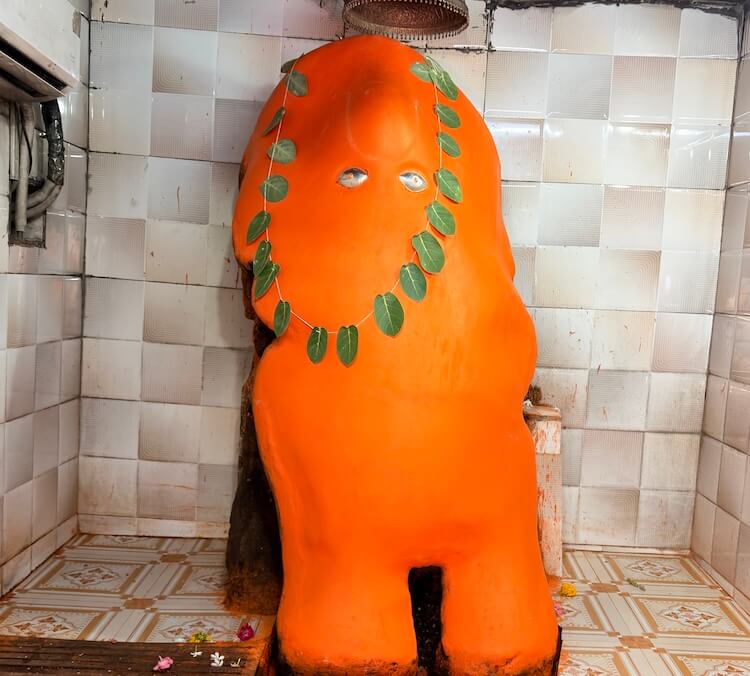
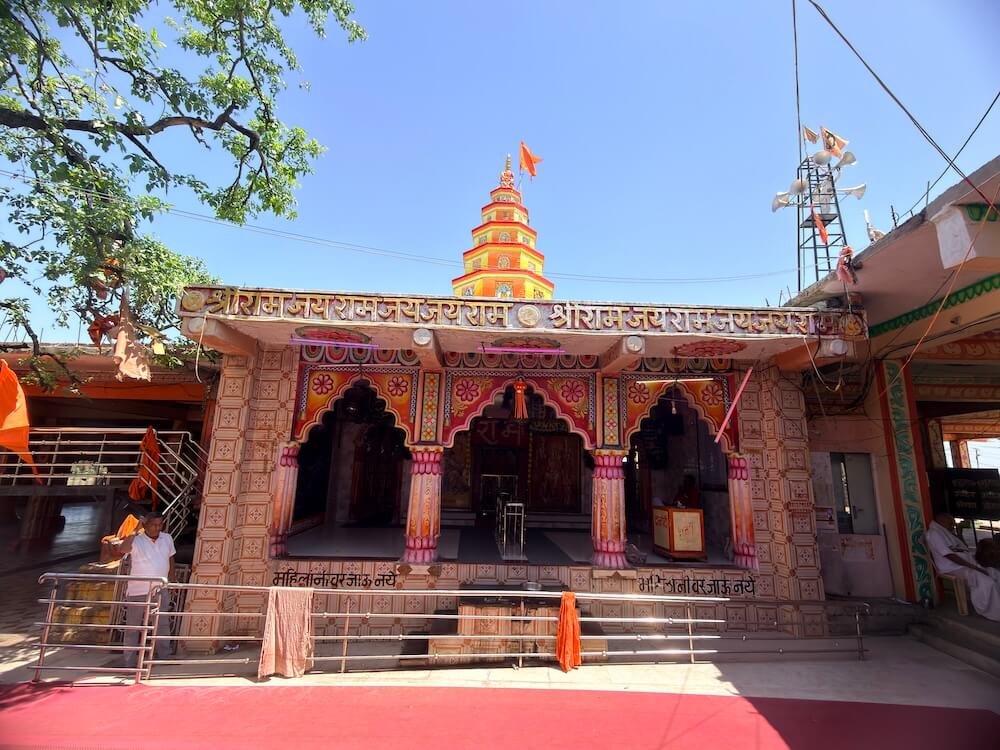
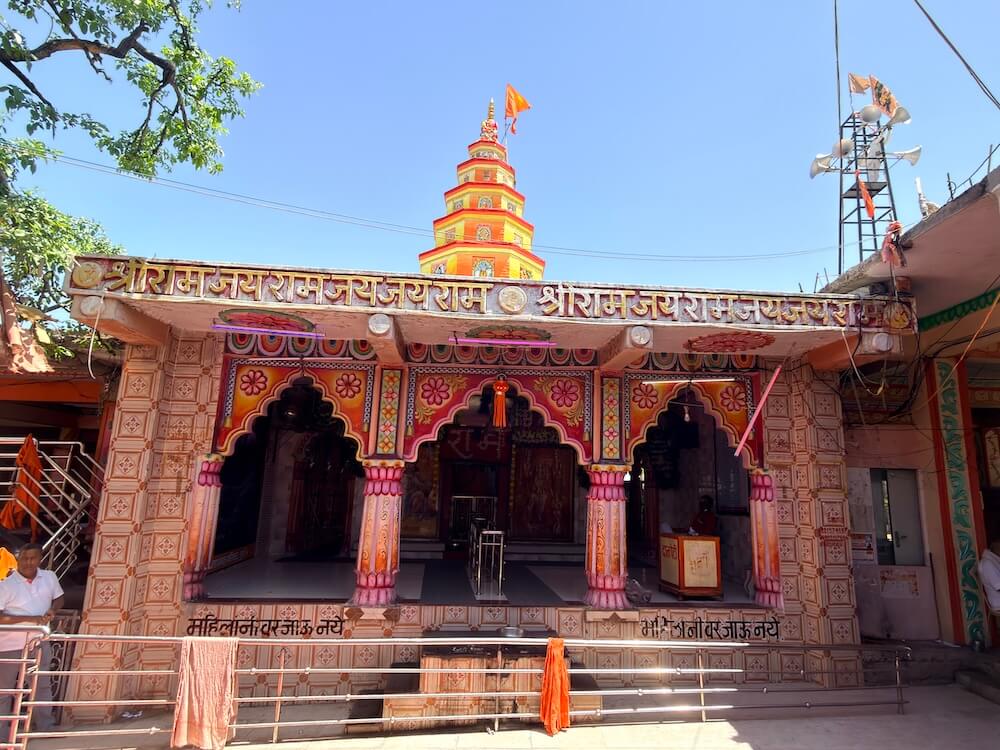
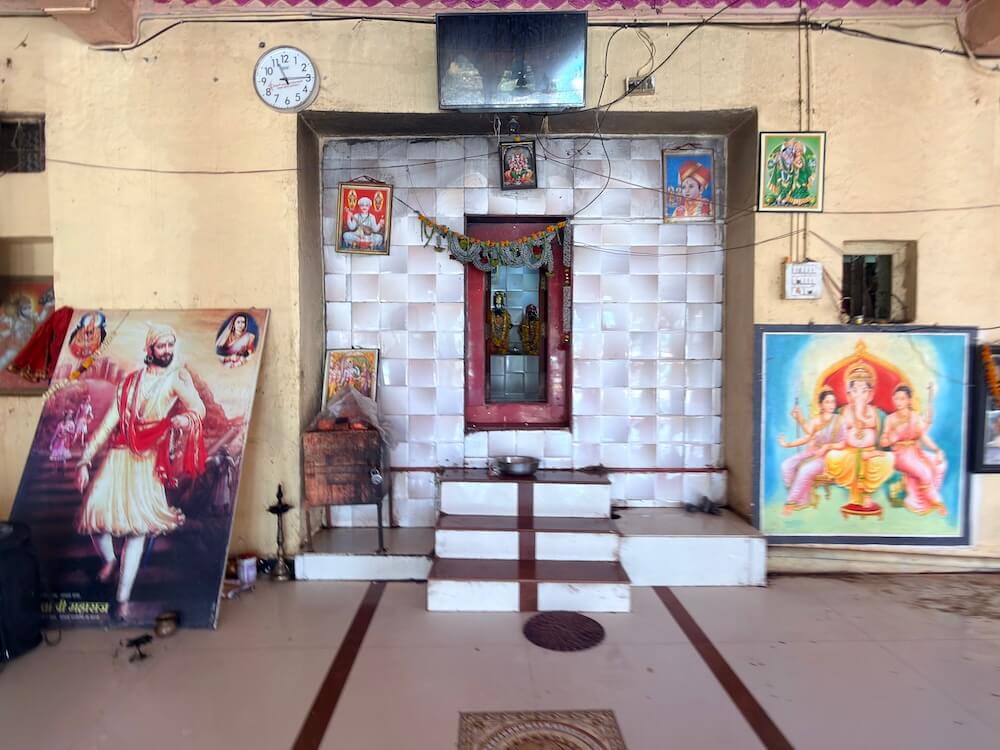
The temple has a vast campus. The temple structure consists of a spacious assembly hall (Sabhamandap) and a sanctum sanctorum (Garbhagriha). The pillars in the assembly hall feature paintings and intricate carvings. On the wall to the left of the entrance to the sanctum, there is an image of Hanuman, and on the right wall, there are images of Lord Shri Rama, Mother Sita, Lakshmana, and Hanuman. The sanctum houses the vermilion-smeared idol of Hanuman. Eyes and feet are carved onto this idol. To preserve the sanctity of this idol and the temple, strict rules for darshan are followed here. Devotees must take a bath in the Godavari riverbed and enter the sanctum with wet clothes for darshan. A beautiful spire (Shikhara) is built over the sanctum of this temple. Various divine niches are carved on this spire. At the very top of the spire is the Amalaka, and above it sits a golden pinnacle (Kalash).
Directly in front of the main Hanuman temple is a separate temple of Vitthal-Rukhumai. This temple also has a large assembly hall. Paintings of various mythological events and different deities are drawn on the walls here. The idols of Vitthal and Rukhumai are seated in the sanctum. In the upper part of this temple, there is a standing idol of Lord Vishnu. This Vitthal temple also has a spire like the main temple. An ancient Shiva Linga is also installed in the Hanuman temple premises. Apart from this, there is a separate place for Shani Dev here. A large pavilion has been built behind the main temple. Food is served to devotees in this pavilion. In the kitchen located near this pavilion, arrangements are made to prepare the deity’s Naivedya and the Mahaprasad for food distribution. A ghat has been built by the temple administration to reach the banks of the Godavari River. In recent times, a large bridge has also been built from the temple directly to the riverbed so that devotees can easily reach the river.
Many devotees from various parts including Parbhani, Nanded, Beed, Dharashiv, Latur, Chhatrapati Sambhajinagar, and Jalna come for the darshan of the Swayambhu Hanuman here. This temple opens for darshan daily at 4 o’clock in the morning. With the exception of Ekadashi, food is served to devotees here 365 days a year. Every day until 12 o’clock in the afternoon, devotees perform various types of Abhishek in this temple. Around 12:30 in the afternoon, the ‘Rotha’ Naivedya is offered to Hanuman. After offering this Naivedya, the distribution of Mahaprasad begins around 1:15 in the afternoon. Approximately 1,500 devotees partake in the Mahaprasad here every day. On the day of Ekadashi, instead of Mahaprasad, fasting food (Faral) is distributed to all devotees here.
Except for the day of Ekadashi, there is a tradition of performing special Abhishek on Hanuman every day in this temple. The Hanuman here is very awakened and grants wishes. Therefore, devotees make vows to this Hanuman to get relief from various troubles. After the vow is fulfilled, a Maha-Abhishek is performed on the Hanuman idol as a gesture of gratitude. There is a huge crowd of devotees for this Abhishek ritual. For this, one has to register in advance about six months earlier. The main hosts who have registered for the Abhishek have to come and stay in the temple premises the day before the Abhishek. The next day, after waking up early and bathing in the Godavari riverbed, this ritualistic Abhishek must be performed with wet clothes. On the new moon day (Amavasya) that occurs every month, this entire area takes on the form of a fair.
This sacred temple stands as a testament to deep spiritual devotion, ancient architectural grandeur, and rich local cultural traditions.
The sanctum sanctorum houses the divine idol consecrated according to ancient Vedic traditions, surrounded by serene courtyards and traditional temple architecture.
Navratri, Maha Shivratri, Annual Temple Jatra & Deepotsav
Compare and book flights, secure top-rated local hotels near the temple, hire reliable guides, and rent cars instantly.
Extend your pilgrimage by visiting other highly sacred temples located nearby.


Add ₹999 more to unlock FREE SHIPPING!
Your sacred cart is currently empty.
Shop Photo FramesFill in your delivery details below to place your order.
Add comment