
Add ₹999 more to unlock FREE SHIPPING!
Your sacred cart is currently empty.
Shop Photo FramesNanded district is known as the land of saints and devotion. The town of ‘Loha’, which preserves the historical and religious heritage of this very district, is considered highly significant. Due to the ancient Kapileshwar Temple here, this town is famous as the ‘Dakshin Kashi’ and a major pilgrimage site in Marathwada. The Safalya Balaji Temple, established in this town, has become a center of faith and attraction for devotees in a very short time. The architecture, grandeur, and serene atmosphere of the temple have earned it the recognition of being the ‘Prati-Tirupati’ (mini-Tirupati) of Marathwada.
As noted by the great researcher Ra. Chin. Dhere in his scholarly book ‘Shri Vitthal: Ek Mahasamanvay’, Vitthal of Pandharpur and Venkatesh of Tirupati are both deities of the same nature. Neither has a direct connection to the Puranic incarnations or forms of Vishnu, yet both have attained the status of Vishnu. Vitthal is considered to be Balakrishna, while Venkatesh is known by the name Balaji. Just as Vitthal’s wife Rukmini, citing Radha as the reason, sits sulking in Dindirvan, similarly, Venkatesh’s wife, angered by her husband enduring the insult caused by Bhrigu, stayed away first in Karvir and later in Tiruchanur. Like Vitthal, Venkatesh is weaponless and silent, keeping his left hand on his waist and bestowing blessings upon devotees with his right hand. Such is this Balaji, who has a large number of devotees in Maharashtra, just as in Andhra.
To ensure that these devotees in Maharashtra could easily have the darshan of Tirupati Balaji, Shri Vitthal Gaikwad built this temple in Loha town in the year 2000. The original Tirupati Balaji temple is situated on the Tirumala hills in Andhra Pradesh. It is at least one thousand five hundred years old. According to historical records, the Pallava Queen Samavai built the first altar of this temple in the year 614 AD. Along with Chola and Pallava kings, the Maratha commander Raghoji Bhonsle also made a significant contribution to the construction and maintenance of that temple. After the Vatican City in Rome, this is considered the richest place of worship in the world. The Safalya Balaji Temple in Loha has been built in the exact same Dravidian architectural style as the Tirupati Balaji temple.
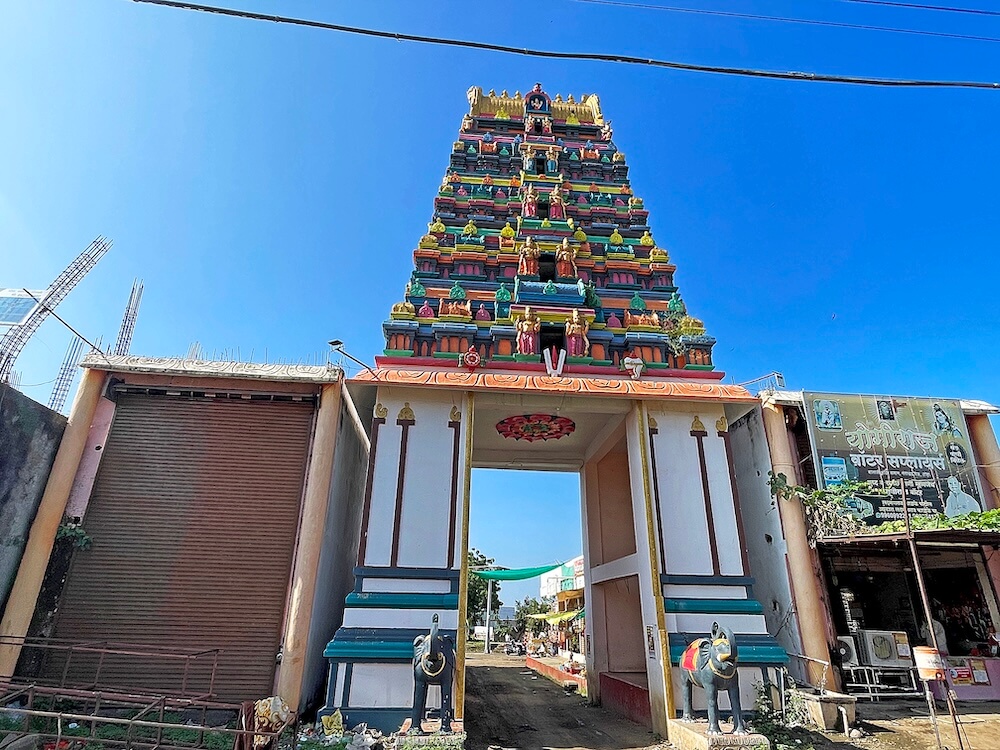
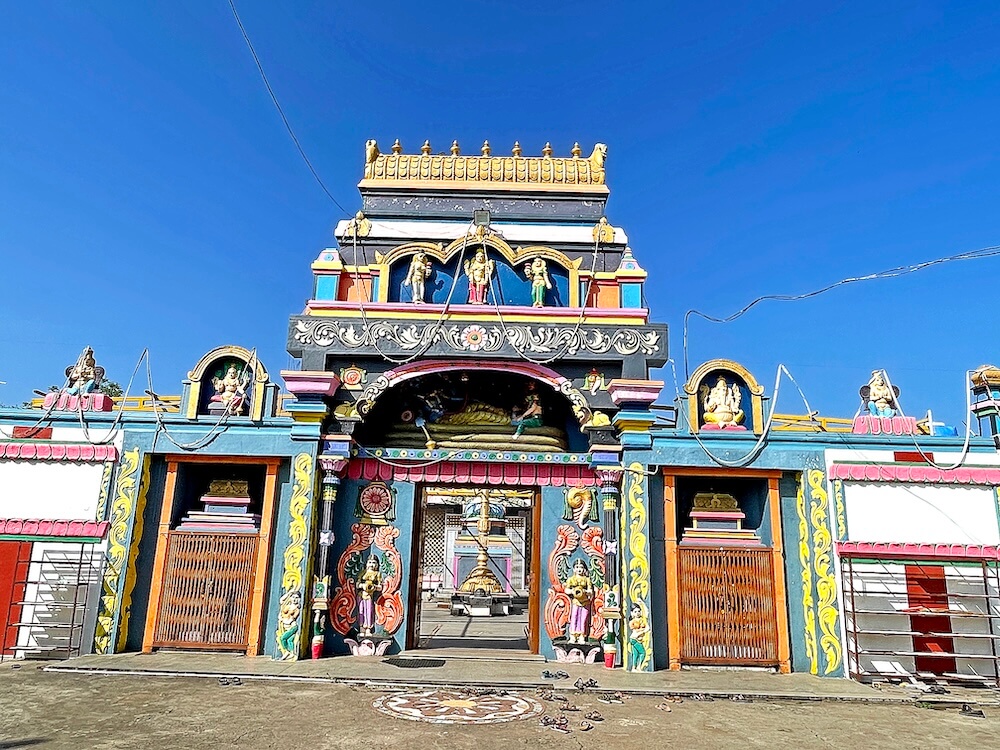
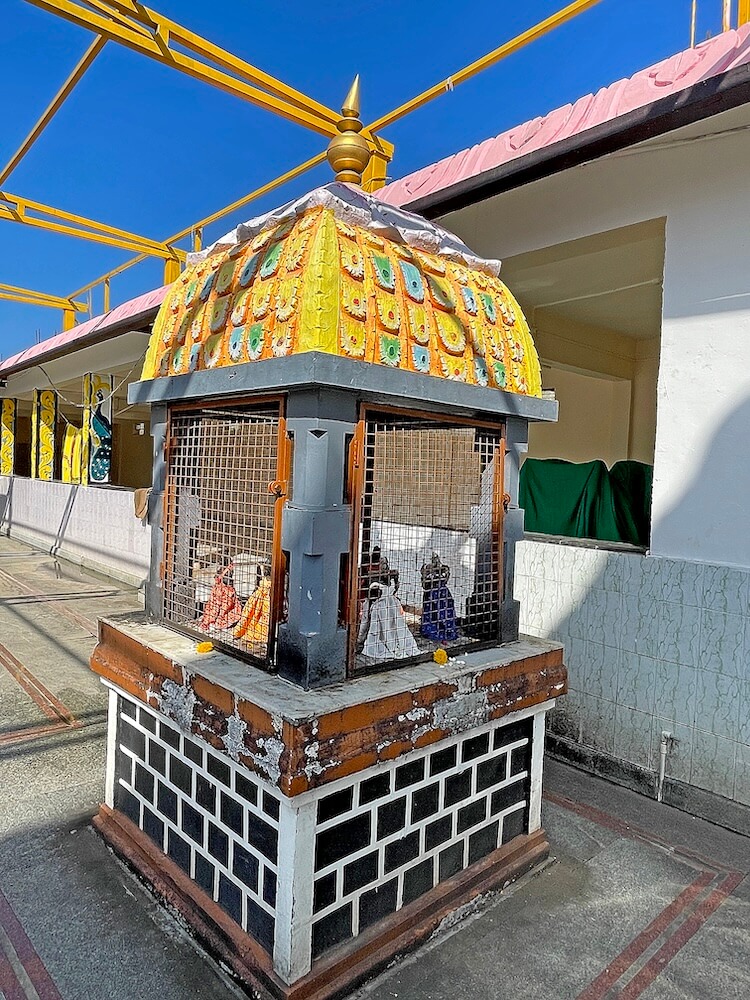
Located in the central part of Loha town, along the main road, there is a spacious parking lot in front of this temple. Near this parking lot is a small temple of Maruti. It houses a beautiful idol of Maruti made of black stone. There is a perimeter wall surrounding the main temple. Following the Dravidian style, a magnificent five-tiered Gopuram has been erected at the entrance. Idols of gods and goddesses are carved into each tier of the Gopuram. At the top of the Gopuram is a horizontal-style shikhara (spire) with five kalashas (finials) on it. At the entrance, Vishnu is depicted in the Sheshashayi posture with Lakshmi seated at his feet. Inside the entrance, there are guard rooms on both sides, from where one enters the temple courtyard. In the courtyard, in front of the temple, there is a platform and a small shrine on it containing the idol of Garuda, the vehicle of Vishnu. The shrine has a dome-shaped ornate shikhara with a kalasha on top. Behind this shrine, on a stone platform, stands a golden-hued flagstaff (Dhvajastambha). In a small temple on the left side in front of the main temple, idols of the Navagrahas are installed.
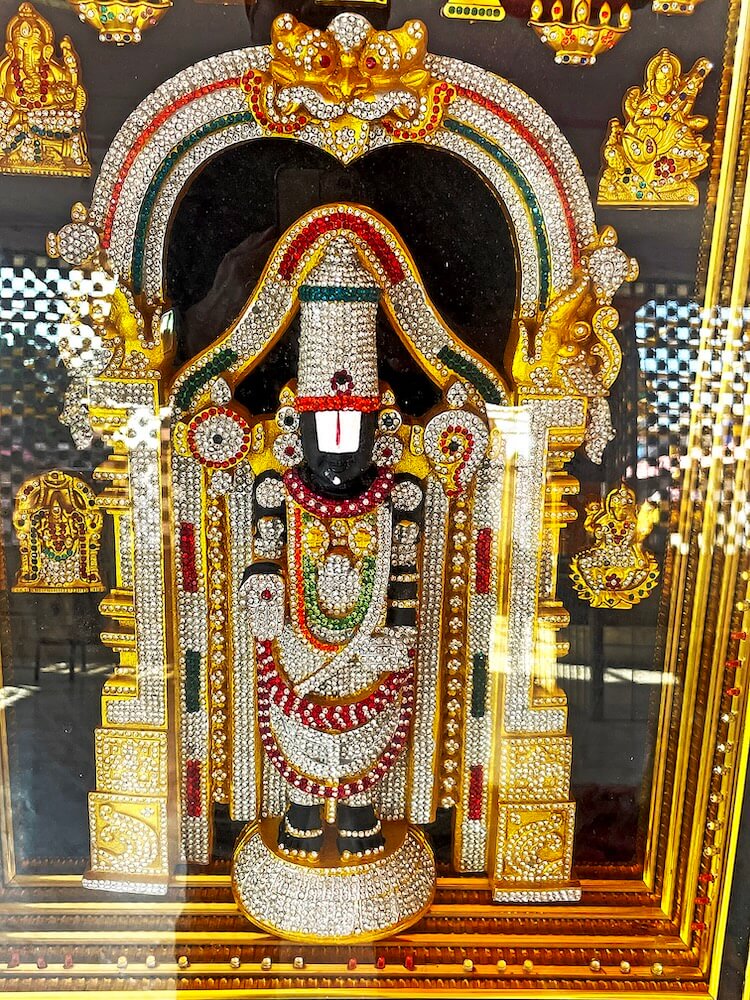
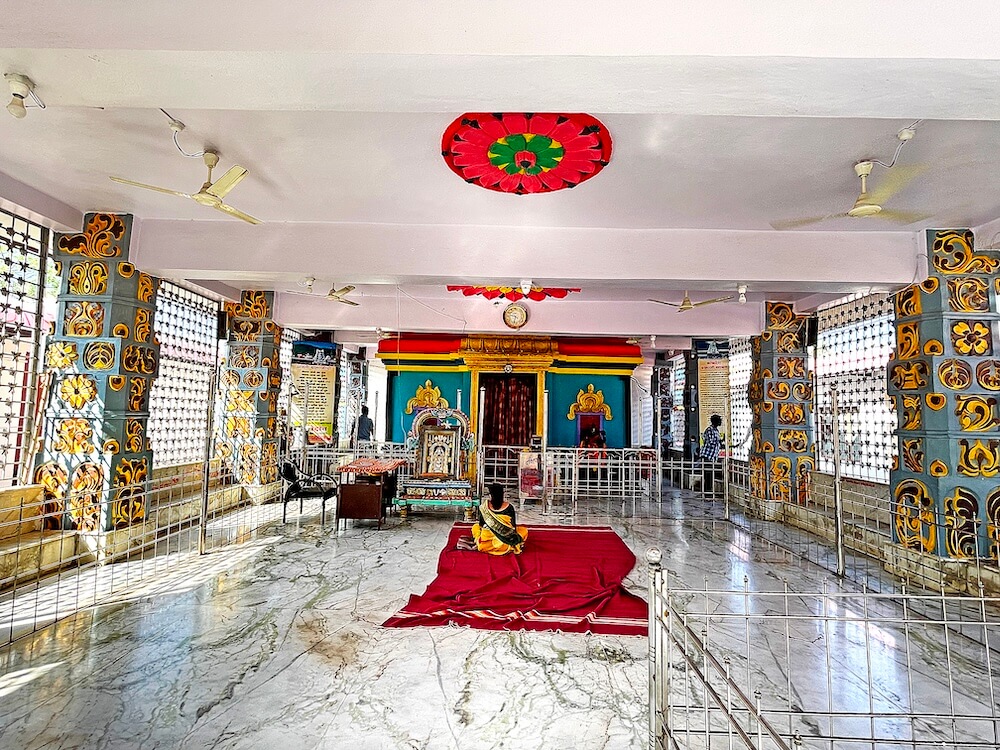
Further ahead, in the semi-open assembly hall (Sabhamandap), seating arrangements have been made for devotees along the outer sides. The assembly hall has two rows of four square ornate pillars each. Stainless steel railings have been installed here to manage the darshan queue. Further ahead, in front of the sanctum sanctorum, there is a stainless steel security railing. The door frames at the entrance of the sanctum sanctorum feature vertical carvings and a beautiful torana (archway) design on the lintel. The entrance has carved wooden doors, and on both sides of the entrance are idols of the four-armed Lakshmi. Inside the sanctum sanctorum, the unique idol of Balaji is seated on a diamond throne (Vajrapitha). Adorned with various garments and ornaments, the deity wears a silver crown. In the prabhavali (halo) behind the idol, there are pillars on both sides, and above them is a makara torana (archway) decorated with leaf and flower motifs. In this archway, there is a Kirtimukha in the center at the top.
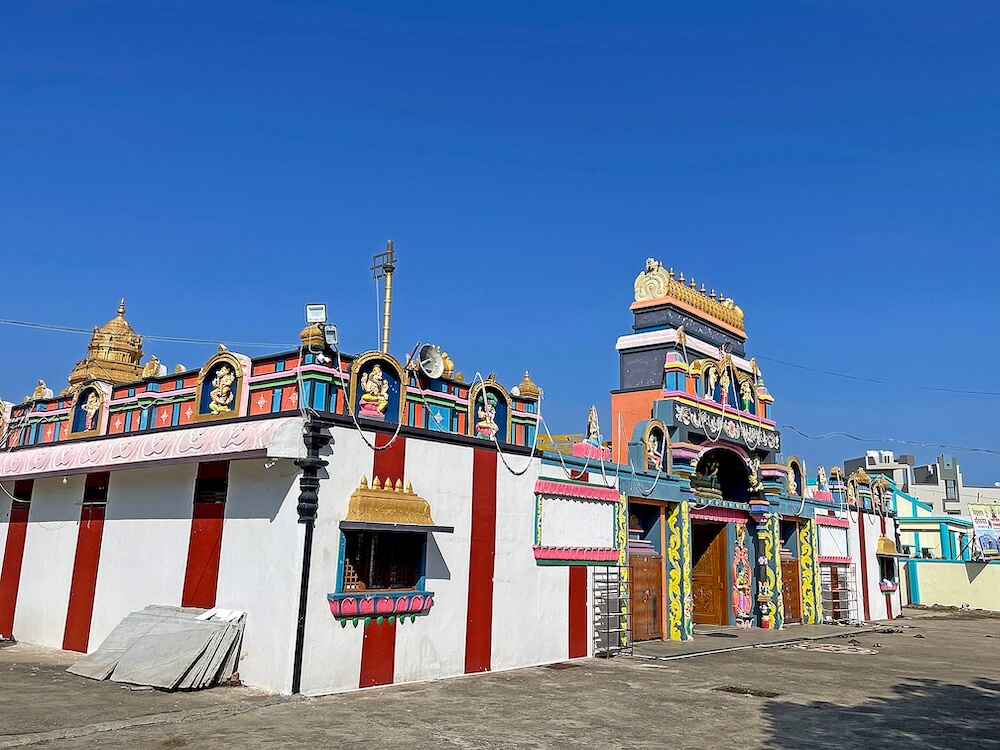
On the outer walls of the temple, various designs have been created using colored glass. There is a parapet on all sides of the temple roof. On the front part of the parapet, there are about twenty niches containing images of various saints and deities. On the roof of the sanctum sanctorum, there are square shikharas in the Dravidian style. These include ‘Kuta’ (miniature temple replicas with vertical shikharas) at all four corners and ‘Shala’ (horizontal shikhara structures) in the middle sections. They feature idols of various deities. At the top of the shikhara, there is a circular stupi with images of deities on all four sides and a kalasha in the center.
Behind the temple, on the left side, is the temple of Goddess Padmavati. In this temple, a four-armed idol of Goddess Padmavati made of black stone is seated on a diamond throne. The Goddess holds lotus flowers in her hands. In the prabhavali behind the idol, there is a makara torana with leaf and flower motifs and a Kirtimukha in the center. The square ornate shikhara above the temple has niches on all four sides containing idols of Goddess Padmavati. At the top of the shikhara is a stupa with a kalasha. To the right behind the temple is the temple of Goddess Lakshmi. Here, the idol of Goddess Lakshmi is on a diamond throne, and there is a high square shikhara on the roof. The shikhara has niches on all four sides containing idols of Goddess Lakshmi. Here too, there is a kalasha at the top of the shikhara. Adjoining the temple’s fortification wall are several structures used as a pilgrims’ rest house (Dharmashala), temple office, and storehouse.
The main annual festivals of Chaitra Padwa and Dussehra are celebrated with great enthusiasm in the temple. During both festivals, programs such as the reading of various religious texts, bhajans, kirtans, music, discourses, and Mahaprasad for devotees are organized. During these annual festivals, hundreds of devotees are present here for the darshan of the deity and to fulfill their vows.
This sacred temple stands as a testament to deep spiritual devotion, ancient architectural grandeur, and rich local cultural traditions.
The sanctum sanctorum houses the divine idol consecrated according to ancient Vedic traditions, surrounded by serene courtyards and traditional temple architecture.
Navratri, Maha Shivratri, Annual Temple Jatra & Deepotsav
Compare and book flights, secure top-rated local hotels near the temple, hire reliable guides, and rent cars instantly.
Extend your pilgrimage by visiting other highly sacred temples located nearby.


Add ₹999 more to unlock FREE SHIPPING!
Your sacred cart is currently empty.
Shop Photo FramesFill in your delivery details below to place your order.
Add comment