
Add ₹999 more to unlock FREE SHIPPING!
Your sacred cart is currently empty.
Shop Photo FramesThe tradition of Nag Puja (serpent worship) in India is extremely ancient. The serpent deity is worshipped both as a protector and a destroyer. Shravan Shuddha Panchami is celebrated as a special day for the ceremony of Nag Puja. There are temples dedicated to the serpent deities in many places across the country, and serpent idols are worshipped in numerous temples. One such famous temple is located in the village of Kokle in the Sakri taluka. Situated on the banks of the Panjara River, this temple of Nagai Mata is ancient and renowned. It is the firm belief of devotees that the water flowing from beneath the feet of this Goddess cures the ailments of both humans and animals.
The Nagai Mata Temple is said to be over one thousand years old. According to the temple legend, many yogis, sannyasis, and mahatmas used to come to this place on the banks of the Panjara River to perform penance. At that time, they were troubled by malevolent forces. To remove this suffering and protect them, Yogiraj Nagababa worshipped Nagai Devi. When the Goddess was pleased and asked him to seek a boon, Nagababa expressed his wish that she should reside here permanently. Since then, Nagai Devi has remained here in the form of a stone deity. By the grace of Nagai Devi, after completing his penance, Nagababa attained Sanjeevan Samadhi in the presence of the Goddess in the year 1684. Thereafter, his disciples continued his work. The Samadhi site of all of them is located here. The temple was renovated in the year 1975, which gave it its current form.
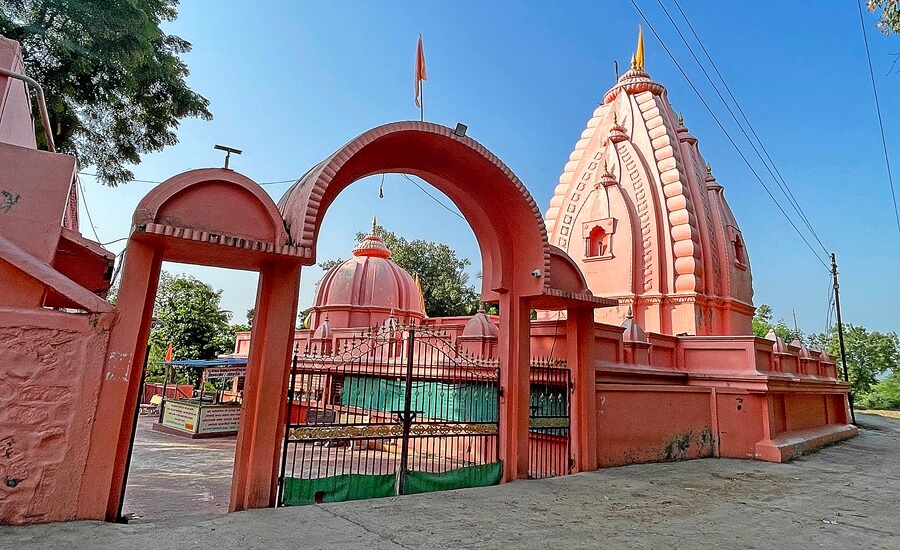
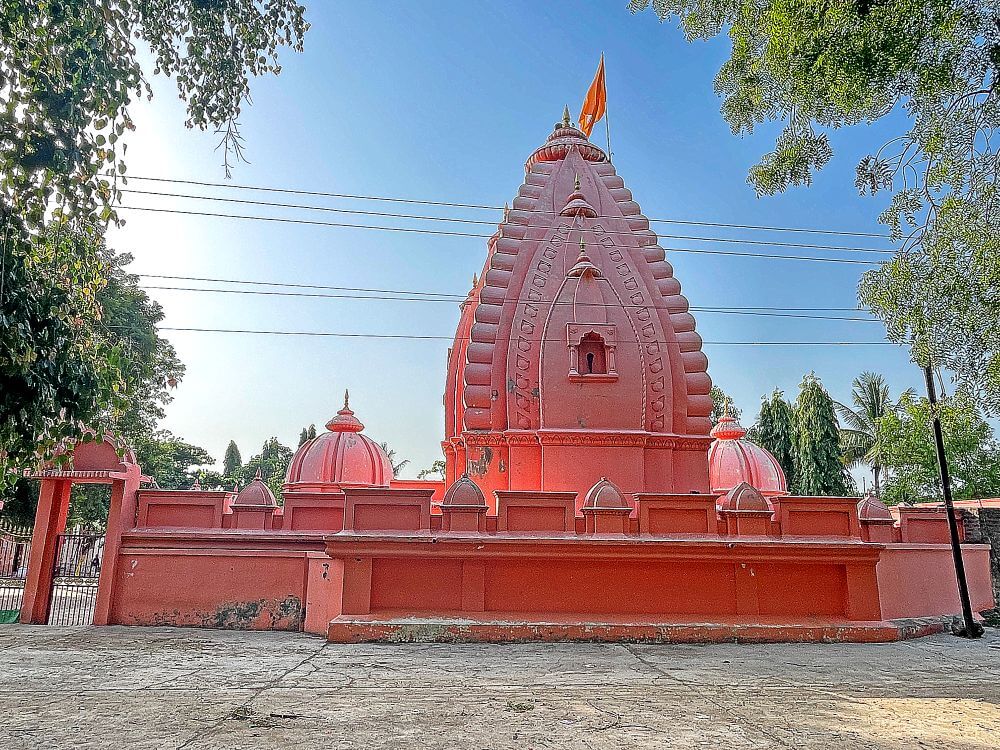
The temple of Nagai Devi, revered as the Kuladevi (family deity) of many clans across the states of Maharashtra and Gujarat, is enclosed by a perimeter wall. This wall features an entrance gate with three semicircular arches supported by four square pillars. From here One enters the temple courtyard. In front of the temple, there is a sacrificial altar (Yajnakunda) and a trident (Trishula) approximately 𝟣𝟧 to 𝟤𝟢 feet in height. It is said that before the renovation of the temple, there was a water reservoir named Gautama Kunda at this very spot. In that reservoir, water flowing from beneath the feet of the Goddess would fall through a cow-faced spout (Gomukha). Devotees held the firm belief that bathing in that reservoir would alleviate ailments and troubles.
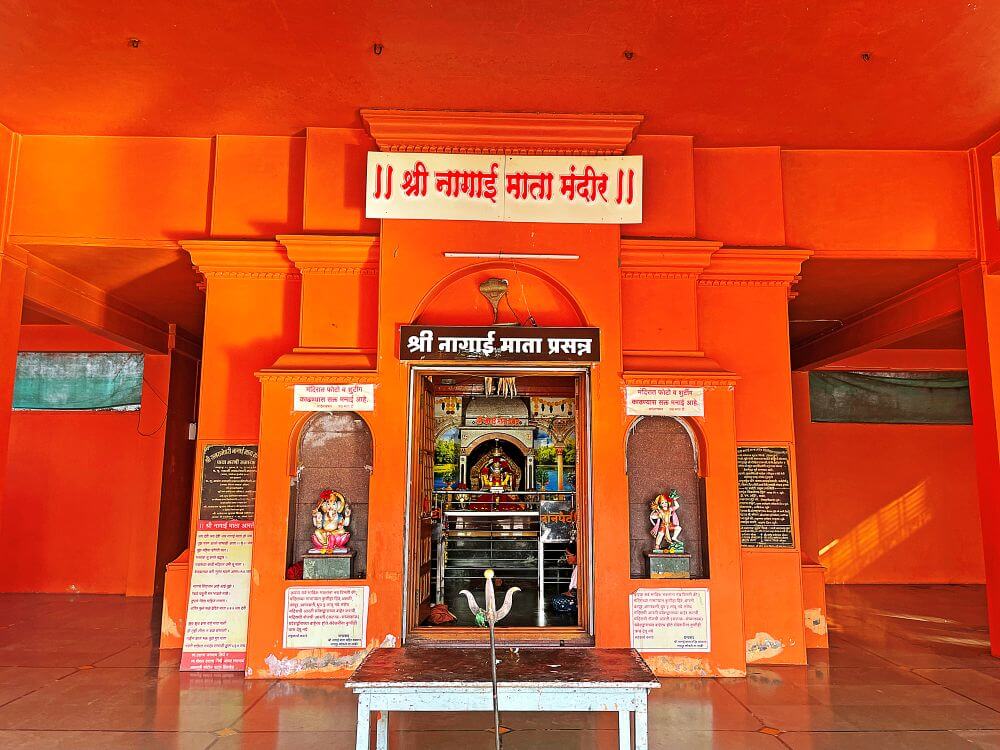
Beyond this point, there is an entrance featuring three arched gateways supported by four square pillars of the temple’s Sabha Mandapa (main assembly hall). The Sabha Mandapa consists of four rows, each containing four square pillars. On the right side of the Sabha Mandapa lies the Sanjeevan Samadhi of the saint Mahant Nagababa. Further ahead, in the niches flanking the entrance to the Garbhagriha (sanctum sanctorum), there are idols of Lord Ganesha on the right and Lord Maruti on the left. Above the entrance, there is a semi-circular niche containing a brass five-hooded serpent. The Garbhagriha here is situated at a slightly higher elevation than the Sabha Mandapa.
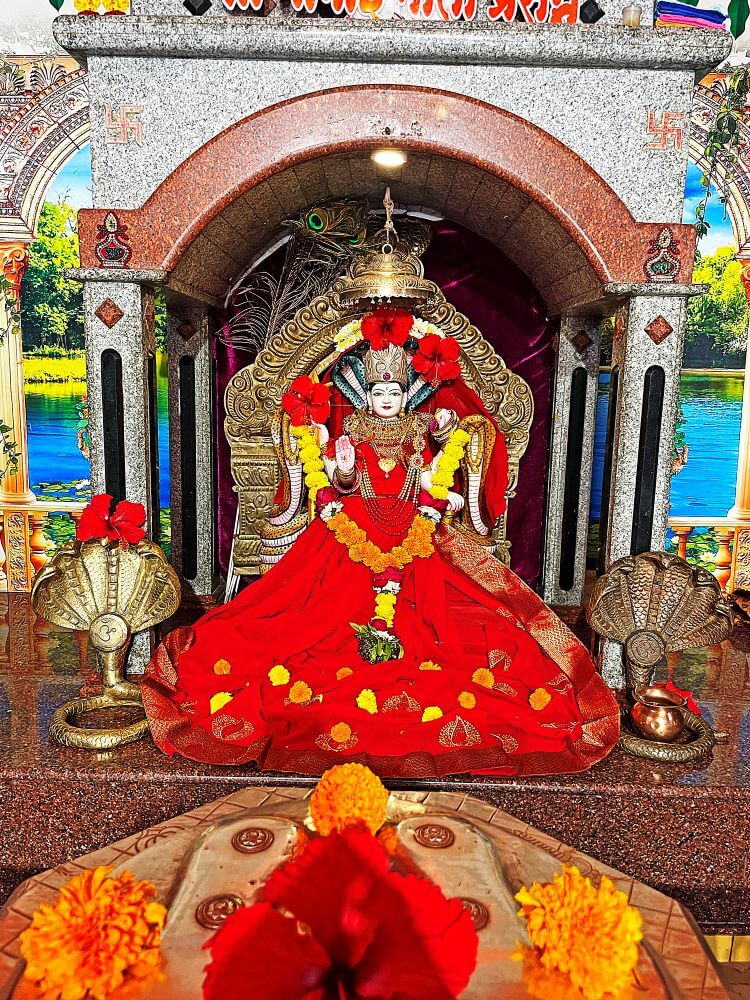
In the sanctum sanctorum, on a diamond pedestal (Vajrapitha), stands the four-armed marble idol of the Goddess seated on a serpent (Nagasana). In three of the Goddess’s hands are the conch, trident, and mace, while the fourth hand is in the Abhaya Mudra (gesture of fearlessness). On both sides of the Goddess are five-hooded brass serpents. Before the renovation of the temple, there was an idol of the Goddess carved from black stone, with serpent maidens on either side. It is said that this idol is currently concealed within the Vajrapitha of the Goddess. A perennial stream of water flows from beneath the Goddess’s feet. This flowing water collects in a small reservoir located within the sanctum sanctorum. Devotees believe that sprinkling this water upon oneself dispels both material and spiritual troubles.
The temple roof is surrounded by a parapet on all sides, adorned with miniature shikhars. On the roof of the sabhamandapa, there are two dome-shaped shikhars on the left and right sides, topped with amalakas and kalashas. Above the garbhagriha stands a tall, square shikhara, crowned with two stacked amalakas, followed by a kalasha and a dhwajapataka.
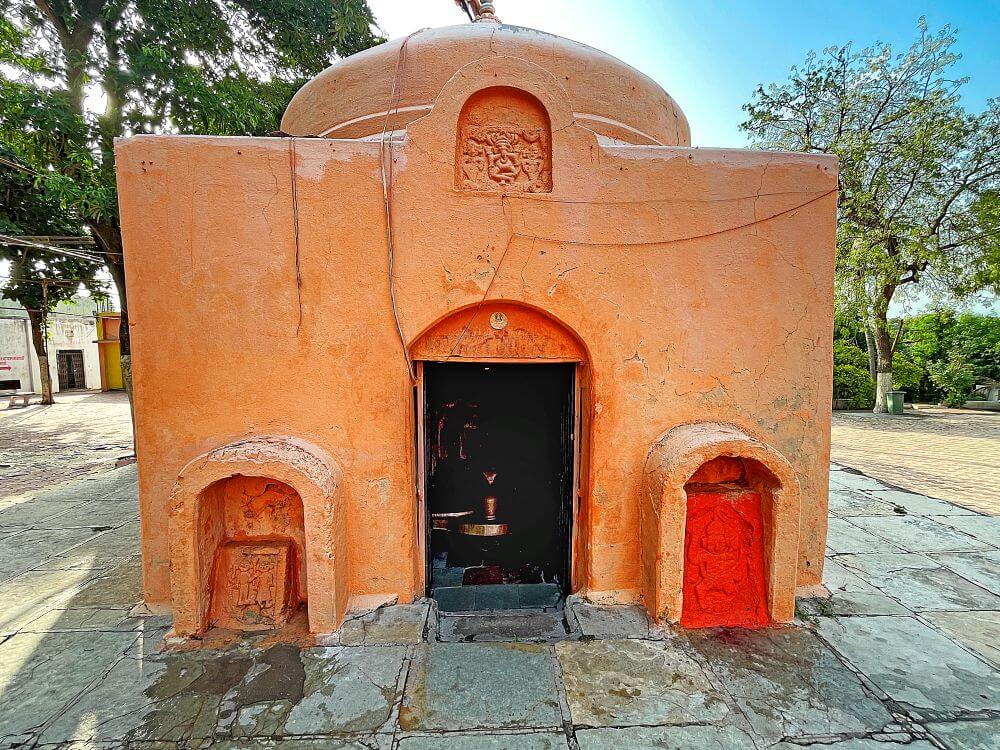
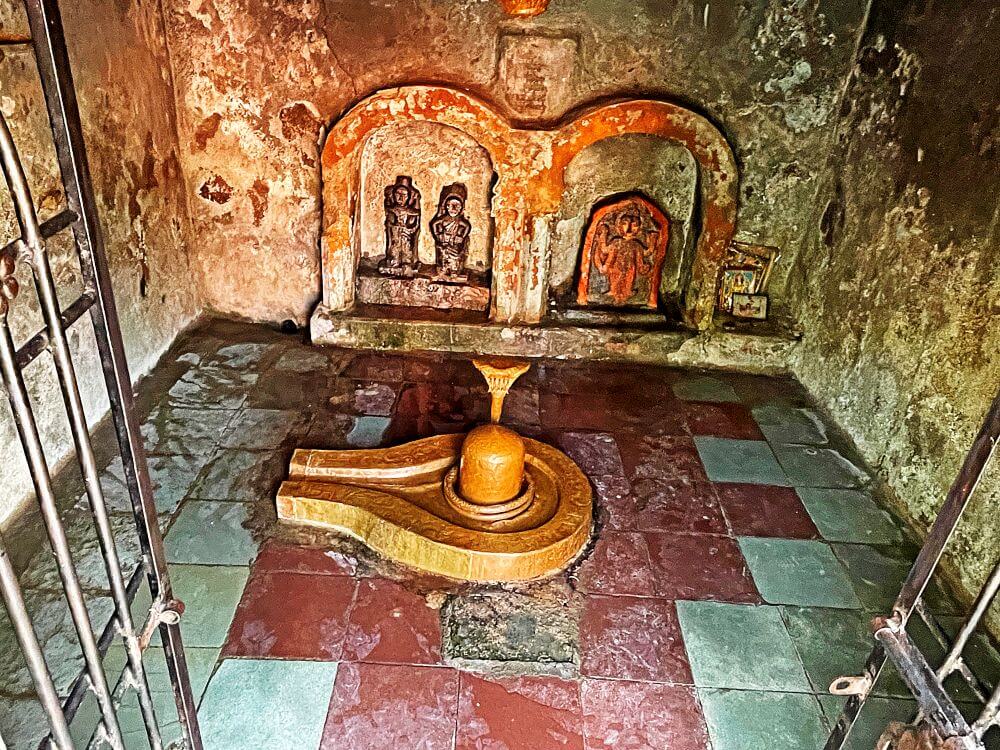
There are ancient Nagakanya idols in the temple courtyard. On the other side is an ancient It is a Shiva temple. To the right of the entrance of the Shiva temple, there is an idol of Hanuman in a niche (devkoshta), and to the left, there are two sword-bearing gatekeepers (dwarpals). In the center of the temple, on the floor, is a self-manifested (swayambhu) Shiva Linga, with a serpent carved upon it. In a niche attached to the back wall of the temple, there are idols of Vitthal-Rukmini carved in black stone. In another niche, there is an idol of the four-armed Goddess Durga. In the courtyard, there are stone idols of the revered deities of the Bhil community. Many devotees from the Bhil community come here to seek the blessings of these deities before beginning any of their worldly or social endeavors. Additionally, there are samadhi platforms of the disciples of Naga Baba here. For the convenience of devotees, there is a pilgrim guest house (bhakta niwas), a free food distribution center (annachhatra), and a building for hosting cultural programs within the temple premises. On the hill behind the temple is the sacred site of Kaka Sankat Maharaj, where it is believed that offering curd rice (dahi-bhat) as naivedya cures illnesses in young children.
A grand fair is held at this temple on Mahashivratri. It is considered one of the major fairs in the Sakri taluka. Apart from this, Nag Panchami, Dev Diwali, Sharadiya Navratrotsav, and Chaitra Navratri Utsav are the main annual festivals celebrated here. During these festivals, thousands of devotees from various parts of the state come to seek the blessings of the Goddess and to fulfill their vows. During the festivals, programs such as Bhajan, Kirtan, Pravachan, Jagaran, and Gondhal are organized at the temple. There is a significant influx of devotees at the temple on every Purnima, Amavasya, Ashtami, Tuesday, and Friday.
This sacred temple stands as a testament to deep spiritual devotion, ancient architectural grandeur, and rich local cultural traditions.
The sanctum sanctorum houses the divine idol consecrated according to ancient Vedic traditions, surrounded by serene courtyards and traditional temple architecture.
Navratri, Maha Shivratri, Annual Temple Jatra & Deepotsav
Compare and book flights, secure top-rated local hotels near the temple, hire reliable guides, and rent cars instantly.
Extend your pilgrimage by visiting other highly sacred temples located nearby.


Add ₹999 more to unlock FREE SHIPPING!
Your sacred cart is currently empty.
Shop Photo FramesFill in your delivery details below to place your order.
Add comment