
Add ₹999 more to unlock FREE SHIPPING!
Your sacred cart is currently empty.
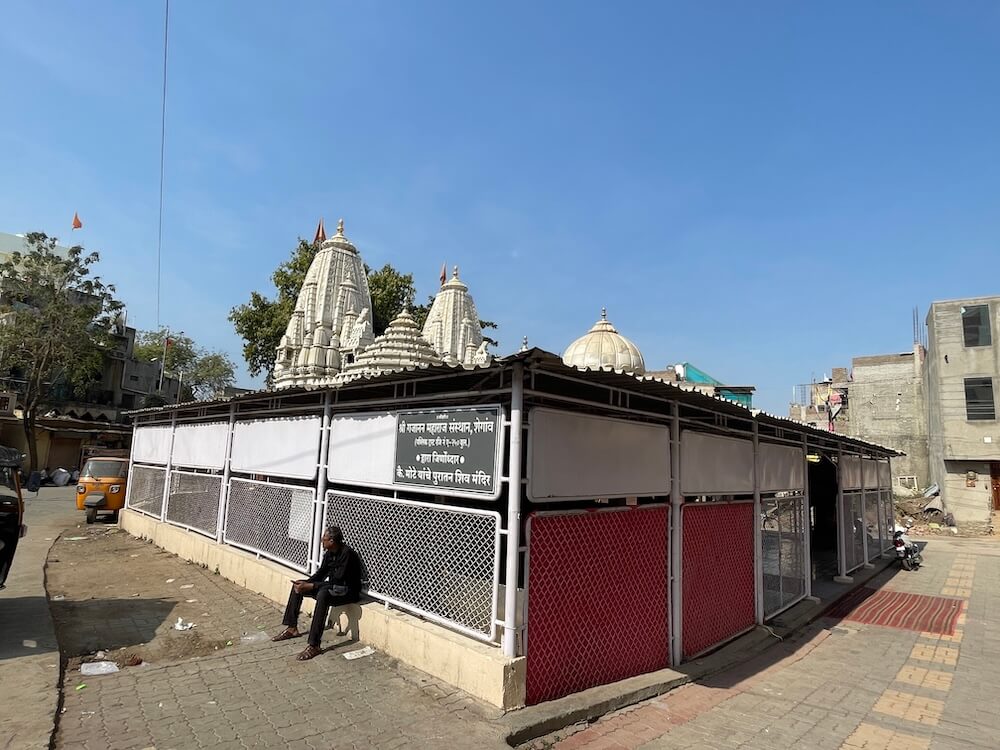
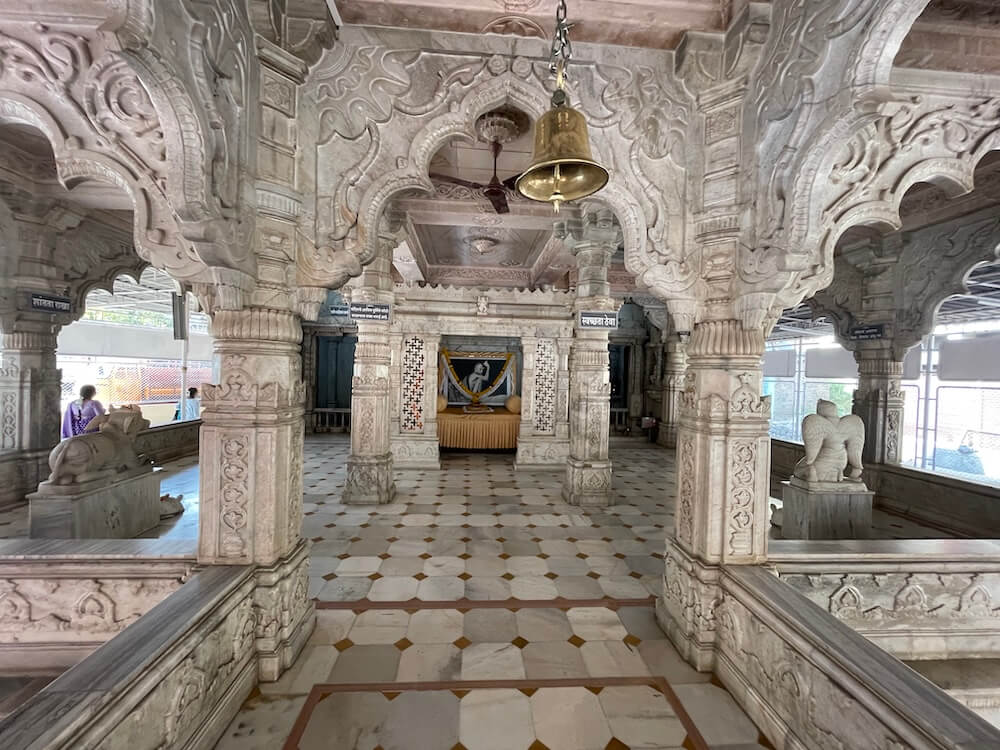
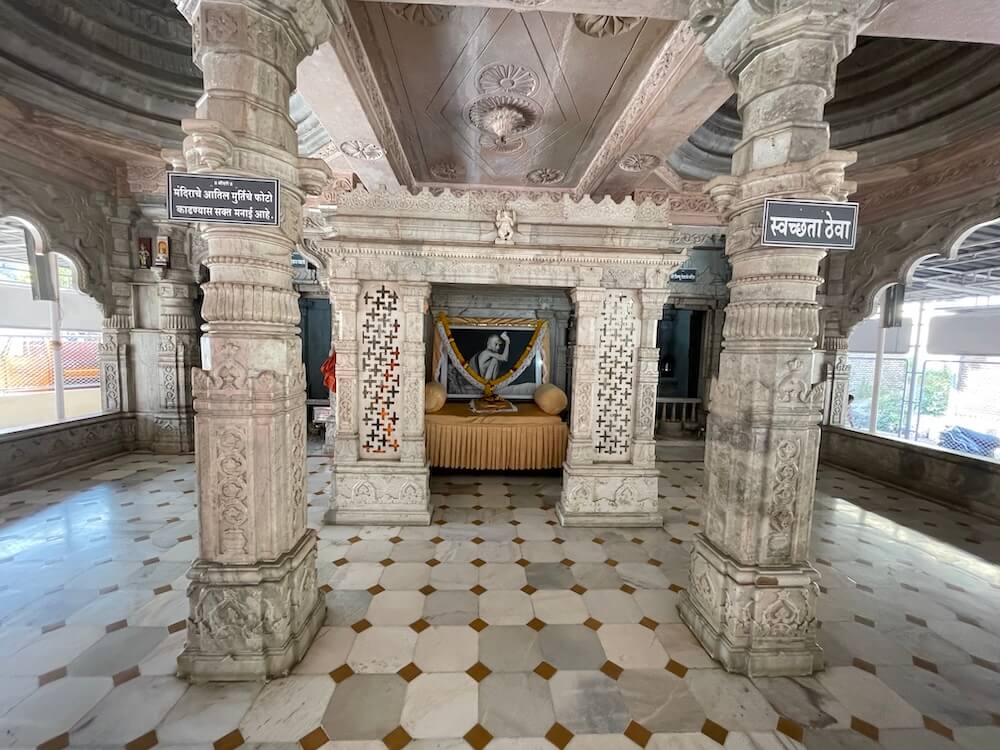
Shop Photo FramesThe Harihar Temple, one of the five sacred sites (Dhamas) in Shegaon, houses the deities Shiva and Vishnu. Since the merchant Mote undertook its renovation, it is known as ‘Mote’s Ancient Shiva Temple’. Gajanan Maharaj resided here for a long period. It was at this very place that he calmed a ferocious cow and a horse, and recited the ‘Hansa Gita’ to Govindbuva. The temple preserves the original photograph and Padukas (footwear) of Maharaj. Recently, it has been renovated using marble stone. Devotees invariably visit this site after taking Darshan of Gajanan Maharaj.
The original name of Shegaon was Shivgaon. Lord Shivshankar was the presiding deity of the village, and the village itself was named after this Shiva temple. It is said that over the course of time, it became known as Shegaon. The tenth chapter of ‘Shri Gajanan Vijay’, written by the saint-poet Dasganu Maharaj, mentions this temple and the events that occurred here. According to this, Govindbuva Taklikar, a renowned Kirtankar of that era and a resident of Barshitakli in Akola district, had once stayed at this Shivalaya. He tied his horse in front of the temple. This extremely ferocious horse would kick anyone who came near or bite like a dog. It would neigh day and night. Govindbuva had forgotten to bring the iron chains to tie it, so he tied the horse as best as he could with a rope (charhat) found in the vicinity and went to sleep. In the middle of the night, Gajanan Maharaj, who was wandering about, came here and slept in the space between the horse’s four legs. He was chanting the great mantra ‘Gani Gana Ganat Bote’. Fearing for the horse, Govindbuva woke up from his half-sleep and came here, only to notice that the horse was standing peacefully. He had never seen the horse stand so calmly before. Suspecting that the horse might be ill, he went near it and saw Gajanan Maharaj sleeping between its legs. Upon realizing the reason for the horse’s calmness, he placed his head at the feet of Maharaj, and his heart was filled with pure, divine emotions (Sattvik Ashtabhav). After Govindbuva told him about the horse, Maharaj calmed the ferocious animal.
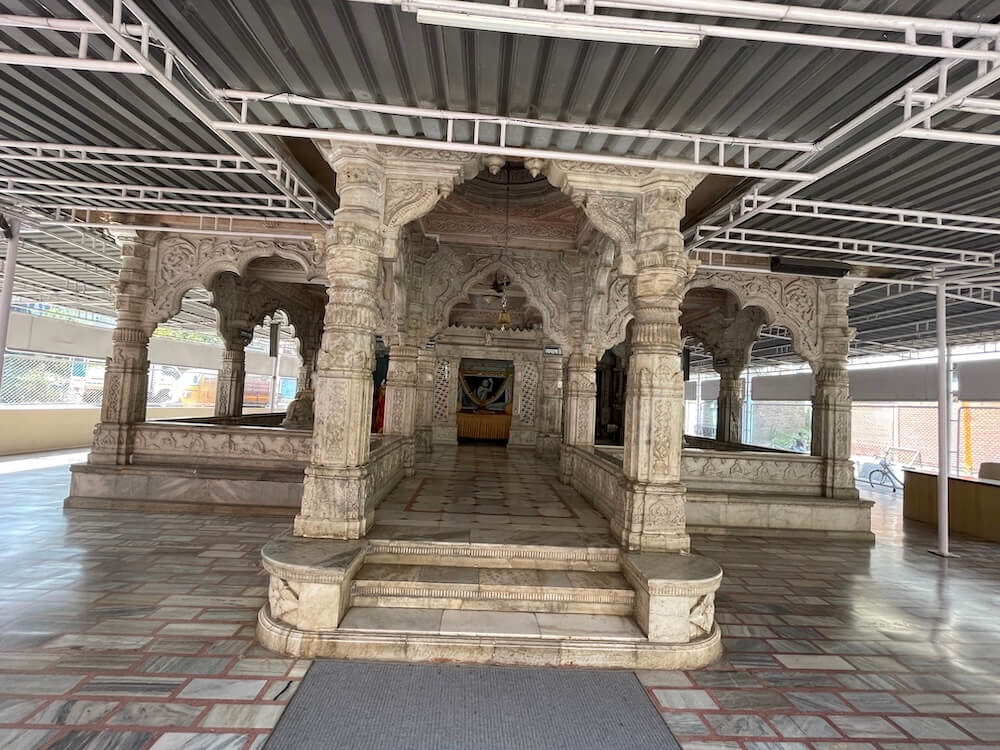
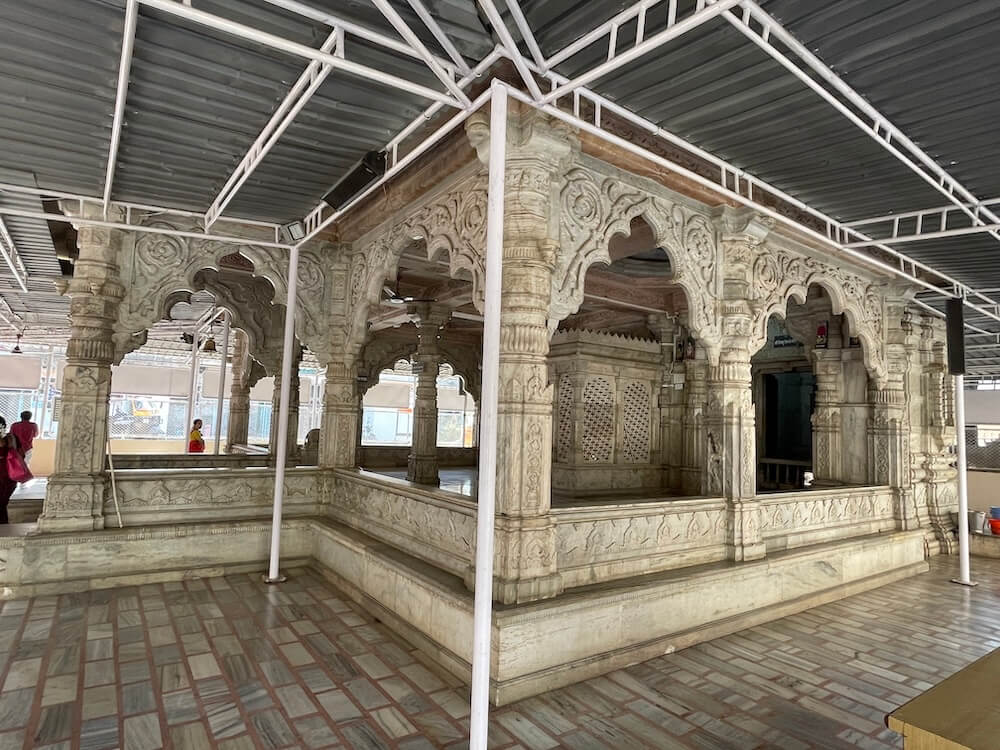
There is also a legend that in this very temple, Gajanan Maharaj asked his ardent devotee Bankatlal to bring Zhunka-Bhakri from the gardener’s house and asked Pitambar to bring water in a Tumba from the stream. Mote renovated this temple in 1833. Before that, the temple had been renovated twice. This temple, known as the old Math of Gajanan Maharaj, was merged into the Shegaon Sansthan by Mote’s descendants in 2000. Thereafter, the Sansthan undertook a renovation. During this renovation, a grand temple with exquisite craftsmanship was built using marble stone. At that time, the idol of Lord Vishnu was consecrated here. This temple is located behind the Gajanan Maharaj temple. The Prakat Sthan (place of manifestation) of Gajanan Maharaj is also located right next to this temple. The temple structure consists of a Mukhamandapa (main entrance hall), two open Sabhamandapas (assembly halls), and three Garbhagrihas (sanctum sanctorum). The temple premises are enclosed by a protective wall. The pillars connected by arched gateways and the ceilings feature intricate carvings. The central Garbhagriha houses the original photograph of Gajanan Maharaj. Both sides of the entrance to this sanctum have carved lattices. Above the entrance, on the central Lalatbimba, is an idol of Ganesha. On the seat inside the Garbhagriha are the original photograph of Gajanan Maharaj and his Padukas. The Garbhagriha on the left contains a Shiva Linga. In the Sabhamandapa in front of this temple, there is a marble idol of Nandi. Below it is the idol of a tortoise. In the niche (Devakoshtha) to the left of the Garbhagriha, there is a marble idol of Ganesha.
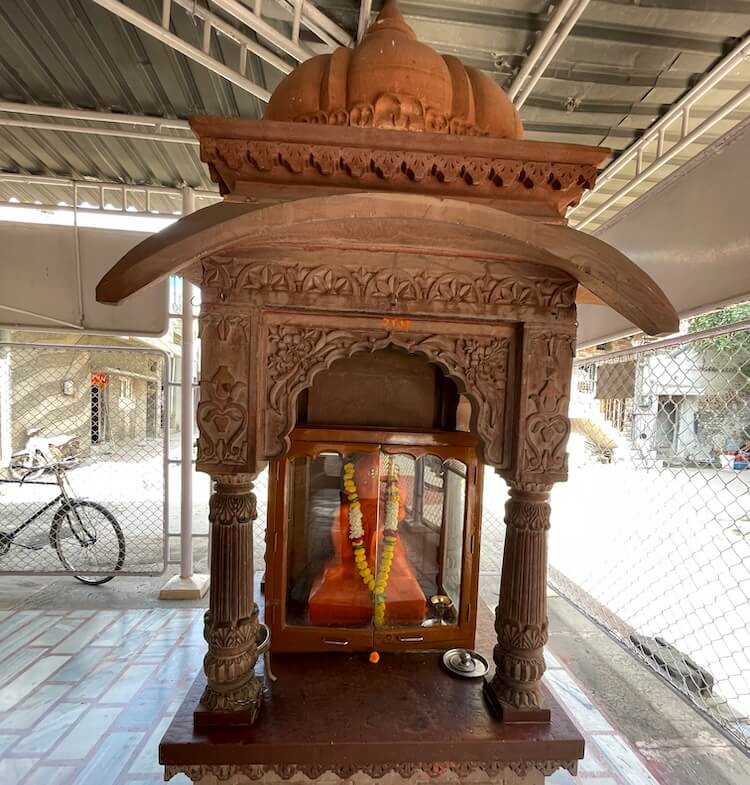
In the niche on the right, there is a marble idol of Goddess Annapurna. In this seated posture, one leg of the idol is lowered, and the Goddess holds a ladle in her left hand and a food bowl in her right. Inside the Garbhagriha, there is a Shiva Linga in a large Shalunka covered with Panchadhatu (five-metal alloy). In the Garbhagriha on the right, there is a standing stone idol of Lord Vishnu holding a mace. In the Sabhamandapa in front of this sanctum, there is a marble idol of Garuda, the vehicle of Lord Vishnu. In the niches on the left and right sides of this sanctum are idols of Jaya and Vijaya. The door pillars of the entrances to both the Shiva and Vishnu sanctums feature beautiful carvings. In the center of these entrances, on the Lalatbimba, are idols of Ganesha, and at the base of the entrances, on both sides, are carved Kirtimukhas of demons. Outside this temple, on the right side, is a small temple of Hanuman. Here, an idol of Hanuman smeared with vermilion is kept in a glass case. Nearby, one can see photographs of the old temple. In front of the temple is the Samadhi of the ascetic Gargacharya.
The Sabhamandapas of this temple have beautiful Shikhara (spires). The Bashingi railing on the roof section has circular layers that taper upwards. Above these are two-tiered Amalakas and Kalashas. The Garbhagrihas have intricately carved Shikharas topped with replicas of smaller spires. At the top are two-tiered Amalakas and Kalashas. There are also lion sculptures in front of the Shikharas. The niches on the outer walls of the temple contain idols of various deities.
The main festival of Maha Shivratri is celebrated in this temple with great enthusiasm. At that time, the entire atmosphere becomes filled with the devotion of Shiva through Mahapuja and the chanting of Hari’s name. Every Monday during the month of Shravan, Rudrabhishek and special religious programs are organized here. During the Prakat Din (manifestation day) and Punyatithi (death anniversary) of Gajanan Maharaj, a large number of devotees gather here. Since the temple contains images of both Vishnu and Shiva, the Hari-Har Bhet ceremony held on Vaikuntha Chaturdashi is particularly unique.
This sacred temple stands as a testament to deep spiritual devotion, ancient architectural grandeur, and rich local cultural traditions.
The sanctum sanctorum houses the divine idol consecrated according to ancient Vedic traditions, surrounded by serene courtyards and traditional temple architecture.
Navratri, Maha Shivratri, Annual Temple Jatra & Deepotsav
Compare and book flights, secure top-rated local hotels near the temple, hire reliable guides, and rent cars instantly.
Extend your pilgrimage by visiting other highly sacred temples located nearby.


Add ₹999 more to unlock FREE SHIPPING!
Your sacred cart is currently empty.
Shop Photo FramesFill in your delivery details below to place your order.
Add comment