
Add ₹999 more to unlock FREE SHIPPING!
Your sacred cart is currently empty.
Shop Photo FramesThere are twelve Jyotirlingas of Lord Shiva in the country. One of these Jyotirlingas is well-known by the name Nageshwar. There is no absolute consensus on the exact location of this Jyotirlinga. According to some, it is near Dwarka in Gujarat, while according to some scriptural scholars, the Nageshwar Temple at Aundha Nagnath in Maharashtra is one of the twelve Jyotirlingas. There are many ancient sites of this Nageshwar across the country including Maharashtra, and the ancient Nageshwar Mahadev Temple at Rahimabad is one of them. Standing resiliently after facing numerous natural and man-made adversities, this temple bears testimony to an exquisite heritage of ancient architecture.
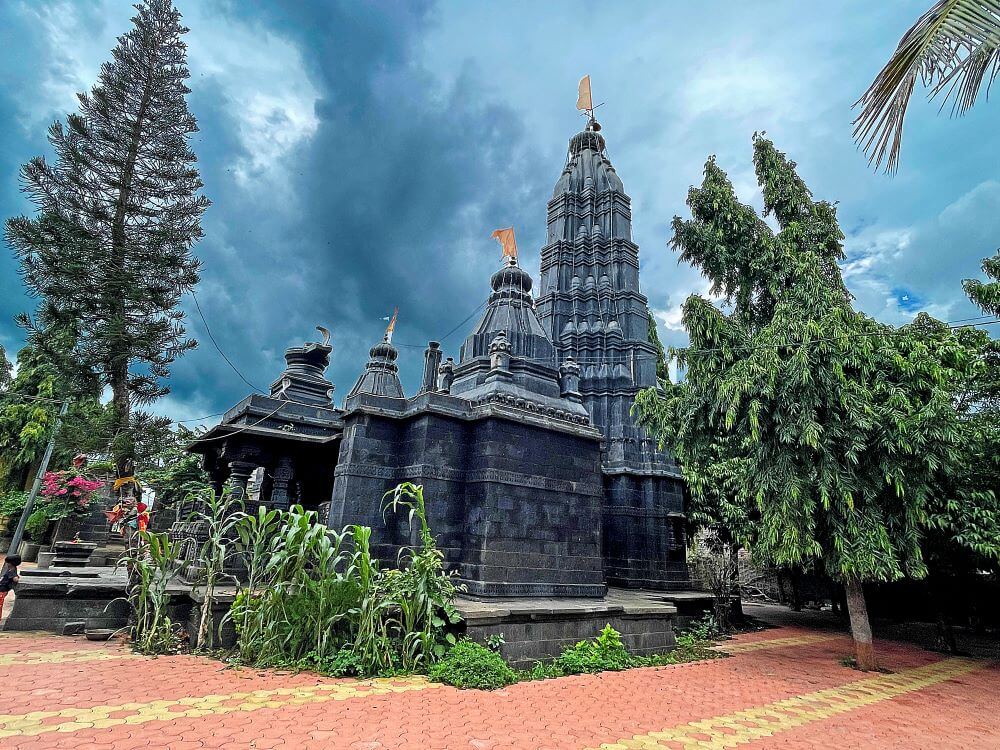
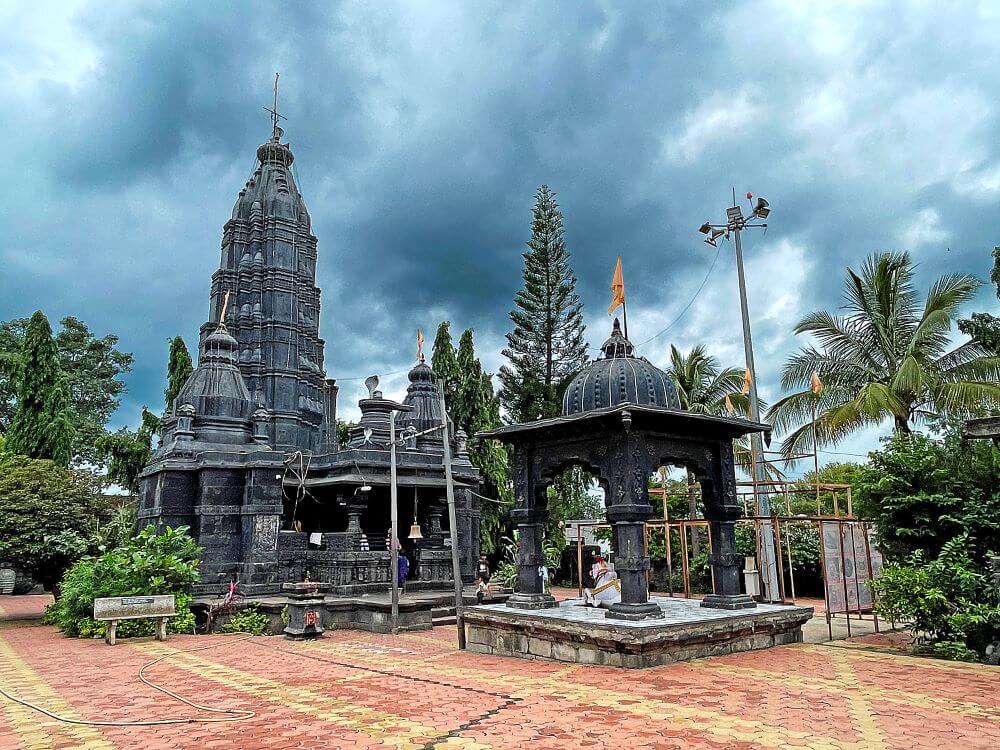
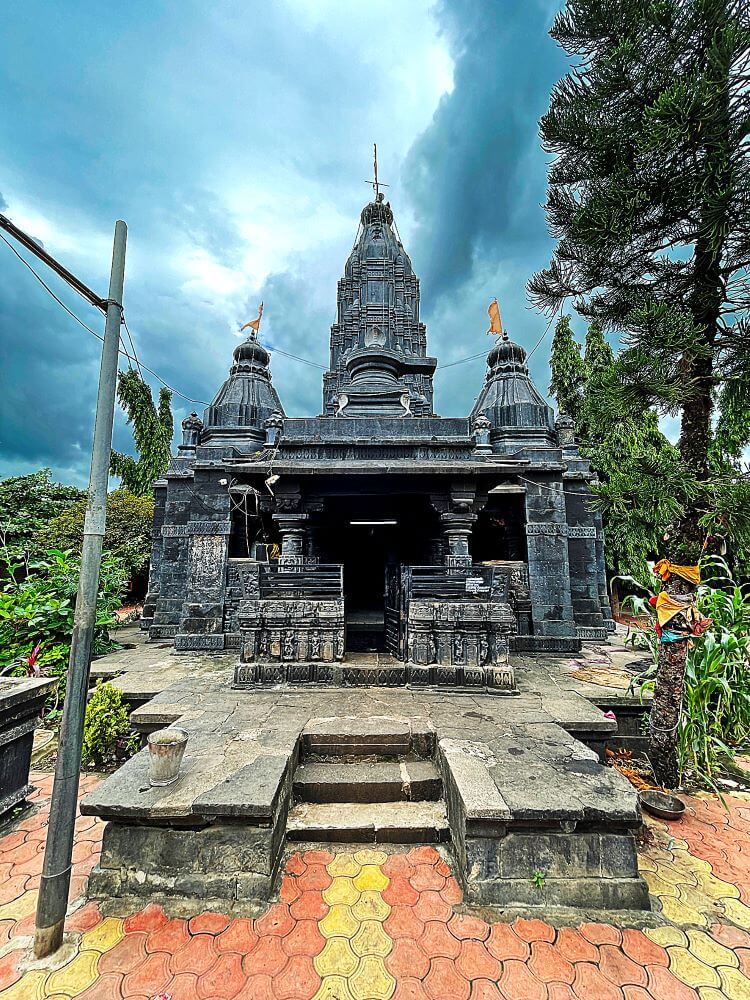
Nageshwar in this temple is renowned as a *jagrut* (awakened) deity who fulfills prayers. There are many legends regarding this. One such story is that even the Nizam of the Hyderabad State had vowed to Nageshwar to be blessed with a son. The temple is famous as an unmatched specimen of sculpture. Upon entering through the outskirts of Rahimabad village, located a short distance from Sillod, this temple built in black basalt stone in the Hemadpanti or Bhumij style comes into view in the central part of the village. Although the exact history of this temple is not known, judging by the Kichaka figures on its pillars, it appears to belong to the post-Chalukya era. Considering the Bhumij or Hemadpanti style temples built in this region during the Yadava period from AD 1178 to AD 1378 and their architectural proportions, it is surmised that the Nageshwar Temple must also belong to this same period.
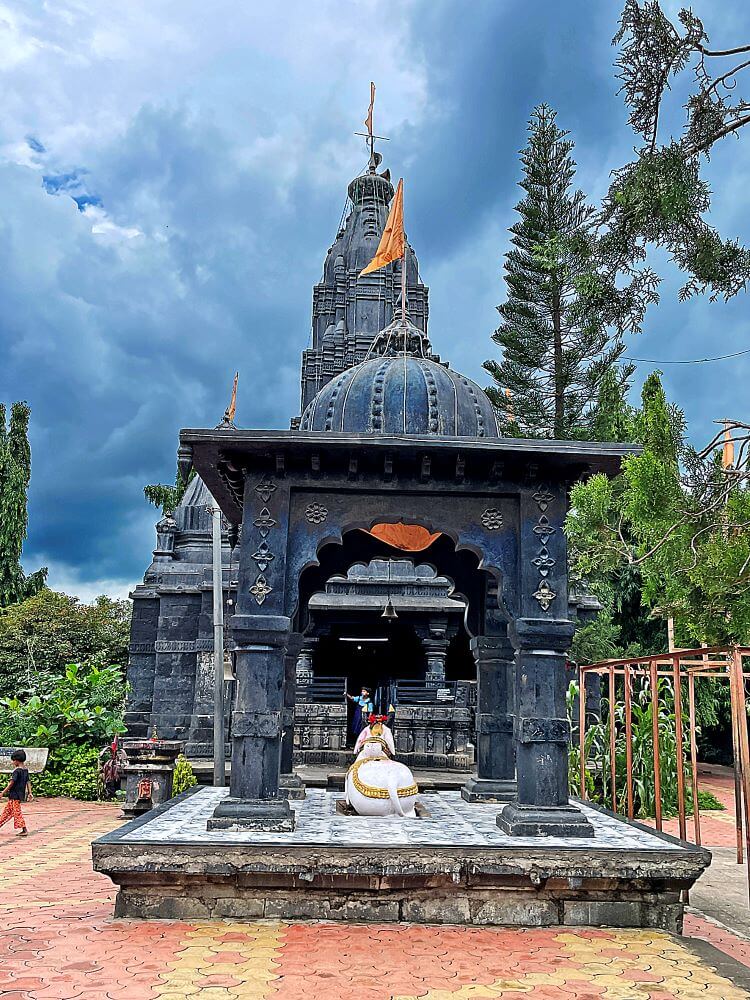
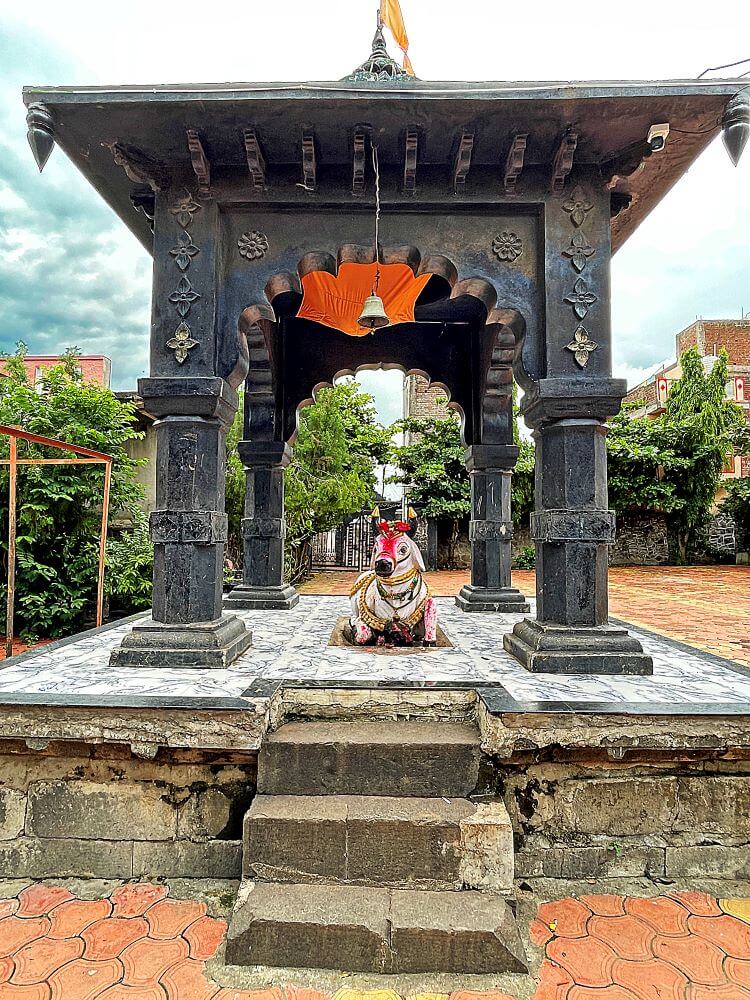
The temple is fortified on all sides. It has two entrance gateways, one to the east and another to the south. The temple courtyard is paved everywhere with interlocking blocks. Various trees and a clean environment make this ancient temple stand out even more. The layout of the temple consists of a Nandi Mandapa, Darshan Mandapa, Sabha Mandapa, two sub-sanctums within the Sabha Mandapa, an Antarala (vestibule), and the main Sanctum Sanctorum (Garbhagriha). This temple faces east. In the courtyard in front of the main temple, on a high platform from the ground, stands the Nandi Mandapa. The structure of this Nandi Mandapa features four circular pillars on the four sides, connecting arched brackets, a flat ceiling above, and a low dome-shaped shikhara over it. Large, prominent floral carvings are etched onto it. In the middle of the mandapa, upon a raised platform, is a large idol of Nandi carved from a single monolithic stone. The mandapa made of black basalt and the pristine white idol of Nandi within it create a striking contrasting beauty. Between the Nandi Mandapa and the temple, there is a small stone sculpture of a tortoise on the ground.
Descending three steps from the Nandi Mandapa and walking a few steps forward leads to three steps of the main temple’s plinth (*adhishtana*). The temple stands on a plinth (*adhishtana*) about two to two-and-a-half feet high from the ground. The plinth has multiple corners, and accordingly, the angular walls of the temple extend from the base up to the shikhara. Leaving a circumambulation path (*pradakshina marga*) of about two to two-and-a-half feet wide from this plinth, the entire construction of the temple is made of stone. Ascending another step from the plinth leads into the Darshan Mandapa of the temple. The Darshan Mandapa here is in the form of an *ardhamandapa* (half-hall). Both sides of it have stone seat-backs (*kakshasana*). Within these are four pillars sculpted from single monolithic stones. There is distinctive carving on these pillars located just above the seat-backs. At the upper ends of all these pillars are ‘tarangahastas’. Where a pillar connects to the beam supports, to prevent the load from concentrating at a single point, very small pillars resembling extra marks are placed above the column; these are called tarangahastas. Kichaka figures are carved upon them. Kichakas are dwarf, pot-bellied, large-eyed, and curly-haired Yakshas. These sculptures depict them as supporting the upper beam with both hands. It is precisely because of these Kichakas that it becomes clear that this temple belongs to the post-Chalukya period. Atop the shikhara of this Darshan Mandapa is a large Shiva Linga featuring a serpent canopy (*nagachhatra*). Below the Linga, there are also two serpent sculptures. The architectural feature of having a Shiva Linga instead of a shikhara over the Darshan Mandapa is considered rare.
The Sabha Mandapa of the temple contains numerous stone pillars. Their design is similar to the pillars in the Darshan Mandapa. These pillars are well-proportioned and adorned with intricate carvings. There are also beautiful sculptures on the pillars. Mythological episodes are carved onto the ceiling of this Sabha Mandapa as well. Adjoining the Sabha Mandapa are two additional sub-sanctums. Inside them, to the right are the idols of Shri Ramapanchayatana and to the left are Viththal-Rukmini. In front of the main sanctum of the temple is the Antarala. The doorway of the sanctum is four-fold (*chara-shakhya*). The strips attached to the outside of the door frame are called branches (*shakha*). Here, there are four such branches. On one of these branches, equine figures are carved, and one branch projects slightly forward compared to the others. At the base of the door branches, pillar statuettes or minor deity figures are carved. This sanctum is situated slightly lower than the Sabha Mandapa. In the center of this square sanctum is the monolithic Shivlinga of Nageshwar. A few years ago, a devotee offered a five-kilogram silver crown to this Shivlinga. During festive times, this crown is placed upon this Shivlinga. The temple has one main shikhara and two sub-shikharas. On all three of these shikharas, replicas of many smaller shikharas are mounted one above the other. At the top of the main shikhara is the *amalaka* and above it is the *kalasha*.
Thousands of devotees visit this ancient temple for *darshan* every Monday. On every Shravani Monday, this area assumes the festive atmosphere of a fair (*yatra*). A fair is held here on Maha Shivaratri. On that day, Nageshwar is anointed with water (*jalabhishek*) brought from the pond located behind the temple. In the afternoon, a sacrificial ritual (*yagna*), and in the evening, a palanquin procession (*palkhi miravnuk*) of Nageshwar takes place. Thousands of devotees from the surrounding five villages participate in this palanquin procession. Alongside Shiva devotees, numerous tourists visit here daily to witness the unique architecture of this temple and its stunning carvings.
This sacred temple stands as a testament to deep spiritual devotion, ancient architectural grandeur, and rich local cultural traditions.
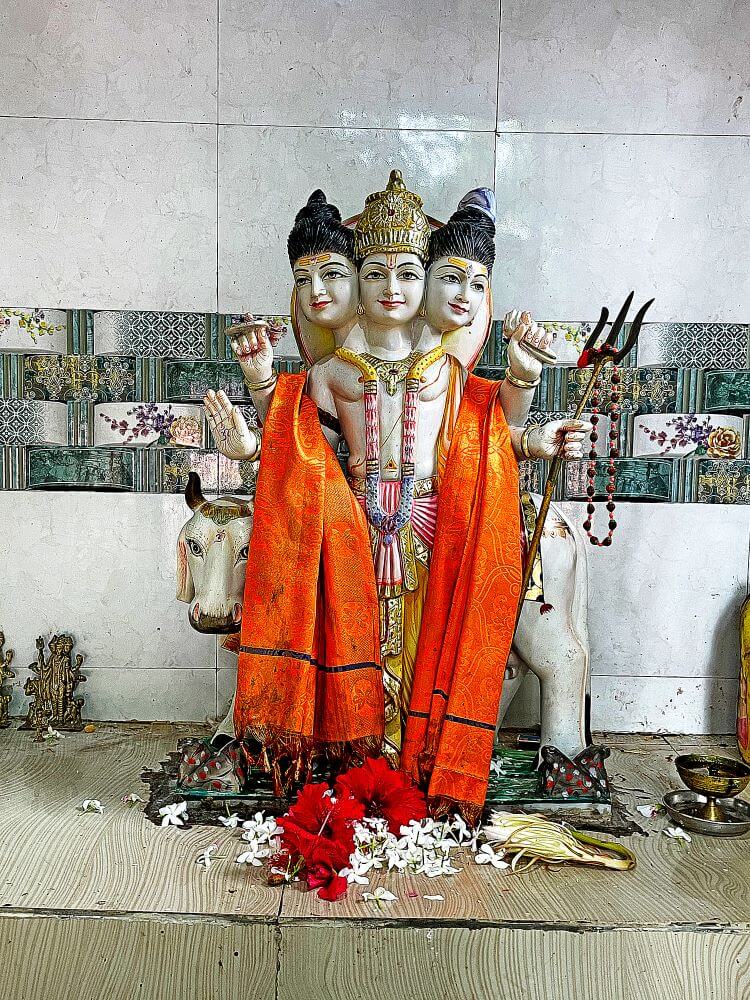
The sanctum sanctorum houses the divine idol consecrated according to ancient Vedic traditions, surrounded by serene courtyards and traditional temple architecture.
Navratri, Maha Shivratri, Annual Temple Jatra & Deepotsav
Compare and book flights, secure top-rated local hotels near the temple, hire reliable guides, and rent cars instantly.
Extend your pilgrimage by visiting other highly sacred temples located nearby.


Add ₹999 more to unlock FREE SHIPPING!
Your sacred cart is currently empty.
Shop Photo FramesFill in your delivery details below to place your order.
Add comment