
Add ₹999 more to unlock FREE SHIPPING!
Your sacred cart is currently empty.
Shop Photo FramesThe ancient sages and saints of India consistently advocated for social and religious reforms, criticizing the malpractices, rituals, and injustices that had crept into Sanatana Dharma. In the thirteenth century, Saint Dnyaneshwar penned the Dnyaneshwari, opening the doors to self-realization for all. Prior to this, in the twelfth century, a similar effort for religious reform was undertaken in the South by Alamprabhu. The Samadhi Temple of Alamprabhu, revered as a Lingayat saint and poet, is located in Bhum town. The sacred Samadhi site of Alamprabhu, who strived for every human being to live with dignity, is a revered place of faith for thousands of devotees.
Today, there is a lack of concrete information regarding the life history of Lingayat Saint Alamprabhu. Some details about Alamprabhu’s childhood can be found in the works written by Harihara, the court poet of Hoysala King Narasimha I. According to these accounts, Alamprabhu, a contemporary of Mahatma Basaveshwara and Lingayat Saint Akka Mahadevi, was born in the Shimoga district of Karnataka. His father’s name was Neerashankar, and his mother’s name was Sujanani. Alamprabhu was an excellent drummer. He used to perform drumming service in the village temple. He soon got married. His wife’s name was Kamalathe. After her untimely demise, Alamprabhu attained a state of detachment. While wandering, having left his home, he met Saint Animish in a cave temple. After receiving initiation from him, he began his penance. Following self-realization, he started composing poetry and propagating Dharma. It is said that his poetry is filled with mystic meaning. He attained nirvana in Kardaliban, Srisailam, Andhra Pradesh.
The Alamprabhu Devasthan in Bhum is the village deity here. Even today, devotees believe that Alamprabhu’s presence exists here. It is said that the Alamprabhu Devasthan is a Samadhi site dating back to the twelfth century. According to some scholars, Alamprabhu passed away in Kardaliban near Srisailam in Andhra Pradesh. However, his Samadhi temples are found in many places across Andhra Pradesh, Karnataka, and Maharashtra. The reason for this is that the Samadhis of all the propagators who spread Alamprabhu’s work gradually came to be known as Alamprabhu Devasthans among the common people.
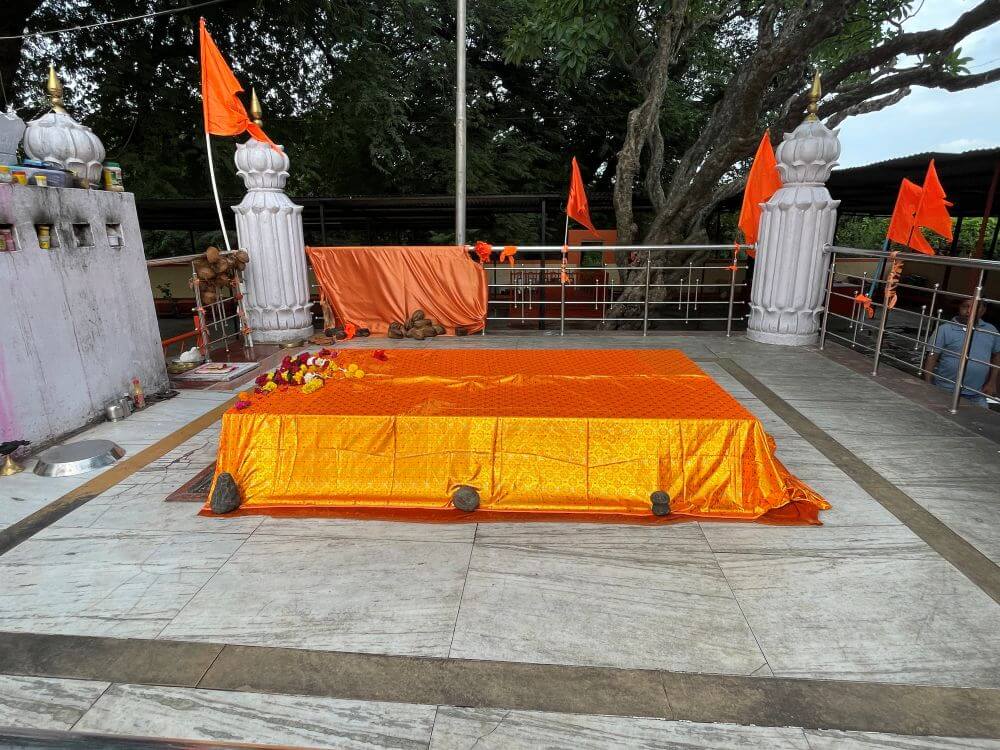
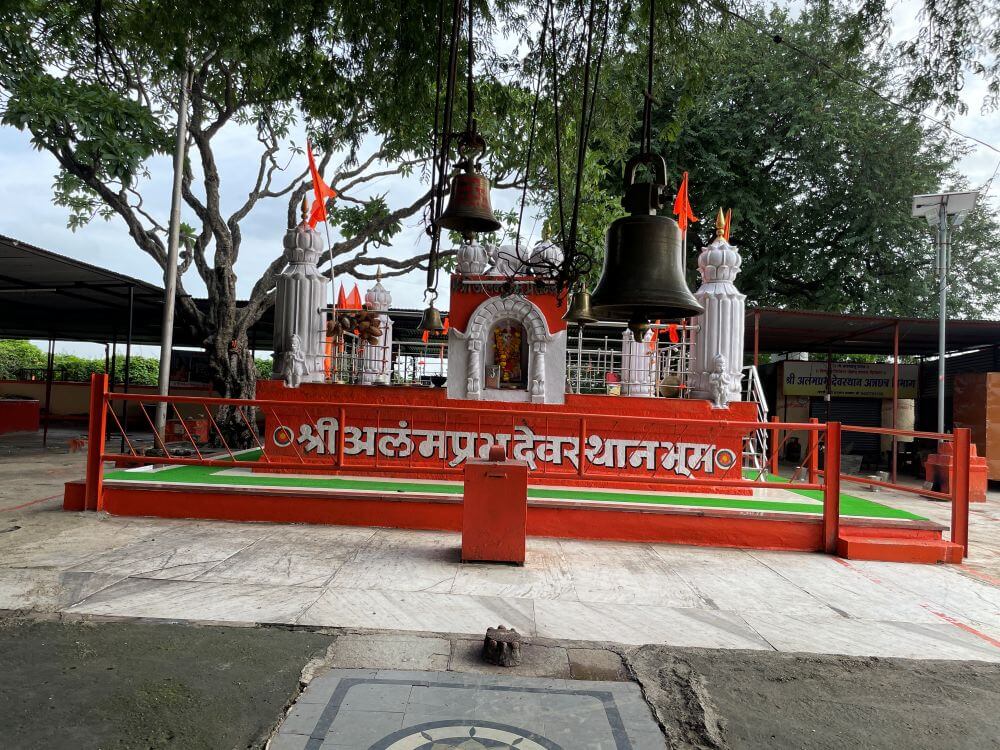
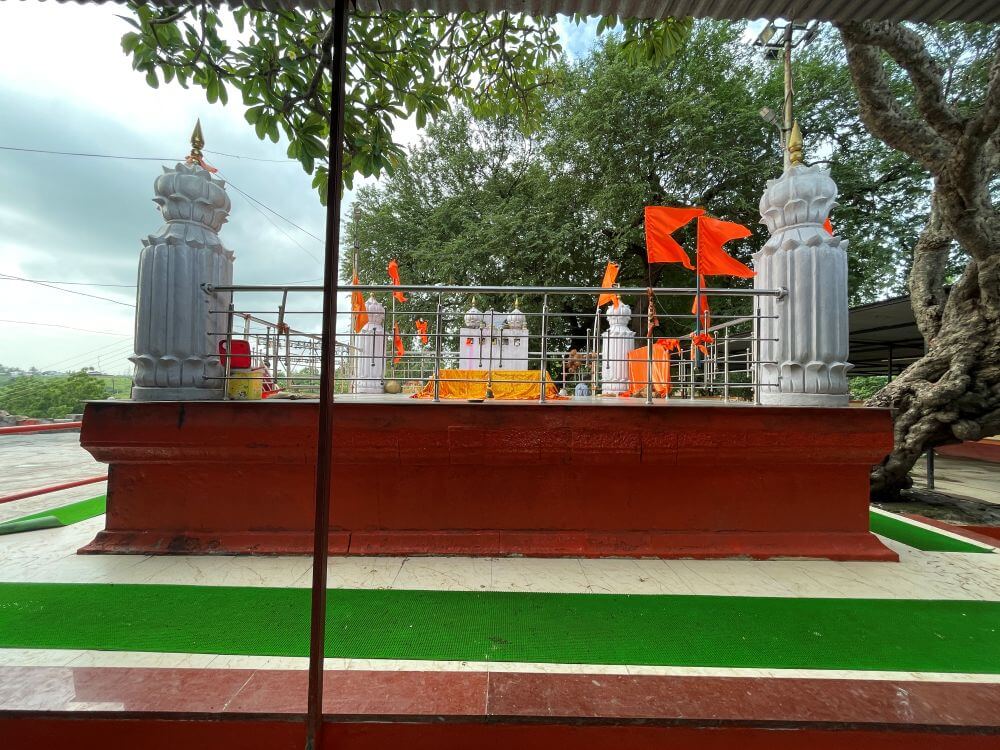
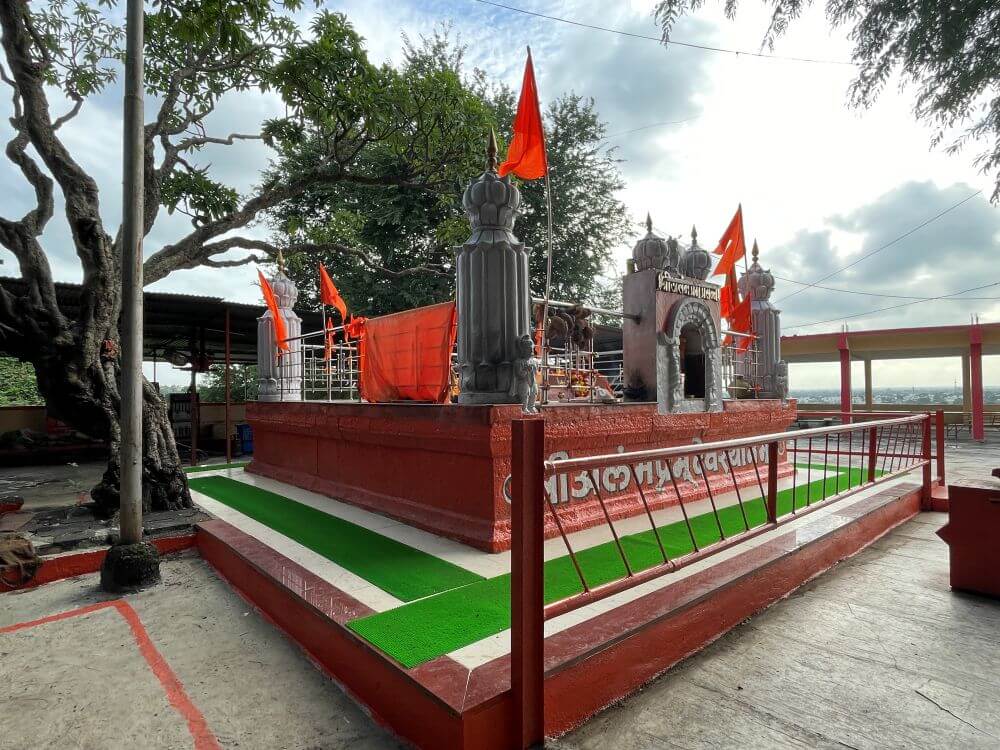
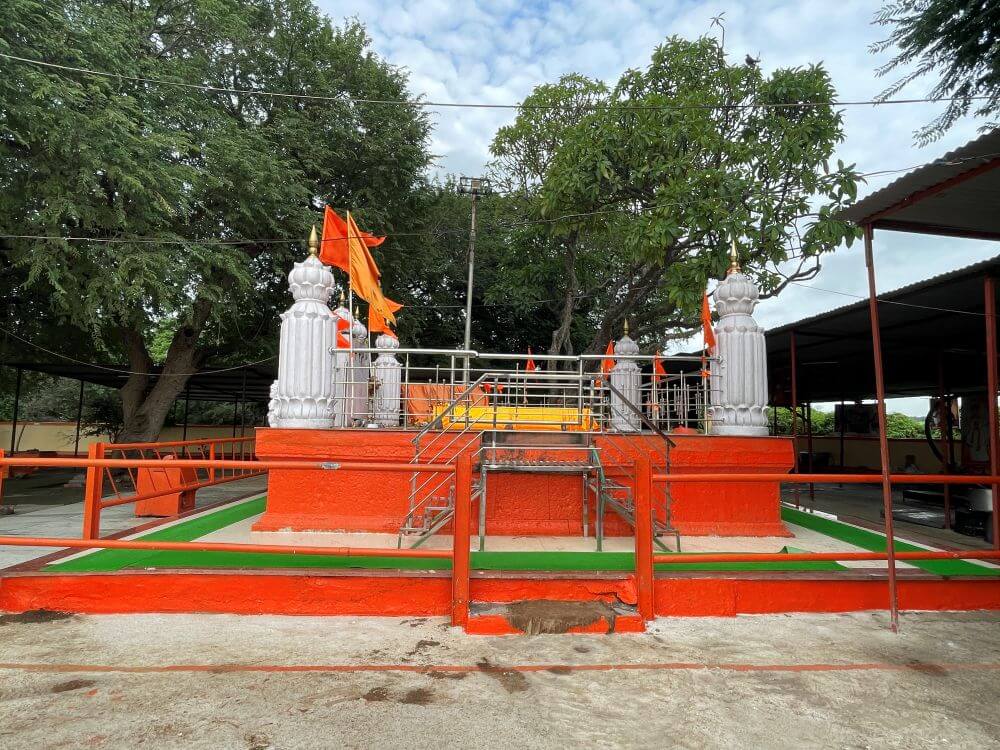
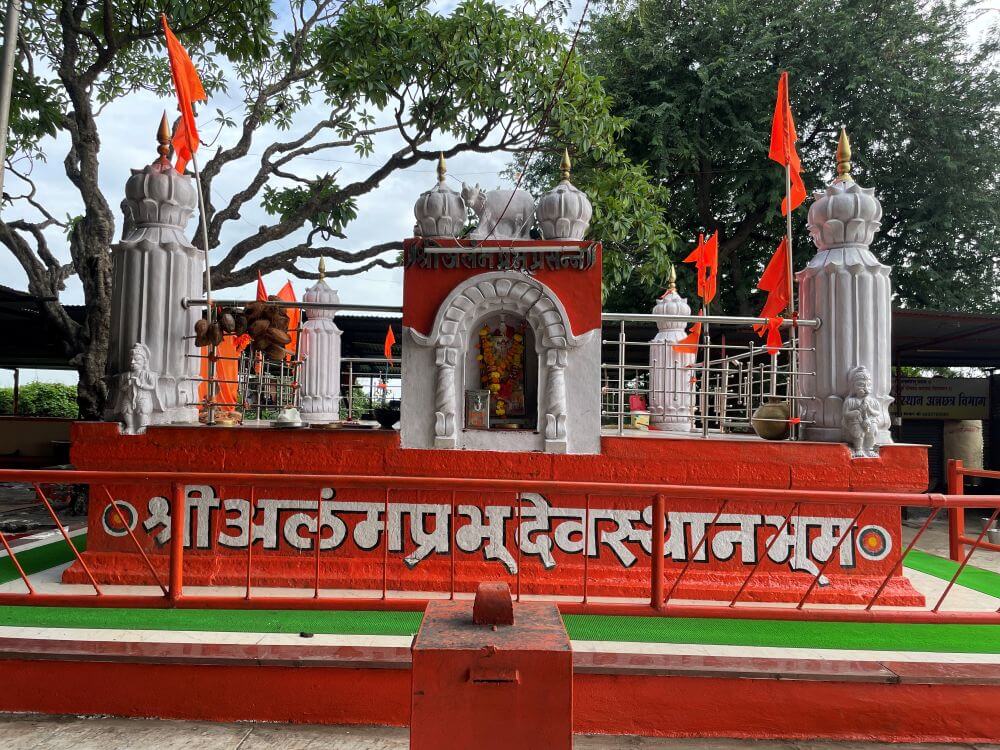
A welcome arch stands before this Devasthan, situated on the outskirts of Bhum town. The Devasthan, located on an elevated ground, is surrounded by a strong compound wall. Entry into the courtyard of this Devasthan is through the gateway in the compound wall. In the paved courtyard, votive brass bells are hung from the branches of ancient trees. Along the fortification wall in the courtyard are cloisters. In front of the cloisters are a square Tulasi Vrindavan and some ancient Samadhis of Mahants. In the center of the courtyard, there is a platform approximately four feet high. There are five steps to ascend the platform. On both sides of the steps and around the platform, there are iron mesh safety railings. At all four corners of the platform are Vamanastambhas (dwarf pillars) adorned with lotus petal carvings. At the base of all pillars are idols of guardian deities, with an Amalaka (finial) at the top and a Kalasha (pinnacle) above it. On the right side of the platform, there is a half-wall. Within its niche is an image of Dattatreya. In the center of the wall is a cow sculpture, with Amalakas on both sides and Kalashas above them. In the center of the platform is Alamprabhu’s Samadhi, covered with a saffron shawl. A circumambulation path surrounds the platform.
Datta Jayanti is the main annual fair and festival of this Devasthan, celebrated with great enthusiasm. During this five-day fair, religious and cultural programs such as Bhajan, Kirtan, music, and discourses are organized. At night, a fireworks display is held. For the occasion of the fair, a Rathyatra (chariot procession) and Palkhi (palanquin procession) proceed from the village’s Datta Temple to the Alamprabhu Devasthan. During this time, the Palkhi route is adorned with attractive rangolis. When the Palkhi reaches Gandhi Chowk in the village, a salutation is offered to the deity with Malkhamb acrobatics. Grand wrestling matches are organized as part of the fair. Wrestlers and wrestling enthusiasts from across the district gather here for this event. The bullock fights and ram fighting competitions held during the fair preserve the traditions of this village. In the month of Shravan, there is a special rush of devotees who come for Darshan at the Devasthan. A large number of devotees visit for Darshan every Monday, Thursday, Purnima (full moon day), and Amavasya (new moon day).
This sacred temple stands as a testament to deep spiritual devotion, ancient architectural grandeur, and rich local cultural traditions.
The sanctum sanctorum houses the divine idol consecrated according to ancient Vedic traditions, surrounded by serene courtyards and traditional temple architecture.
Navratri, Maha Shivratri, Annual Temple Jatra & Deepotsav
Compare and book flights, secure top-rated local hotels near the temple, hire reliable guides, and rent cars instantly.
Extend your pilgrimage by visiting other highly sacred temples located nearby.


Add ₹999 more to unlock FREE SHIPPING!
Your sacred cart is currently empty.
Shop Photo FramesFill in your delivery details below to place your order.
Add comment