
Add ₹999 more to unlock FREE SHIPPING!
Your sacred cart is currently empty.
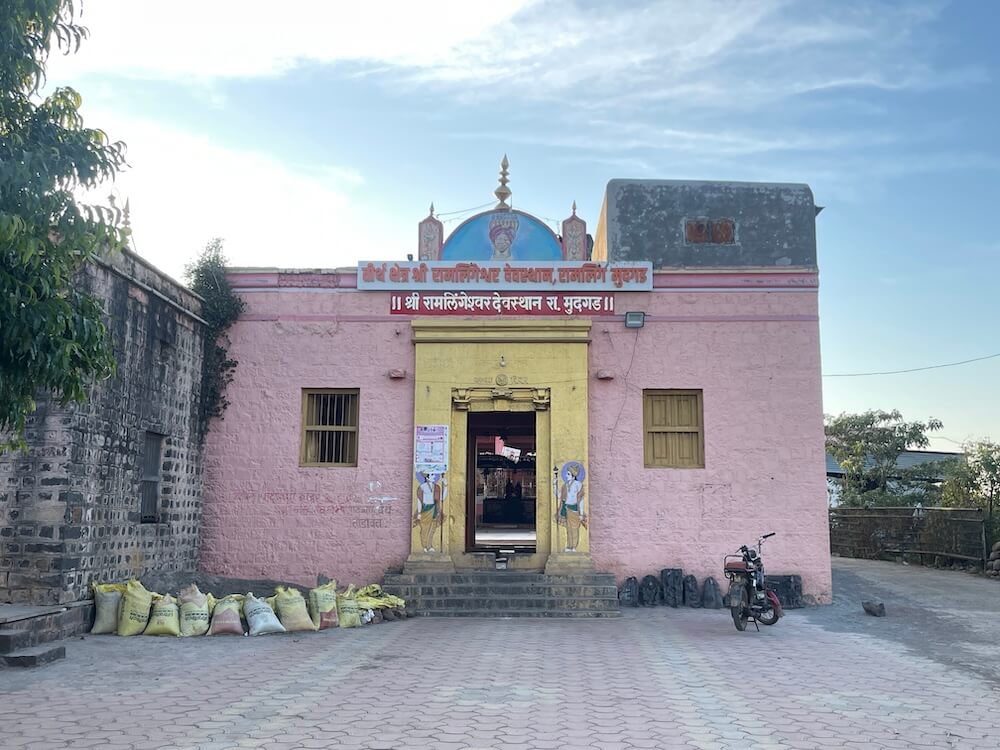
Shop Photo FramesIt is believed that the Shiva Linga in the Ramlingeshwar Temple, situated in a picturesque location on a small hill at Mudgad, was consecrated by Shri Rama. Mentions of this temple are found in oral traditions, folklore, and various scriptures. Influenced by the Hemadpanti architectural style, the temple houses several ancient idols, which fascinate both devotees and scholars alike. It is said that this temple received royal patronage during the Rashtrakuta era and subsequent periods. Even during the Nizam’s rule, donations were granted to the temple, which highlights its significance.
Shiva Lingas named Rameshwar or Ramling are found in many places across the country. The Patal Khanda of the Skanda Purana contains references to Shri Rama consecrating a Shiva Linga. According to the legend of this temple, Shri Rama is an avatar of Lord Vishnu and a devotee of Lord Shiva. After Ravana abducted Sita, Shri Rama and Lakshmana began searching for her. To ensure success in their search, they worshipped Lord Shiva at this very spot. For this purpose, they installed this Shiva Linga, and thus it came to be known as ‘Ramling’. The importance of this temple and the Shiva Linga is described in local manuscripts like the ‘Ramling Mahatmya’. Many Abhangs and Gaulanis based on Ramlingeshwar are sung in the border regions of Marathwada and Karnataka. Some folk songs sung while grinding grain contain verses like, “Let us go to Mudgad for the darshan of Ramling.”
This area of Latur district, which was part of the Ashmaka Janapada during the Mauryan period, later came under the rule of the Rashtrakutas. Latur, or ancient Lattalur, is the ancestral home of the Rashtrakuta dynasty. The Chalukyas of Badami also held power here. According to some historians, the Latur-Bidar region was called the Chalukya country, and this is why the dynasty in Badami came to be known as Chalukya. During these regimes, Latur and its surrounding areas gained great political and commercial importance. Many temples were built during this period, and religious sites received royal patronage. Even after the Nizam’s rule was established here, the temple at Mudgad received government assistance for its maintenance and festivals. It is said that references to ‘Shri Ramlingeshwar Sansthan, Mudgad’ are found in the relevant royal decrees and other historical documents.
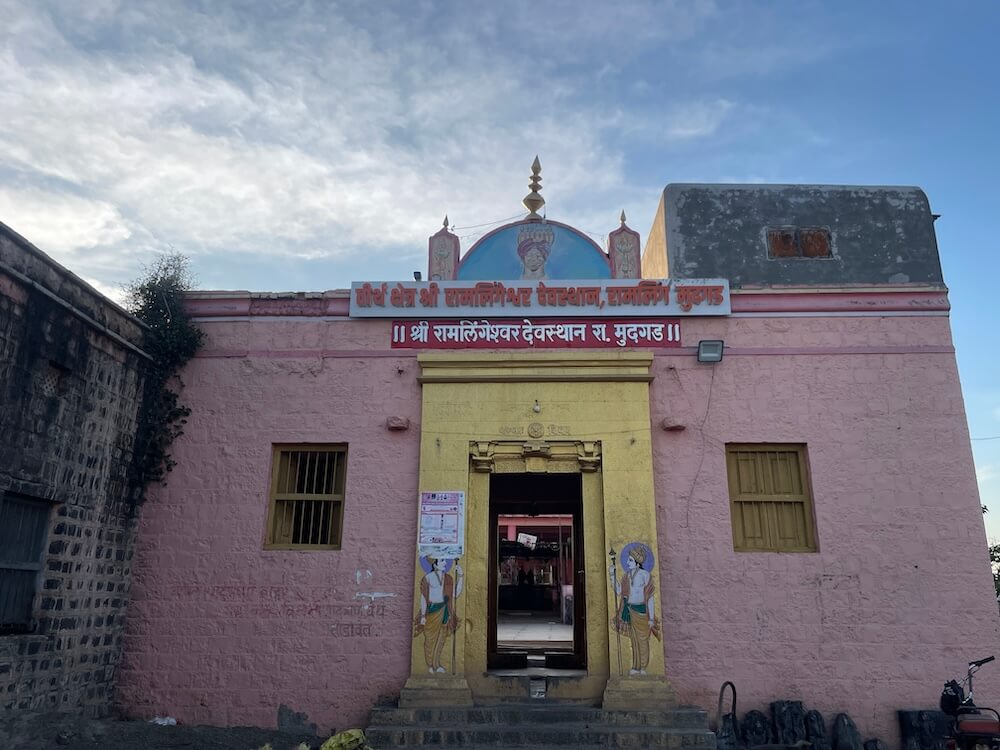
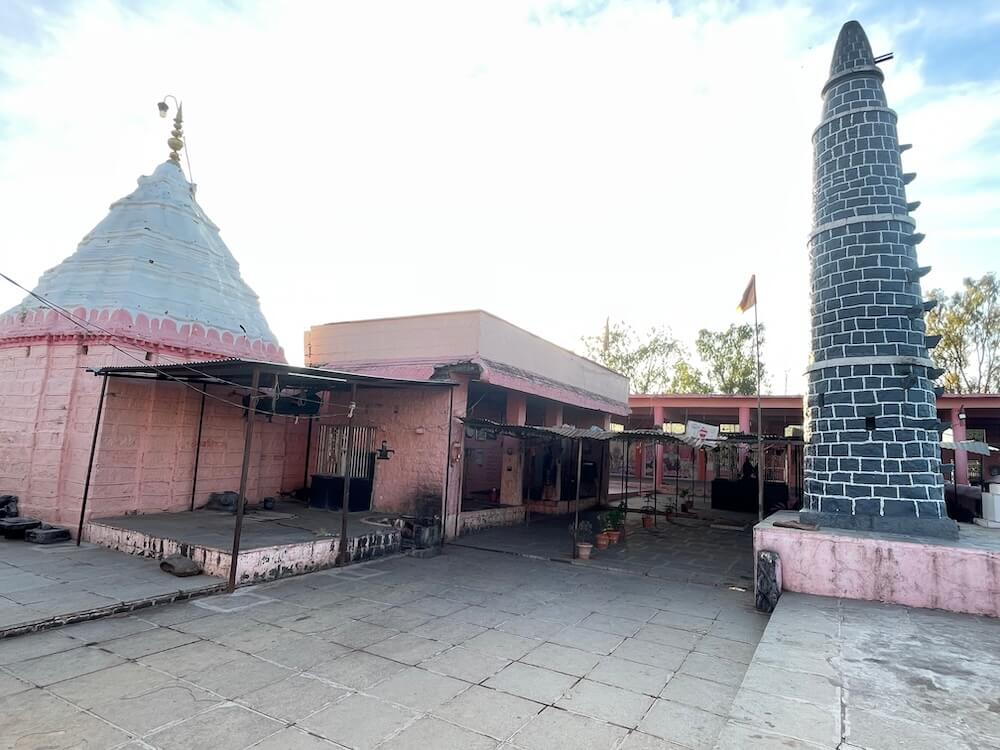
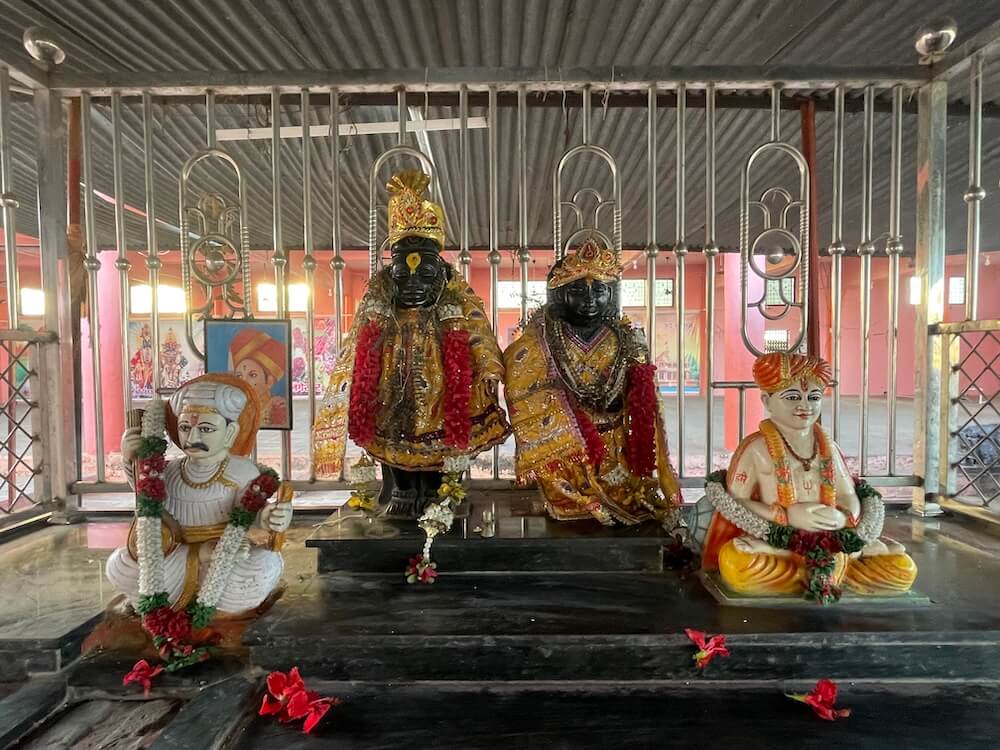
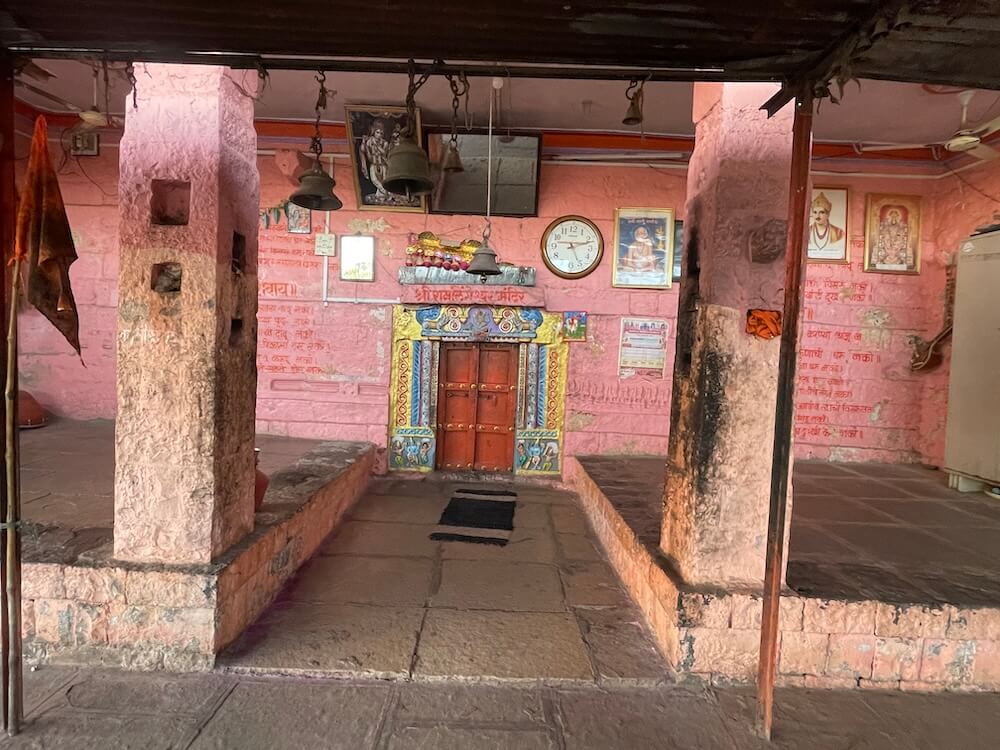
The temple is situated in a spacious courtyard. It has a stone boundary wall and an ornate entrance gate, featuring semi-circular stone masonry and shikhara spires. There is an idol of Hanuman at the lintel of the entrance door. This entrance has five steps. Inside, there are ancient-style cloisters on both sides. On the right side, there is a deepmala (lamp tower). The uniqueness of this lamp tower lies in its design, which incorporates both brackets and hands for holding lamps. Right in front, in an open temple-like structure, are the idols of Vitthal-Rukmini. Idols of Saint Dnyaneshwar and Saint Tukaram Maharaj are also installed on either side of these idols. On the right side of the temple, many ancient carved idols are placed along the wall. These include idols of Shankar-Parvati, Vishnu, Ganpati, and Yakshas riding horses. On the front wall of the main temple, to the right, the Saptamatrikas and Ganpati are carved. The entrance of the temple is also finely decorated. There is beautiful carving on the three-layered door frame. On both sides, there are door guardians and attendants waving chauris. On the top panel of the door, there are two vyalas (mythical beasts). Between them stands a four-armed goddess with her feet on the chest of a demon. Beside her, an idol of Nandi is also carved, with one of its feet also resting on the demon.
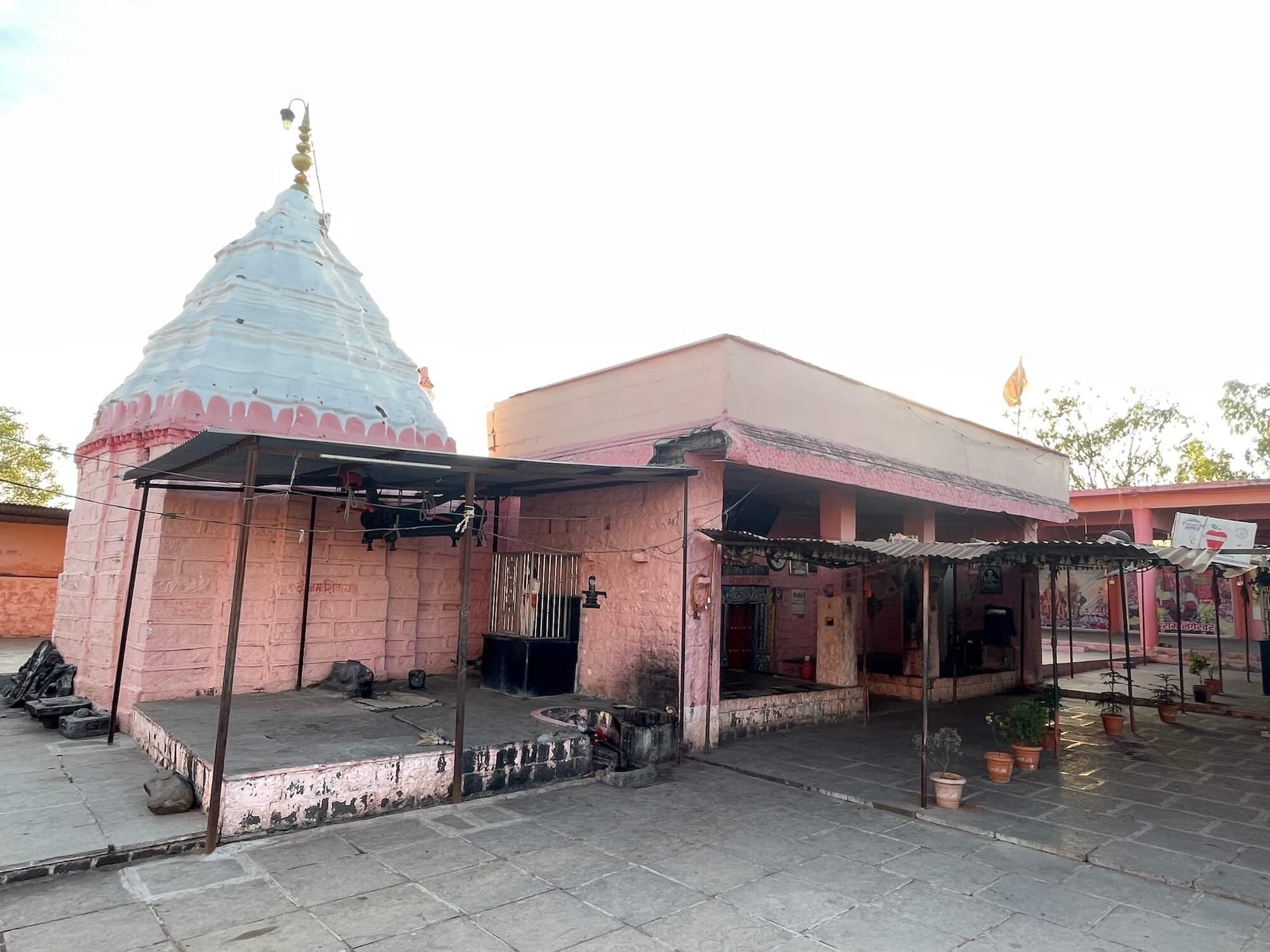
After entering through this low-height door, one sees the rangashila (ceremonial stone) in the center of the sabhamandapa (assembly hall). The pillars in all four directions have beautiful carvings. In front is the main sanctum, and there are sub-sanctums on the left and right sides. Such a structure in a temple is called ‘Trikuta’. In the antarala (vestibule) of the right-side sanctum, there are two idols of Nandi. One of these Nandis faces the right sanctum, while the other faces the left. Both these sanctums contain Shiva Lingas. The shalunka (base) of the Shiva Linga in the right sanctum is circular, while the Shiva Linga in the left sanctum has a rectangular shalunka.
Beside the door of the main sanctum, there are two idols in a niche-like structure. One of them is of Sheshashayi Vishnu. Although the idol has worn down over time, one can still see Lakshmi pressing the feet of Vishnu, who is reclining on Shesha, and Lord Brahma seated on a lotus emerging from Vishnu’s navel. The second idol is more heavily damaged, making it difficult to identify. The door of the main sanctum is also carved. There is an idol of Ganpati on its lintel. The Shiva Linga inside the sanctum is well-defined. This stone Shiva Linga, about one foot tall with a double-circular shalunka, is very captivating. Usually, a gomukha (cow-mouth) structure is used to drain the abhisheka water from the sanctum. However, outside this sanctum, a matsymukha (fish-mouth) structure has been used instead. Such a fish-mouth is considered rare. Outside the temple, there is an idol of Samarth Ramdas. Next to it, there is a circular Shiva Linga on a shalunka.
Except for the time between two and four in the afternoon, devotees can have darshan at the temple from five-thirty in the morning until eight-thirty at night. On Mondays, Mahashivratri, and during the month of Shravan, darshan is available throughout the day. Various religious ceremonies are celebrated with enthusiasm in this temple throughout the year. The Mahashivratri festival is celebrated here with great fervor. On this day, programs including abhisheka, Rudra-pathana, and bhajans are organized from early morning. Thousands of devotees from Nilanga taluka and the Karnataka border region come here for darshan. There is a special crowd of devotees every Monday in the month of Shravan. As it is believed that Shri Rama consecrated this Linga, the Ramnavami festival is also celebrated on a large scale.
This sacred temple stands as a testament to deep spiritual devotion, ancient architectural grandeur, and rich local cultural traditions.
The sanctum sanctorum houses the divine idol consecrated according to ancient Vedic traditions, surrounded by serene courtyards and traditional temple architecture.
Navratri, Maha Shivratri, Annual Temple Jatra & Deepotsav
Compare and book flights, secure top-rated local hotels near the temple, hire reliable guides, and rent cars instantly.
Extend your pilgrimage by visiting other highly sacred temples located nearby.


Add ₹999 more to unlock FREE SHIPPING!
Your sacred cart is currently empty.
Shop Photo FramesFill in your delivery details below to place your order.
Add comment