
Add ₹999 more to unlock FREE SHIPPING!
Your sacred cart is currently empty.
Shop Photo FramesThe village of Bhutmungali is situated in the Manjra river basin in the Nilanga taluka of Latur district. The ancient Sadashiv Temple and the shrine of Bhuteshwar Baba located in this village are major centers of faith for devotees. It is believed that the village of Bhutmungali derives its name from Bhuteshwar. In this area, the Sadashiv Temple, the Samadhi of Bhuteshwar Baba, and the Mahadev Temple are all located together, which has bestowed the status of a sacred pilgrimage site upon this entire region.
This area has been known as a spiritual center since ancient times. This region was once famous for the penance performed by sages and seers. It is said that this temple was constructed approximately between the eleventh and thirteenth centuries. The influence of the architectural styles of the Chalukya and Yadava periods is clearly visible in the stone masonry here. Latur and this part of Marathwada as a whole were under the suzerainty of the Chalukya and Yadava kings since historical times. During this period, many stone temples were built in this region. It is said that the famous Nilkantheshwar Temple at Nilanga and this temple were built during the same period. The Nilkantheshwar Temple at Nilanga is considered an excellent example of Chalukya architecture in the Bhumija style. The temple at Bhutmungali also bears witness to that same era. Bhuteshwar Baba, who previously resided in this area, was a great Siddha Purusha (an enlightened soul). The Mahadev in the Sadashiv Temple was his presiding deity. He performed rigorous penance at this place. He had a great influence on the local people. He showed the common people the path of devotion and dedicated his entire life to the welfare of the public.
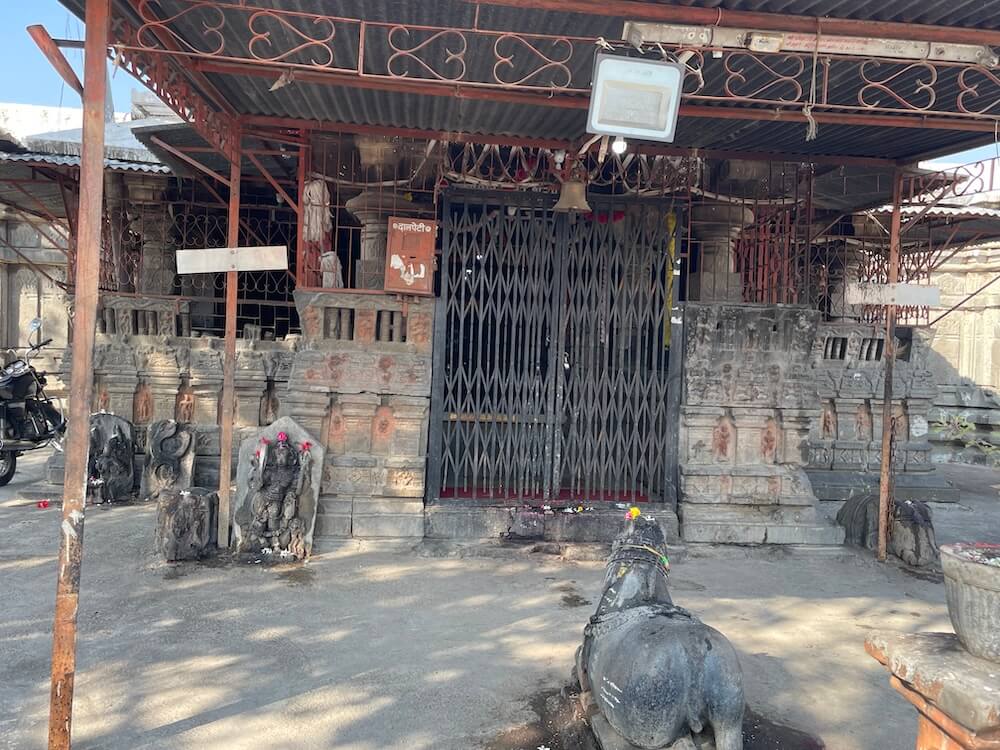
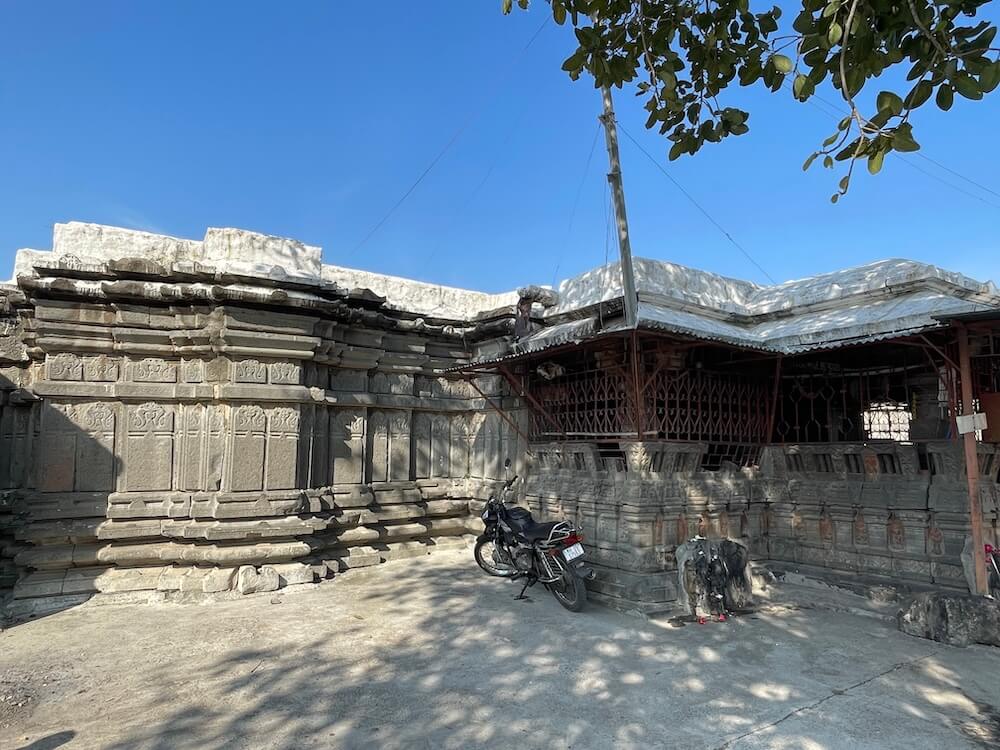
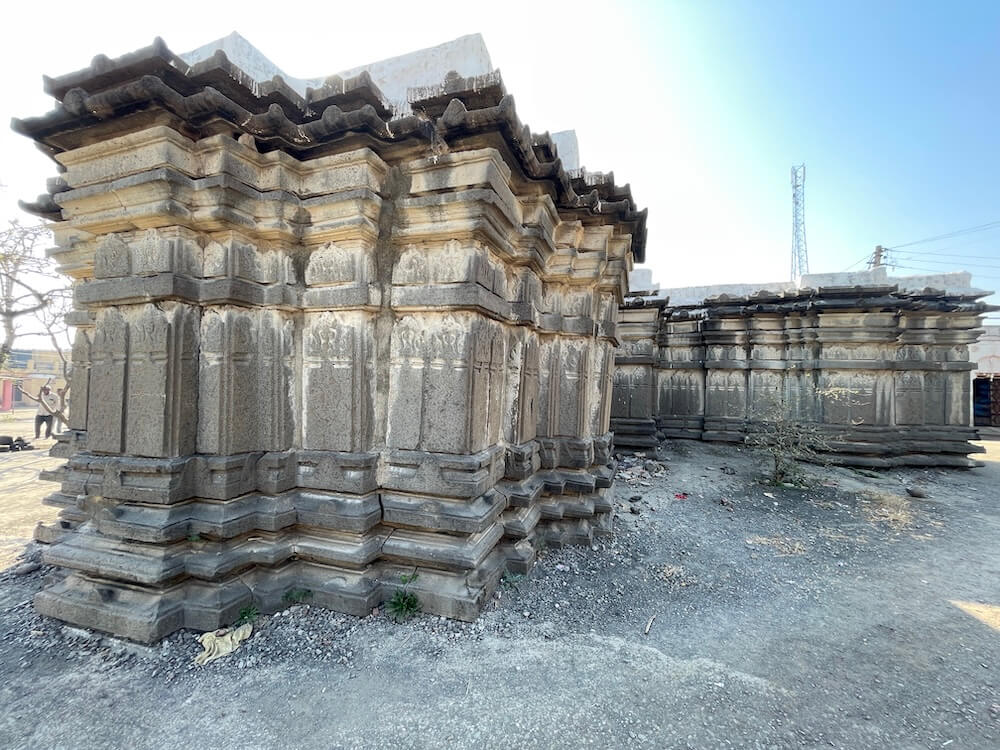
The Sadashiv Temple at Bhutmungali is in the Hemadpanti style. Contemporary to the Nilkantheshwar Temple at Nilanga, this temple is of the ‘Trikuta’ (three-shrine) type, following the same pattern. This temple has three sanctum sanctorums. However, this temple does not have the star-shaped structure like the Nilkantheshwar Temple. Nevertheless, carvings, small sculptures, and niches are found on the exterior and in the overall structure of this temple. In the niches on the outer walls, there are sculptures of various gods, goddesses, Yakshas, and Sursundaris. Some of these sculptures have eroded over time, and due to some being broken, it has become difficult to identify exactly which deity they represent. Some ancient stone remnants of the original temple are seen scattered in the temple premises. Some ancient sculptures have been placed against the outer wall of the temple.
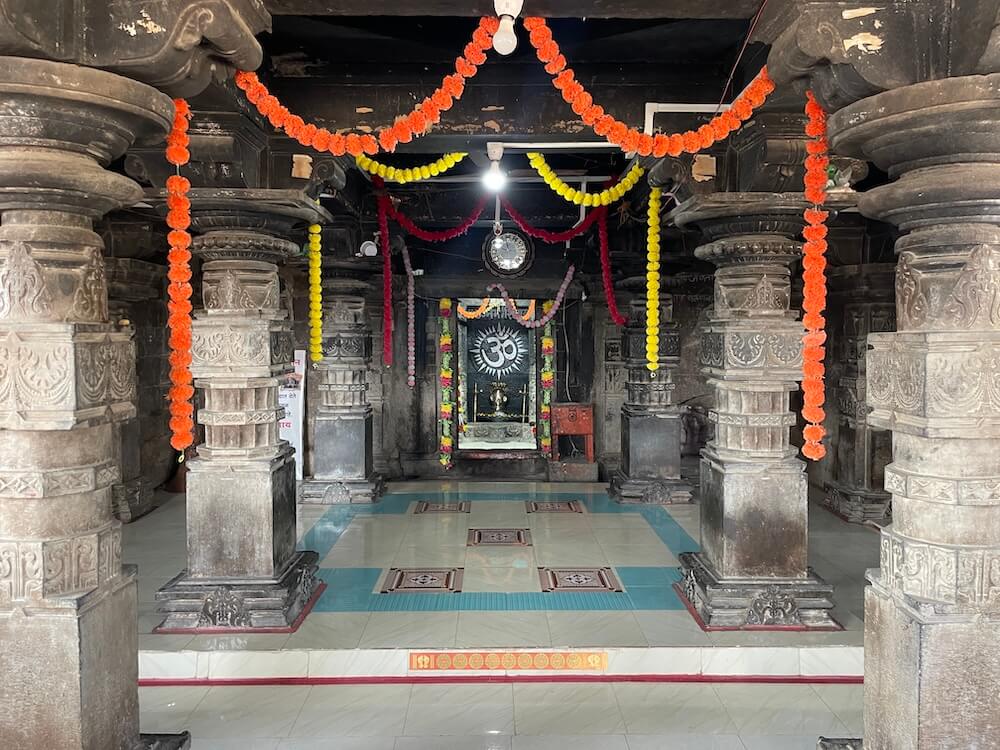
There is a structure like a Mukhamandapa (entrance porch) to enter the temple. In front of this entrance is a statue of Nandi. Upon entering through the Mukhamandapa, one sees the ornate stone pillars and Kakshasanas (stone benches) of the Sabha Mandapa (assembly hall). In the center of the four stone pillars in the middle of the Sabha Mandapa is a Rangashila (stage). Standing on this Rangashila, one can see the main sanctum in front and the sub-sanctums on the left and right sides. There is an Antarala (vestibule) in front of all three sanctums. There are various sculptures in the niches of the Sabha Mandapa, while some niches are empty. A sculpture of Sheshashayi Vishnu is also seen in this area. The pillars of the temple are of a mixed style, being square and circular. Kirtimukhas and floral vines are carved on the middle sections of the pillars. The ceiling of the temple is decorated with lotus petal designs.
In the left sanctum of the temple, there is an idol of Vishnu, and in the right sanctum, there is an idol of Shiva-Parvati. In most temples, one sees Parvati sitting on Shiva’s lap, but here Shiva and Parvati are in a standing posture. The doorways of all three sanctums are of the triple-door frame type. The floral patterns, door pillars, geometric carvings, and the sculptures of the Dvarapalas (gatekeepers) at the base are clearly visible on these doors. The ancient Shivling, or Sadashiv, is established in the main sanctum. A mask of Shankar is placed on the high Shalunka (base) here. In front of the temple, there used to be a large stepwell (Barav) with stairs to descend. Now, the size of this stepwell has been reduced.
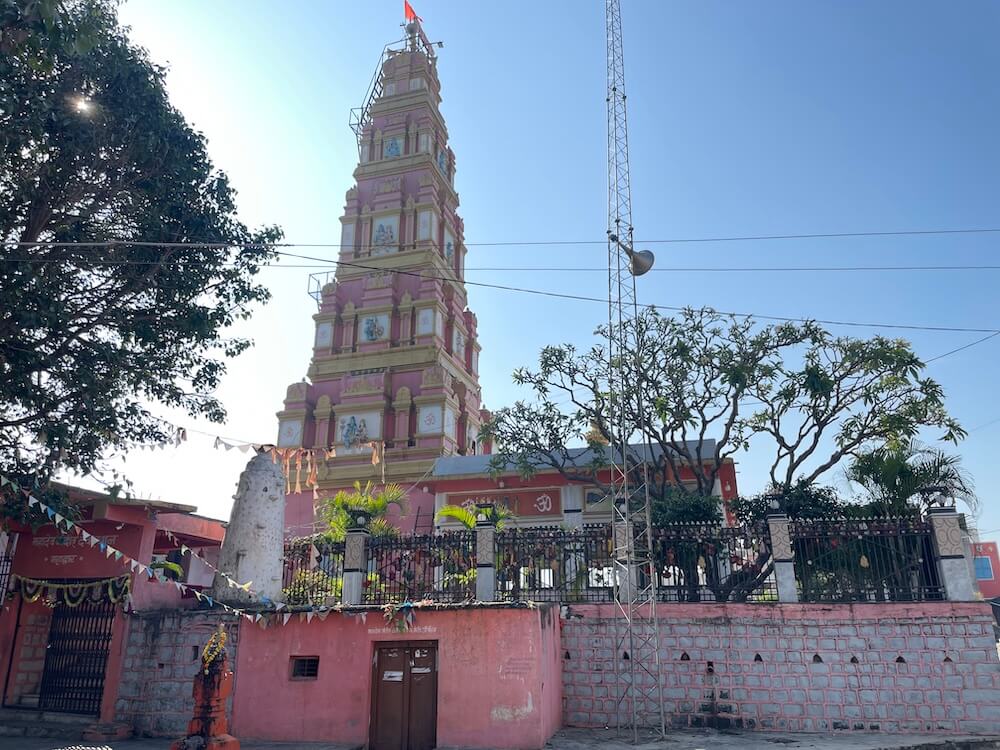
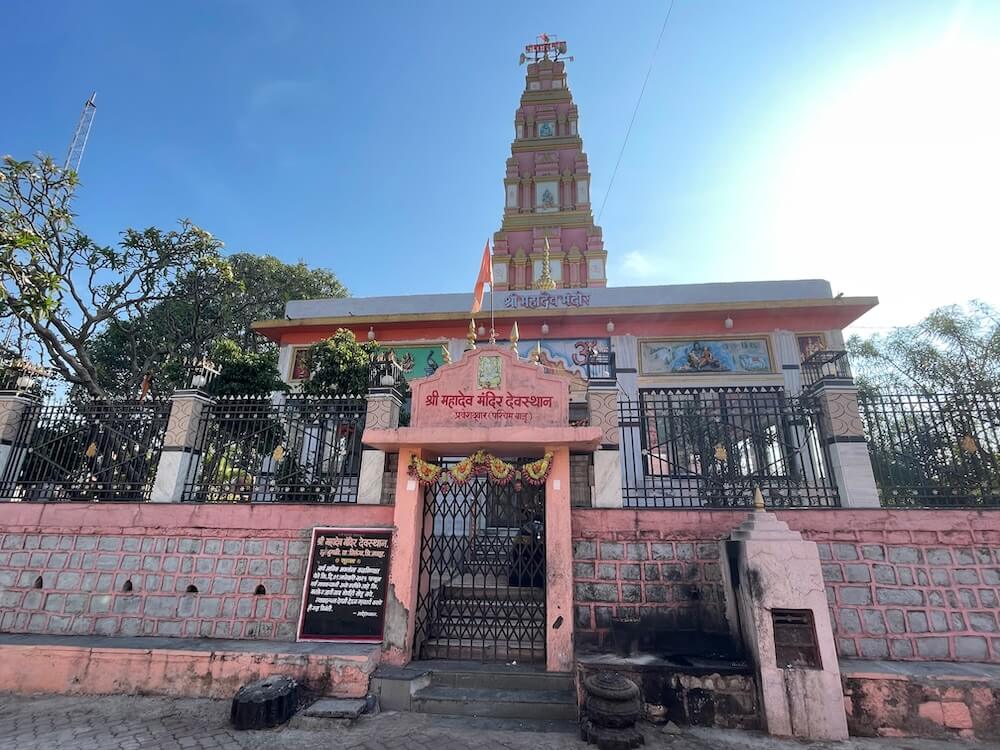
At some distance from this temple is the Mahadev Temple, which is the site of Bhutnath Baba. This temple is also known as the Bhutnath-eshwar Temple. The Samadhi of Bhutnath Baba is very close to this temple. A record on the temple indicates that its renovation took place on 18 March 2018. The newly constructed Shikhara (spire) of the temple is extremely tall. It is clearly visible from a distance. Previously, this temple was also an ancient stone structure. Local residents say that the old carved stones from here have been taken into custody by the Archaeological Department. Cement and other modern materials have been used in the construction of this newly built temple. The structure of the Shalunka of the Shivling in the sanctum of this temple is similar to the Shalunka in the ‘Sadashiv Temple’, but the height of the Linga in this temple is slightly greater. In front of this temple are the Vitthal-Rukmini Temple and the Bhavani Temple. Adjacent to this temple is the Samadhi of Bhuteshwar Baba.
These three temples in the village of Bhutmungali are collectively considered the village deities. Although there are differences in the structures and distances of these temples, their administration and festivals are the same. The Jatrotsav (fair) of Bhuteshwar Baba, the Sadashiv Temple, and the Mahadev Temple is celebrated collectively. This joint festival begins twelve days after Gudi Padwa. During the festival, a palanquin procession of the deity and the Baba’s Padukas (footprints) is taken out. During this fair, wrestling matches are held, and Bhajan-Kirtan and Mahaprasad are organized. Apart from this, a festival is also celebrated here on the occasion of Mahashivratri. Devotees can come here for Darshan daily from 6:00 AM to 1:30 PM and from 4:00 PM to 8:30 PM.
This sacred temple stands as a testament to deep spiritual devotion, ancient architectural grandeur, and rich local cultural traditions.
The sanctum sanctorum houses the divine idol consecrated according to ancient Vedic traditions, surrounded by serene courtyards and traditional temple architecture.
Navratri, Maha Shivratri, Annual Temple Jatra & Deepotsav
Compare and book flights, secure top-rated local hotels near the temple, hire reliable guides, and rent cars instantly.
Extend your pilgrimage by visiting other highly sacred temples located nearby.


Add ₹999 more to unlock FREE SHIPPING!
Your sacred cart is currently empty.
Shop Photo FramesFill in your delivery details below to place your order.
Add comment