
Add ₹999 more to unlock FREE SHIPPING!
Your sacred cart is currently empty.
Shop Photo FramesKusur, located in the Vaibhavwadi taluka, is a nature-rich village surrounded by hills on all sides. There are twelve hamlets in this village. The Gad River, which originates at the foothills of Gagangad, flows through the center of this village. The village deity, the self-manifested (Swayambhu) Rameshwar Darubai Temple, is a place of faith for countless devotees. The two-day ‘Wadiya Jatrotsav’ celebrated in this temple is a famous festival here. This pilgrimage is known in the Konkan region as the ‘Maherwashinichi Yatra’ (Pilgrimage of the daughters of the village). Thousands of devotees from Konkan and Goa attend this festival.
The deity Darubai here is considered a form of Goddess Mahakali. According to Hindu Puranic legends, Kali is the fierce incarnation of Shiva-Shakti, Parvati. It is said that ‘Kaal’ is Shankar and his wife is Kali. The Puranas contain stories of Kali slaying many demons. One of these demons was named Darukasura. The mythological story regarding this is that an Asura named Daruka became extremely powerful by pleasing Lord Brahma. This Darukasura had received a boon that he would not meet his death at the hands of any God, Yaksha, Gandharva, or man. Only a woman could kill him. Becoming arrogant due to this, he caused havoc in all three worlds. Then all the gods sought refuge in Lord Shankar. Shankar gave birth to Mother Kali from his own and Parvati’s essence. With just her roar, the demon Daruka and his army of Asuras were reduced to ashes. The story goes that the Goddess who killed the demon Daruka came to be known as Darubai.
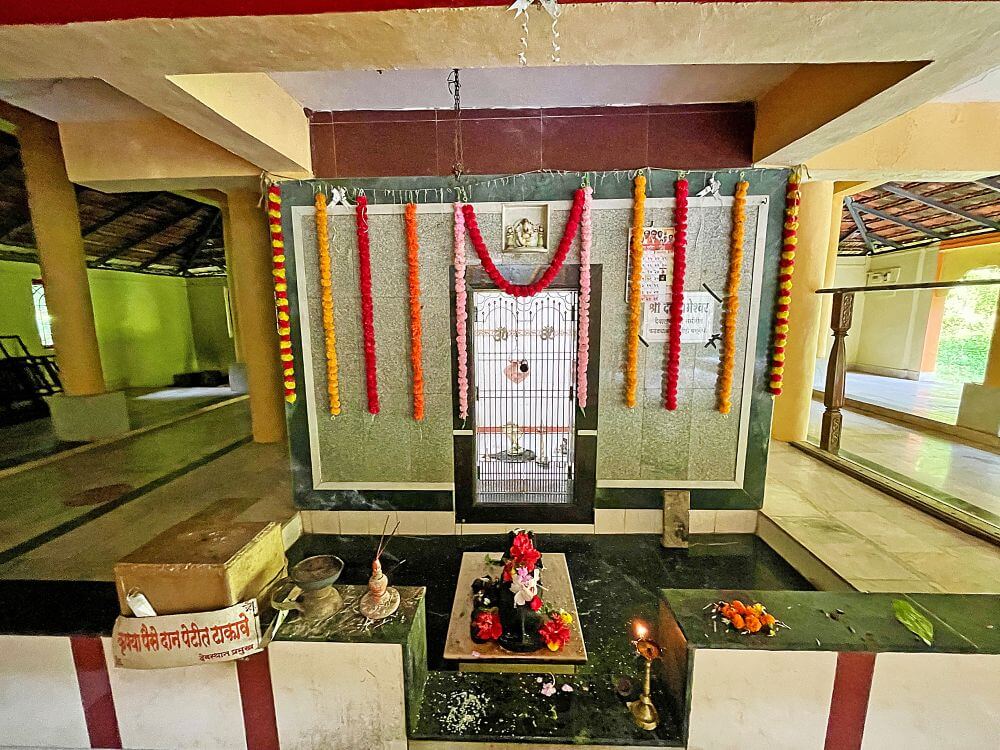
In Maharashtra, there was a Darubai temple in the Vagere-Nirgud Wadi area of Mulshi taluka in Pune district. Although the villages and hamlets there were relocated due to the Temghar Dam, the stone structure of that temple can still be seen in the riverbed. The second temple of Darubai in the state is in Kusur. There, Darubai and Rameshwar Mahadev have been consecrated in the same temple. In the same assembly hall (Sabhamandap), there are two separate sanctum sanctorums (Garbhagrihas) facing each other.
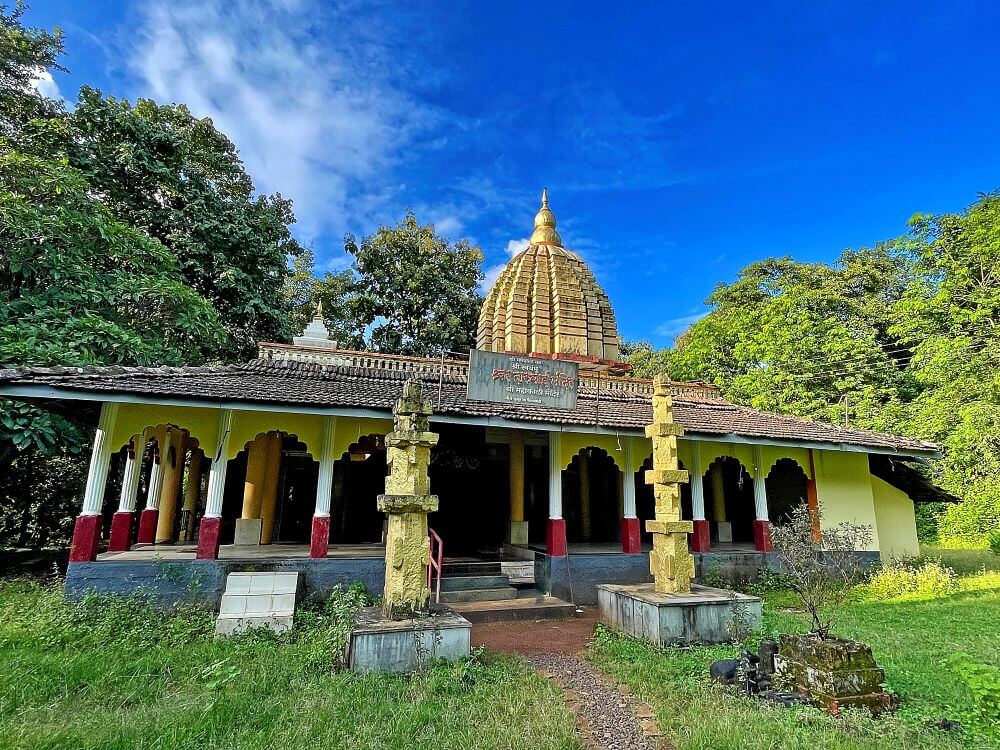
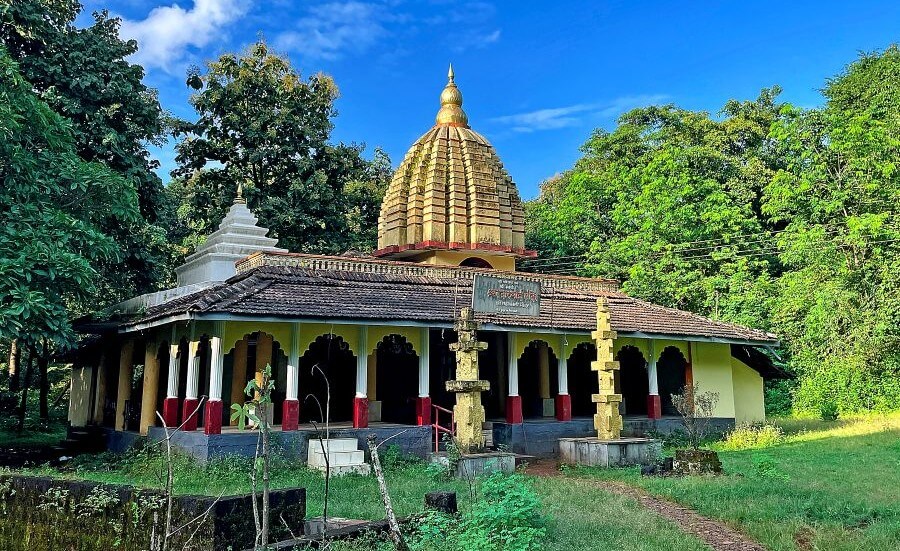
Due to the dense vegetation in the temple premises, the tall spire of the temple is not visible until one reaches the courtyard. In this courtyard, near the entrance of the temple, there are two platforms with lamp pillars (Deepstambhas). Next to these lamp pillars is a Tulsi Vrindavan. Here, there is a stone idol of Nandi as well as stone footprints (Padukas) on a platform. The Darubai temple is built on a plinth slightly elevated from the ground, and one enters the assembly hall after climbing four steps. The assembly hall here is of an open type, and each pillar is connected to the others with arch-like craftsmanship.
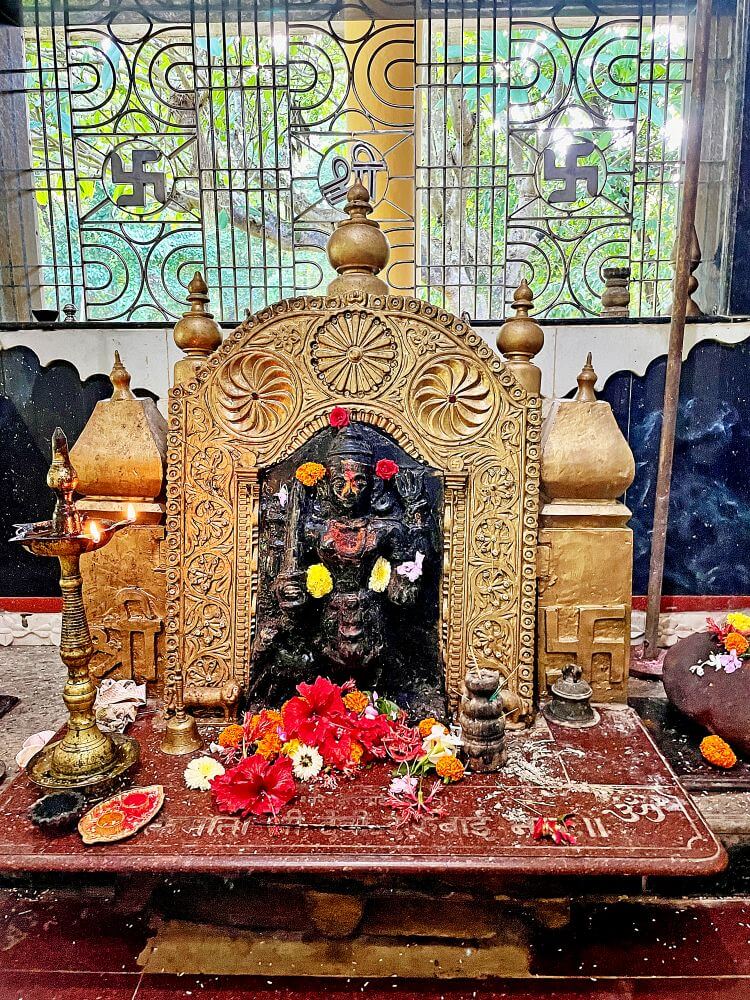
After passing through the entrance, the sanctum of Shakti Darubai is on the left and the sanctum of Lord Rameshwar is on the right. In Darubai’s sanctum, there is an idol of Darubai carved in stone on a large, square-like seat. In this relief-style idol, the Goddess holds a sword in one hand and also carries a trident. Behind this idol is a canopy (Makhar) covered with brass sheets, which features beautiful craftsmanship. There are three spires on the upper side of the canopy. Beside the idol of Darubai is a circular stone ‘Tandala’ (aniconic form), which is also worshipped by offering turmeric and vermilion.
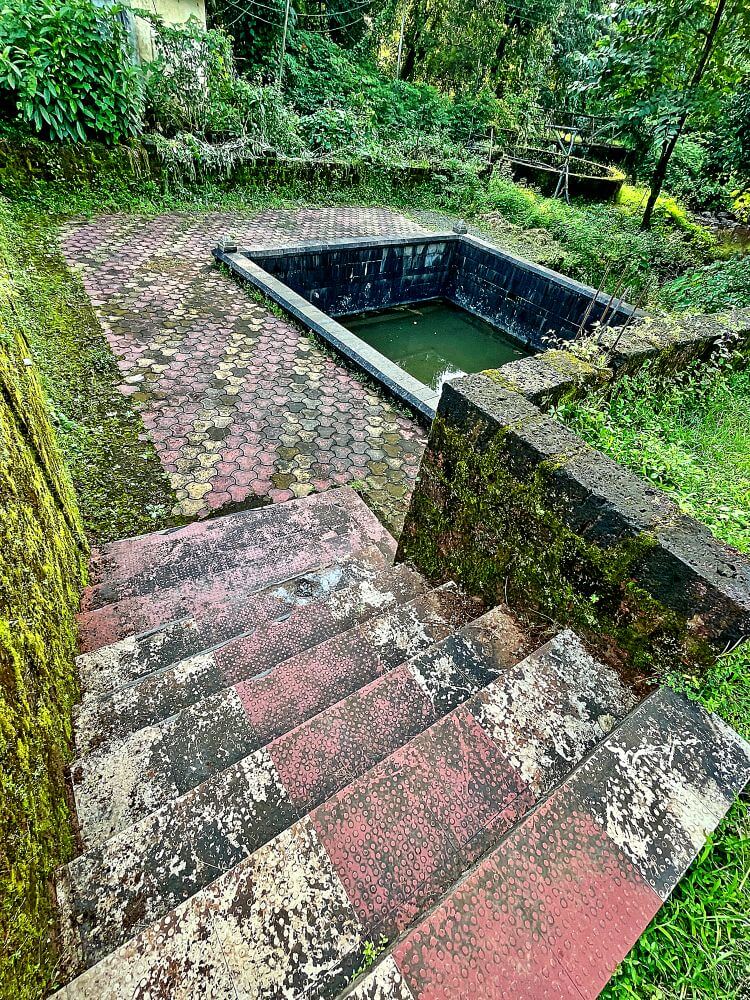
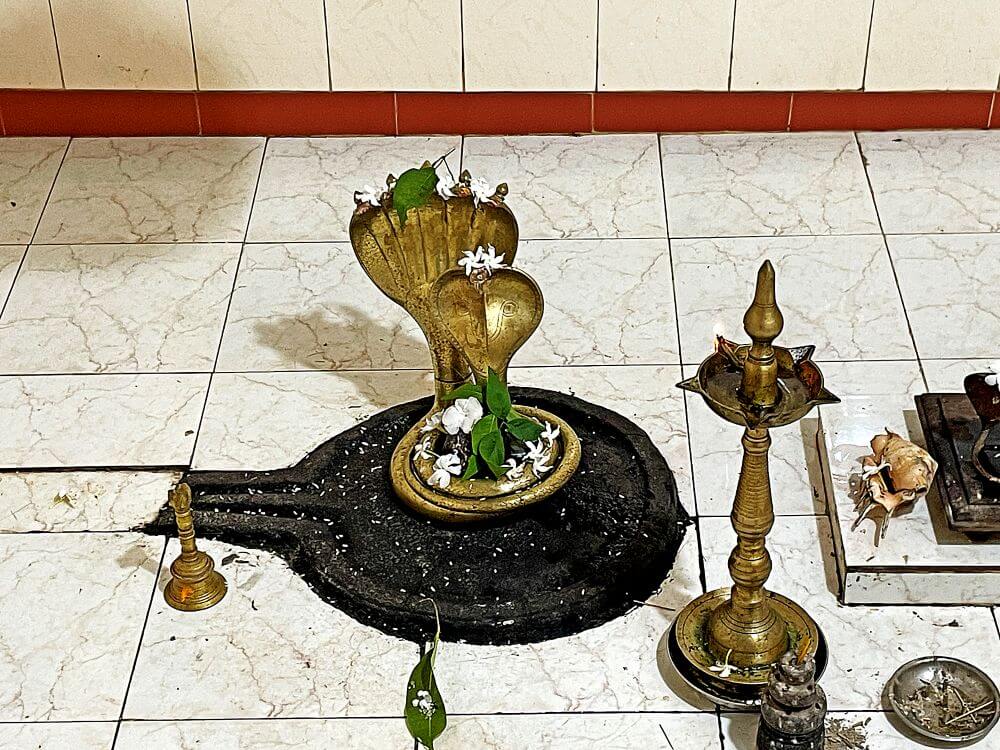
In front of Rameshwar’s sanctum, there is an idol of Nandi on a small platform, and inside the sanctum, in the center, is the Linga of Rameshwar. In the middle of this Linga are two brass cobras. Although this temple is tiled, there is a small spire over Darubai’s sanctum and a large, uniquely crafted spire over Rameshwar’s sanctum. Near this temple, i.e., behind the Shakti Darubai sanctum, there is a well and a water tank built of stone. One can reach this tank by descending ten steps from the temple courtyard. It is said that this tank contains water throughout all twelve months.
The ‘Maherwashinichi Yatra’ (pilgrimage of the women of this village who have married and moved to other villages) is famous in the surrounding five villages. This two-day festival begins on Kartik Vadya Chaturdashi. According to the villagers, this festival has a tradition of about 400 years. On the first night of the pilgrimage, around ten o’clock, programs such as worship, offering a sari and blouse piece (Oti) to the Goddess, offering food (Naivedya) to the deities, and the ‘Wadi’ offering take place. The great offering (Maha-Naivedya), known as ‘Wadi’, is offered to the God and Goddess from the provisions collected by the villagers. Because of this, the pilgrimage is also called ‘Wadiya Jatrotsav’. On the second day, the temple is opened for devotees to have Darshan. At this time, the daughters and daughters-in-law of the village offer an Oti to Mother Darubai. Vows are also made to the deity. Because of the reputation of the Mother as one who rushes to the call of the daughters of the village, a large number of them, along with their families, make it a point to be present to offer an Oti with a sari and coconut to the Goddess. Many festivals like Wadiya Jatrotsav, Shimga, Ganesh Chaturthi, Dussehra, Diwali, Mahashivratri, and Tripurari Purnima are celebrated with great enthusiasm in the village.
This sacred temple stands as a testament to deep spiritual devotion, ancient architectural grandeur, and rich local cultural traditions.
The sanctum sanctorum houses the divine idol consecrated according to ancient Vedic traditions, surrounded by serene courtyards and traditional temple architecture.
Navratri, Maha Shivratri, Annual Temple Jatra & Deepotsav
Compare and book flights, secure top-rated local hotels near the temple, hire reliable guides, and rent cars instantly.
Extend your pilgrimage by visiting other highly sacred temples located nearby.


Add ₹999 more to unlock FREE SHIPPING!
Your sacred cart is currently empty.
Shop Photo FramesFill in your delivery details below to place your order.
Add comment