
Add ₹999 more to unlock FREE SHIPPING!
Your sacred cart is currently empty.
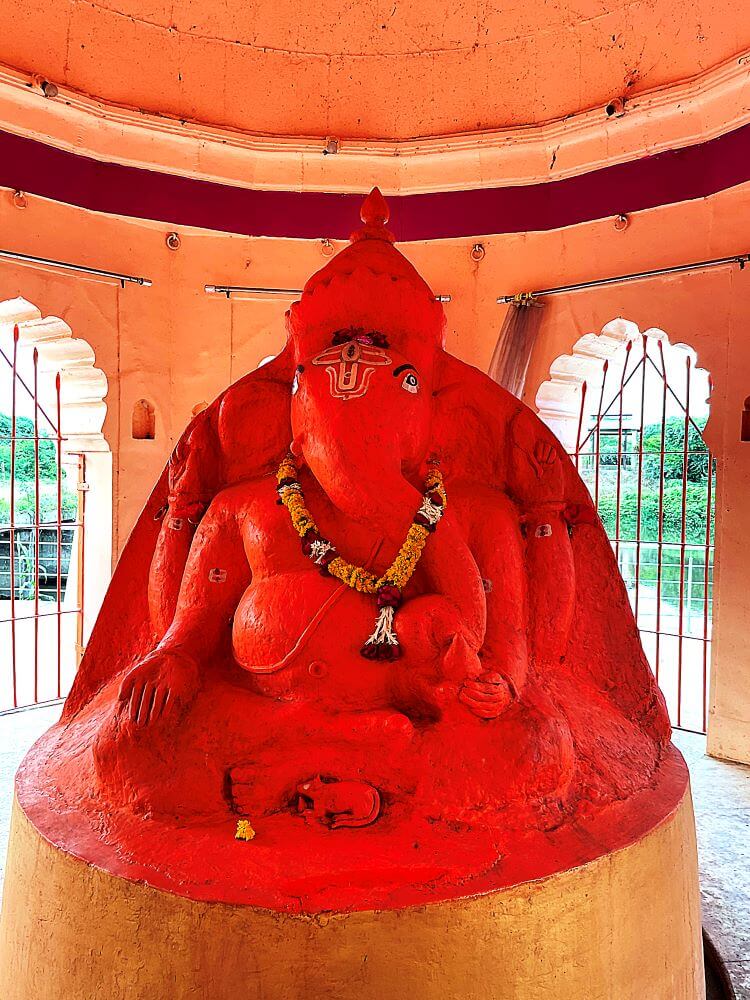
Shop Photo FramesIn Shendurvada, located in the Gangapur taluka of Chhatrapati Sambhajinagar district—a region renowned as a city of historical and pilgrimage sites—stands an ancient and famous temple of Lord Ganesha. According to mythology, it was at this very place that Lord Ganesha assumed his Vishwaroop (universal form) and strangled the demon Sindurasura with his noose (pasha) to slay him. At that time, Ganesha’s body was smeared with the demon’s blood, which resembled vermilion (shendur). Consequently, the Ganesha here came to be known as Sinduratmaka and Sindurvadan Ganesha. Recognizing the deep devotion of the followers and the significant number of pilgrims visiting the temple, the state government honored it in 2006 by granting it the ‘C’ grade pilgrimage site status.
According to the information in the Puranic scriptures, once Lord Brahma was sleeping in his abode. Upon waking up, a child was born from the yawn that escaped Lord Brahma. Lord Brahma told him that because the color of his body is copper-red, he would be known as ‘Sindur’, and whoever he embraces would be reduced to ashes. To test the power of this boon, he stepped forward to embrace Lord Brahma himself. Angered by this, Lord Brahma cursed him, saying, “Due to this act of yours, you shall become a demon,” and departed for Vaikuntha. Sindurasura followed him there as well. However, Lord Mahadeva confronted him there, and he was forced to engage in battle with Him. As this battle continued for a long time, Sindurasura left that place and came to the earthly realm.
Sindurasura began to torment everyone on Earth as well. His capital was at Rajasadan (present-day Shendurvada) near the temple of Grishneshwar. He stopped the Vedic rituals and worships performed here. He used to harass even the gods. Terrified by this, all the gods prayed to Bal Ganesha for help. At that time, Ganesha was eight years old. Ganesha challenged Sindurasura to a battle. At that moment, Sindurasura grabbed Ganesha and flew into the sky. However, unable to bear the weight, he dropped Ganesha into the Narmada River below. Because of this, the pebbles in the Narmada turned red. Overjoyed at the thought that the child had died, Sindurasura began to see Ganesha in every pebble in the river. Thereafter, Ganesha assumed a cosmic form with infinite heads, arms, and legs, grabbed Sindurasura tightly, and strangled him to death with his noose. The village where this battle took place is Shendurvada. Before his death, Sindurasura requested Ganesha to grant him a place near Him, so that he too would be worshipped along with Ganesha. Ganesha accepted Sindurasura’s request. Therefore, in the Sinduratmak Ganesha temple at Shendurvada, the face of Sindurasura is situated at the base of the Ganesha idol. Devotees worship Sindurasura along with Ganesha here.
Shendurvada village is situated on the banks of the Kham River in Gangapur taluka. Adjacent to the riverbed here is the Sinduratmak Ganesha Temple. There is an inscription on the door on the outer side of this temple. It bears the record, “Shri Gajanan Charani Sarbhojraj Vishwambhar Shake 1706 Krodhi Nama.” From this, it can be surmised that this ancient temple must have been renovated in the year 1785 CE. According to the treaty signed between Nanasaheb Peshwa and the Nizam at Udgir before the Battle of Panipat, the rights to collect Chauthai from the Daulatabad region and the Devgiri fort came under Maratha control. Following this, the Marathas held authority in this region for about 40 years. Through the donations given by the Maratha chieftains and jagirdars of that time, many temples were constructed and renovated in the Paithan, Kaygaon Toka, and Aurangabad regions. It is also said that this temple must have been renovated during that same period. The temple attained its current form after a renovation that took place about 35 years ago.
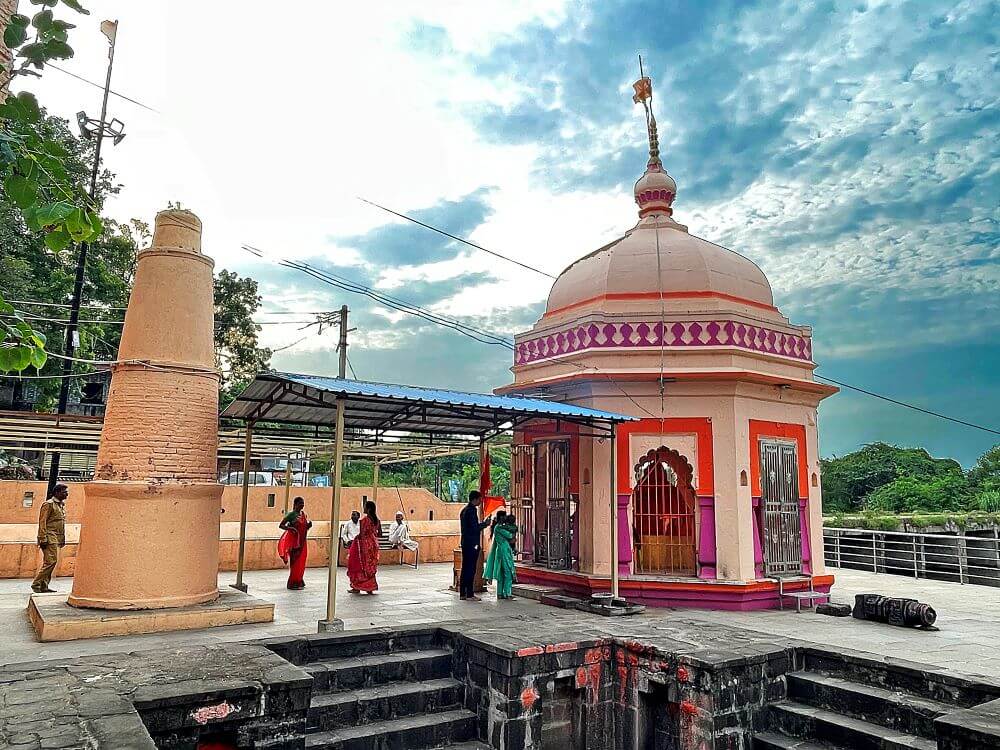
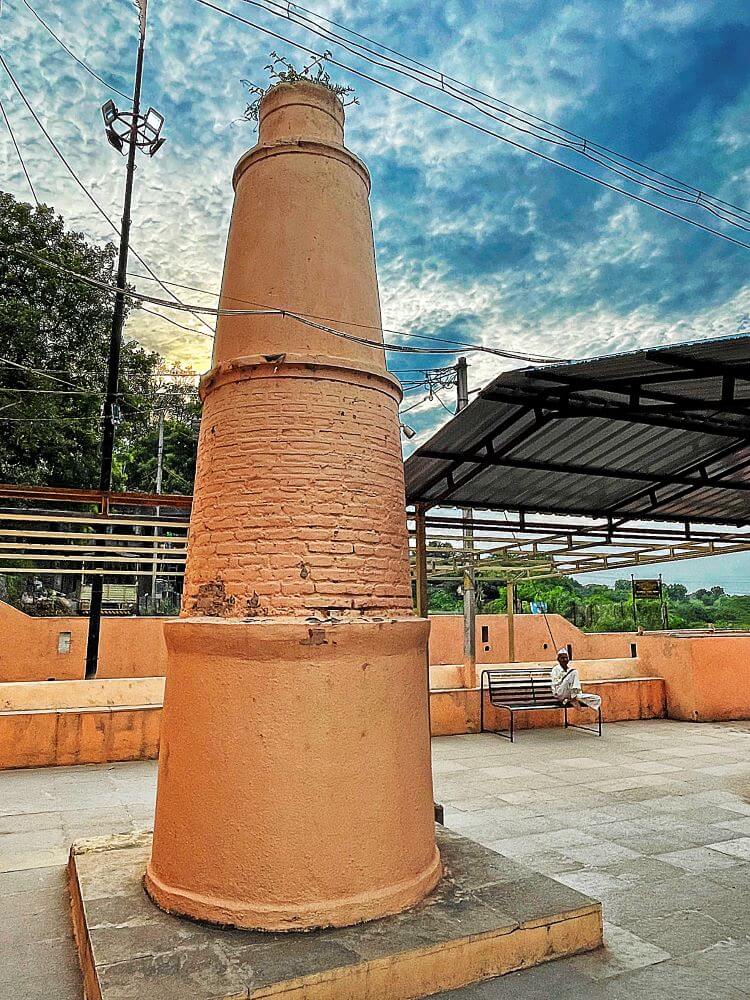
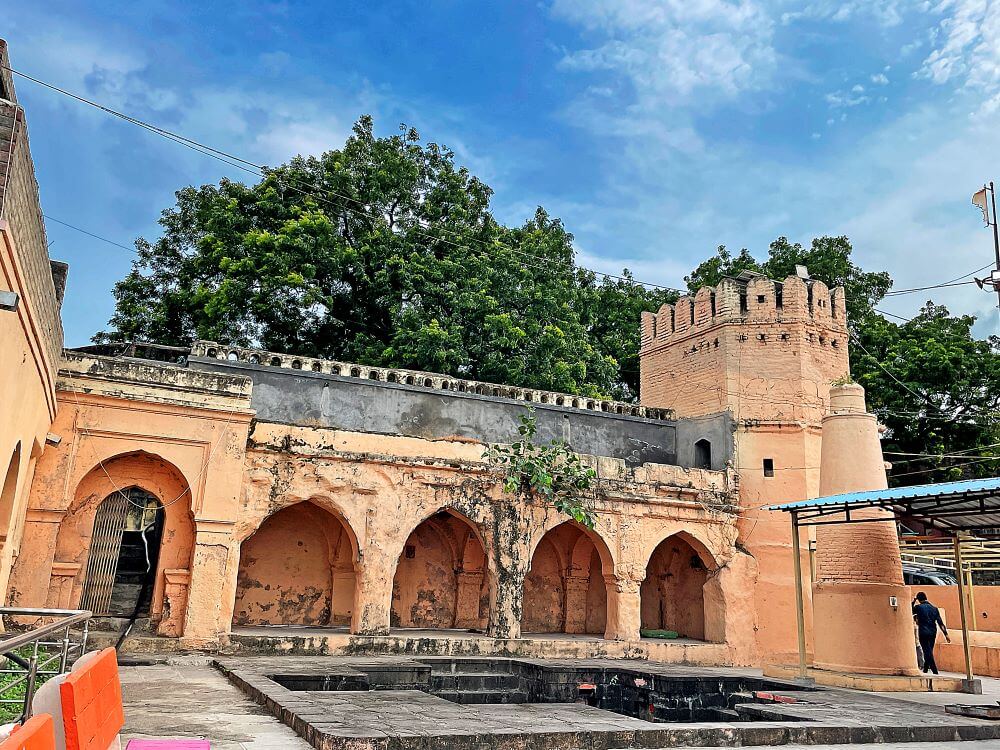
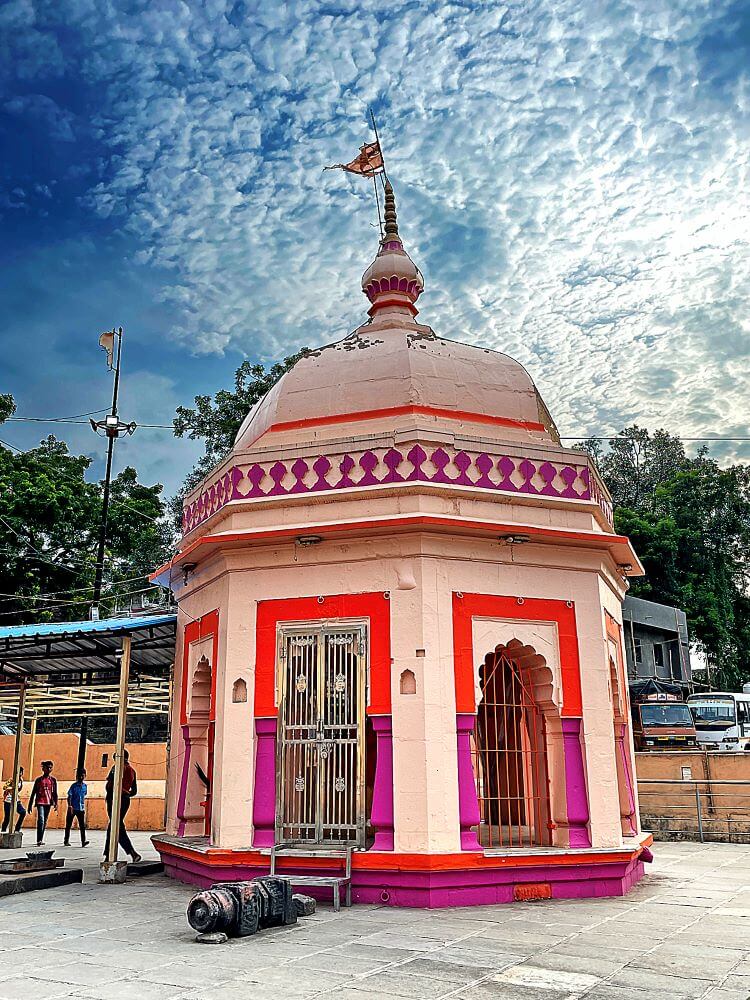
The temple courtyard is paved with stone. Adjacent to this courtyard stands an ancient mansion belonging to the Jahagirdar family, with stone walls approximately twenty feet high. Within the temple premises, there are shrines dedicated to Lord Maruti and Goddess Durga. Opposite the main temple is the monastery of the renowned saint-poet Madhvamunishwar, where the samadhis of the saint, his son, and two other disciples are located. To the left of the temple lies the Bhagirathi Tirtha Kund (Vinayak Kund). It is said that if the holy water from this tank is sprinkled in homes and fields, it prevents the infestation of rats. In front of the temple stands a stone lamp pillar (Deepmal). The temple is octagonal in shape and features eight arches; this design appears to have been implemented to ensure the temple remains safe from the ravages of river floods. The idol of Lord Ganesha in the temple is smeared with vermilion, has a trunk turned to the left, and stands over six feet tall. Below this idol is the figure of Sindurasura, which features silver eyes. The temple has a dome-shaped spire and an iron entrance gate. There are numerous small niches (devlis) on both the outer walls and the interior of the temple.
Every day at 8:30 in the morning, the worship of Lord Ganesha takes place here. On Sankashti and Angarki Chaturthi, a large crowd of devotees gathers here for darshan. On every Sankashti and Angarki, Lord Ganesha is adorned with a traditional silk garment (sovale) and offered elaborate worship (salankrut puja). The Atharvashirsha Mandal was established in the village in 1974. Since then, on the Sankashti of every month, one thousand recitations of the Atharvashirsha are performed here. On this occasion, sago khichdi is distributed to the visiting devotees, and after moonrise, the Mahaprasad is served. During the period of Ganeshotsav, Aarti and puja are performed in the morning and evening. Apart from this temple, there is a temple of Swayambhu Vitthal in Shendurvada village. A large number of devotees gather there on Ashadhi and Kartiki Ekadashi.
This sacred temple stands as a testament to deep spiritual devotion, ancient architectural grandeur, and rich local cultural traditions.
The sanctum sanctorum houses the divine idol consecrated according to ancient Vedic traditions, surrounded by serene courtyards and traditional temple architecture.
Navratri, Maha Shivratri, Annual Temple Jatra & Deepotsav
Compare and book flights, secure top-rated local hotels near the temple, hire reliable guides, and rent cars instantly.
Extend your pilgrimage by visiting other highly sacred temples located nearby.


Add ₹999 more to unlock FREE SHIPPING!
Your sacred cart is currently empty.
Shop Photo FramesFill in your delivery details below to place your order.
Add comment