
Add ₹999 more to unlock FREE SHIPPING!
Your sacred cart is currently empty.
Shop Photo FramesDahiwali Budruk, Taluka Chiplun, District Ratnagiri
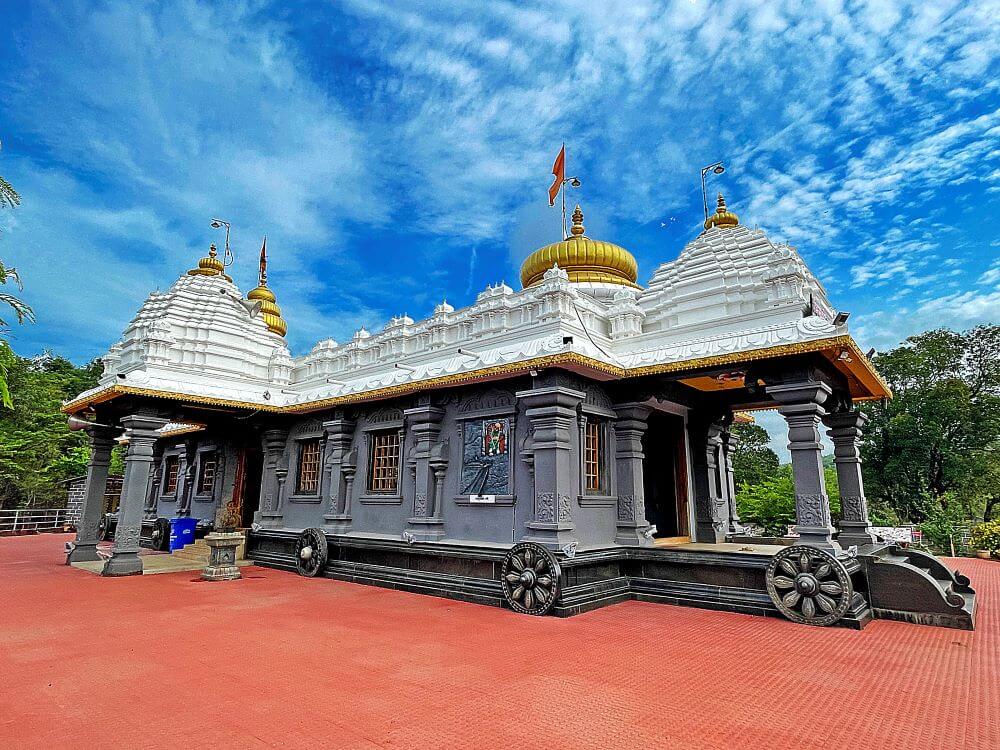
The temple of Trimukhi Vardaan Manai Devi, located in Dahivali Budruk of Chiplun taluka, which adds to the splendor of the Konkan region, is a place of deep faith for the devotees here. The uniqueness of this place lies in the fact that the entire temple is constructed in the form of a chariot. This structure has been created through a beautiful fusion of Maharashtrian and South Indian culture and architecture. The construction of the temple has been done using black stones brought from Salem in Tamil Nadu. Devotees believe that this Goddess is the protector of women who have been married off from the village (Maherwashini) and that she responds to their calls.
Nestled in a region rich with natural beauty, Dahivali Budruk is considered a prosperous village in the Konkan. This village is situated two kilometers away from the Savarde railway station in the Chiplun taluka. The village is surrounded by the banks of the perennial Kapshi River flowing from the south and high mountains to the north. In this village, at the foothills of the mountain, stands the three-hundred-and-fifty-year-old temple of the Trimukhi Vardaan Manai Devi, which is considered one of the most spiritually awakened and famous temples in the Konkan region. The idol of the Goddess with three faces is considered rare in the country. Considering the deep devotion of the devotees towards the Goddess and the number of pilgrims who come here for darshan, the state government has also honored this temple by granting it the ‘C’ grade pilgrimage site status.
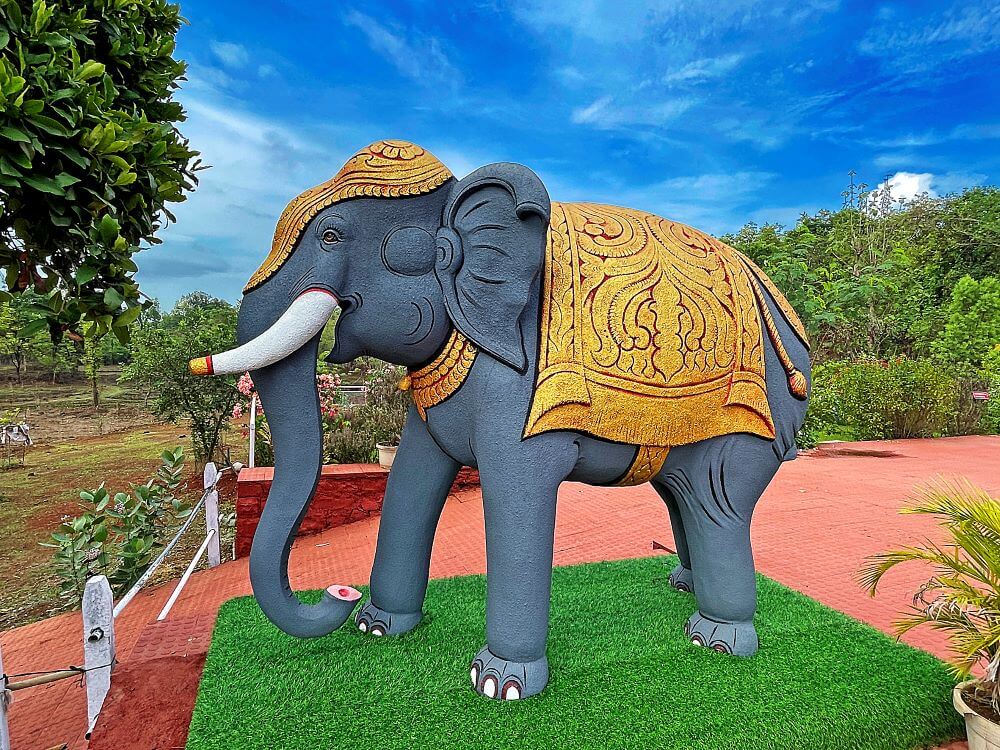
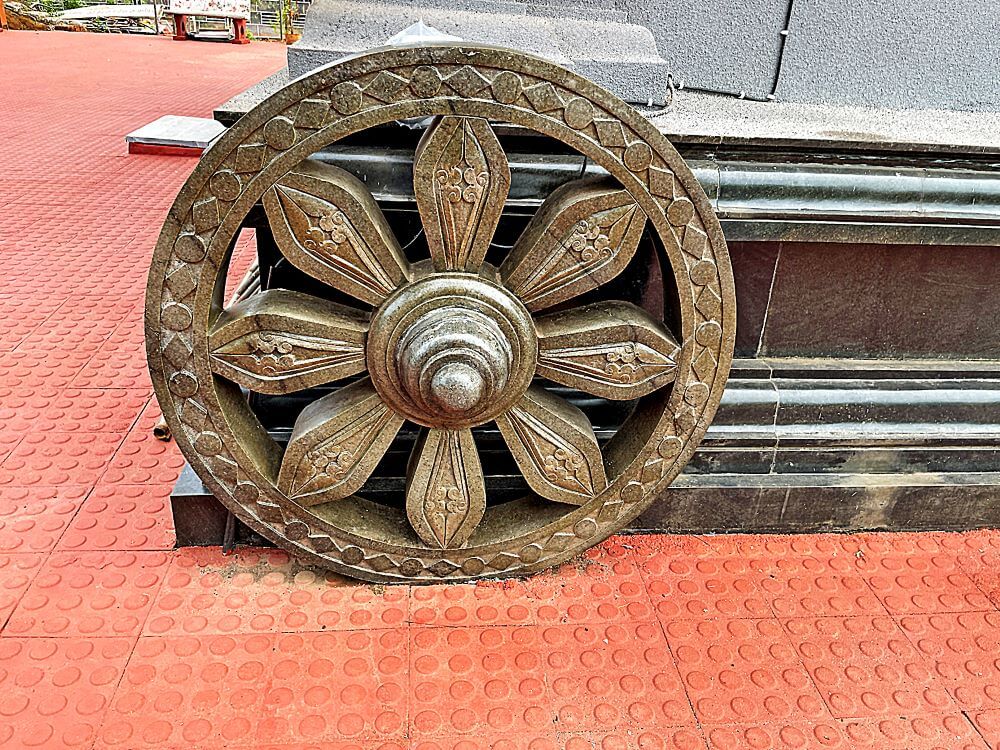
This temple of the three-faced Vardaan Manai Devi is situated on a flat area on a hillside. The temple courtyard is approximately four to five feet high. Upon entering the courtyard via the steps, one sees beautiful gardens developed on both sides of the temple. These contain various flowering plants and ornamental trees, which enhance the beauty of the temple. Near the main entrance, there are two large sculptures of elephants on both sides. This temple was built by the same artisans who constructed the Prati Balaji Temple in Pune. For this, forty artisans from Kerala worked day and night for three months. The design of this temple is like a chariot. Therefore, just as a chariot has wheels, five wheels each are carved into the stone on both sides of the temple. Also, like the flags on a chariot, saffron flags have been placed on the shikhara (spires) here. Due to the stone spray finishing applied to all the stonework here, this structure appears as if it has been carved from a single, monolithic stone.
The temple is structured with a Darshan Mandap, Sabha Mandap, and Garbhagriha. The temple is built on a plinth approximately three feet high. Therefore, one enters the Darshan Mandap by climbing five steps. The Darshan Mandap here is of an open type, and on the four pillars within it, there is one main and four at the top. There are five such spires, with four situated at the corners. On both sides of the Darshan Mandapa, stone wheels are carved on the exterior. Near the entrance of the Sabha Mandapa, inside a carved stone shrine, are the black stone idols of Manai Devi and Bhairi. The Sabha Mandapa is spacious and completely open. All the pillars here are embedded within the walls. This Sabha Mandapa also features one main spire and several smaller spires. On the exterior of the Sabha Mandapa, four wheels are carved, with two on the right and two on the left.
In the assembly hall, to the left of the sanctum sanctorum, stands an idol of Nandi carved from black stone, with a Shiva Linga placed before it. The sanctum sanctorum has been constructed within the assembly hall, leaving space for a circumambulation path. Within the unique stone shrine of this sanctum, from left to right, are the idols of Goddess Vardana, Vaghjai, Gudhai, and Baji. Among these, the idol of the primary deity, Goddess Vardana, is larger than the others and possesses three faces and six arms. She is considered to be the combined form of Lakshmi, Saraswati, and Durga. On all three faces are beautifully crafted crowns, carved directly into the stone. This form of the Goddess is a divine blessing, featuring intricately carved garments and ornaments, various weapons held in six hands, and a beautifully sculpted back slab.
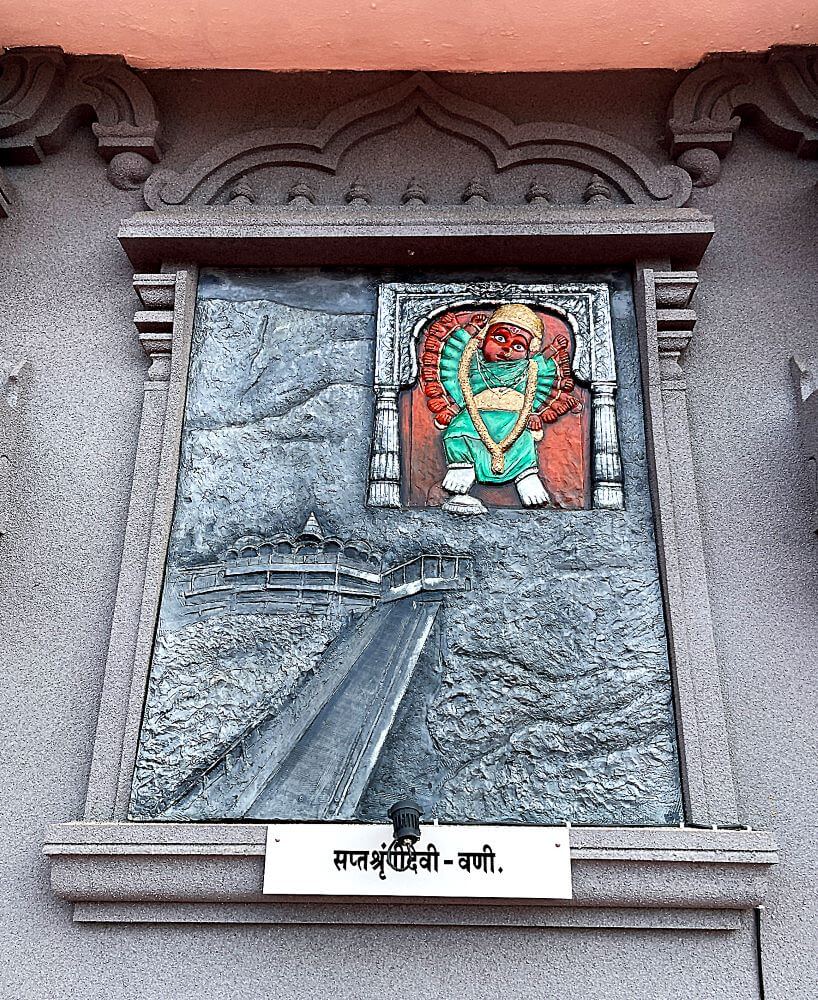
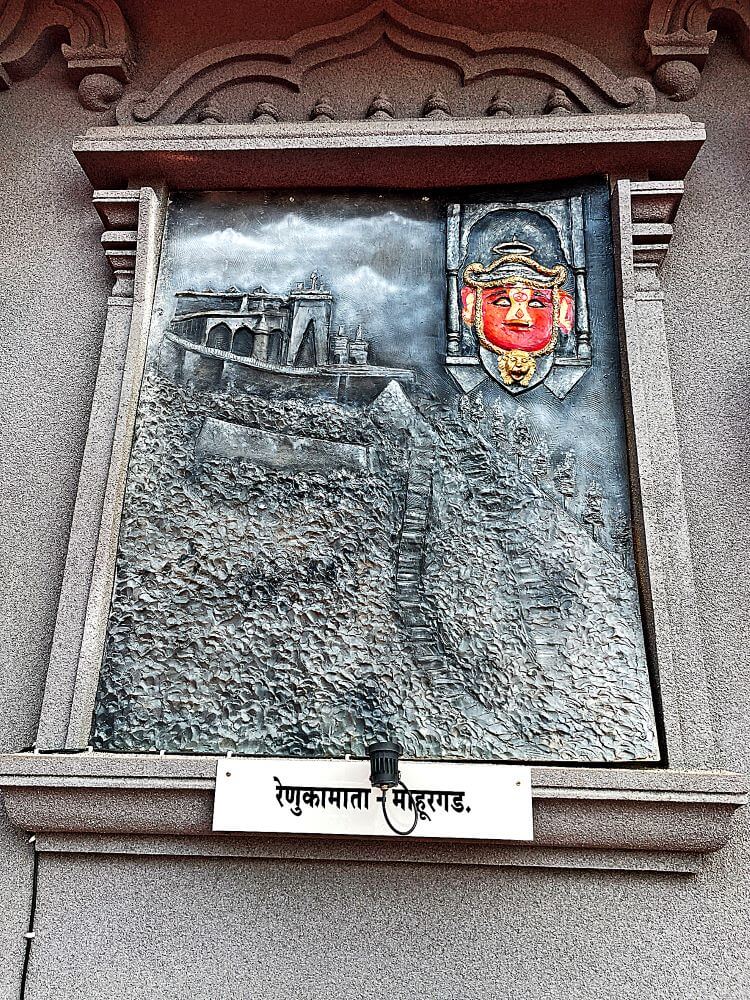
The outer walls of the temple are adorned with intricate craftsmanship, and the stone wheels carved into them are so beautifully rendered that they appear as realistic as the wheels of an actual chariot. Furthermore, the exterior walls feature murals of Renukamata of Mahurgad, Saptashrungi Mata of Vani, Tulja Bhavani of Tuljapur, and Mahalakshmi Ambabai of Kolhapur. Behind the temple, ancient idols are arranged in a row.
Every village festival in the Konkan region possesses its own unique significance. Similarly, the Sama Yatra held every three years at this temple in Dahivali is a special event. It is said that the tradition of this pilgrimage dates back hundreds of years. In years when there is an Adhik Maas (extra month), a three-day festival is held here on the day of Paush Purnima. On the first day of the festival, which falls on Paush Trayodashi, a palanquin carrying the idols of Varadan-Manai, Gudhai, Waghjai, Bhairi, and Baji is carried in a procession throughout the village. During this time, a fifty-foot-tall Aina tree is felled, stripped of its bark, and fashioned into a pillar known as a ‘Laat’. On the second day, this pillar is carried through the surrounding villages with traditional dances. At various places, married women perform rituals to worship the pillar. The pillar is then mounted into a groove on a twenty-five-foot-tall wooden post located in front of the Goddess’s temple. On the third day, which is Purnima, the village elders and subsequently the devotees are hoisted onto this structure. This is accompanied by the playing of drums and shehnai. Because all the devotees offer their prayers to the Goddess in one collective voice, this festival is called ‘Sama Yatra’. It is believed that ‘Sama’ signifies a collective call made by everyone together to the Divine. Villagers who have moved away for work or business make it a point to return for this festival. Since it occurs only once every three years, the allure of the pilgrimage is even greater.
The sanctum sanctorum houses the divine idol consecrated according to ancient Vedic traditions, surrounded by serene courtyards and traditional temple architecture.
Navratri, Maha Shivratri, Annual Temple Jatra & Deepotsav
Compare and book flights, secure top-rated local hotels near the temple, hire reliable guides, and rent cars instantly.
Extend your pilgrimage by visiting other highly sacred temples located nearby.


Add ₹999 more to unlock FREE SHIPPING!
Your sacred cart is currently empty.
Shop Photo FramesFill in your delivery details below to place your order.
Add comment