
Add ₹999 more to unlock FREE SHIPPING!
Your sacred cart is currently empty.
Shop Photo FramesDedicated to Lord Shiva, the ancient temple of Vaijnath Mahadev shrine in Jitodia has bestowed a distinct spiritual identity upon the Charotar region of Gujarat. The pre-eminent feature of this temple is the natural stream of water that flows incessantly from microscopic apertures atop the Shivalinga (an iconic representation of Lord Shiva) enshrined within the Garbhagriha (sanctum sanctorum). Devotees reverently refer to this sacred flow as the ‘Shivganga’. Hundreds of pilgrims from various regions visit daily to behold this divine sight and partake of the holy water as Teertha (sanctified water). This sacred site, endowed with immense historical and religious significance, commands profound faith amongst Shiva devotees. It is the firm belief of the faithful that a visitation to this shrine leads to the fulfilment of one’s cherished desires.
This seat of Vaijnath Mahadev is over a millennium old. According to historical chronicles, the origins of this temple are directly linked to Kumarapala, the son of Raja Siddharaj Jaysinh Solanki (r. 1094-1143 CE), the illustrious 12th-century ruler of Gujarat. In the year 1212 of the Vikram Samvat (1155 CE), this valiant monarch commissioned the Jirnoddhara (restoration and renovation) of the temple. Throughout its historical journey, the temple has witnessed numerous vicissitudes and withstood foreign invasions. According to local legend, during the Mughal Empire, the shrine was repeatedly attacked. To defend this religious sanctuary and its culture, the ascetics and saints of the then Goswami sect displayed unprecedented valour. In this struggle, approximately 200 to 250 Sadhus sacrificed their lives and attained martyrdom. Nearly 100 Samadhis stand within the temple precincts as a testament to this supreme sacrifice. Devotees gather in vast numbers to pay their respects at these memorials, particularly on the days of Purnima (full moon) and Amavasya (new moon).
The legends associated with this temple trace back to the era of the Mahabharata. In ancient times, this entire region was part of a dense forest known as ‘Hidimbivan’. During the period when the Pandavas were in exile, the mighty Bhima was searching for a suitable site to consecrate a Shivalinga for his daily worship. It was at this very spot that Bhima installed the Shivalinga and performed his devotions to Lord Mahadev. Subsequently, for many years, the site remained veiled by time and reclaimed by the wilderness. The local folk tale says that approximately a thousand years ago, a cowherd observed that one of his cows would daily visit a specific spot and spontaneously offer her milk. The cowherd brought this phenomenon to the King’s attention. When he ordered an excavation of the site, this divine Shivalinga was revealed. The King desired to transport the Shivalinga to his capital. However, despite exhaustive efforts, the Shivalinga could not be moved from its original location. That very night, Lord Mahadev appeared in the King’s dream, commanding him to leave the Shivalinga where it was and to erect a temple over it. The King’s mother also received a similar divine vision, leading to the construction of the temple at this site. The name ‘Vaijnath’ is derived from ‘Vaidya’, meaning the Lord who is a healer or physician, as it is believed that this sacred water possesses the power to cure various ailments.
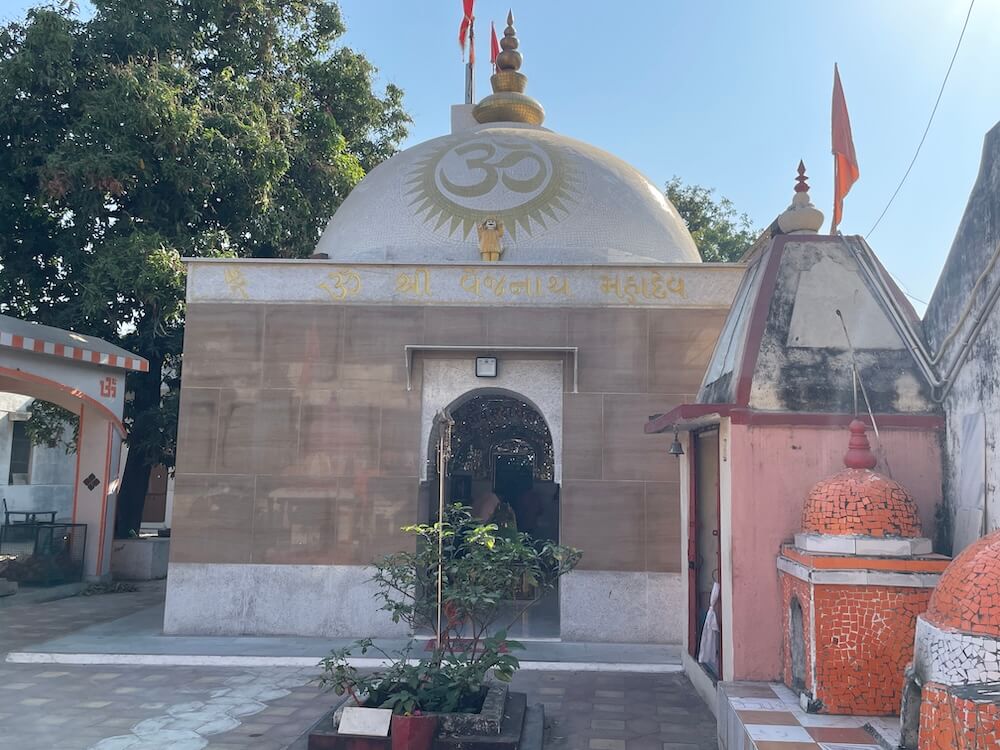
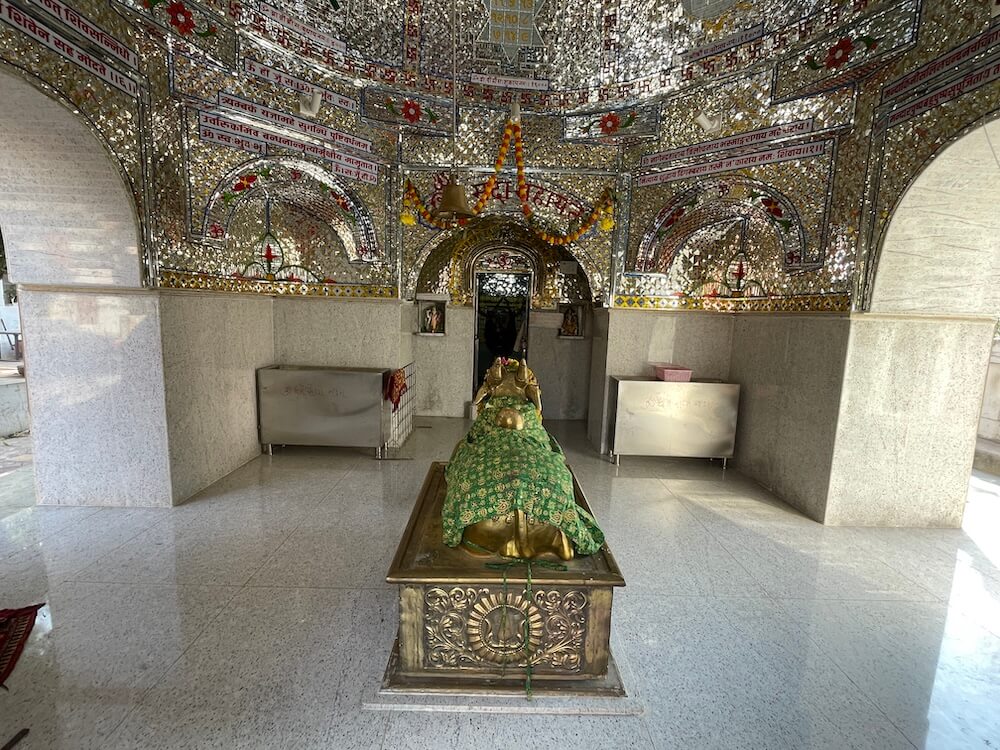
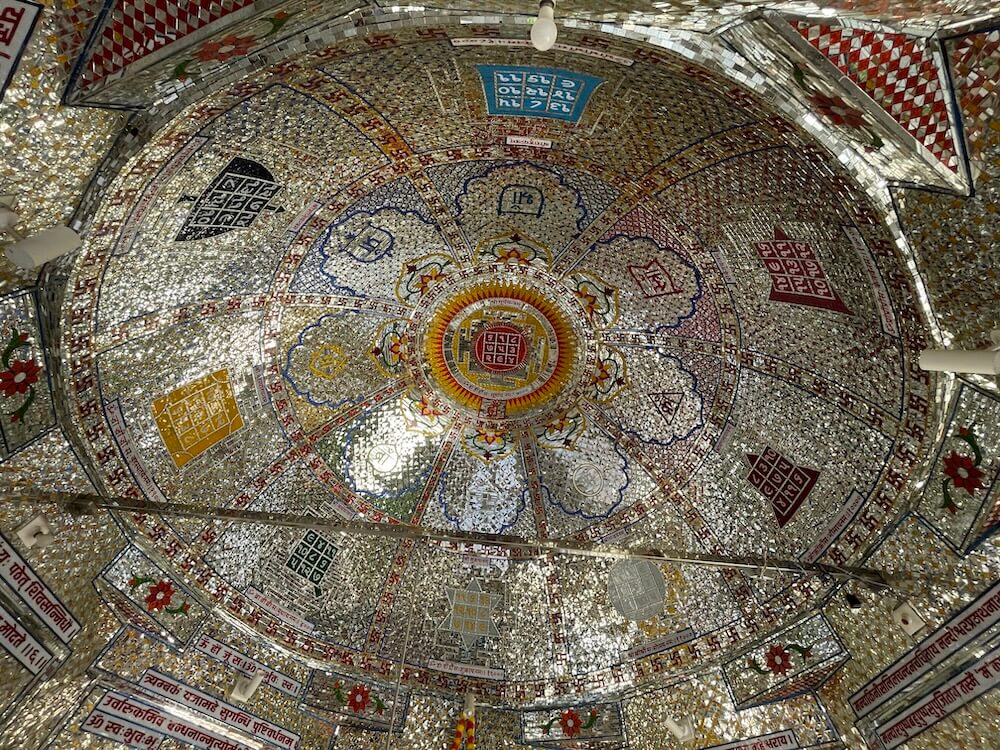
One enters the temple courtyard through a gateway set within the surrounding ramparts. To the left and at the front, there are arched cloisters. The Vaijnath Mahadev temple stands centrally within the courtyard. The architectural composition of the temple comprises a Sabhamandap (assembly hall), an Antarala (vestibule) and the Garbhagriha (sanctum sanctorum). In the Sabhamandap, a brass idol of Nandi is placed upon a large pedestal. Additionally, the assembly hall houses a Nagara (traditional drum). The upper walls and the ceiling of the Sabhamandap are adorned with intricate glass minakari (enamel) work. In front of the Nandi idol, near the entrance to the vestibule, sits a sculpture of a tortoise. Devotional niches are situated on either side of the sanctum’s entrance. In the centre of the Garbhagriha resides the Swayambhu (self-manifested) Shivalinga, encircled by a coiled serpent deity made of Panchadhatu (an alloy of five metals). It is said that water seeps through the fine pores in the upper part of the Shivalinga before five o’clock in the morning and between 12:00 and 1:00 in the afternoon. The water flowing from the Shivalinga collects in a specific Kunda (tank) and is distributed to devotees as Teertha. Furthermore, a niche within the sanctum houses an idol of Lord Ganesha. The niches on the wall behind the Shivpindi also contain idols of Shri Ram-Lakshman-Sita, Parvati and Lakshmi-Narayan. The assembly hall and the sanctum of the temple are crowned by two dome-shaped Shikharas (spires).
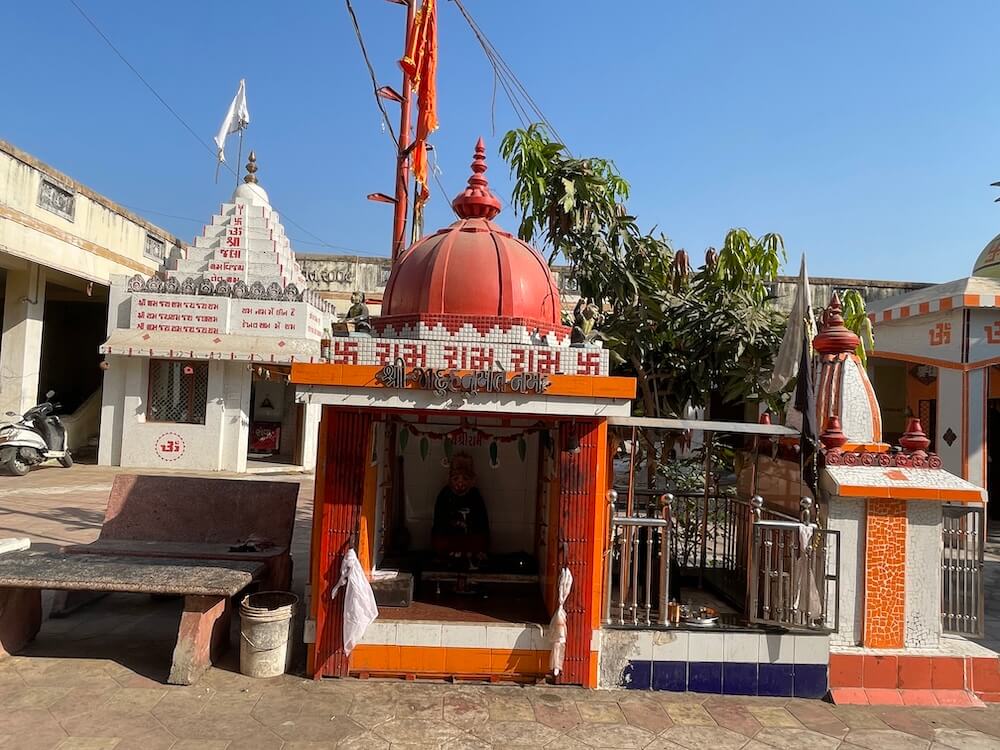
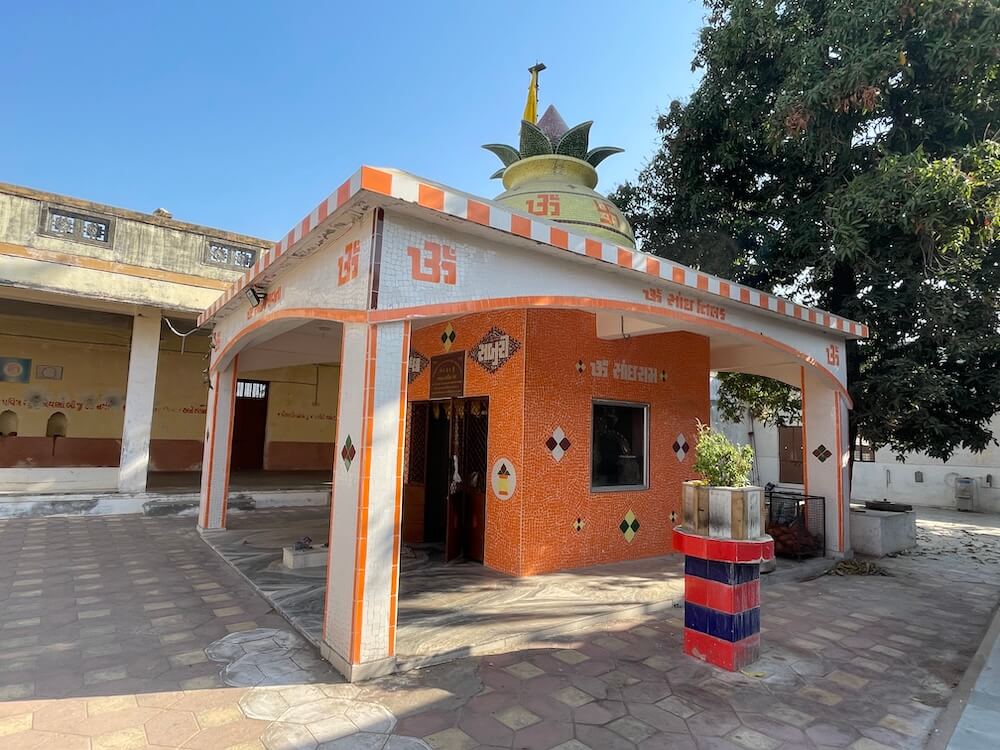
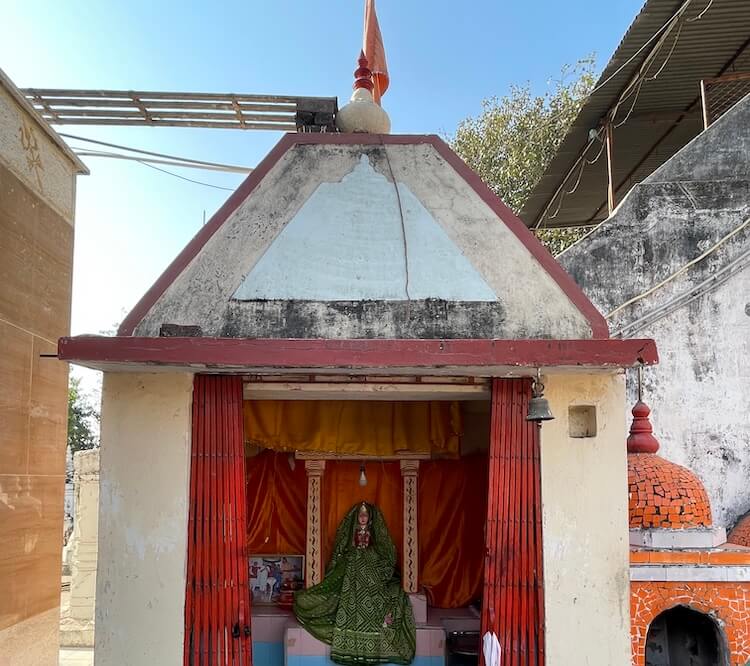
To the right of the temple, there are approximately 100 Samadhis of the Sadhus. Apart from the main shrine, several other temples have been established within the complex. These include independent shrines dedicated to Hanuman, Jalaram Bapa, Sai Baba, Durga Mata, Santoshi Mata and Shani Dev.
During the month of Shravan, a deluge of devotion sweeps through the temple. Throughout this month, various religious programmes are organised. Sadhus and seers from different provinces reside at the temple during this period to perform collective Hom-Havan (fire rituals) and the Maharudra Yajna. Every Monday of Shravan, the temple is elaborately decorated and long queues of devotees form for Darshan (sacred viewing). Mahashivratri is the grandest festival celebrated here, on which day a mask of Lord Mahadev with Jata (matted hair) is placed upon the Shivalinga. The Shringar Puja (ornamental worship) performed on this occasion is renowned. On the day of Shravani Amavasya, a large fair is held within the temple precincts. Special worship is also conducted during festivals such as Janmashtami and ‘Dharo Aatham’ (Bhadrapada or Bhadarva Sud Atham). The temple is open for devotees daily from 6 am to 9 pm.
This sacred temple stands as a testament to deep spiritual devotion, ancient architectural grandeur, and rich local cultural traditions.
The sanctum sanctorum houses the divine idol consecrated according to ancient Vedic traditions, surrounded by serene courtyards and traditional temple architecture.
Navratri, Maha Shivratri, Annual Temple Jatra & Deepotsav
Compare and book flights, secure top-rated local hotels near the temple, hire reliable guides, and rent cars instantly.
Extend your pilgrimage by visiting other highly sacred temples located nearby.


Add ₹999 more to unlock FREE SHIPPING!
Your sacred cart is currently empty.
Shop Photo FramesFill in your delivery details below to place your order.
Add comment