
Add ₹999 more to unlock FREE SHIPPING!
Your sacred cart is currently empty.
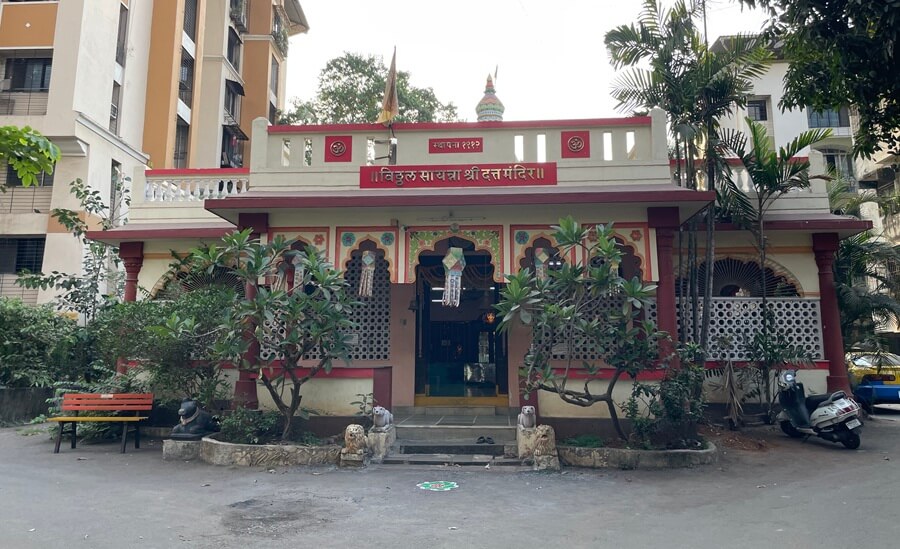
Shop Photo FramesThe Vitthal Sayanna Temple is counted among the few temples that preserve the cultural heritage of Thane city. Based on the name of the temple, one might assume that it is dedicated to Lord Vitthal; however, this temple is dedicated to Lord Dattatreya. Vitthal Sayanna built this temple at the behest of his guru, and thus, it is known by his name. Once located outside the main city, this temple, which was surrounded by many trees in those days, is now nestled amidst buildings. Yet, the uniqueness of this temple is felt right from its entrance, which is situated on the main road.
Located between Hariniwas Circle and Teen Hath Naka in Thane, this temple boasts a history spanning over one hundred years. This temple is counted among the ‘heritage structures’ of Thane. The legend of this temple states that there used to be a vast forest here. The spiritual guru, Nand Maharaj, had a divine revelation that Lord Dattatreya resided in this forest. Therefore, it was his wish that a Dattatreya temple be built here. Vitthal Sayanna, a contractor who constructed many towering buildings in Mumbai during the British era, was his disciple. Honoring his guru, Vitthal Sayanna built this spacious and beautiful Dattatreya temple in this forest. The idol of Lord Dattaguru was ceremoniously consecrated in this temple on the day of Gokulashtami, on 8 September 1912.
Vitthal Sayanna, who built this temple, was originally a resident of Mumbai. However, after constructing the temple, he began living next to it in Thane. He held an important position in the social and cultural life of Thane at that time. Vitthal Sayanna originally belonged to the Telugu Yadav Golla community of Andhra Pradesh. His His father was in the business of supplying milk to the British army in the Colaba area. Vitthal Sayanna also initially pursued this same business. Over time, he began taking on small construction contracts for the British. Through his hard work, he became a major contractor in a short span of time. He constructed many structures that enhance the glory of Mumbai. He built several significant buildings in the Indo-Saracenic or Indo-Gothic architectural style, which is a blend of Indian, Islamic, and Western architectural traditions. These include the Prince of Wales Museum (now the Chhatrapati Shivaji Maharaj Vastu Sangrahalaya), the Mumbai General Post Office, and the Sir Cowasji Jehangir Hall. He also constructed the Tata Power House in Khopoli, as well as the old British-era bridge connecting Thane and Kalwa.
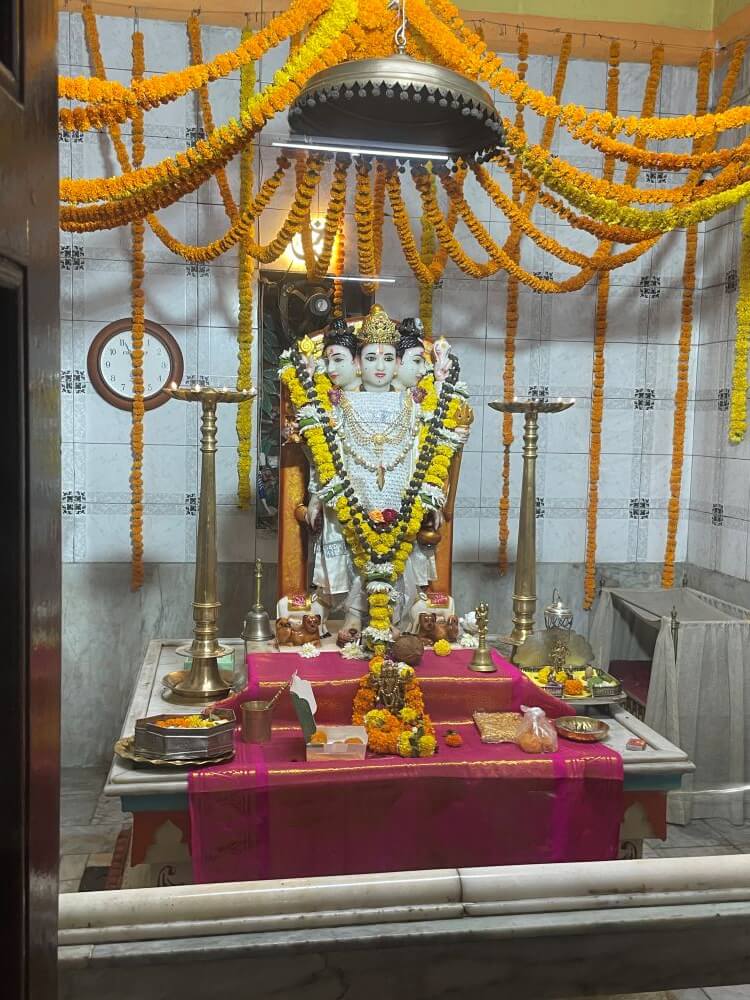
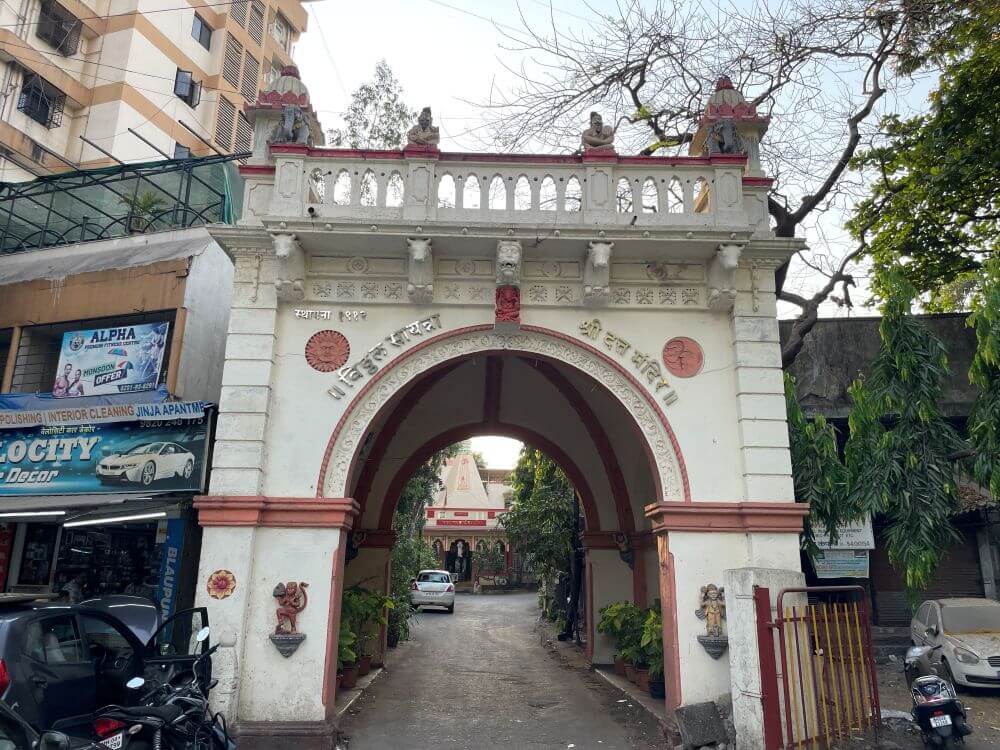
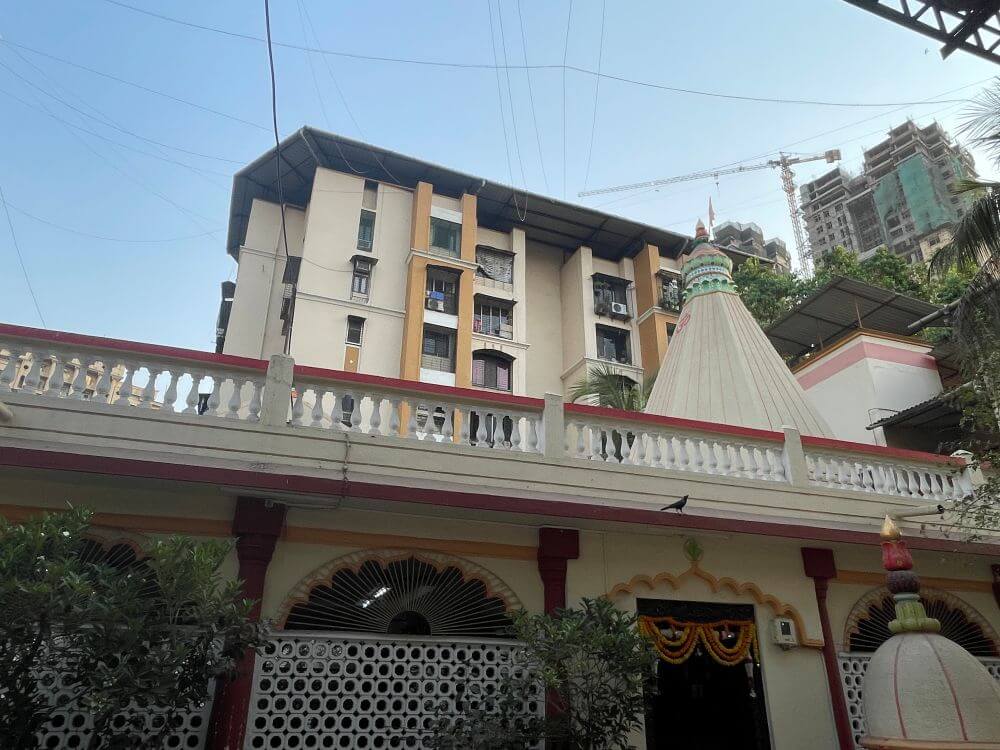
The idol of Lord Dattatreya in this temple is carved from marble stone. It is approximately three and a half feet in height. It is said that this idol was crafted by Muslim artisans from Jaipur. Of the Dattatreya incarnation, Shri Nrusimha Saraswati Since the time of the incarnation, the field of Dattatreya devotion has seen a synthesis of Hindu and Muslim traditions. Chand Bodhle, the guru of the Dattatreya devotee Janardan Swami, was a Muslim. It was Chand Bodhle who inspired Saint Eknath Maharaj to compose the ‘Chatuhshloki Bhagavata’. There is also a legend that Dattatreya visited Saint Eknath Maharaj in the guise of a Malang. This tradition of syncretism in the worship of Dattatreya is unconsciously reflected in the craftsmanship of the idol in this temple. On the main road here, there is a large grand entrance to the temple premises. This grand entrance, which is twenty feet wide, has a dome with a radius of approximately eight to ten feet. On its four corners are four load-bearing Yaksha figures. Above the entrance, there are four small domes at the four corners. Next to them are statues of sages and seers, as well as elephants and dogs. On the back side of the arch are the idols of Lakshmi and Saraswati. Inside the grand entrance, there is seating space like a guardroom on both sides. It is said that during temple festivals, musicians playing the chaughada would sit here, and the attendants who welcomed arriving distinguished devotees by showering flowers would also be stationed here. After entering through this spacious door, to the left is the idol of Hanuman, and To the right is the idol of Garuda.
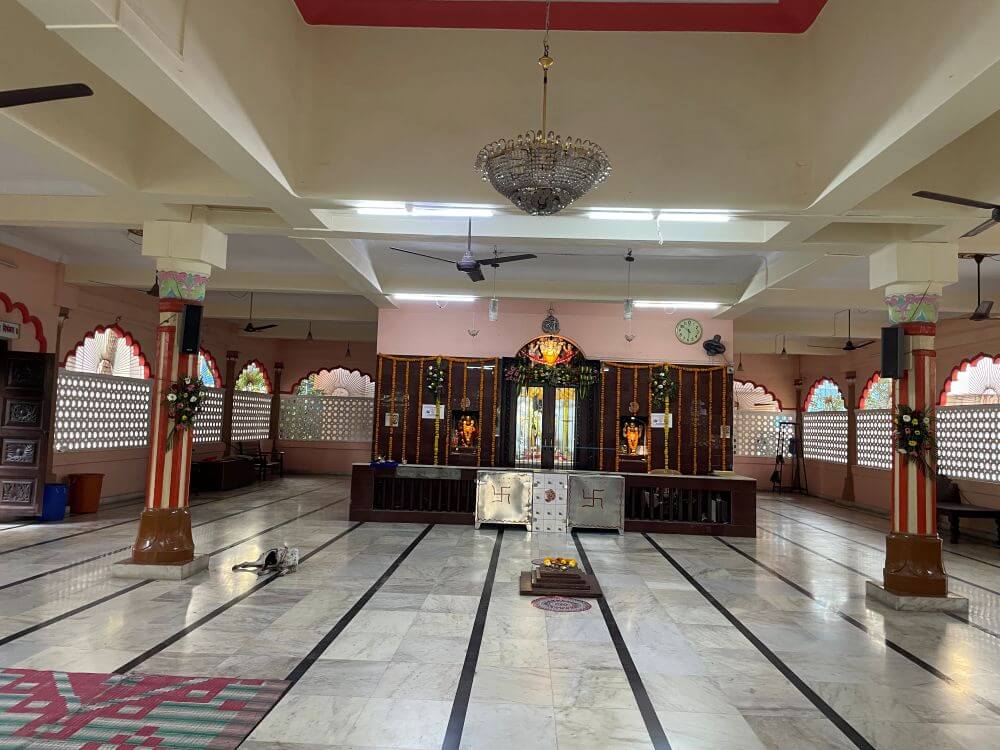
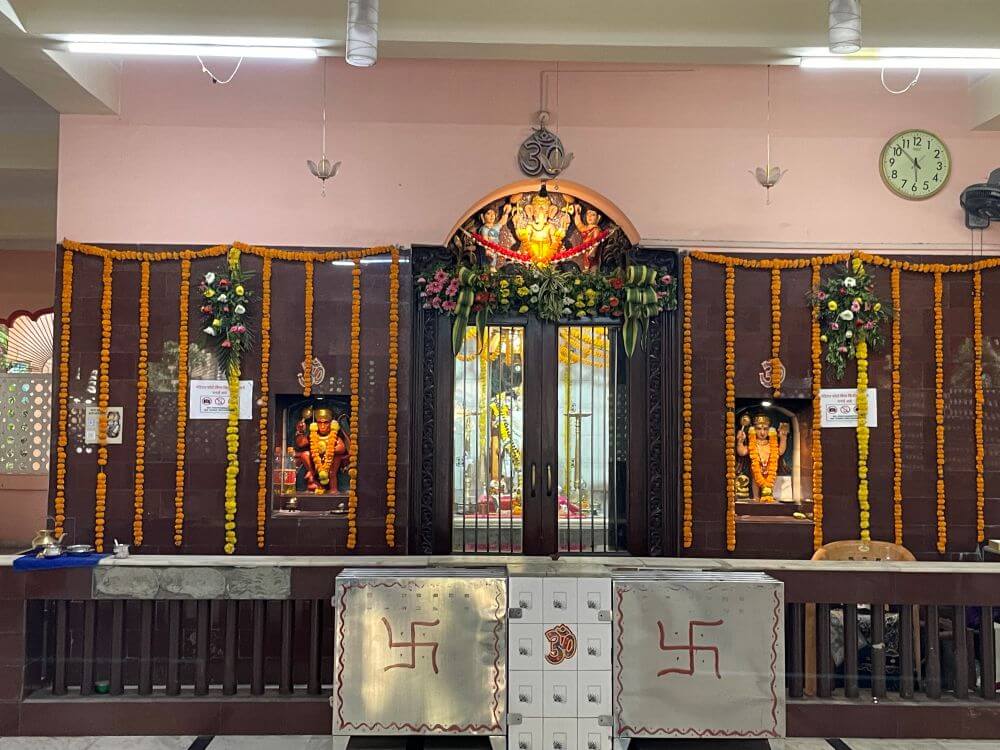
There is a small yet spacious path in the courtyard leading up to the temple. Here stands a full-sized statue of Vitthal Sayanna. On both sides of the temple steps, there are statues of a lion and a dog. On one side, there is a statue of Nandi. The design of the temple’s main hall was different in the past; however, it was altered during the renovation that took place in 1985. There are two pillars in the center of the hall. Beyond them, leaving a spacious circumambulation path, is the sanctum sanctorum. A statue of a tortoise is placed here. In the niches on the left and right sides of the doorway, there are beautiful statues of Hanuman and Garuda. On the lintel above the entrance of the sanctum sanctorum, there is a statue of Ganapati, flanked by statues of Riddhi and Siddhi waving whisks. During festivals and auspicious occasions, the idol of Dattatreya in the sanctum sanctorum is adorned with jewelry, a golden crown, and attire woven with golden threads. This crown and attire It has been preserved since the time of its establishment. Along with the main idol, there are two small brass idols of Lord Dattatreya here.
Behind the temple is an ancient Tulsi Vrindavan. Nearby are the Padukas of Nand Maharaj, over which a small dome has been erected. It is said that many saints, including Gadge Maharaj, Tukdoji Maharaj, and Chinmayanand Swami, have visited this temple. It is also said that Shirdi Sai Baba and Kalavati Mata have visited this place. This temple has hosted devotional music concerts by legendary artists such as Balgandharva, Sawai Gandharva, Master Krishnarao, and Ram Marathe.
Festivals such as Gudi Padwa, Ram Navami, Hanuman Jayanti, Ashadhi Ekadashi, Krishna Janmashtami, Dahi Handi, and Ganpati are celebrated at the temple. On Dussehra, Diwali, and Kojagiri, a milk abhishek is performed on the idol. The management of the temple is carried out by the descendants of Vitthal Sayanna. Devotees can have darshan at the temple between 5 in the morning to 12 in the afternoon and from 4 in the evening to 9 at night.
This sacred temple stands as a testament to deep spiritual devotion, ancient architectural grandeur, and rich local cultural traditions.
The sanctum sanctorum houses the divine idol consecrated according to ancient Vedic traditions, surrounded by serene courtyards and traditional temple architecture.
Navratri, Maha Shivratri, Annual Temple Jatra & Deepotsav
Compare and book flights, secure top-rated local hotels near the temple, hire reliable guides, and rent cars instantly.
Extend your pilgrimage by visiting other highly sacred temples located nearby.


Add ₹999 more to unlock FREE SHIPPING!
Your sacred cart is currently empty.
Shop Photo FramesFill in your delivery details below to place your order.
Add comment