
Add ₹999 more to unlock FREE SHIPPING!
Your sacred cart is currently empty.
Shop Photo FramesThe Ashtavane Ganapati Temple in Guhagar, Ratnagiri District, known as the ‘Land of Gods’ in Konkan, is a revered shrine for many devotees. This temple is situated on a hill to the east of the village. Hundreds of devotees and tourists visit daily to seek the blessings of Lord Ganesha and to behold the panoramic view of Guhagar beach. Grand celebrations are held during Maghi Ganesh Utsav and Angaraki Chaturthi. This Ganesha is renowned for fulfilling the wishes of His devotees.
The legend of the temple states that many sages used to meditate in the caves of the mountains near the vast sea of Guhagar. In one such laterite cave, the sages installed an idol of Shri Ganesha for their daily worship. Over time, the laterite cave developed cracks and collapsed. Only a part of it remained. To preserve the sanctity of this place, the villagers built a temple around the remaining laterite slab. This is the awakened Ganesha temple of Ashtavane.
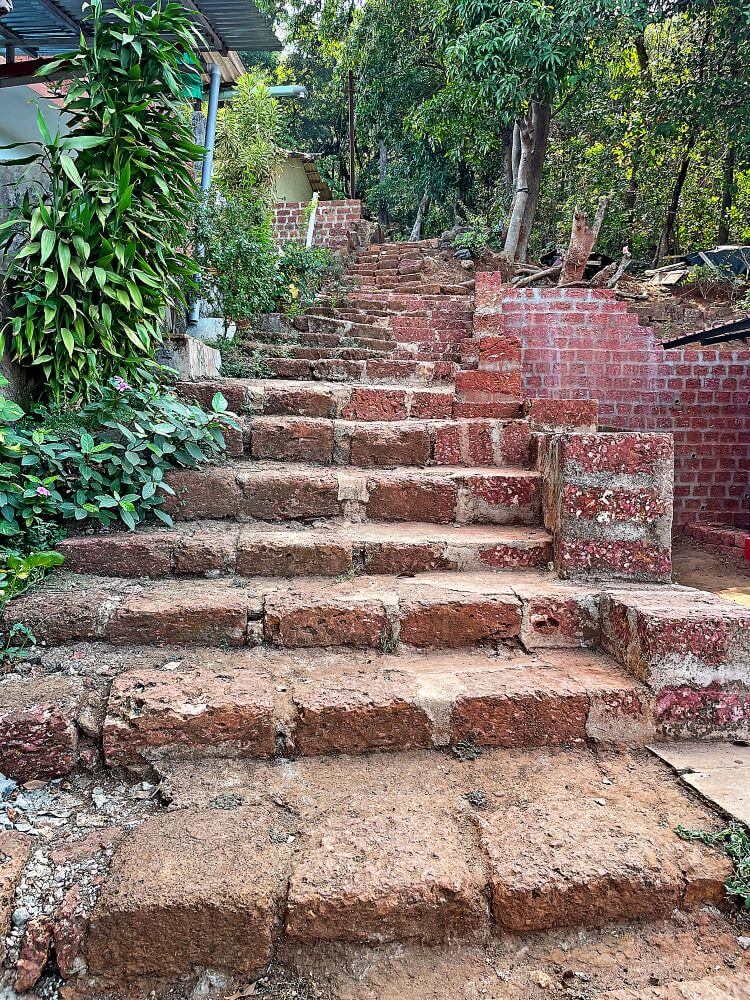
It is said that in ancient times, Guhagar had many caves, which is how the village got its name, Guhagar. Due to ancient shrines like Vyadeshwar, Durgadevi, Urphata Ganapati, Kartik Swami Temple, and Kopari Narayan Temple, Guhagar is known as the ‘Land of Gods’. A short distance from the Kartik Swami Temple in the Varcha Pat area of the village, there is a ‘pakhadi’ (a narrow path). From there, a path leads to the temple via steps built of laterite stone. One can reach the temple premises in 10 to 15 minutes by climbing these steps. After the pakhadi ends, one can ascend 15 to 20 steps to enter the temple. The abode of Ganesha is nestled in a nature-rich environment, with the pakhadi winding through mango and jackfruit trees, offering a panoramic view of Guhagar beach along the way. Thus, in addition to its religious significance, this temple holds a special place in Guhagar’s tourism.
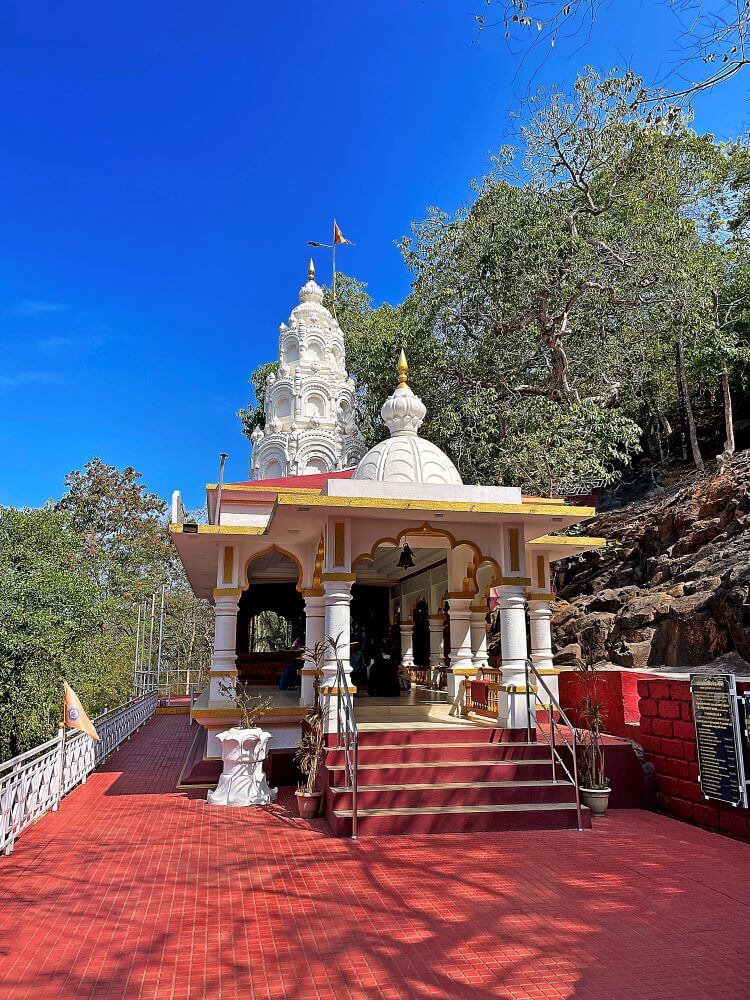
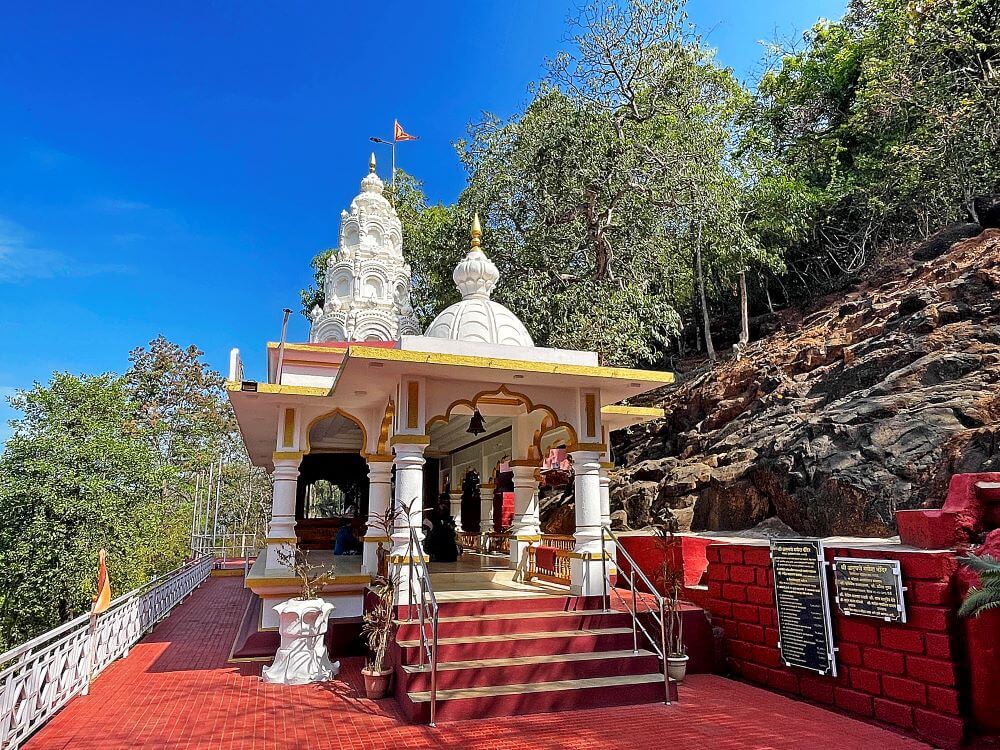
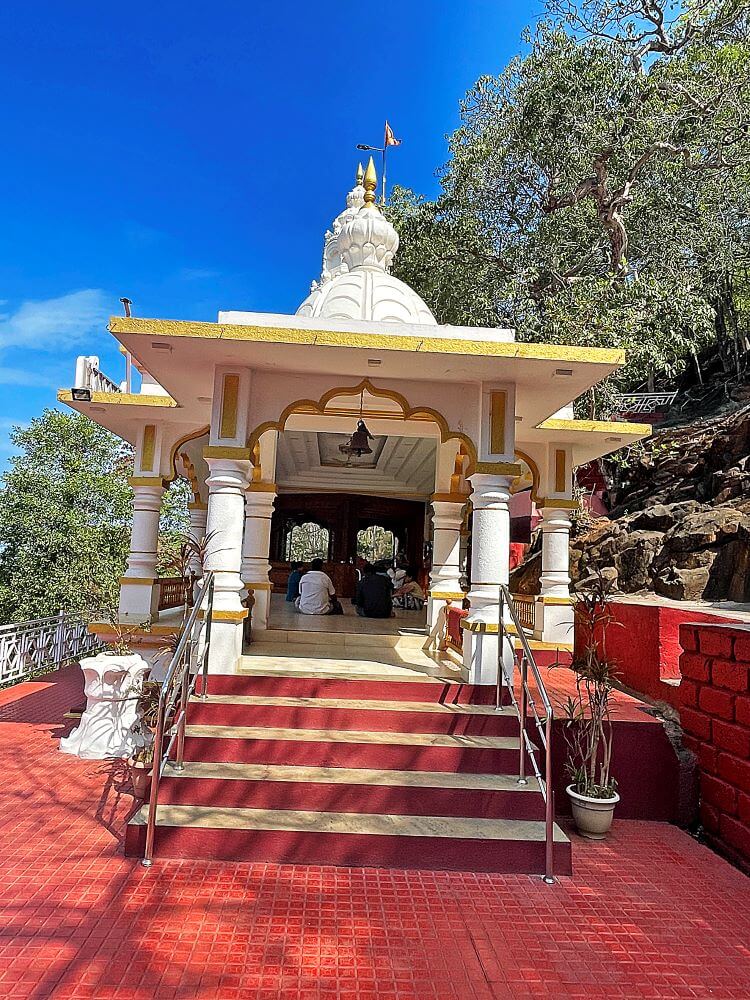
The laterite stone construction, attractive painting, and tall shikhara (spire) of the temple beckon devotees and tourists from afar. The temple courtyard is surrounded by a wall, and the entire courtyard is paved. The entire temple is painted in red, golden, and white colors. After the renovation in 2016, the temple acquired its current form. The temple comprises a Darshan Mandap (viewing hall), a Sabha Mandap (assembly hall), and a Garbhagriha (sanctum sanctorum). After climbing five steps from the temple courtyard, one enters the Darshan Mandap. The Darshan Mandap and Sabha Mandap are open-type structures, with their pillars connected by arched carvings at the top. The interior of the Sabha Mandap is beautifully painted, and a large chandelier hangs in the center.
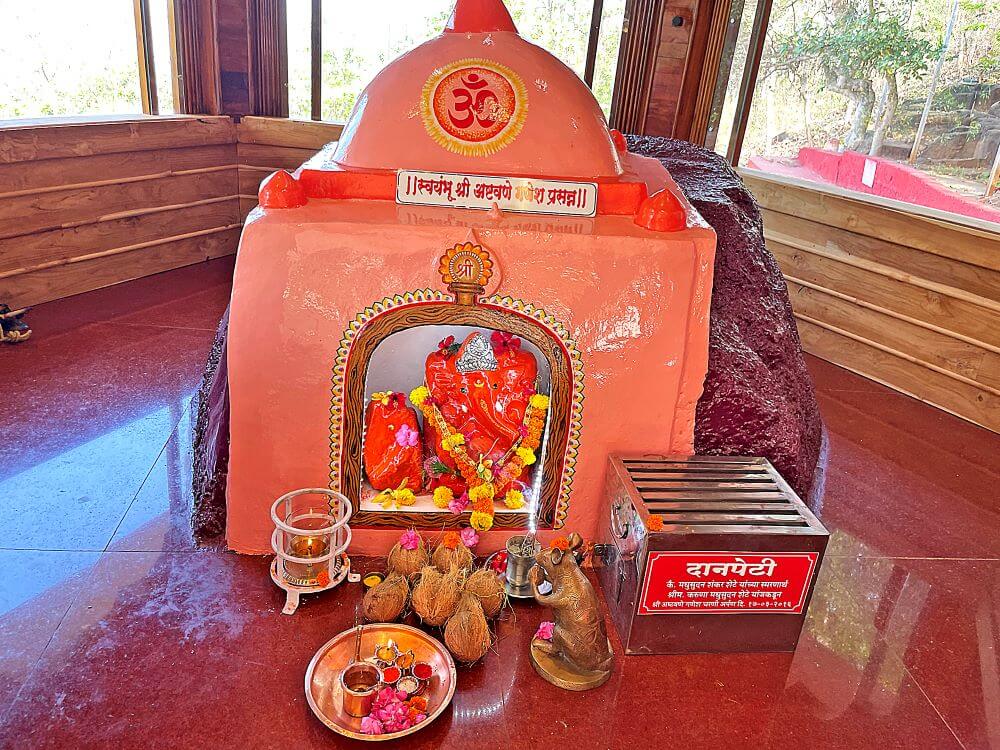
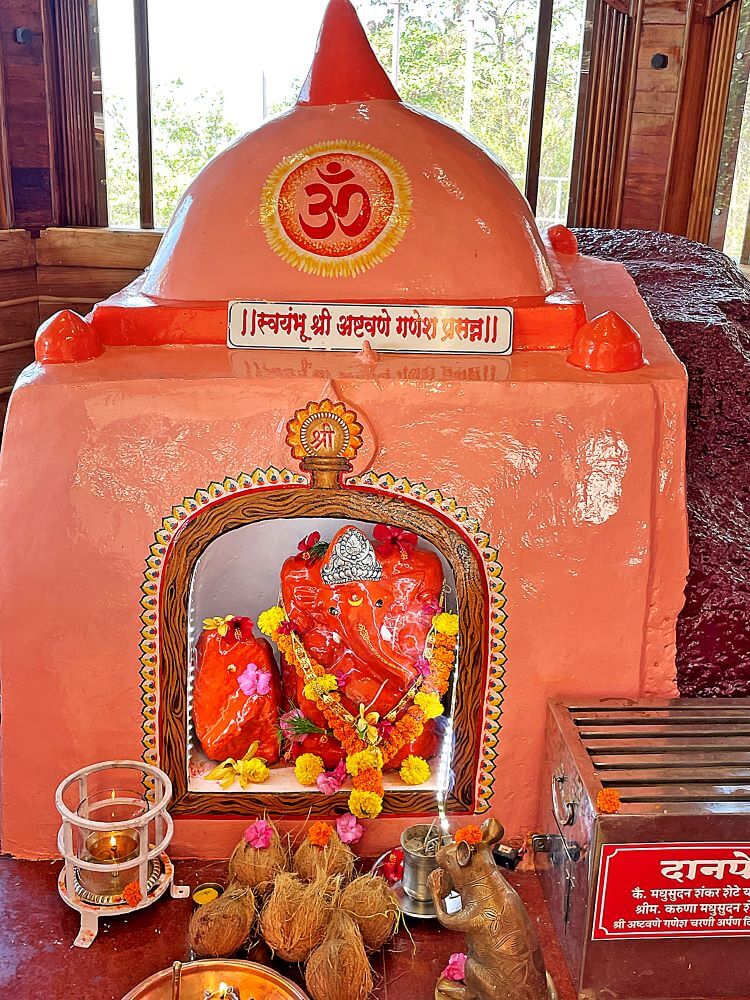
The Garbhagriha, located in front of the Sabha Mandap, features wooden carvings. The carvings on the doorframe of the sanctum depict leaves, flowers, vines, and peacock sculptures. Inside the Garbhagriha, the form of Lord Ganapati is carved on the front side of an ancient, large laterite slab. This is the main idol here. A small dome is built with the support of this slab, housing an east-facing idol of Ganesha with a left-turned trunk, measuring two and a half feet in height. The vermilion-anointed Ganesha wears a silver crown with a crescent moon on His forehead. A small slab is also present next to the Ganesha idol. In front of the idol is a large brass Mushakaraj (mouse, Lord Ganesha’s vehicle) holding a modak in its hands. The Darshan Mandap and Garbhagriha of the temple have shikharas. The entirely white shikhara above the Garbhagriha features distinctive carvings and many small, intricately carved kalashas (finials).
To the left of the temple, there is a perennial spring flowing from the rock. This water is channeled into a small pond through a ‘gomukh’ (cow’s mouth spout). This water is used for the rituals performed here. The water in this pond is known as ‘Ashtaache Teerth’ (the holy water of Ashta). From this, the place became known as Ashtavane and the temple as Ashtavane Ganesh Temple. Devotees believe that skin ailments and itching are cured by bathing in this water. It is said that this Ashtaache Teerth is considered as sacred as the Ganga Teerth. In the event of a death in the area, relatives offer Ashtaache Teerth to the mouth of the deceased. This practice has been observed for hundreds of years.
Every Tuesday and Sankashti Chaturthi, the temple is crowded with devotees seeking darshan. A grand festival is celebrated here during Maghi Ganesh Utsav and Angaraki Chaturthi. During this period, every devotee who comes for darshan is offered ukadiche modak (steamed modaks) as prasad. Devotees can have darshan of Ashtavane Ganesha daily from 5 AM to 8 PM.
This sacred temple stands as a testament to deep spiritual devotion, ancient architectural grandeur, and rich local cultural traditions.
The sanctum sanctorum houses the divine idol consecrated according to ancient Vedic traditions, surrounded by serene courtyards and traditional temple architecture.
Navratri, Maha Shivratri, Annual Temple Jatra & Deepotsav
Compare and book flights, secure top-rated local hotels near the temple, hire reliable guides, and rent cars instantly.
Extend your pilgrimage by visiting other highly sacred temples located nearby.


Add ₹999 more to unlock FREE SHIPPING!
Your sacred cart is currently empty.
Shop Photo FramesFill in your delivery details below to place your order.
Add comment