
Add ₹999 more to unlock FREE SHIPPING!
Your sacred cart is currently empty.
Shop Photo FramesMohol, known in ancient times as Chandramauli, is a historically famous and religiously significant village in Solapur district. This very village was home to Nagnaath, who established the ‘Nagesh Sampradaya’, a Shaivite tradition that emphasizes yogic practices. There are many famous Shiva shrines in this area. Bhaneshwar Mandir is one of them. This temple dates back to the Yadav period, and the ‘Solapur Gazetteer’ records that it was likely built by Hemadri, the prime minister of Ramdevraya Yadav. This temple, an excellent example of architecture, is a place of faith for countless devotees in the region.
The city of Mohol has witnessed many transformations. This city and its surrounding area were under the Satakarni rule from ninety CE to three hundred CE. In later periods, the Chalukyas and then the Yadavs ruled here. In thirteen hundred and forty-seven CE, this region came under the Bahmani rule. This taluka also experienced the period of the Adilshahi of Bijapur. Mohol was greatly affected by the wars of the thirteenth century. During the ‘Durgadevi Famine,’ which lasted for twelve consecutive years from thirteen hundred and ninety-six to fourteen hundred and eight CE, Mohol was literally deserted. It took another quarter-century for it to be resettled, as stated in the Gazetteer. During such crises, the saints and religious places here provided solace to the city. Bhaneshwar Mandir is one of the prominent temples among them.
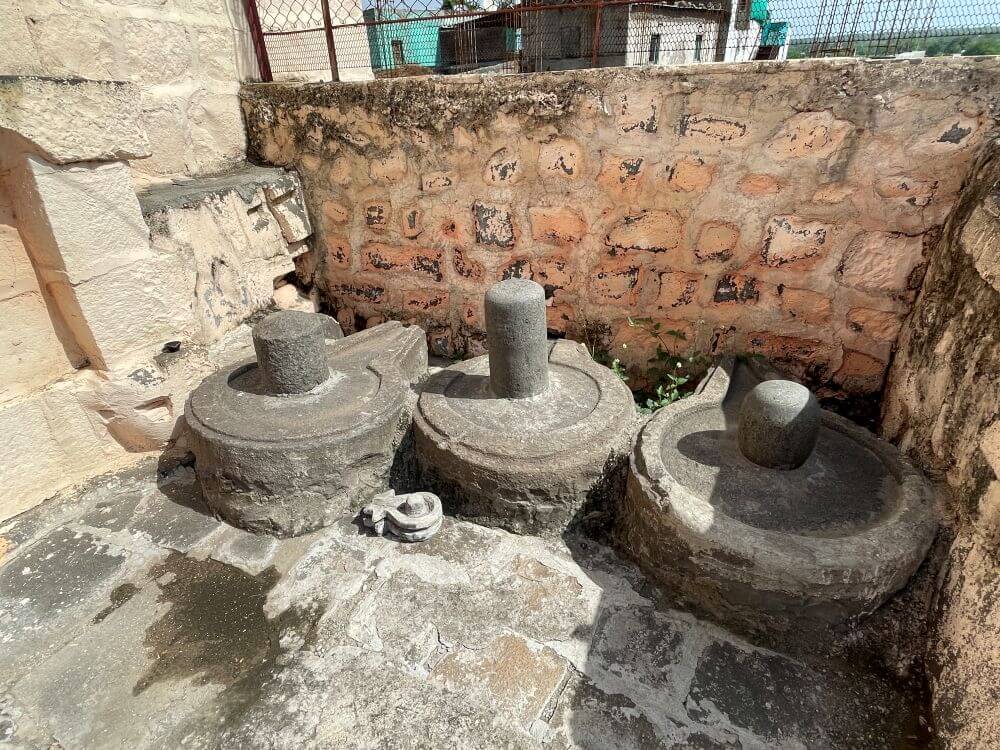
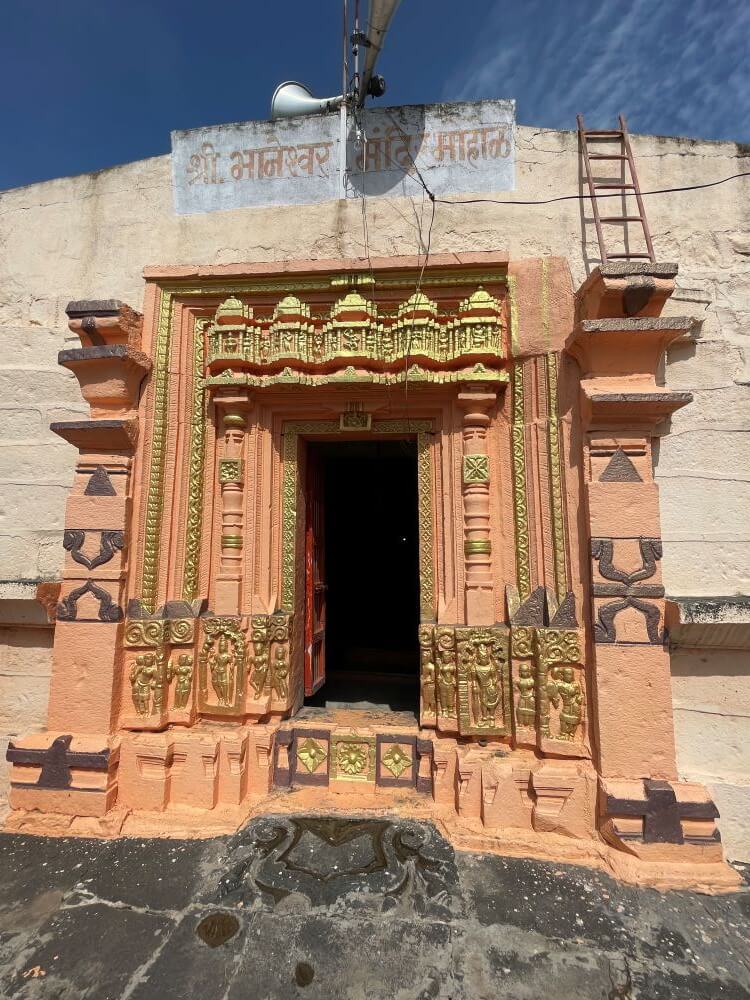
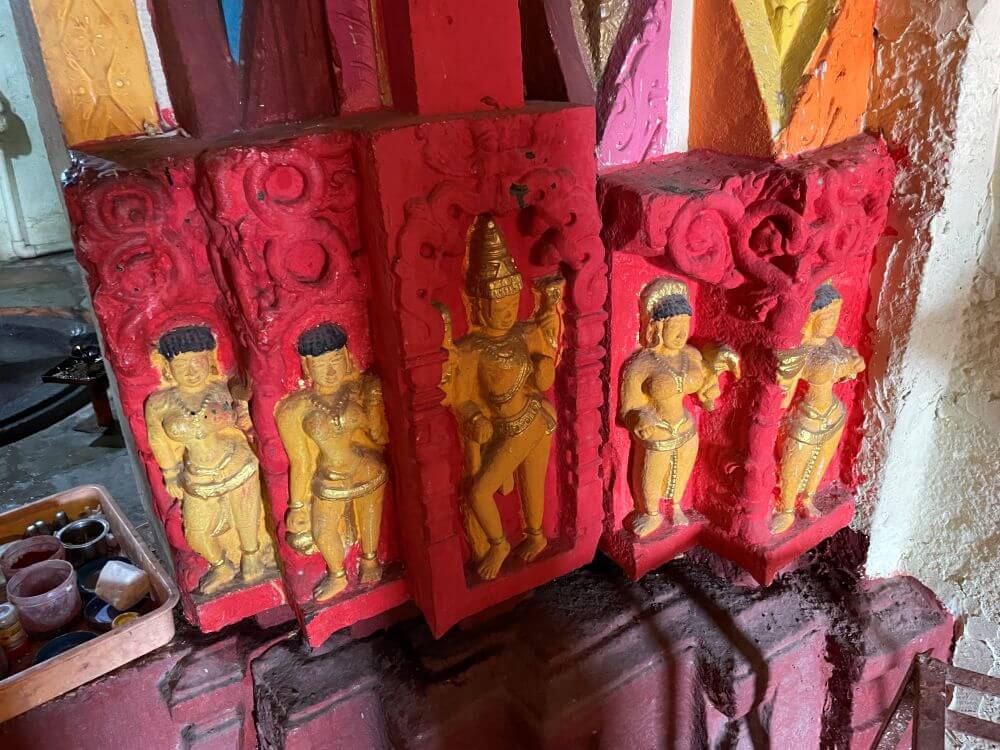
Situated in the heart of Mohol city, this ancient temple, built in the Hemadpanti architectural style, is distinctive. There are eleven steps leading up to the entrance of this temple, which stands on an adhisthana (plinth) about eight to ten feet high from the ground. On both sides of the stairway, there are large platforms with many ancient idols. The main entrance of the temple is adorned with various carvings and sculptures. A unique feature of this entrance is that it has nine dwarashakhas (door jambs) on each side. Of these, each side has two stambhashakhas (pillar jambs) and three velbutti shakhas (creeper motif jambs). Below these dwarashakhas are many small sculptures of dwarapalas (door guardians). The vertical bands on the left and right sides of the door frame are called dwarashakhas. According to temple scholar Go. Ba. Deglurkar, Indian temples can have one to nine dwarashakhas. They have different names according to their number. A single-jambed door is called Smarakirti, a two-jambed door is Suprabha, three (Subhaga), four (Gandhari), five (Nandini), six (Malini), seven (Hastini), eight (Mukushtali), and a nine-jambed door is called Padmini. Of these, an eight-jambed door is rare, and a nine-jambed door is considered extremely rare. Below this entrance, there is a chakranakshi (wheel motif) and a murti of Ganesha at the lalatabimba (lintel center). Above the lalatabimba, there is an ornate torana (archway) on the uttaranga (upper part of the door frame).
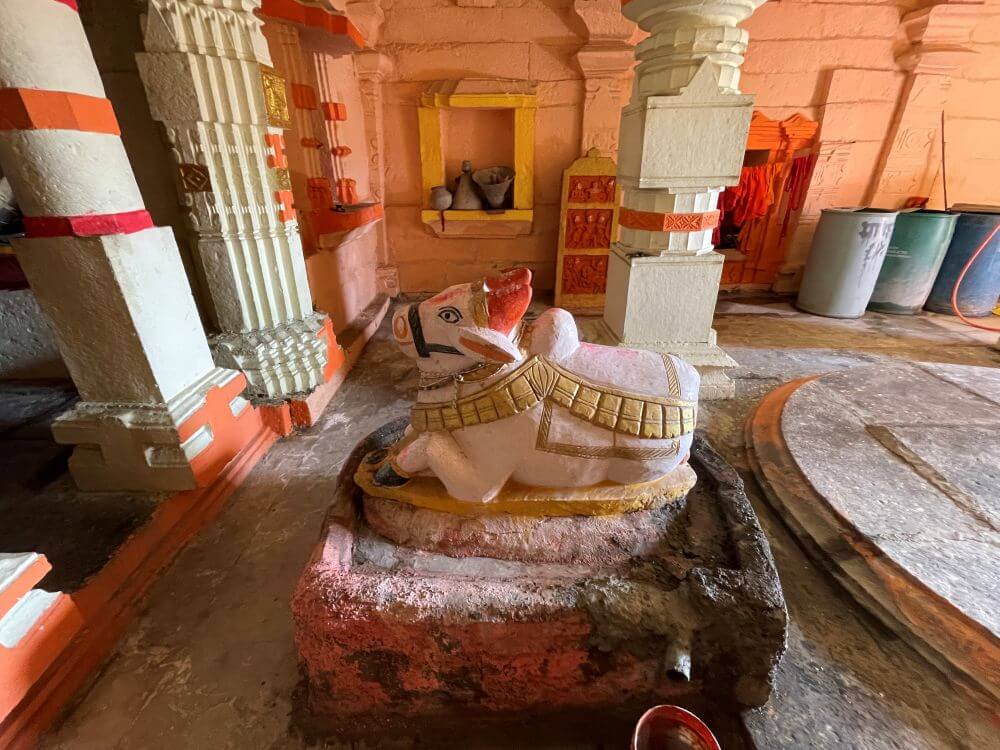
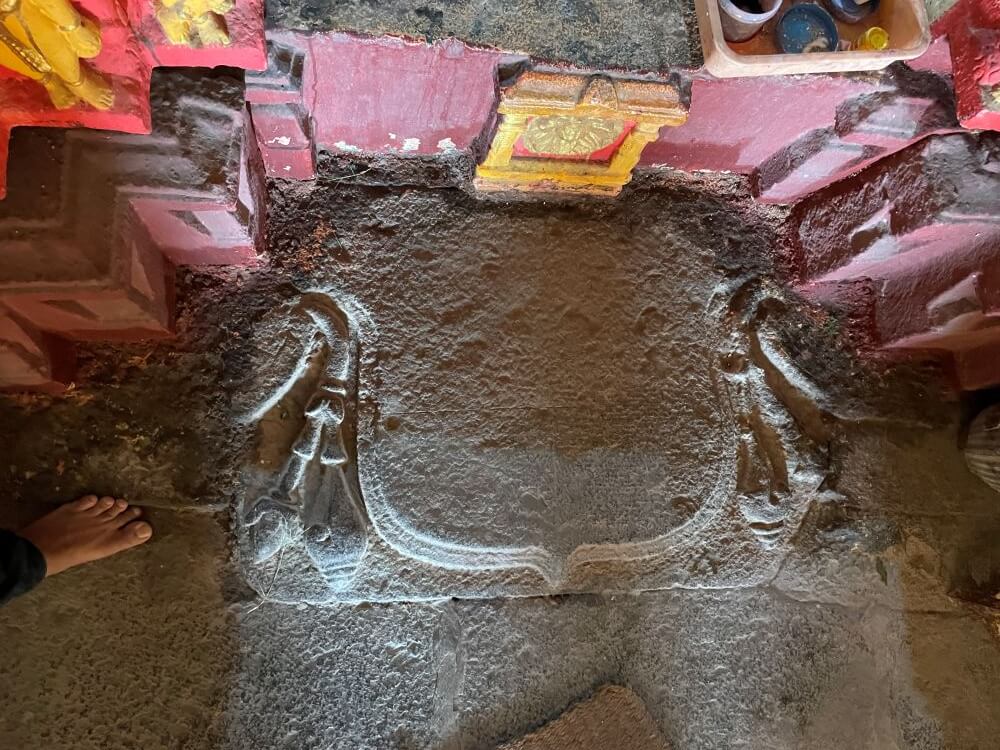
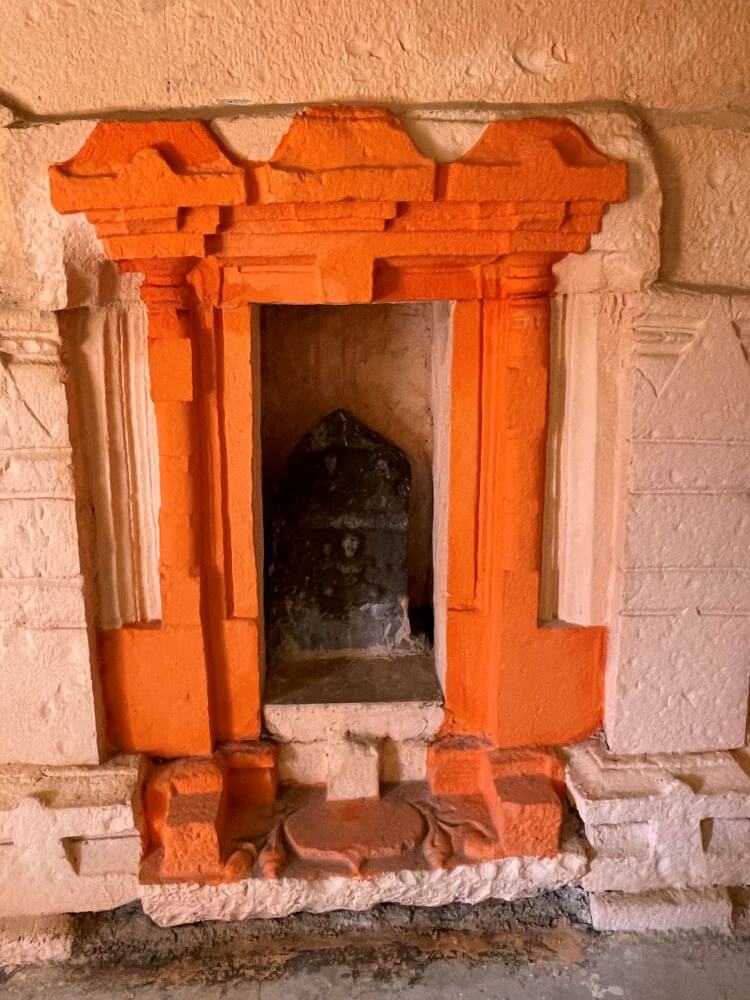
The temple is structured with a sabhamandapa (assembly hall), antarala (vestibule), and garbhagriha (sanctum sanctorum). The enclosed sabhamandapa has four large stone pillars. The stambhapada (base), stambhadanda (shaft), and stambhashirsha (capital) of these pillars are in various shapes. In the center of the four pillars in the sabhamandapa, there is a slightly elevated circular rangashila (performance platform) from the ground. This rangashila has traditionally been used as a stage for dance and other devotional performances. It is designed so that devotees standing or sitting around can enjoy the performance while it is offered facing the garbhagriha. In front of the rangashila, on the platform before the antarala, there is a murti of Nandi carved from a single stone. The structure of the garbhagriha entrance and the main temple entrance are similar. The beautiful painting on the dwarashakhas of both these entrances makes the sculptures and artistry appear exquisite. Inside the garbhagriha, in the center of the floor, there is a large ancient Shivapindi. In the devakoshta (niche) on the wall in front of this Shivapindi, there is a family murti of Shankar-Parvati carved from a single stone. In it, Shankar and Parvati are seated on Nandi, and Ganesha and Kartikeya are also beside them. Additionally, many devakoshtas in the temple contain murtis and sculptures of various deities.
Daily puja and aarti are performed regularly in the temple. A large number of devotees visit the temple for darshan every Monday. During the month of Shravan, there is a large crowd here. On Shivaratri and Mahashivaratri, devotees from outside the village also come here in large numbers. Abhishekas are performed on the Mahadev Pindi and Nandi. Throughout the year, some festival or another is always ongoing here. Especially significant is the Deepotsava (festival of lights) celebrated on Tripuri Pournima. On this day, the entire temple is adorned with lamps. This temple is open to devotees only from six to seven in the morning and six to seven in the evening every day.
This sacred temple stands as a testament to deep spiritual devotion, ancient architectural grandeur, and rich local cultural traditions.
The sanctum sanctorum houses the divine idol consecrated according to ancient Vedic traditions, surrounded by serene courtyards and traditional temple architecture.
Navratri, Maha Shivratri, Annual Temple Jatra & Deepotsav
Compare and book flights, secure top-rated local hotels near the temple, hire reliable guides, and rent cars instantly.
Extend your pilgrimage by visiting other highly sacred temples located nearby.


Add ₹999 more to unlock FREE SHIPPING!
Your sacred cart is currently empty.
Shop Photo FramesFill in your delivery details below to place your order.
Add comment