
Add ₹999 more to unlock FREE SHIPPING!
Your sacred cart is currently empty.
Shop Photo FramesThe ‘Nagesh Sampradaya’ is one of the significant sects that emerged in the twelfth century, rejecting the religious discrimination and rituals prevalent across the country at that time. The founder of this sect was Nagnath, also known as Nagesh Maharaj. He is the presiding deity of this sect. He first resided in Mohol and subsequently in Vadval in Maharashtra. Due to a miracle performed by Nagnath Maharaj here, he received the name ‘Vadval-Siddha’. Consequently, this temple holds a place of special importance within the sect. It is also said about this place, ‘Those who cannot visit Kashi should come to Vadval.’
Historically, Nagnath Maharaj was a Siddha Purusha (an enlightened being) who lived in the twelfth century. Maharashtra and Karnataka were his fields of activity. The legend regarding Nagnath Maharaj states that he first appeared to a Bharadwaj Gotra Brahmin named Hegras, who lived in Mohol (Chandramauli) in Solapur district, on the banks of Lake Manasarovar. Since many cobras (Nagas) were seen playing on his body, he became famous as Nagnath or Nagesh. Later, he accompanied Hegras to Mohol. There, troubled by the miscreants of the village, he went into a forest along with Hegras and other devotees. While sitting under a withered banyan tree, he asked his disciple to pour water on the tree. As soon as the water was poured, the banyan tree sprouted leaves, and thus he came to be called Vadval-Siddha or Vat-Siddha Nagnath.
In the medieval period, this sect developed primarily in the border regions of Maharashtra and Karnataka. This sect emphasizes Yoga and is devoted to Lord Shiva. Instead of focusing on rituals, extreme asceticism, or renunciation, this sect presented a spiritual philosophy that makes common people devotional. Casteism is not accepted in this sect. Similarly, there is no place for specific vows, attire, flags, or rosaries. Embracing the teachings of tolerance and generosity inherent in the Hindu religion, this sect has always warmly embraced the Hindu and Muslim religions, as well as various other sects. It is said that Nagesh once appeared to Hegras in the guise of a Fakir at Mohol. Similarly, he appeared to Sheikh Nasruddin in Delhi in the form of a Prophet. Hegras was the beloved disciple of Nagnath Maharaj. After completing his incarnation, Nagnath Maharaj announced that his mission was complete and disappeared into the Kharg-Tirtha at Vadval.
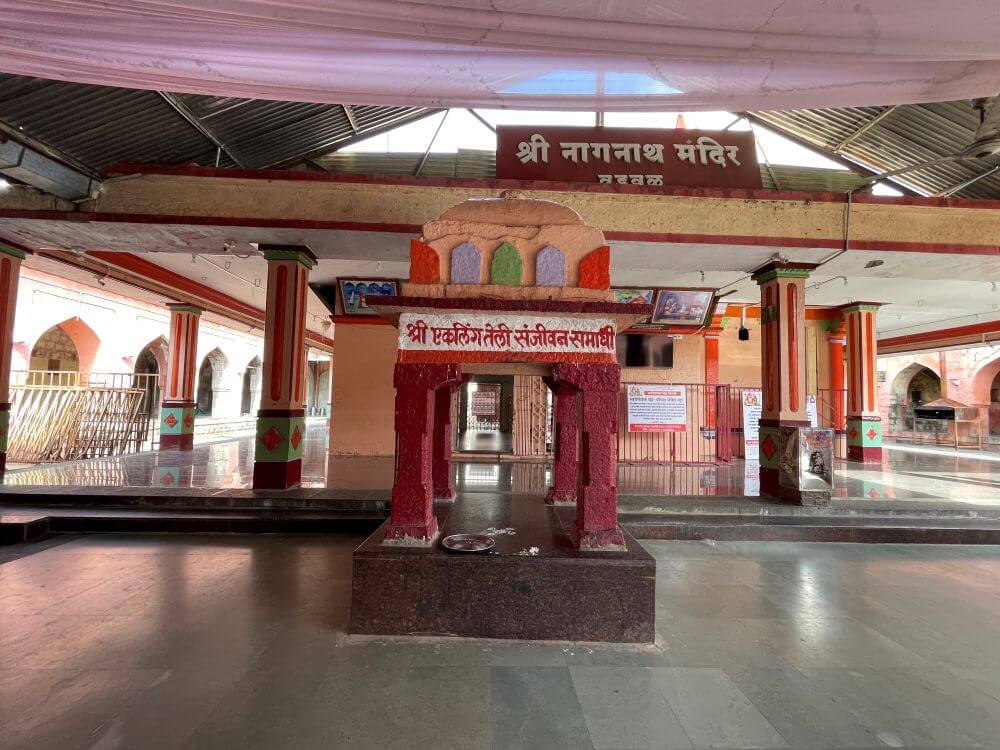
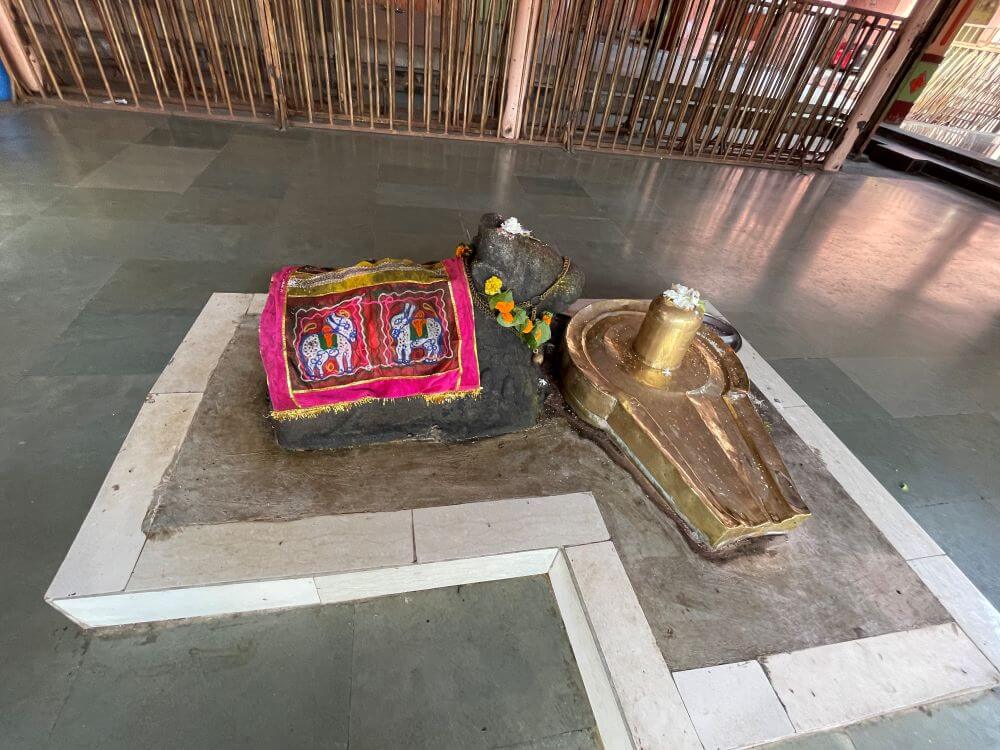
The Nagnath temple at Vadval is said to date back to the twelfth century. The story regarding this is that there was a devotee of Nagnath named Ekling Teli at Manur. Later, he came to Vadval. He expressed a desire to Nagnath, saying, ‘You should walk over my head during the festival held on the fourth and seventh days of the bright fortnight of Chaitra.’ Later, Ekling Teli built the Nagnath temple at Vadval. He attained Samadhi right in front of this temple. According to the boon granted to him, even today, during the annual festival, when the spirit of Nagnath moves, it passes over the Samadhi of Ekling Teli.
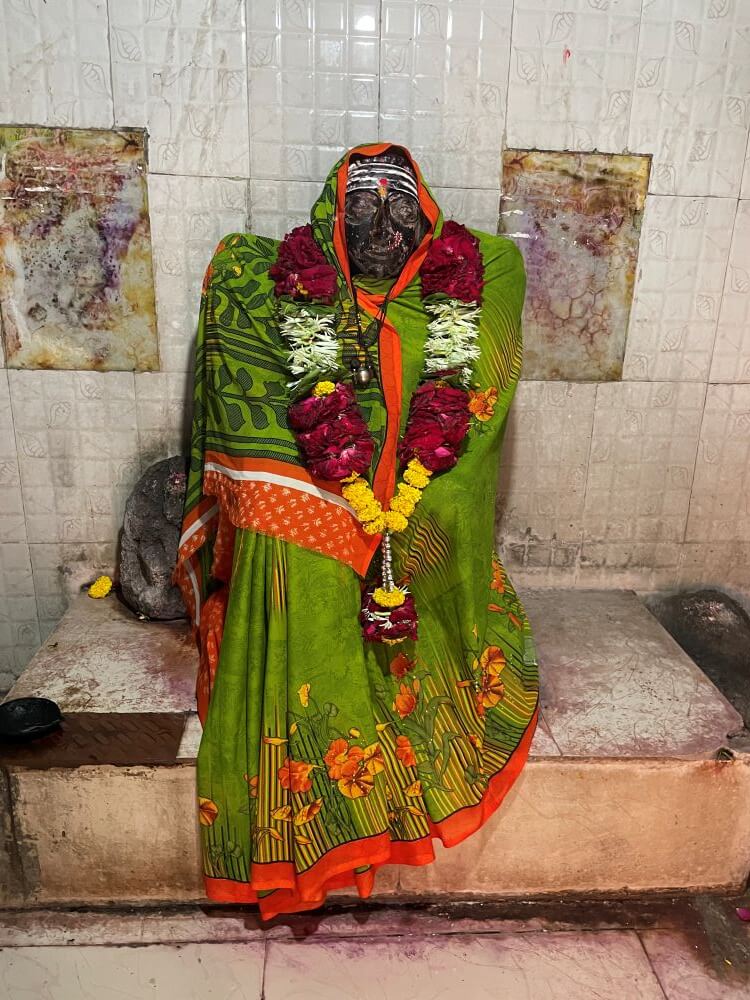
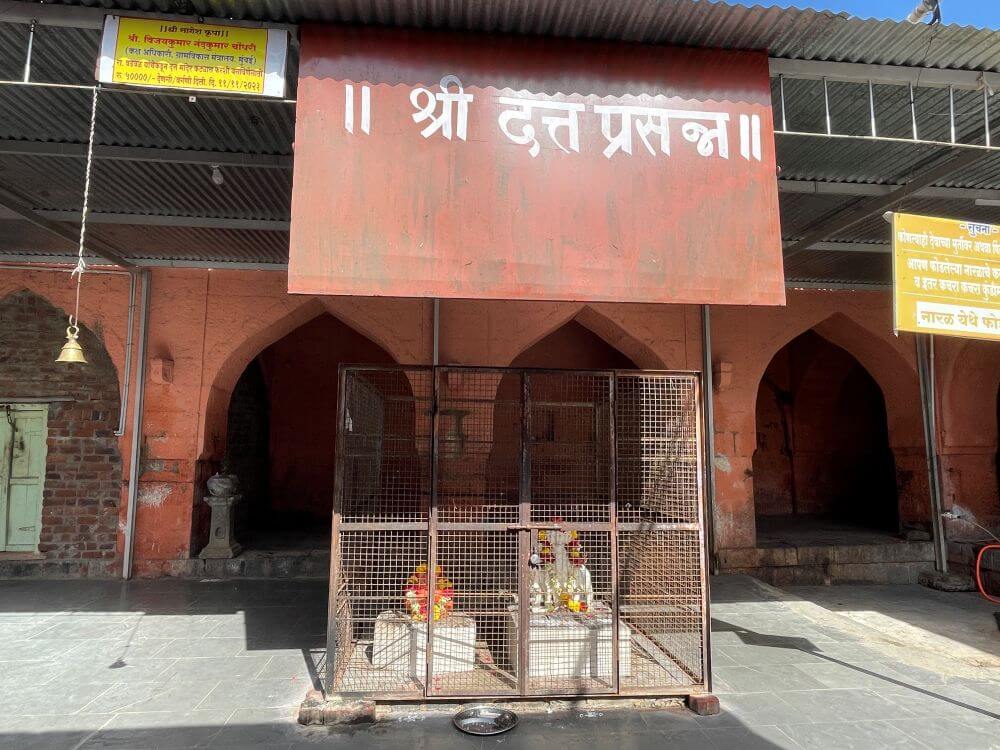
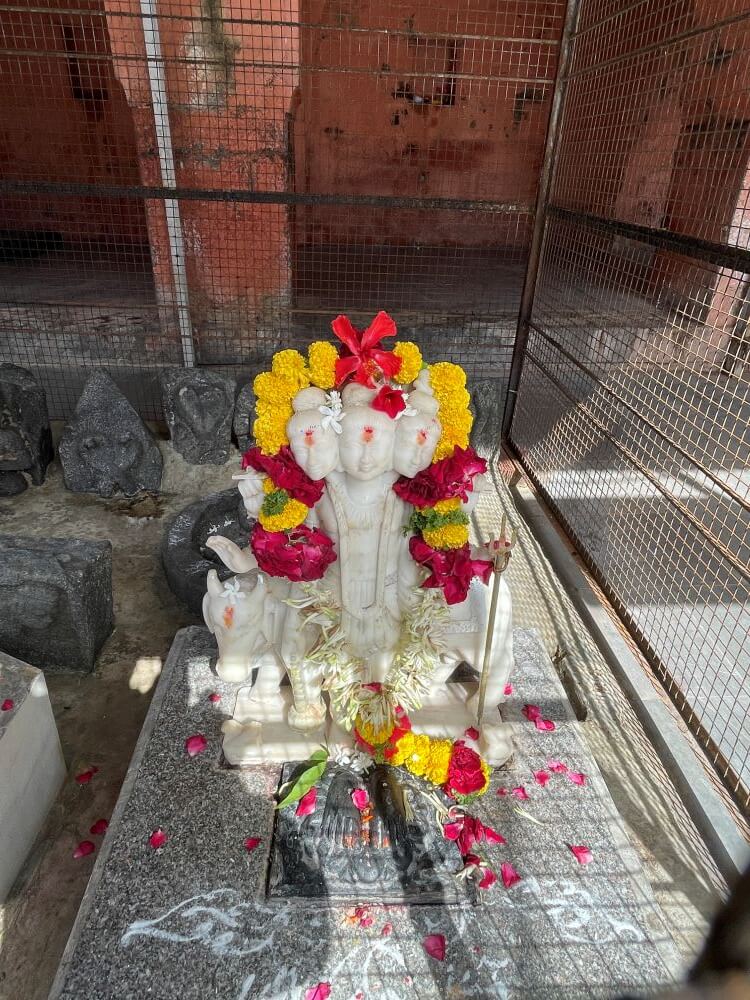
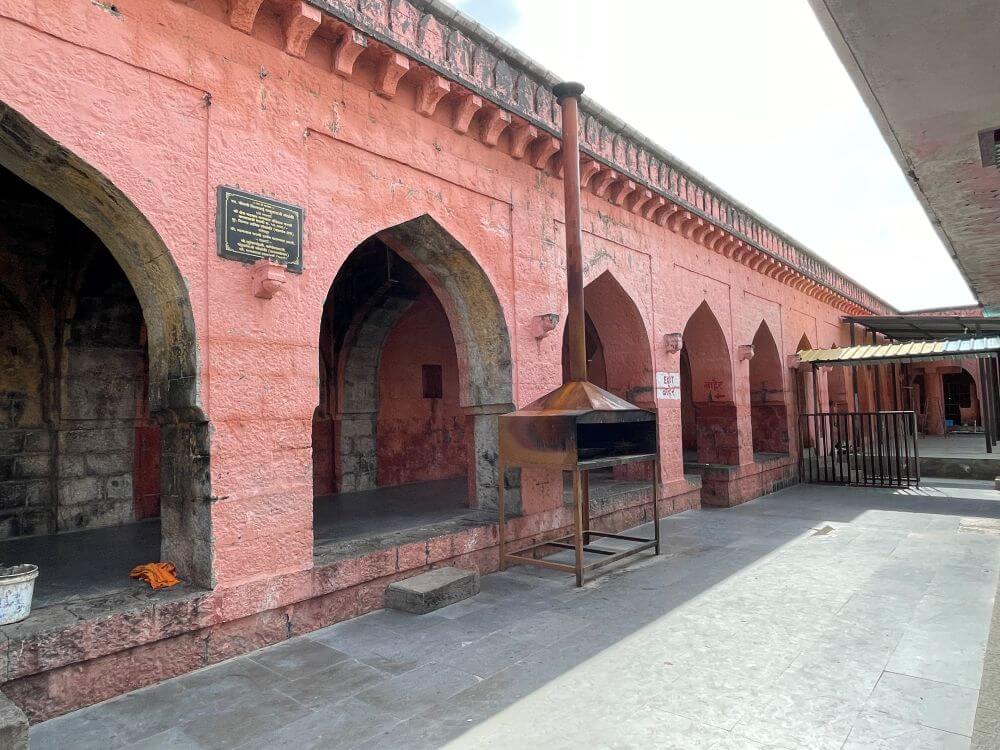
This Hemadpanti-style temple, enclosed by high walls on all sides, has three entrances. The main eastern entrance is named ‘Nagesh-Bhakta Delhi Darbar’. This two-storied entrance has a Nagarkhana (drum house) on the upper floor. One enters the temple courtyard through this entrance after climbing three steps. There are railings on both sides of the steps. Inside the courtyard, there are cloisters (ovaris) along the fortification walls. There is a large pavilion from the entrance to the main temple. A tin roof has been placed over it for the convenience of devotees. In this pavilion, on a raised platform, is the Sanjivan Samadhi of Ekling Teli. Beyond that, the temple structure consists of an open Sabha Mandap (assembly hall), Antaral (vestibule), and Garbhagriha (sanctum sanctorum). The roof of the open Sabha Mandap is supported by pillars. Beyond that is the entrance to the Antaral. Above this entrance, on the ceiling side, are images of various deities. Although the entrance of this temple faces east, the Garbhagriha faces south. The door frames of the Garbhagriha are covered with brass sheets. On both sides of this entrance are door guardians (Dwarapals), and there is an image of Lord Ganesha on the lintel. On the Vajra-pitha in the Garbhagriha, there are two idols of Nagnath Maharaj. Among the devotees, they are addressed as the ‘Elder God’ and the ‘Younger God’. Both idols have silver crowns and brass masks. It is said that in this very Garbhagriha, Nagnath had left the impression of his right foot before concluding his incarnation. In the temple premises, there are sites such as the Sanjivan Samadhi of the saint-poet Uddhav Chindhan, the Ovari of Bapuji Maharaj and the Dhangar Deshmukh, the Guru-Gadi, and the temple of Dhanamma Devi.
In Vadval, near the Gopal Krishna temple, is the Samadhi site of Nagnath’s devotee, Hegras. Apart from this, there is also the Kharg-Tirtha, which is considered an important pilgrimage site in the Nagesh Sampradaya. Legend has it that this water pool was created by Nagnath himself by digging with a sword (Khadga), hence it was named Kharg-Tirtha.
Various religious rituals and festivals are held throughout the year in this Nagnath temple. A traditional practice in this temple is the application and removal of oil. In the month of Chaitra, devotees offer oil to the deity. Behind this lies the concept of purification of the body, mind, and soul. Every Monday in the month of Shravan, a Jalabhishek (water offering) of the deity is performed at dawn. Mahashivratri and Dussehra festivals are celebrated with great enthusiasm in the temple. On these days, special worship, Abhishek, Homa-Havan, and religious discourses take place. The annual Yatra (procession) of Nagnath Maharaj is held on the full moon day of Chaitra. At this time, thousands of devotees come here for Darshan. After the conclusion of the Vadval Yatra, the Nagnath Yatra at Mohol begins. For this Yatra, the Palakhi (palanquin) with a canopy is taken from Vadval to Mohol. On Akshaya Tritiya, the honor-bearers of the Lord’s canopy arrive at the temple at 8 o’clock at night. Chanting hymns, they leave the temple with the canopy and reach Kharg-Tirtha around 11 o’clock at night. From here, the Palakhi proceeds to Mohol and rests there. The honor-bearers of the Nagnath temple in Mohol arrive to welcome the Palakhi. They take this Palakhi in a procession to the Nagnath temple in Mohol. After the main ceremonies are completed there, on the eighth day of the bright fortnight of Vaishakh, the Lord’s Palakhi departs from Shri Kshetra Mohol towards Shri Kshetra Vadval. The Palakhi arrives at Kharg-Tirtha in Vadval at 8 o’clock at night. From there, again chanting hymns and accompanied by fireworks, the Palakhi reaches the Lord’s temple. Devotees can have Darshan of Nagnath Maharaj in this temple daily from 4 o’clock in the morning to 10 o’clock at night.
This sacred temple stands as a testament to deep spiritual devotion, ancient architectural grandeur, and rich local cultural traditions.
The sanctum sanctorum houses the divine idol consecrated according to ancient Vedic traditions, surrounded by serene courtyards and traditional temple architecture.
Navratri, Maha Shivratri, Annual Temple Jatra & Deepotsav
Compare and book flights, secure top-rated local hotels near the temple, hire reliable guides, and rent cars instantly.
Extend your pilgrimage by visiting other highly sacred temples located nearby.


Add ₹999 more to unlock FREE SHIPPING!
Your sacred cart is currently empty.
Shop Photo FramesFill in your delivery details below to place your order.
Add comment