
Add ₹999 more to unlock FREE SHIPPING!
Your sacred cart is currently empty.
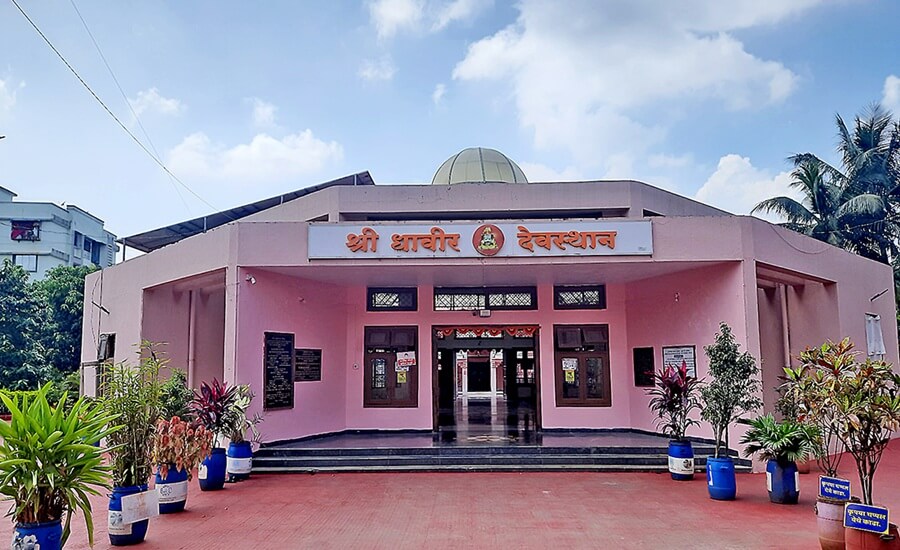
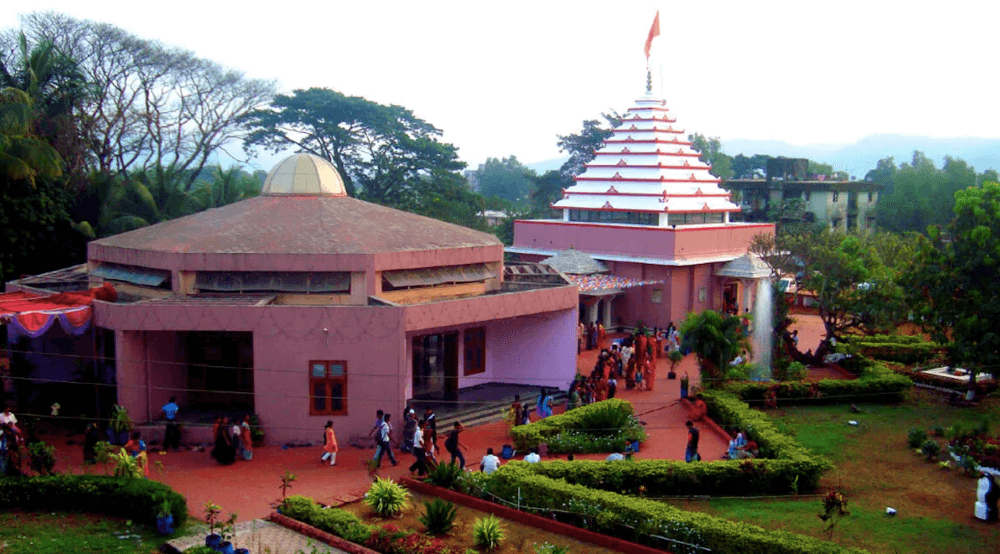
Shop Photo FramesIn our state, there are only two temples that are honoured with an armed salute by the police. Of these, the first is Shri Vitthal Devasthan in Pandharpur, and the second is the temple of Dhāvir Mahārāj, the village deity of Roha. On the second day of Dasara, the palanquin that sets out from this temple for the village circumambulation receives an armed salute from the police. This tradition has been ongoing since the year one thousand eight hundred and sixty-two. Located at the foot of Hanuman Tekdi, to the west of the city, amidst a picturesque natural setting, the temple of Dhāvir Mahārāj is a revered place of faith for thousands of devotees from Roha Taluka and across the district.
The city of Roha is nestled in a naturally abundant region, graced by the Avchitgad fort to the north, the Kalasgiri hill to the south, and the perennial flow of the Kundalika River. From here, approximately The village of Varathi is located at a distance of ८ kilometres. It is said that a cow, which would graze daily in the forest near that village, would release her milk at a particular spot. This sight was witnessed by a cowherd named Mahagaonkar from this region. Driven by curiosity, he began to dig at that spot with a pickaxe. After digging a little, the self-manifested murti of Dhāvir Mahārāj appeared there. When this event came to the knowledge of Subhedar Balwantrao More of Roha, he had a temple built for Dhāvir Mahārāj at this very spot. From then on, visiting Varathi to have darshan of Dhāvir Mahārāj became a part of his daily routine.
Over time, due to advancing age, Balwantrao More found it increasingly difficult to go to Varathi every day for the darshan of Dhawir Maharaj. On days when he could not have the darshan of Dhawir Maharaj, he would not partake of any food. Consequently, he began to observe fasts daily, and his distress grew. Dhawir Maharaj could not bear the hunger of His beloved devotee. He appeared to Subhedar More in a dream vision and instructed him, ‘To the west of Roha, there is From the rock, one beholds the Varathi mountain. ‘Construct My temple precisely at that very spot; I shall grant you My darshan there itself,’ thus it was revealed. Accordingly, Subhedar More met with the vatandar Shri Bapuji Raje Deshmukh, who owned that land, and recounted the divine vision to him.
Bapuji, too, was a most devout bhakta of Dhāvir Mahārāj. He promptly offered his land to Subhedar More for the temple of Dhāvir Mahārāj. In the year one thousand eight hundred and forty-eight, the bhūmi-pūjan was performed on Māgha Shuddha Trayodashī, and the temple was completed in the Phālguna Vadya Paksha—that is, in a mere two and a half months. Thereafter, Bapuji Raje Deshmukh took the initiative to convene the village assembly of Rohā, where it was unanimously decided to accept Dhāvir Mahārāj as the Grāmadevatā. Thus, Dhāvir Mahārāj became the Grāmadevatā of Rohā.
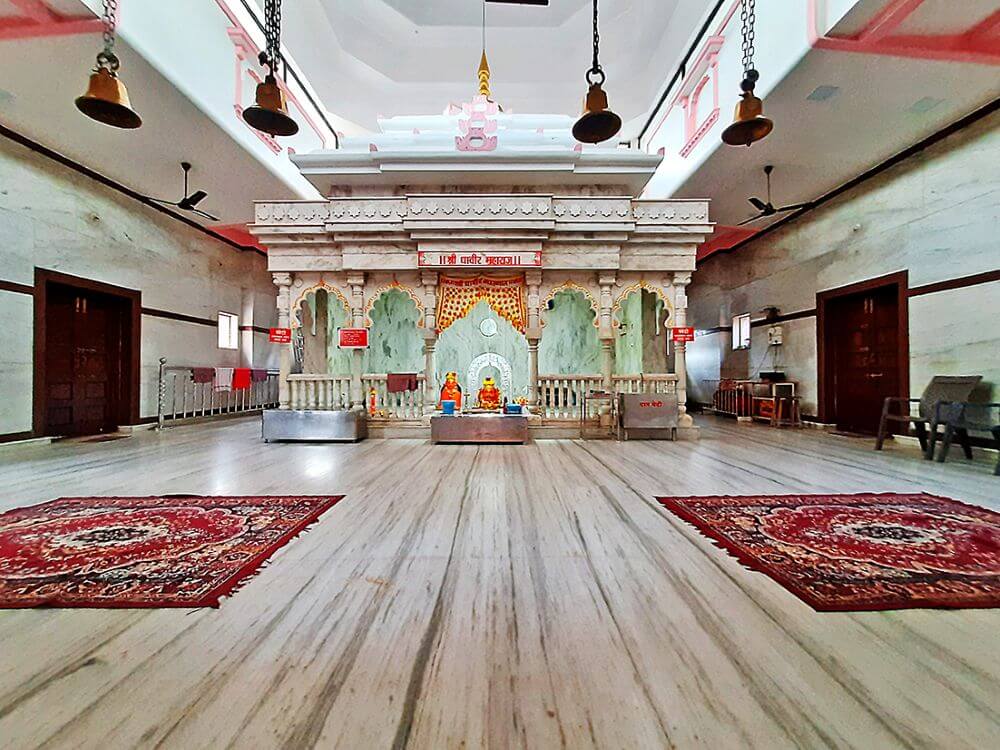
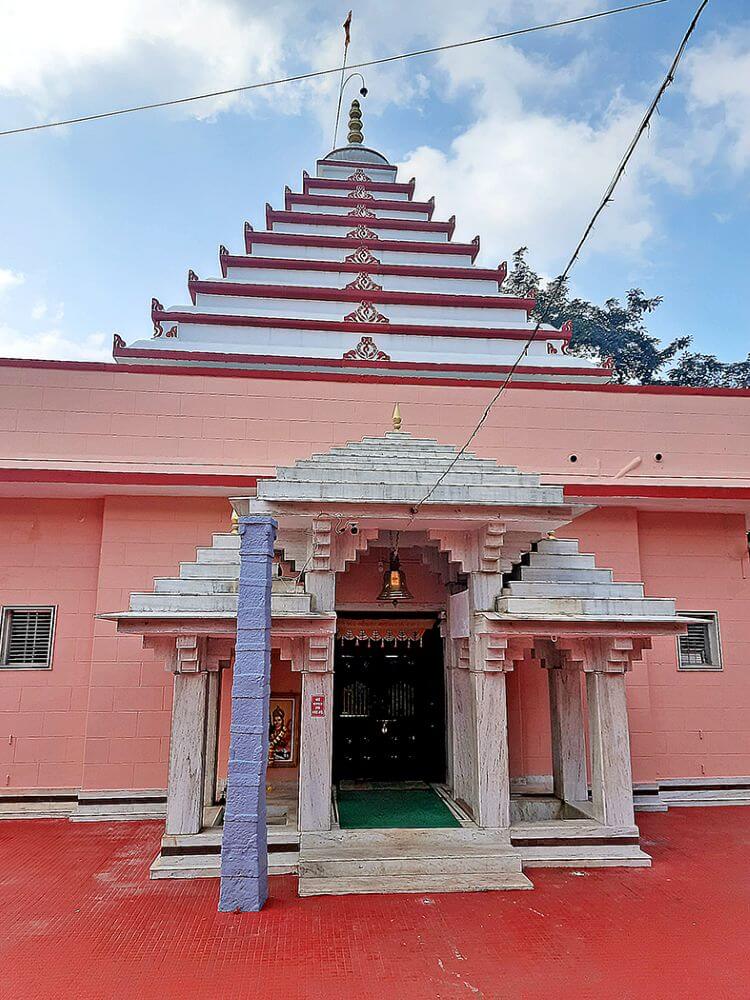
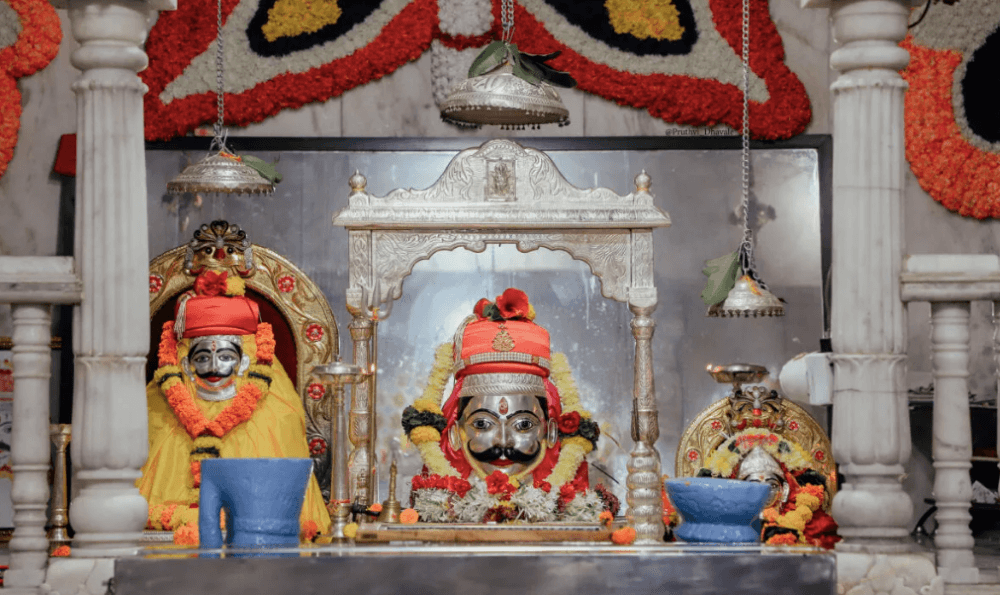
The Dhāveer Mahārāj Mandir was first renovated in the year एकोणीसशे सोळा, and then again in एकोणीसशे चौऱ्याण्णव by none other than Param Pujya Pāndurang Shāstri Āthavale. The inner sanctum of the present temple retains the design of the old shrine, while its exterior construction follows modern architectural principles. Previously, the temple was quite small, but in एकोणीसशे चौऱ्याण्णव, it was transformed into the spacious abode we see today. To the right of the temple’s entrance resides Nandī, and to the left is the sacred abode of Chedā Mahārāj, the revered bodyguard of Dhāveer Mahārāj. This clearly indicates that Dhāveer Mahārāj is originally a deity from the Kshetrapāl category within the Shiv Parivār. The temple’s Garbhagriha, the sanctum sanctorum, is crafted from marble, and at its very heart stands the stone idol of Dhāveer Mahārāj. Alongside Him are the divine forms of Kālikā (Kālkāī) Mātā, Bahirībuvā, and Vāghbāppā. In the temple courtyard, to the right, there is a stone slab where the ritual of offering Bali is traditionally performed.
Regarding the sacred abode of Kāḷkāī Devī here, this legend is recounted: it is said that the Siddī of Muruḍ could never advance beyond the salt pans in the Bhālgāv region of this place. He could not make progress. The reason for this was that Kāḷkāī Devī of the salt marsh and Dhāvīr Mahārāj had held him back. Kāḷkāī is the family deity of the Raje Deshmukhs. In the same assembly where Dhāvīr Mahārāj was accepted as the village deity of Rohā, it was decided to install Kāḷkāī Devī in His temple.
From this sacred temple, the palanquin procession commences on the second day of Dussehra. Since the British era, it has been a tradition for the police to offer a guard of honour to the Divine. The legend behind this practice is as follows: Once, when Shri Bapuji Deshmukh and the British Collector of the district were strolling in the Chanera-Virwadi region, they were suddenly attacked by Siddi’s soldiers. The Collector was naturally alarmed by this sudden assault, but Shri Bapuji reassured him, saying that Dhawir Maharaj was with them, protecting them. At that moment, Shri Bapuji Deshmukh bowed to Dhawir Maharaj and invoked His divine name. Miraculously, the sound of horses’ hooves suddenly began to echo in the air. Believing that soldiers were accompanying the two, Siddi’s troops retreated from the spot. This incident made the British Collector realise the divine presence and power of Dhawir Maharaj. He reverently bowed to the Maharaj and issued a decree that on the day of the palanquin procession, the police should offer a salute to Dhawir Maharaj.
For over one hundred and fifty years, the sacred Navarātri festival has been celebrated here. During this auspicious period, the temple precincts transform into a vibrant fairground. On the first day of this festival, the ghata-stāpanā ritual is performed for the Devī, and on the day of Vijayadaśamī, the ghata is reverently immersed. Throughout this time, Dhāvīr Mahārāja’s āratī is performed thrice daily—in the mornings and evenings at seven o’clock, and again at midnight—accompanied by the resounding beats of dhol, nagārā, sambaḷ, and the ringing of temple bells. Each night, a ‘prahar’ signifies the divine vigil. This prahar is traditionally observed by every community and sector here, This sacred service is performed daily from evening until midnight during the festival period. The Gondhalis, devotees of Shri Khandoba who come from Jejuri, have been offering this devotional service for many years.
On the second day of Dasara, the beautifully adorned palanquin of the Lord sets out for a circumambulation of the village. At this time, the police offer a salute to the palanquin. Thousands of villagers and devotees participate in this palanquin procession, which continues for approximately twenty-six hours. On this auspicious day, not only are the residents of Roha present, but also those villagers who have moved away for work or business return to attend the palanquin procession. The number of married daughters visiting their parental homes (maherwashini) in this palanquin is also significant. During this time, the palanquin of Dhāvir Mahārāj goes from house to house to meet His beloved devotees. In every home, the Lord is worshipped with the waving of a five-wick lamp (pancharati) and the offering of sugar-coated puffed gram (sakhar phutane).
The sacred city of Roha is already renowned due to the revered Dhāveer Mahārāj Mandir. Furthermore, this very Roha has bestowed upon our nation two precious jewels, two great souls, who have greatly enhanced Roha’s glory. One of them is Dr. Chintamanrao Deshmukh, the first Finance Minister of our country, who shaped its economic direction, and a former Governor of the Reserve Bank. The other is Pāndurang Shāstri Āthavale, the revered founder of the Swādhyāy Parivār. Here, Chintamanrao Deshmukh was affectionately known as ‘Bhāī’ and Pāndurang Shāstri as ‘Dādā’. Thus, it is often said here, ‘The divine pair of Dādā and Bhāī is the eternal sweetness of Roha.’
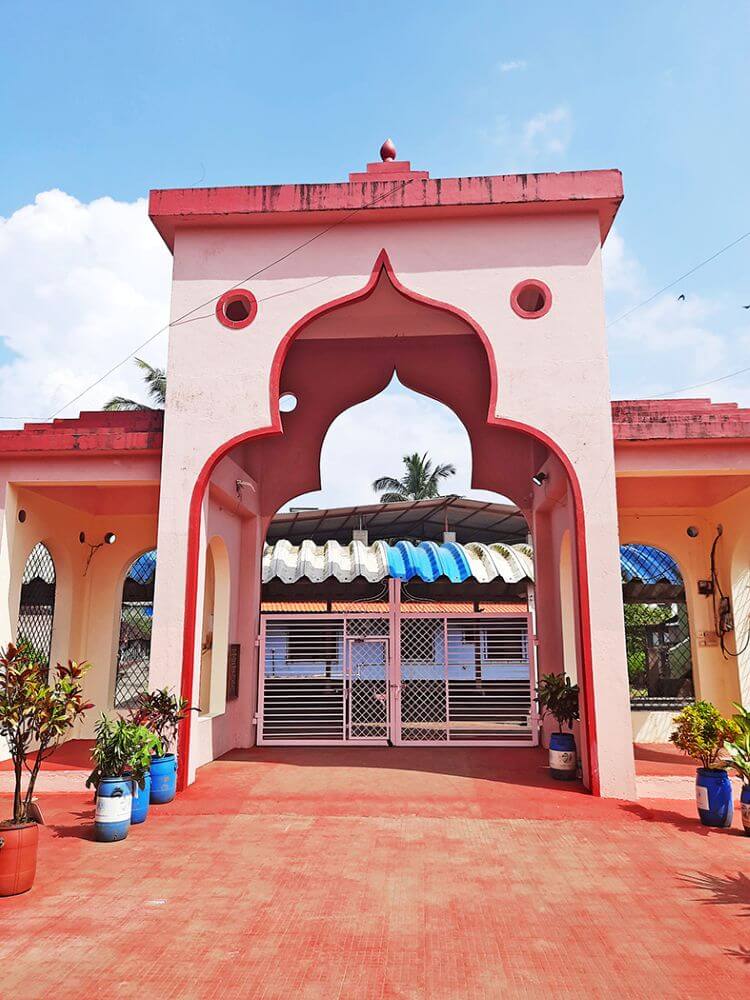
This sacred temple stands as a testament to deep spiritual devotion, ancient architectural grandeur, and rich local cultural traditions.
The sanctum sanctorum houses the divine idol consecrated according to ancient Vedic traditions, surrounded by serene courtyards and traditional temple architecture.
Navratri, Maha Shivratri, Annual Temple Jatra & Deepotsav
Compare and book flights, secure top-rated local hotels near the temple, hire reliable guides, and rent cars instantly.
Extend your pilgrimage by visiting other highly sacred temples located nearby.


Add ₹999 more to unlock FREE SHIPPING!
Your sacred cart is currently empty.
Shop Photo FramesFill in your delivery details below to place your order.
Add comment