
Add ₹999 more to unlock FREE SHIPPING!
Your sacred cart is currently empty.
Shop Photo FramesAn ancient temple dedicated to Shri Bhavani Durgamata is situated on Durgadi Fort in Kalyan, which was constructed during the reign of Satavahana King Yajna Shri Gautamiputra Satakarni and later restored by Chhatrapati Shivaji Maharaj. The fort derives its name ‘Durgadi’ from Goddess Durgadevi. It is recorded that Shivaji Maharaj repaired this ancient fort and built a rampart fortress here. It is said that the temple of the Goddess was erected at that time. Having weathered natural elements as well as human invasions for several centuries, this temple stands as a testimony to history, where lakhs of devotees arrive for darshan during the Navratri festival.
The history of Kalyan dates back to the 2nd century BCE, beginning with the rise of the Satavahana dynasty. In ancient times, Kalyan was an important and flourishing port. It was connected to major commercial centres of the Satavahana era, such as Paithan, Nashik, Tagar, and Junnar. Various goods arriving from Junnar and Naneghat were exported through the port of Kalyan. Between 80 CE and 110 CE, during the reign of Satavahana King Shivaswati, this region was conquered from the Satavahanas by Western Kshatrapa Nahapana. Later, Gautamiputra Satakarni defeated Nahapana and re-established rule over this region. During this period, Kalyan prospered greatly. Later, in the seventeenth century, the region came under Adilshahi rule. Chhatrapati Shivaji Maharaj captured Kalyan-Bhiwandi on 24th October 1657.
An entry regarding this in the ‘Jedhe Shakavali’ states: “In Shake 1579, Hemalambi Samvatsara – on Ashwin Vadya Dwadashi, the King took Kalyan-Bhiwandi. At that time, the army and Hasham were dispatched under Dadaji Bapuji as the Subhedar; then Dadaji Krishna Lohokare and his brother Sakho Krishna Lohokare were requested from Kanoji Naik Jedhe, and Dadaji Pant was assigned charge of Kalyan while Sakhopant was given charge of Bhiwandi.” Mentioning these events, the ‘Jedhe Karina’ further states, “When the fortress of Durgadi was built near the port at Kalyan, Rajashri Swami discovered various kinds of treasure and wealth in Kalyan.” From this, it appears that during the excavation for the fort’s foundation, Maharaj discovered immense wealth here. Believing that this treasure was found through the divine grace of Goddess Durgadevi here, he restored this temple. It was from this very site that the foundation of Maharaj’s naval fleet was laid.
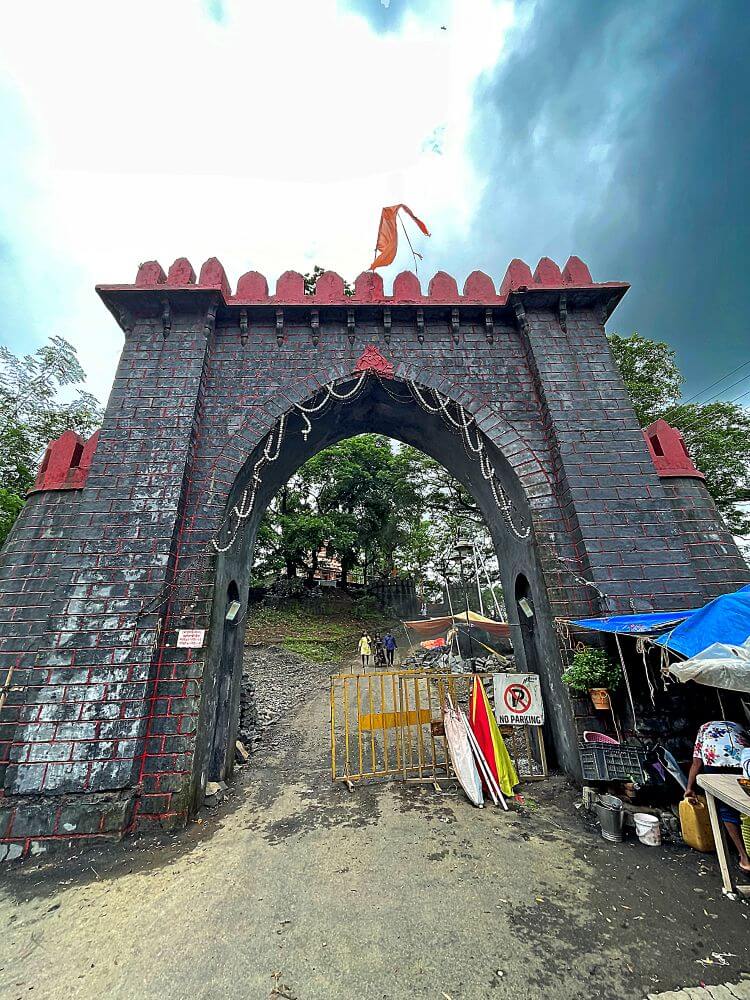
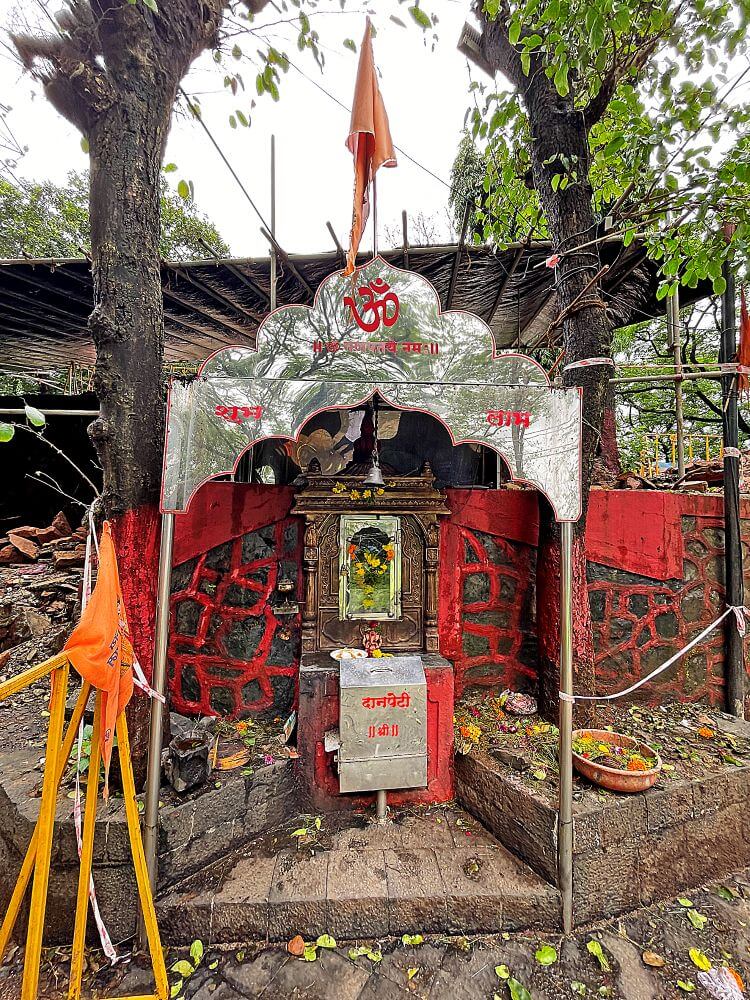
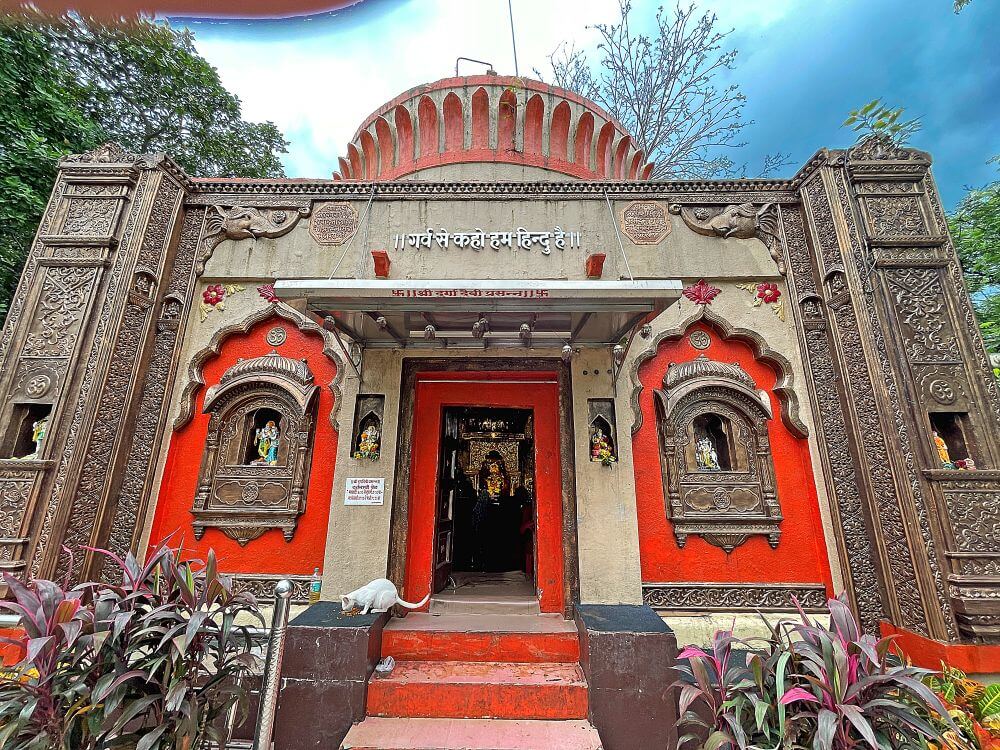
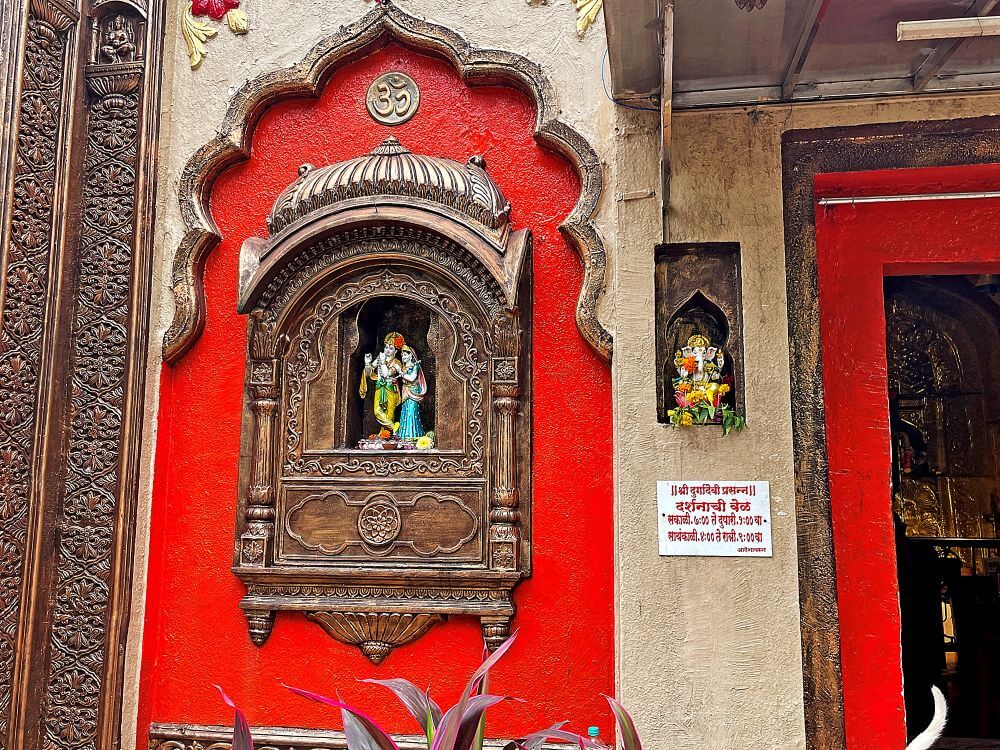
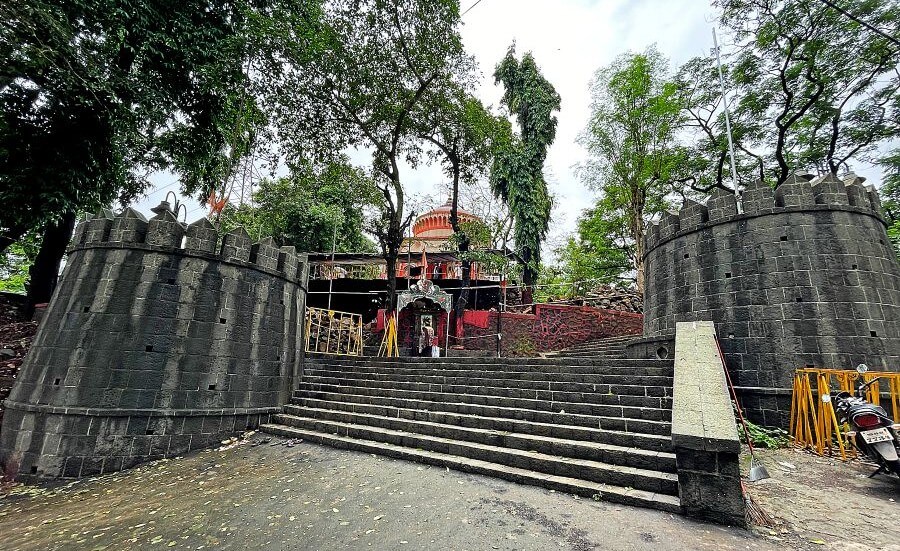
Later during the Peshwa era, following the Battle of Vasai, Bajirao Peshwa entrusted the governorship (Subhedari) of Kalyan to Vasudev Joshi Murudkar between 1740 and 1751 CE. In 1749 CE, he renovated the Durgadevi Temple. A grand festival was also organized at that time. At that time, donations were given to about 100 Brahmins in various places, and Shri Vedamurti Mahadev-bhat Godbole, who resided in Kalyan, was appointed for the worship and sacred offerings (Naivedya) of Goddess Durgamata. Records in the Peshwa archives state that an annual grant of over two Khandis of rice and twenty rupees in cash from the Kalyan treasury was assigned to him as an Inam (reward). The Thane Gazetteer mentions that the idol in the temple was stolen in the year 1876 CE. Thereafter, the descendants of Godbole consecrated a Tandala (sacred uncarved stone icon) and continued worshipping the Goddess. With the intent to rejuvenate this historic temple, in the 1970s, the then Municipal President of Kalyan, Namdeo Kashinath Aher, secured financial assistance from the municipality during his tenure, installed a new Panchadhatu (five-metal alloy) idol of the Goddess, and renovated the temple. The consecration following the renovation was performed on 15th December 1974, during the Shivrajyabhishek Tercentenary Celebrations, by Param Pujya Gajanan Maharaj alias Annasaheb Pattekar of Thane. Shivshahir Babasaheb Purandare was present on this occasion. This fort of historic heritage is situated on a small hill along the Kalyan creek on the Kalyan-Bhiwandi route. The bastions of the fort’s old entrance gate still remain intact. In earlier times, the fort entrance was known as ‘Ganesh Darwaja’. Upon entering the fort premises through the main gate, a small temple of Lord Ganesha is seen to the left near the steps. Climbing a few steps from there, the ancient temple of Goddess Durgadevi stands on the left side. The temple courtyard is paved with stone tiles. In front of the temple, there is a Yagnakunda (sacred fire pit). Above the main entrance of the temple, there is attractive craftsmanship featuring sculptures of royal elephants with raised trunks on both sides. Beside them, the Shivmudra (royal seal) is carved. Near the entrance in the outer niches of the temple facade, there are idols of Lord Ganesha, Goddess Lakshmi, Radha-Krishna, Lord Dattatreya, Lord Hanuman, and Swami Vivekananda.
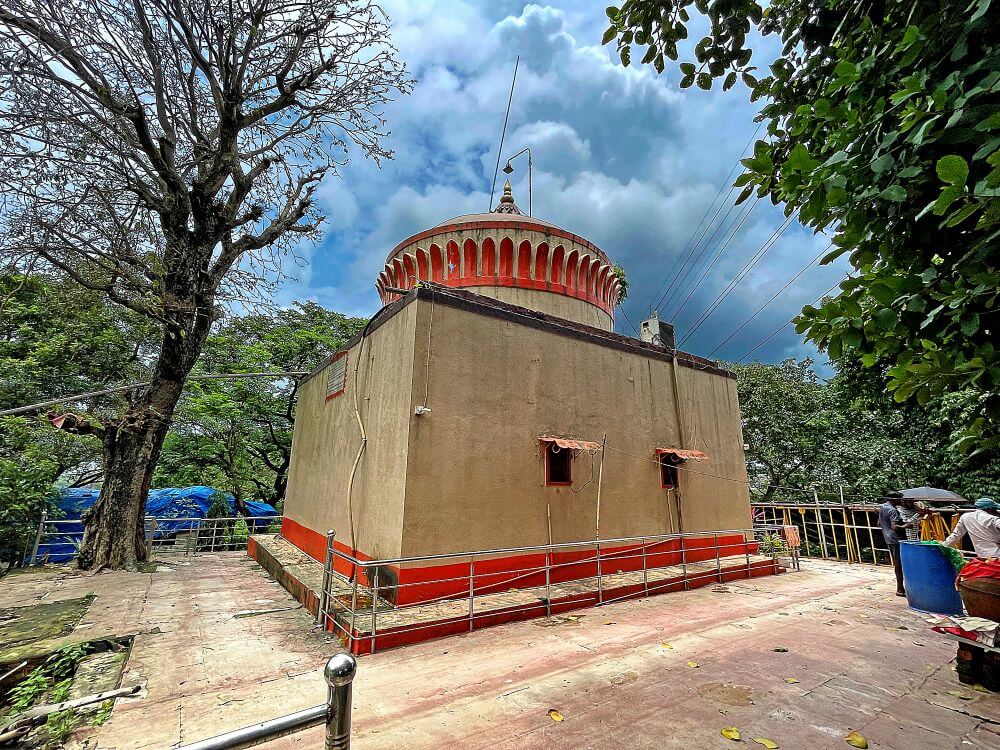
The temple architecture consists of a Sabhamandap (assembly hall) and a Garbhagriha (sanctum sanctorum). To enter the Sabhamandap of this elevated temple, one has to climb three steps. Beyond the Sabhamandap lies the Garbhagriha. The entire sanctum features attractive craftsmanship on gold-gilded metal sheets. Idols of Dwarapalas (gatekeepers) are carved on both sides here. In the centre, within an intricately carved Makhar (ornate archway), resides the new Panchadhatu idol of Goddess Durgamata. The three-and-a-half-foot tall crowned idol has four arms—holding sacred weapons in three hands while one hand is in the blessing posture. Behind the idol stands Her lion mount. To the right of this idol is the ancient Tandala of Goddess Durgadevi adorned with a sacred mask. Inside the Garbhagriha, there are also idols of Lord Ganesha and other deities. This temple of Goddess Durgadevi is square in shape, surmounted by a dome-shaped Kalash (spire). On the upper section of the wall behind the temple’s sanctum, there is an inscription depicting the history of the temple.
In this temple, the Navratri festival is celebrated with great fervor from Ashwin Shukla Pratipada to Shukla Navami. Lakhs of devotees from Mumbai, Thane, Raigad, and Palghar districts visit to seek the blessings of the Goddess. During this period, many women offer traditional Oti (ritual offering of blouse piece and coconut) to the Goddess. On all nine days, religious programs such as Kakad Aarti, Maha Aarti, Bhajans, Kirtans, and spiritual lectures take place. A Navchandi Yagya is also performed during this time. On the occasion of this festival, Durgadi Fort lights up with grand illuminations. Devotees can have darshan at the temple every day from 7:00 AM to 1:00 PM and from 4:00 PM to 9:00 PM.
This sacred temple stands as a testament to deep spiritual devotion, ancient architectural grandeur, and rich local cultural traditions.
The sanctum sanctorum houses the divine idol consecrated according to ancient Vedic traditions, surrounded by serene courtyards and traditional temple architecture.
Navratri, Maha Shivratri, Annual Temple Jatra & Deepotsav
Compare and book flights, secure top-rated local hotels near the temple, hire reliable guides, and rent cars instantly.
Extend your pilgrimage by visiting other highly sacred temples located nearby.


Add ₹999 more to unlock FREE SHIPPING!
Your sacred cart is currently empty.
Shop Photo FramesFill in your delivery details below to place your order.
Add comment