
Add ₹999 more to unlock FREE SHIPPING!
Your sacred cart is currently empty.
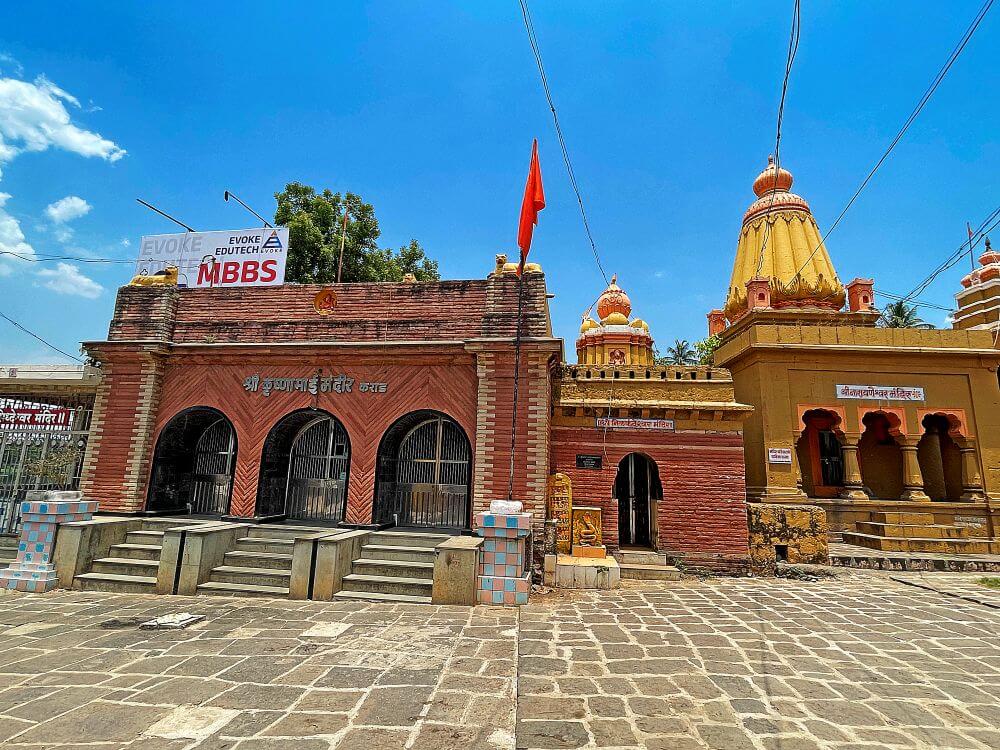
Shop Photo FramesThe mythological identity of Karad is that of a city conquered by Sahadeva during his southern military campaign (Digvijaya) as part of the Rajasuya Yajna organized by King Yudhishthira. Witness to history since prehistoric times, this city has attained the status of a pilgrimage site due to the ‘Pritisangam’ (confluence) of the Krishna and Koyna rivers. On the ghat of this Pritisangam, described as a sacred site in the ‘Karhad Mahatmya’, stands the ancient temple of Krishnamai, the presiding deity (Gramadevata) of Karad. The Yatrotsav (fair) of Krishnamai is celebrated here on a grand scale twice a year. The entire city of Karad participates in this festival.
According to the ‘Sahyadri Khanda’, this city, considered the original abode and thus the primordial seat of the Brahmins, was known in ancient times by names such as Karhataka, Karahataka, and Karahatadesha. Between the 7th century BCE and the 3rd century BCE, this region was ruled by the Rashtrikas. It is said that our state derives its name, Maharashtra, from these Rashtrikas. This city has witnessed the eras of various powers, ranging from the Satavahanas, Chalukyas, Rashtrakutas, and Shilaharas to the Yadavas, Bahamanis, Adil Shahis, Marathas, and the British. Although the capital of the Shilahara kings was Kolhapur, they referred to themselves as ‘Karahatadhipati’ (Lords of Karahata). This place gained significance due to the Pritisangama. The confluence of the Krishna River, flowing from the north, and the Koyna River, coming from the south, is known by the poetic name, Pritisangama.
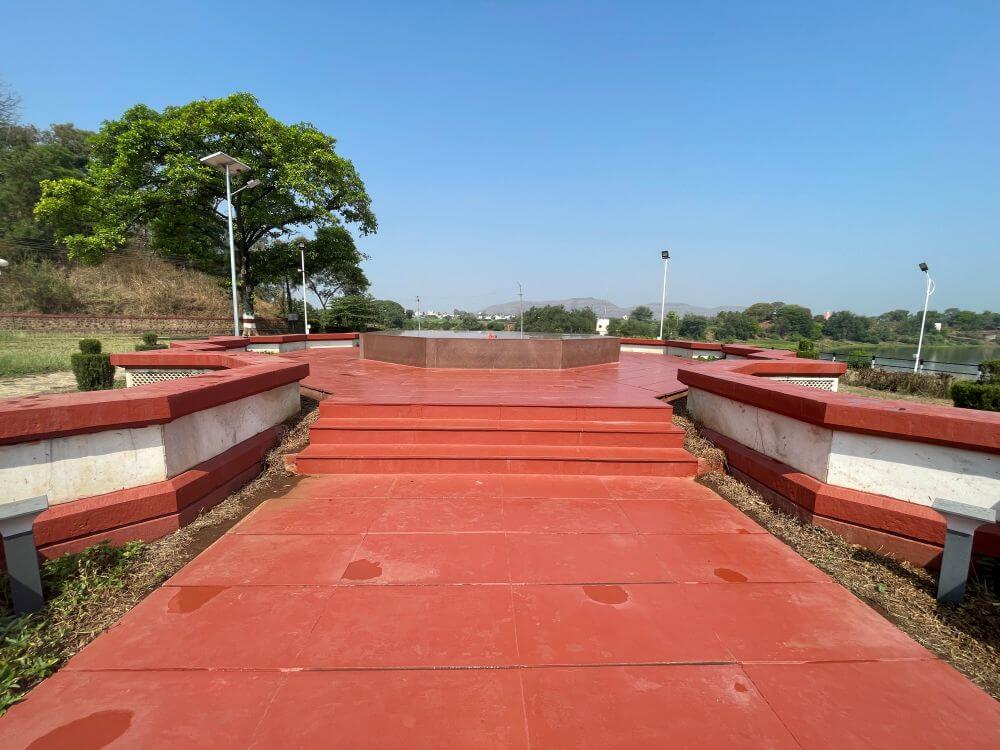
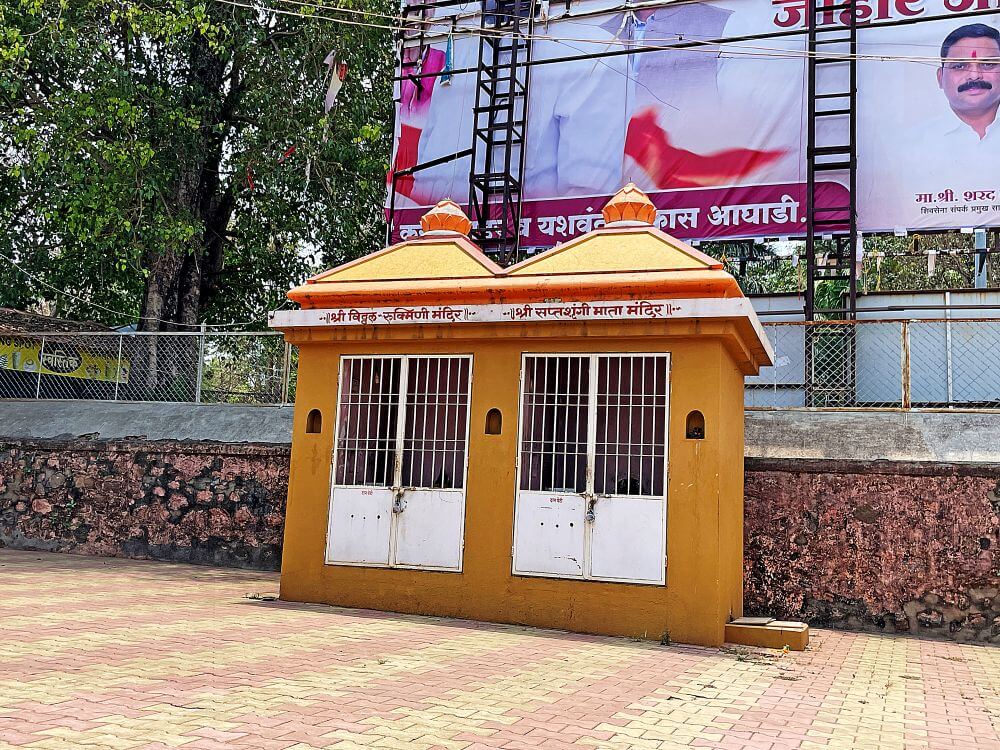
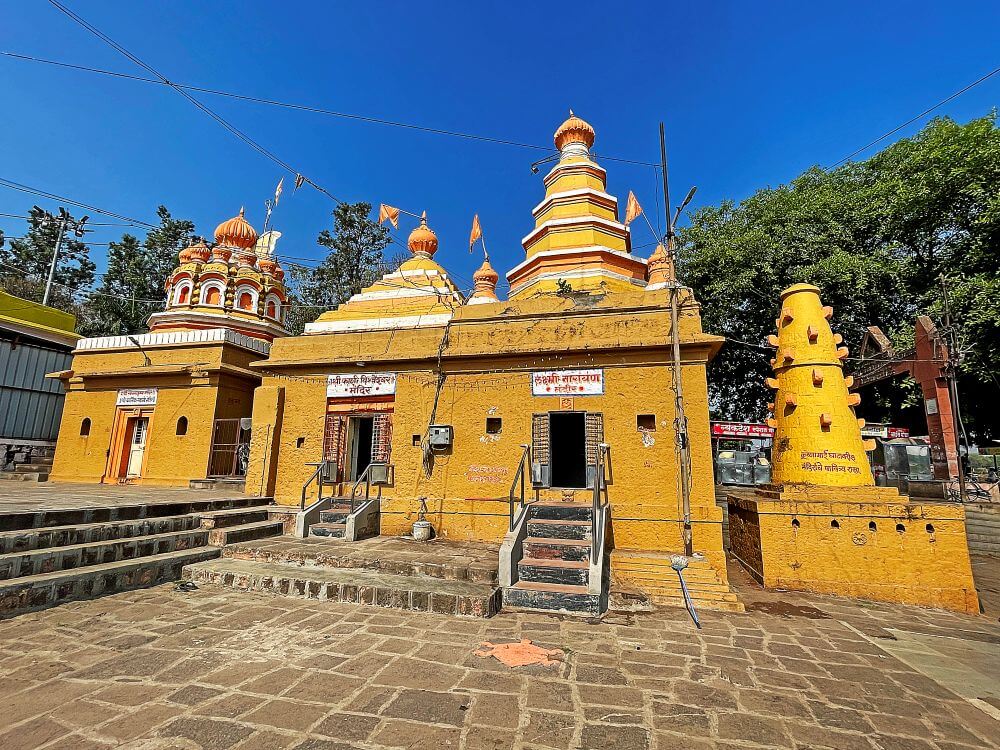
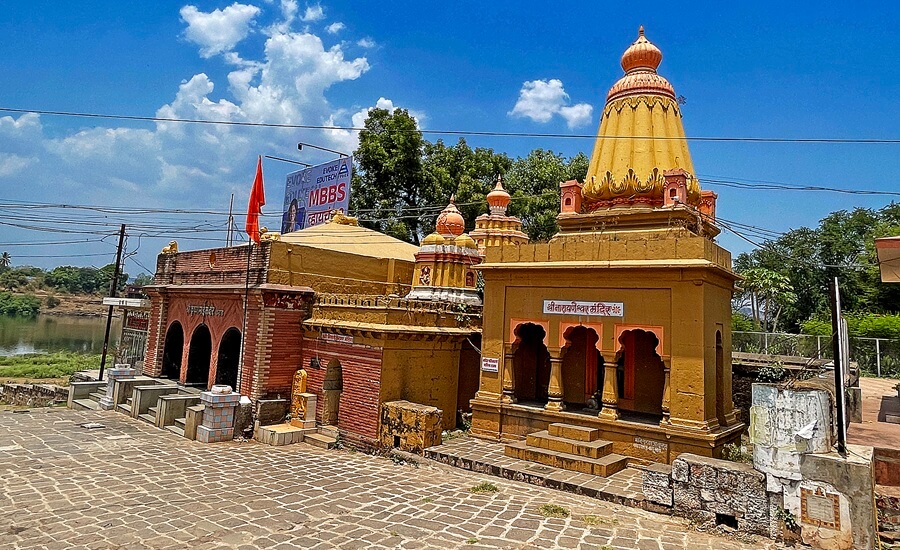
In the politics of modern Maharashtra, the site of Preeti Sangam is considered highly significant. Yashwantrao Chavan, the architect of the independent state of Maharashtra, its first Chief Minister, and a former Defence Minister of the country, passed away on 25 November 1984. His last rites were performed at Preeti Sangam. A beautiful garden and memorial have been established here, incorporating the site of the funeral rites and the Swami’s garden that previously existed adjacent to it. According to Hindu religious traditions, many temples are built at the confluence of rivers. At the confluence of the Krishna and Koyna rivers, there are various temples such as Hatkeshwar, Ratneshwar, Kashi Vishweshwar, Kapileshwar, and Paveshwar. The temple of Krishnamai, the presiding deity of Karad, is also situated on the ghat at this very confluence.
The legend regarding this temple is that Bajipant Karkare of Chaphal had commissioned an idol of the Goddess made of white stone from North India. He intended to install this idol in the Konkan region. However, one day, his wife had a divine vision in a dream. The Goddess told her, “Hand over this idol to Antaji Bahirav of Karad and have it installed on the banks of the Krishna River.” Accordingly, they installed the Goddess in a small temple on the banks of the Krishna in Karad and entrusted its management to Antaji Bahirav Awate. The wife of Raja Bhavanrao Pantpratinidhi, the public-welfare-oriented ruler of the Aundh State, While Rajasabai was residing at Vite, a Gujarati Brahmin worked for her. After he passed away without any heirs, his unclaimed property, worth approximately three thousand rupees, was utilized to construct the large stone temple that stands today in place of the original hut-like shrine of Krishnamai.
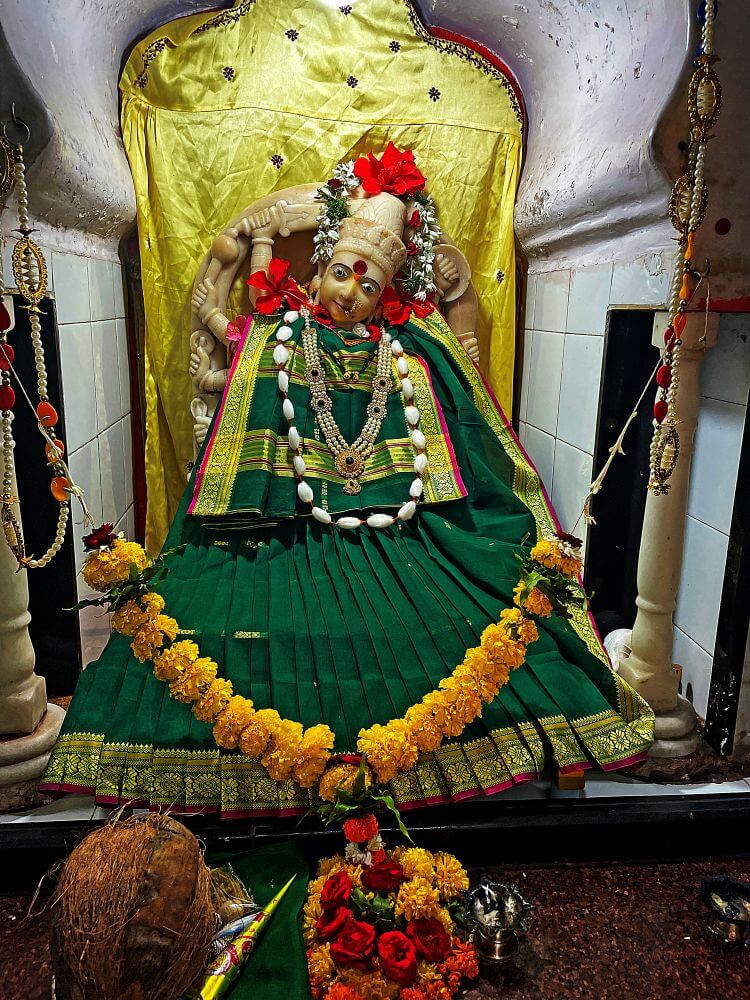
The great social reformer of Maharashtra, Gopal Ganesh Agarkar (1856-1895), originally hailed from the village of Tembhu near Karad. According to the biography of Agarkar written by S. M. Garge and published by the ‘National Book Trust’, Agarkar’s mother, Thakubai alias Saraswatibai, was from Karad. She was of a religious disposition and, following the customs of that time, had read the Pothis and Puranas. She had composed some songs herself. In one of these songs, she has described the idol of Krishnamai. According to it, the Goddess has a smiling face. She is Dashabhuja (ten-armed) and wears armlets on her arms. She holds a trident in one hand. She has vanquished the demon. The Goddess wears a waistband around her waist, Bugadi earrings in her ears, and around her neck She is adorned with a mangalsutra and thushi, anklets on her feet, and wears a zari-bordered saree with a patterned choli. Originally, the Goddess in this temple is Mahishasuramardini. The idol of the Goddess has a tilted neck, and she is looking towards the Krishna River. According to legend, this is how she came to be known as Krishnamai.
The ancient stone temple of the Goddess here has now been adorned with a modern look. The structure of the temple consists of a Sabhamandapa (assembly hall), Antarala (vestibule), and Garbhagriha (sanctum sanctorum). The design of the temple from the front resembles the entrance of a fort. Situated at a slight elevation from the ground, the temple is accessed by five steps. The Sabhamandapa here is enclosed. In the Sabhamandapa, arrangements for the darshan queue have been made towards the side of the Antarala. In the Garbhagriha, a white marble, ten-armed idol of Krishnamai is installed on a Vajrapitha. Religious programs such as Abhisheka, Mahapuja, and Bhajan-Kirtan are regularly organized in this temple.
The Krishna-mai Yatra takes place here twice a year: on the last Monday of the month of Shravan and in the month of Chaitra. On the last Monday of Shravan, the palanquins of all the deities from the surrounding five-village radius (panch-kroshi) arrive to visit Krishna-mai. This includes the temples of Sangameshwar, Ratneshwar, Bhairoba, Navagraha, Kamaleshwar, Sant Sankhu, Garudmama Radhakrishna Mandir, Uttara Lakshmi, Bhairavnath, and Hatkeshwar. On this day, countless devotees take a holy dip in the Krishna River and seek the blessings of the Goddess. Many married women also perform the ritual of offering a sari and coconut (oti) to Krishna-mai.
The second yatra (pilgrimage festival) is held from Chaitra Vadya Pratipada to Chaturthi. This four-day festival of Krishnamai is a well-known and popular celebration here. Previously, this festival was organized by the Pant Pratinidhi Sansthan of Aundh. Later, around 1811, the villagers began organizing it by collecting subscriptions. On the day before this festival, on Chaitra Shukla Purnima, the Utsav Murti (processional deity) is brought in a procession from the priest’s house to the ghat. During the festival, after the Haldi-Kumkum ceremony of Krishnamai on a Tuesday or Friday, the Chaitra Gauri Haldi-Kumkum ceremony is performed in every household in Karad. On the final day, a Chhabina (processional parade) is taken out, and the Utsav Murti is returned to the priest’s house. A Mahaprasad is also organized here during this festival period. Since 1957, this festival has taken on a more extensive form. Along with this, a Deepotsav (festival of lights) is held here on Kartik Purnima, which is known as ‘Ghat Pajalne’. At night, fireworks are displayed in the riverbed.
This sacred temple stands as a testament to deep spiritual devotion, ancient architectural grandeur, and rich local cultural traditions.
The sanctum sanctorum houses the divine idol consecrated according to ancient Vedic traditions, surrounded by serene courtyards and traditional temple architecture.
Navratri, Maha Shivratri, Annual Temple Jatra & Deepotsav
Compare and book flights, secure top-rated local hotels near the temple, hire reliable guides, and rent cars instantly.
Extend your pilgrimage by visiting other highly sacred temples located nearby.


Add ₹999 more to unlock FREE SHIPPING!
Your sacred cart is currently empty.
Shop Photo FramesFill in your delivery details below to place your order.
Add comment