
Add ₹999 more to unlock FREE SHIPPING!
Your sacred cart is currently empty.
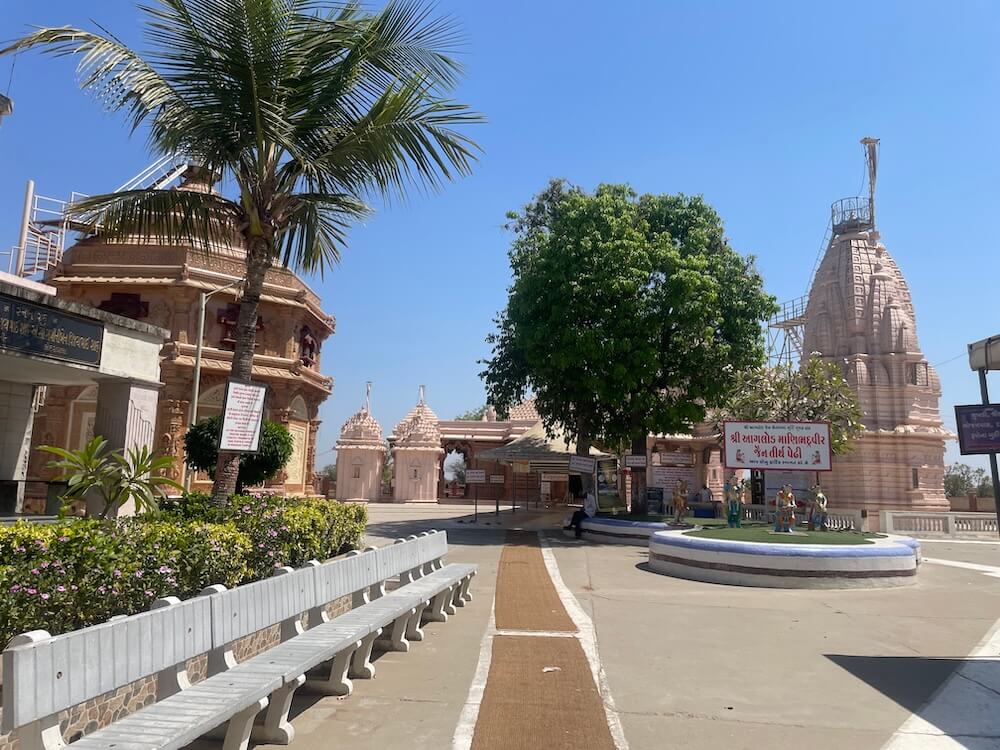
Shop Photo FramesNestled upon the serene banks of the Sabarmati River in the Vijapur Taluka, the Shri Manibhadraveer Jain Tirtha at Aglod stands as a spiritually vibrant and historically profound sanctuary. Known in antiquity as ‘Agastyapuri’, this hallowed ground once housed the hermitage of the venerable Sage Agastya. Regarded as a paramount ‘Shaktipitha’ within Jainism, it is here that the ‘torso’ of Manibhadraveer is enshrined. The expansive temple complex, crafted in the exquisite Maru-Gurjar architectural style, houses the majestic idol of Lord Vasupujya Swami, the 12th Tirthankara, within its principal sanctum. Adjacent to the main shrine lies a dedicated temple for Manibhadraveer, featuring a unique idol with a Varaha (boar) countenance. The festival of Vasant Panchami marks a grand religious congregation here, drawing thousands of Jain devotees from across the nation.
According to mythological chronicles, Lord Shri Ram is also believed to have graced this sacred soil during his period of exile. In his penultimate birth, Manibhadraveer was a noble Jain layman named Manekshah of Ujjain. He was a devout follower of the ‘Samkitmul Vrata’ and a steadfast disciple of Acharya Hemvimal Suriji. He possessed a refined passion for playing thirty-six varieties of musical instruments. Owing to his unwavering devotion to the faith, he was ordained as a ‘Kshetrapal’ (guardian deity). Inspired by his preceptor’s discourses, he embarked upon the arduous ‘Navyanu Yatra’. However, he attained a heroic martyrdom while defending cows and his companions from assailants. At the moment of his passing, his body is said to have divided into three parts. The head fell at Ujjain, the lower limbs at Magarwada and the torso at Aglod. Today, these three sites are worshipped as the primary seats of his power. It is a firm conviction among the faithful that visiting all three shrines between sunrise and sunset bestows immense spiritual merit, ensures protection against malevolent forces and ushers in prosperity.
The chronicles of this Tirtha’s establishment reveal that the Jain Acharya Shantisomusuriwarji Maharaj undertook 121 days of rigorous penance with the aspiration of obtaining a divine vision of Manibhadraveer. In 1677 CE, on the day of Vasant Panchami, the deity manifested before him and commanded the creation of this pilgrimage site. Consequently, the extraordinary torso-idol of Manibhadraveer was formally consecrated. Acharya initially established a clay mound representing the torso on a hillock outside the village. Over time, the shrine underwent restoration under the spiritual guidance of Acharya Vijay Anandghansuriwar in 1964 and Acharya Vijaybhuvansuriwarji in 1984.
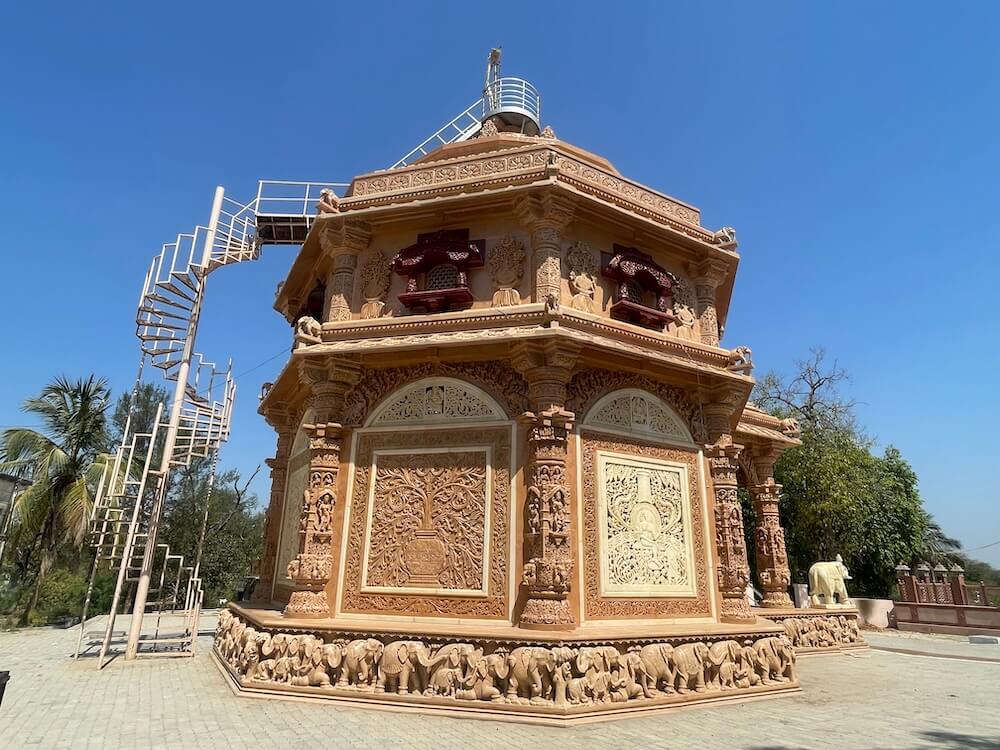
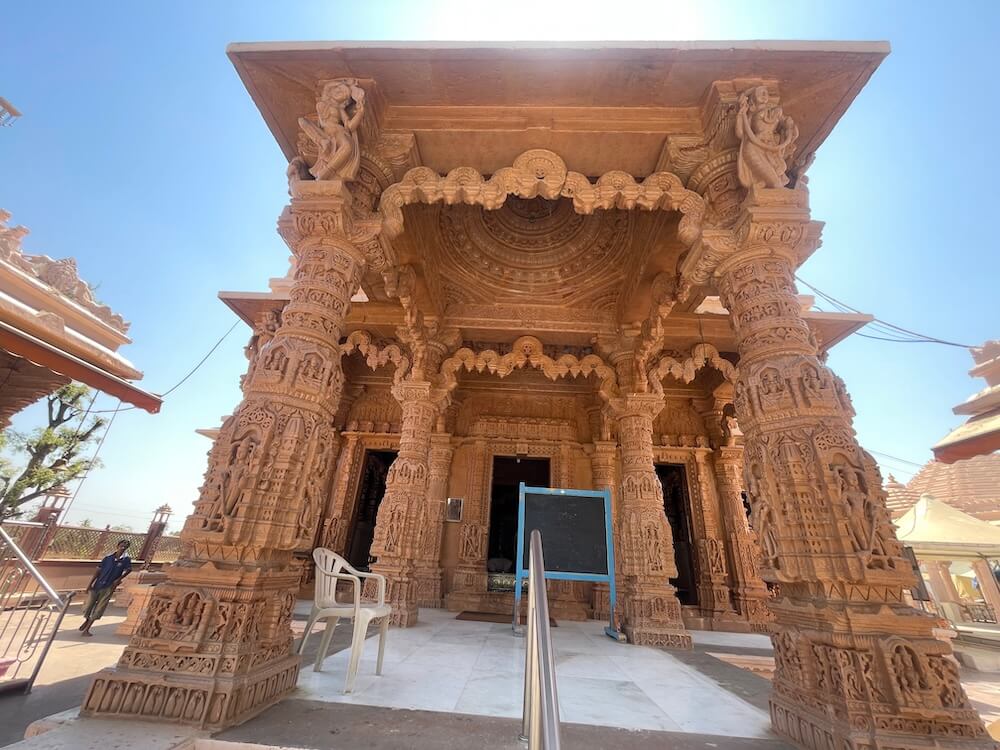
Architecturally, the temple is a masterpiece of space and aesthetic beauty. Situated a short distance from the main gateway of Aglod village, the shrine honours Lord Vasupujya Swami as the ‘Mulnayak’ (primary deity). The principal structure measures 130 feet in length and 82 feet in breadth, with its spire soaring 53 feet above the ground. The edifice is a fine specimen of the Maru-Gurjar style and every day a new flag is hoisted atop the spire in accordance with strict scriptural rituals.
The temple’s layout comprises a ‘Mukhamandapa’ (entrance porch), a ‘Sabhamandapa’ (assembly hall) and a ‘Garbhagriha’ (sanctum sanctorum). Its pillars are interconnected by scalloped arches adorned with delicate carvings and various celestial figures, while the assembly hall’s ceiling features captivating decorative motifs. Within the sanctum, a 151-centimetre-tall marble idol of Vasupujya Swami sits in the ‘Padmasana’ (lotus) posture. This pristine white statue is carved from a single, monolithic block of stone. Securely preserved within the temple’s basement is an exceedingly ancient idol of Lord Adinath. The exterior walls are decorated with niches containing Jain icons, supplemented by friezes of elephants, cavalry, ‘Kirtimukhas’ (glory masks) and a continuous row of elephant sculptures at the base. The primary spire is surrounded by several smaller subsidiary spires.
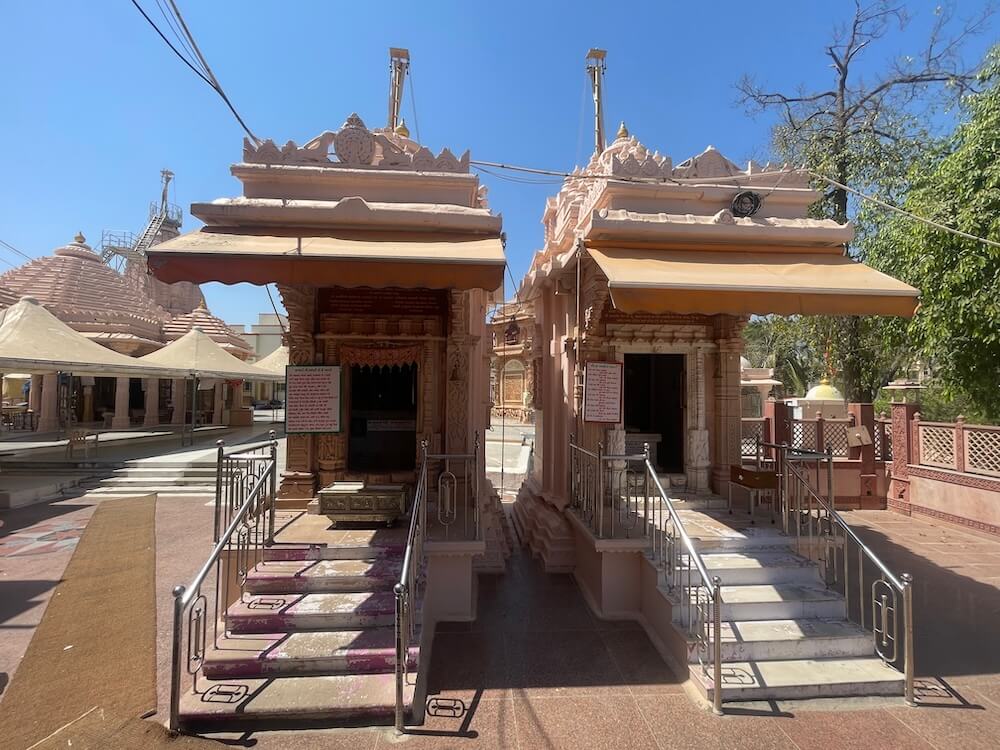
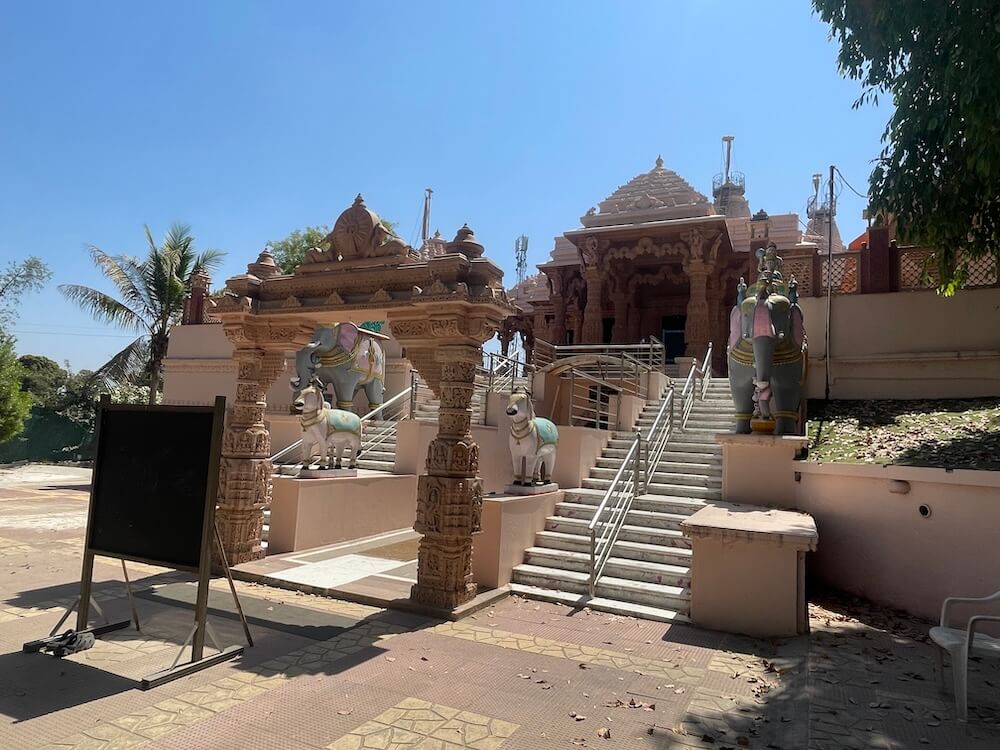
The separate temple of Manibhadraveer stands in close proximity, guarded by statues of gatekeepers. Inside, the idol of the deity is enshrined within a gold-gilded alcove, wearing a silver crown. The deity possesses a Varaha-like face and is mounted upon a white elephant named ‘Airavat’. Sundays and Thursdays witness a heavy influx of pilgrims.
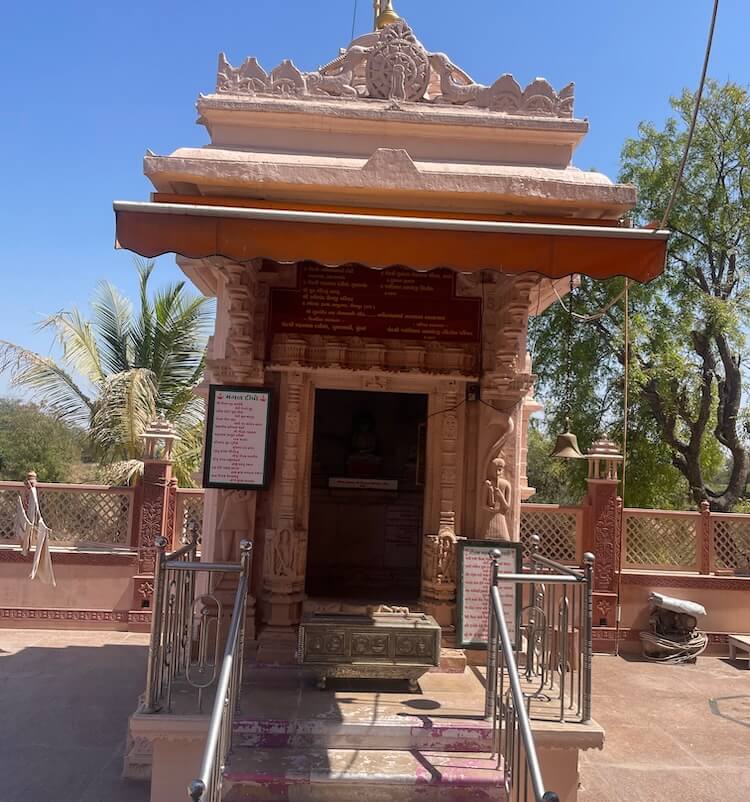
The complex also features a temple dedicated to Lord Adeshwar, accessible via a flight of steps. The assembly hall of this shrine is decorated with intricate ‘mirror work’ and the sanctum houses a seated idol of Adeshwar Bhagwan. A smaller temple nearby enshrines Goddess Padmavati, Saraswati and Mahalakshmi, alongside a dedicated shrine for Gautamsvami. For the convenience of visiting devotees, the complex provides ‘Dharamshalas’ (guest houses) and a ‘Bhojanshala’ (refectory) serving pure vegetarian meals. A traditional offering of ‘Sukhadi’—a sweetmeat prepared from pure ghee, jaggery and wheat flour—is sold as ‘Prasad’. According to local custom, this offering must be consumed within the temple premises.
Throughout the year, the Tirtha hosts various religious observances. Festivals such as the fifth, eighth and fourteenth days of the lunar fortnight, as well as Diwali, are celebrated with great fervour. Vasant Panchami (Magh Shukla Panchami) is the most significant occasion, marking the manifestation day of Manibhadraveer. On this morning, a special ‘70-Bhed Puja’ is conducted for the deity, accompanied by sacrificial rituals (hom-havan) and elaborate ceremonies. On this day, followers of the Jain Shwetambar sect and other devotees gather at Aglod in vast numbers.
This sacred temple stands as a testament to deep spiritual devotion, ancient architectural grandeur, and rich local cultural traditions.
The sanctum sanctorum houses the divine idol consecrated according to ancient Vedic traditions, surrounded by serene courtyards and traditional temple architecture.
Navratri, Maha Shivratri, Annual Temple Jatra & Deepotsav
Compare and book flights, secure top-rated local hotels near the temple, hire reliable guides, and rent cars instantly.
Extend your pilgrimage by visiting other highly sacred temples located nearby.


Add ₹999 more to unlock FREE SHIPPING!
Your sacred cart is currently empty.
Shop Photo FramesFill in your delivery details below to place your order.
Add comment