
Add ₹999 more to unlock FREE SHIPPING!
Your sacred cart is currently empty.
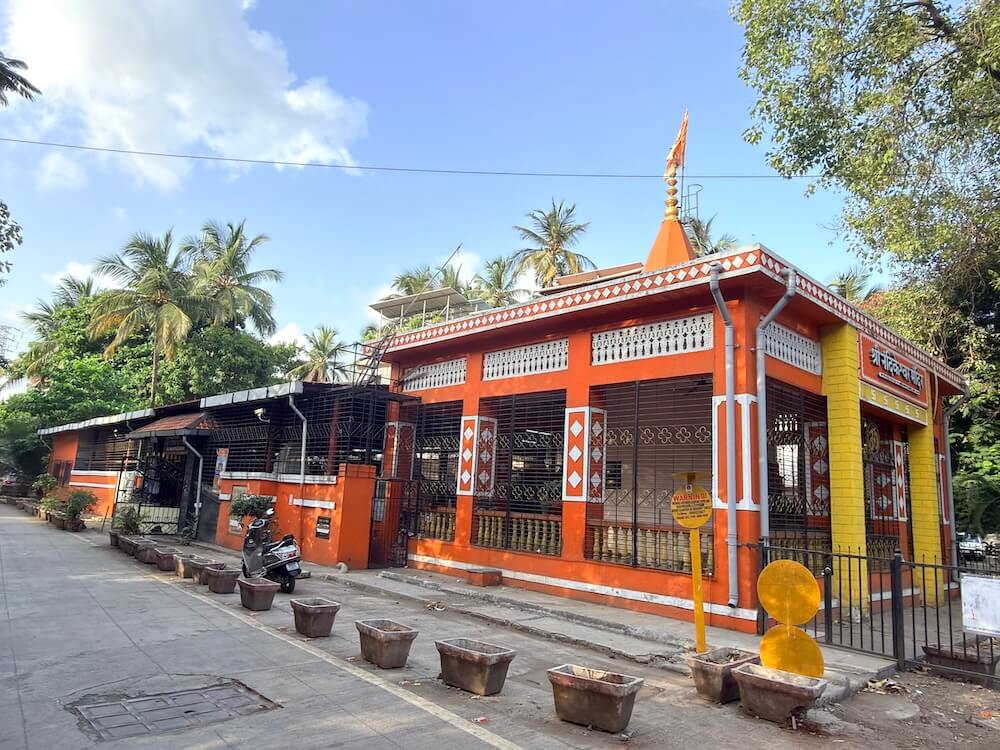
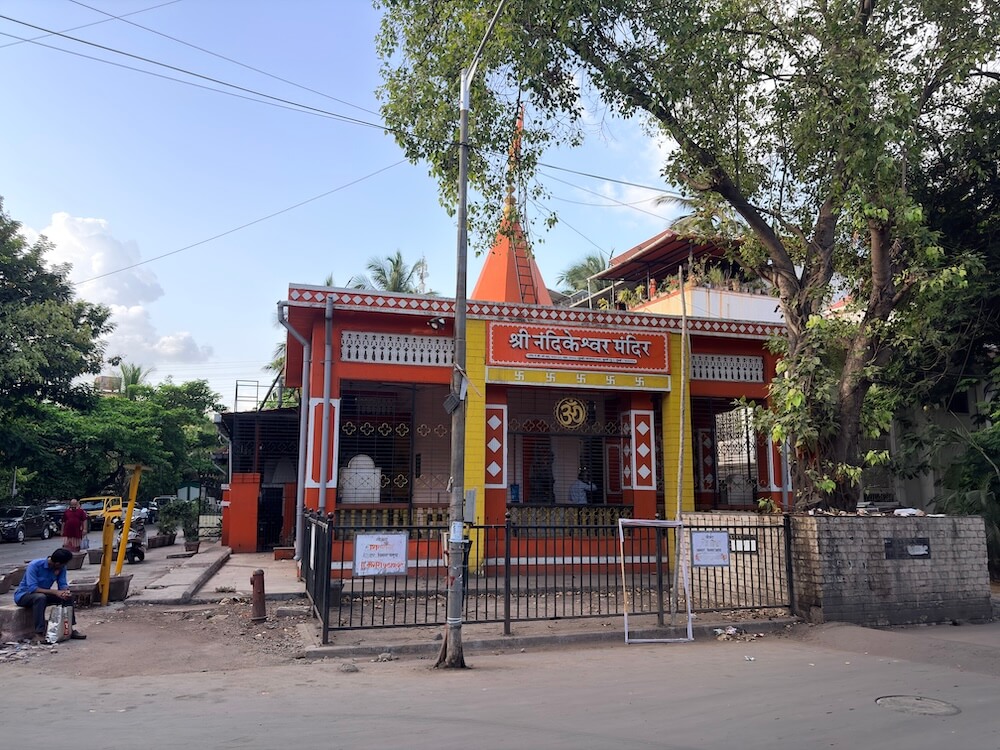
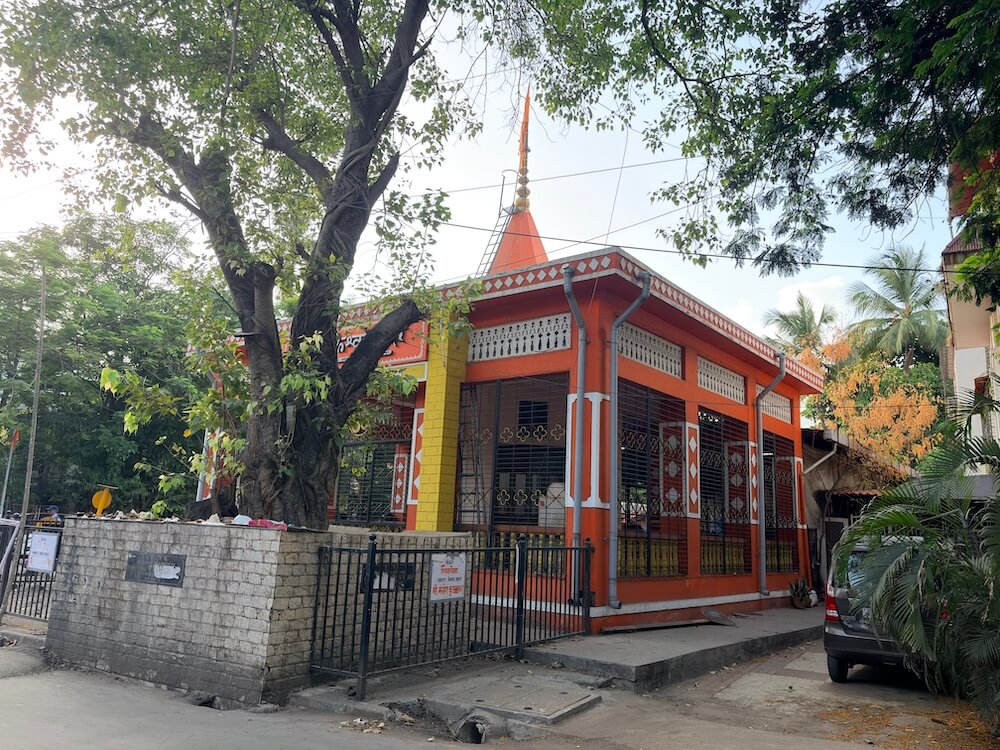
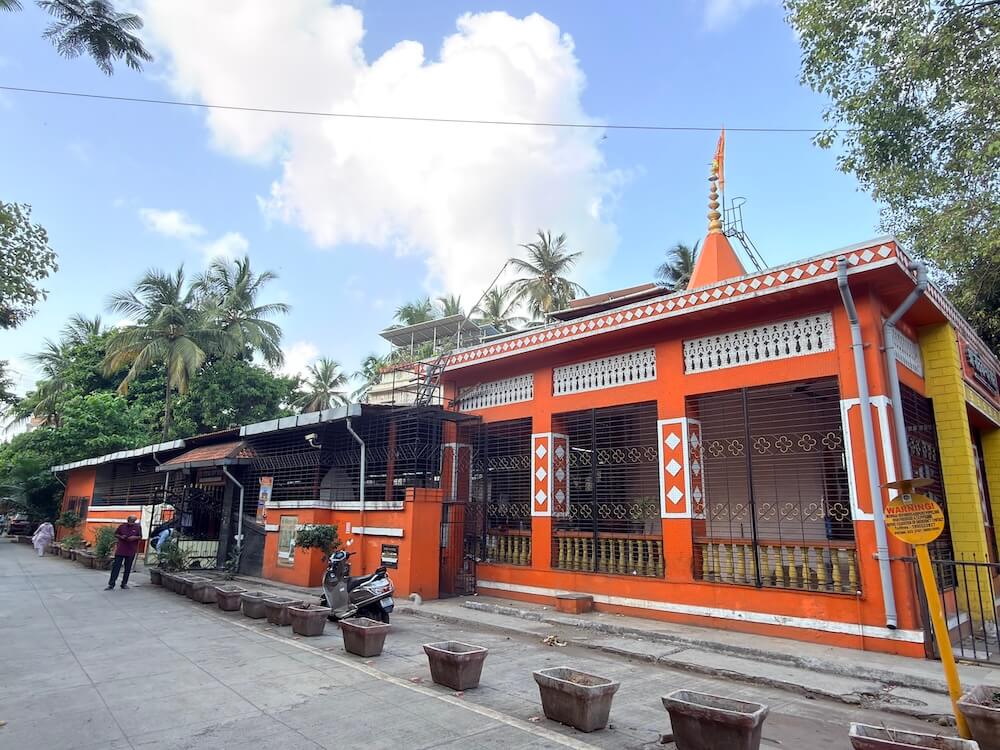
Shop Photo FramesMumbai, as a city, is as deeply connected to its ancient cultural and religious heritage as it is modern and fast-paced. Located near D. N. Road in the Kamgar Nagar area of Kurla East, a central suburb of Mumbai, the Nandikeshwar Temple is a part of this very cultural tradition. This temple is recognized as a highly significant and famous religious site in this region. The Kurla area is blessed with a rich historical and social legacy. Historically a part of Salsette Island, this area was later connected to the main islands of Mumbai. This temple stands as a witness to the transformation of this region.
Mumbai emerged as the nation’s financial capital in the nineteenth and twentieth centuries. During this process, the Girangaon (mill district) and industrial sectors of Mumbai expanded significantly. Initially, large centers of textile mills were established in areas like Byculla, Parel, Lalbaug, Chinchpokli, Prabhadevi, and Dadar in South and Central Mumbai. This region came to be known as Girangaon. However, due to a shortage of space, rising land prices, and the increasing expansion of business at the beginning of the twentieth century, this industrial sector began to shift towards the suburbs. During this period, many textile mills and factories were started in and around Kurla. Consequently, the working class from across Maharashtra settled in this area. This change proved to be a major turning point in the geographical and economic history of Mumbai.
Kurla developed into a very important industrial location due to its geography and transport facilities. Kurla became a major junction on the Great Indian Peninsula Railway, known today as the Central Railway. Connectivity to the Harbour line also became available from here. Being near the Mithi River made it easier for factory owners to transport raw materials and reach finished goods to the ports. The greatest and most historical evidence of the industrial history of the Kurla area is the ‘Swadeshi Mills’. In the year 1886, the famous industrialist Jamsetji Tata established this textile mill in Kurla. This single mill gave the village of Kurla the form of a large industrial city. Apart from Swadeshi Mills, many other small and large factories, chemical companies, oil mills, and iron works were started in this area. Due to this industrial location, Kurla became a major hub for laborers in Mumbai.
Information about the textile mill in Kurla and the condition of the workers is found in the book ‘For the Love of India: The Life and Times of Jamsetji Tata’, published some years ago by R. M. Lala. According to this, in 1886, Jamsetji Tata bought the failing ‘Dharamsi Mill’ in Kurla. He renamed this mill ‘Swadeshi Mills’. At that time, Kurla was a marshy area outside the city of Mumbai. Taxes were lower here than in Mumbai city, and there was excellent railway connectivity. It was for these reasons that Jamsetji chose this location. Jamsetji emphasized building good colonies for the workers to live in here. Due to this industrial expansion, the population of the Kurla area began to grow rapidly. A large amount of human labor was required to work at different levels in the mills and factories. This working class primarily came to Mumbai from the Konkan, Ratnagiri, Sindhudurg, Satara, Sangli, Kolhapur, and Marathwada regions of Maharashtra. Large chawls and settlements were built around the mills for the residence of these workers. Kamgar Nagar in Kurla East is considered an excellent example of this. The life of the workers here was one of struggle and hardship. Various labor unions also became active in this area for their rights and welfare. These unions later led many historical struggles. The Nandikeshwar Temple was established in the Kamgar Nagar area to bring this working class together and fulfill their spiritual needs.
In the early days, this temple was in a very small and simple form. The industrial atmosphere of Kamgar Nagar and the Kurla area was not limited to economic progress alone; it gained a distinct social and cultural dimension. Workers who came from different districts of Maharashtra came together and preserved their culture here. This temple became the main focal point of their culture. Bhajan groups, labor welfare centers, theater festivals, lecture series, and public Ganeshotsav began on a large scale in these mill worker settlements. As the urban development of the Kurla area progressed and the population here increased, the form of this temple also changed. Local residents and the temple management came together to renovate this temple and gave it its current grand form.
The Nandikeshwar Temple is dedicated to Lord Shiva. The very name Nandikeshwar clarifies the actual importance of Nandi in the temple. Nandi, the vehicle of Mahadeva, is considered a symbol of devotion and strength. According to the Shiva Purana, Nandi is a prominent attendant (Gana) of Shiva, just like Bhairava, Virabhadra, Manibhadra, Chandisha, Shringi, Bhringiriti, Shaila, Gokarna, Ghantakarna, Jaya, and Vijaya. He is considered the chief gatekeeper of Shiva. He is also known by the names Nandisha and Nandishwara. In the Shiva Sahasranama, Nandi is said to be a name of Shiva. In the 22nd chapter of the Shatarudra Khanda of the Shiva Purana, it is stated that Lord Shiva assumed the incarnation of Nandi. There is a mythological story in this context that the gods won the war between the Suras and Asuras after the churning of the ocean (Samudra Manthan). After that, Lord Vishnu ordered all the Asuras to go to the netherworld (Patal Loka). He himself took the Asuras to the netherworld, but there the Asuras imprisoned him. Then all the gods prayed to Lord Shiva. At that time, to destroy the Asuras, Shiva assumed the Vrishabha (bull) incarnation.
Nandi is believed to be the son of Sage Shilada. According to legend, Nandi was born to Sage Shilada after he performed severe penance to Lord Shankara. The Sage imparted the knowledge of all four Vedas to Nandi. Once, when Varuna visited them, he blessed Sage Shilada with a long life but did not bless Nandi. When the Sage inquired about this, Varuna revealed that Nandi had a short lifespan. Hearing this, Sage Shilada became deeply worried. Subsequently, Nandi performed penance to Lord Shankara. Pleased by his rigorous devotion, Lord Shankara granted him the boon of remaining in His presence forever. At that time, Lord Shankara gave him the face of a bull and made him His vehicle (Vahana). Lord Mahadeva granted Nandi the boon that if a devotee whispers their wish into his ear while he is in a meditative state, it will reach Him. Therefore, even today, many devotees whisper their wishes into Nandi’s ear instead of speaking them directly before the Shiva Linga. Devotees believe that Mahadeva fulfills the wishes whispered into Nandi’s ear. For this reason, Nandi is duly worshipped upon entering a temple of Mahadeva. Because of this, Mahadeva is famously known as Nandikeshwara, the Lord of Nandi.
The Nandikeshwara Temple is situated in the bustling area of Kamgar Nagar in Kurla. The temple structure consists of a spacious Sabha Mandap (assembly hall), Antarala (vestibule), and Garbhagriha (sanctum sanctorum). In the Sabha Mandap, facing the Antarala, there are three small shrines. To the right, Maruti and Shani Dev are enshrined, and to the left, Sai Baba is seated. Near the entrance of the Antarala, there is an idol of Nandi placed on a high pedestal in the Sabha Mandap. From here, one ascends three steps to enter the slightly elevated Antarala. The Garbhagriha is designed with a circumambulation path (Pradakshina Marg) around it. In the center of the Garbhagriha, on the floor, lies the Nandikeshwara Mahadeva Linga.
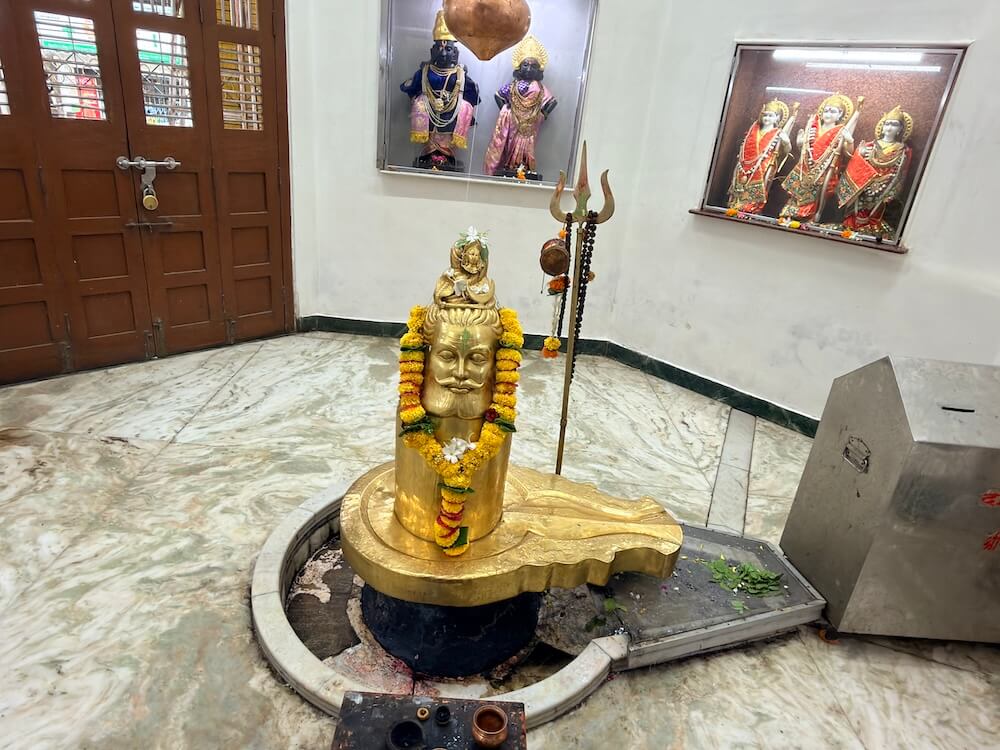
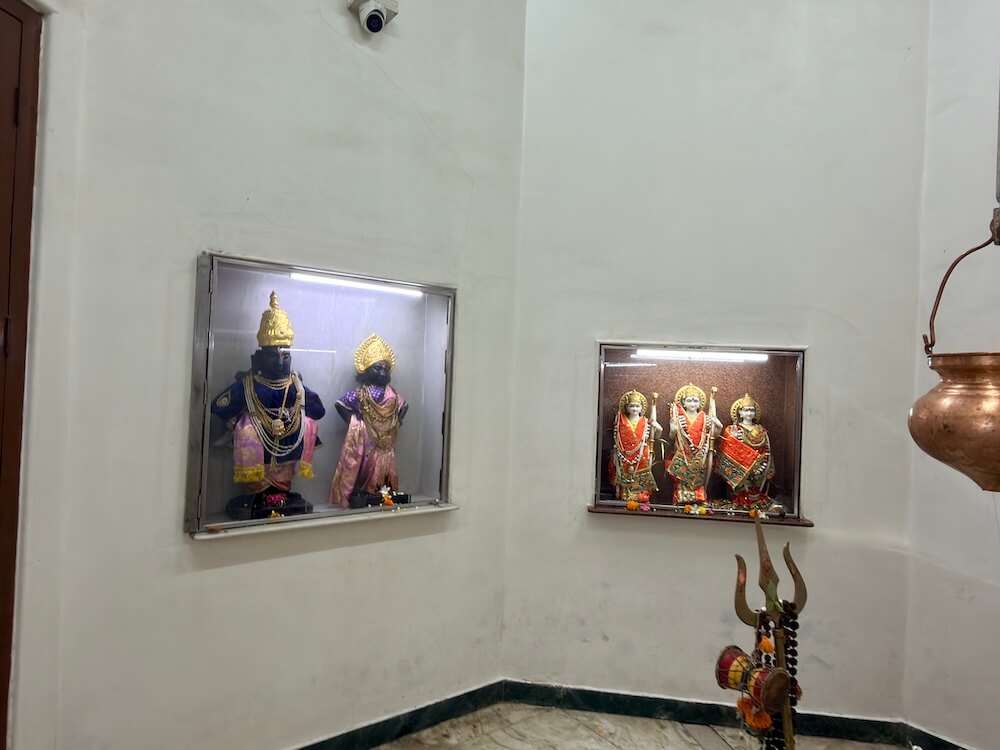
A brass mask of Mahadeva is placed upon this Linga. The mask is carved with the face of Mahadeva featuring a beard, mustache, and matted hair (Jata). A Trishula and Damaru are placed near the Shiva Linga. In the niches (Devakoshtakas) built into the walls of the Garbhagriha, there are idols of Amba Mata, Radha-Krishna, Vitthal-Rakhumai, Rama-Lakshmana-Sita, and Ganapati. There are also idols of various deities in the niches along the circumambulation path. Attached to the back wall of the Garbhagriha is a large idol of Krishna playing the flute. Above the Garbhagriha stands an octagonal-shaped Shikhara (spire) that tapers towards the top.
Every year, the Mahashivratri festival is celebrated at the Nandikeshwara Temple on a grand scale and in a disciplined manner. On the day of Mahashivratri, long queues of devotees form from early morning to seek the blessings of Nandikeshwara.
On this day, the temple is illuminated with decorative lights and adorned with flowers. Special worship is organized every Monday during the month of Shravana. Throughout the entire month, various religious discourses and Kirtans are held. Additionally, the Akhand Harinam Saptah, organized annually by the Nandikeshwara Seva Mandal, is considered the biggest celebration here.
During this Saptah, Bhajans and chanting of the Lord’s name continue for seven days, twenty-four hours a day. Local citizens participate in this with great enthusiasm. Along with these main festivals, the temple also enthusiastically celebrates Sankashti Chaturthi, Angarki Chaturthi, Vinayaka Chaturthi, Shri Ganesh Jayanti, and Maghi Ganeshotsav. Devotees can visit the temple for the Darshan of Nandikeshwara daily from 6 in the morning to 12 in the afternoon and from 4 in the evening to 9 at night.
This sacred temple stands as a testament to deep spiritual devotion, ancient architectural grandeur, and rich local cultural traditions.
The sanctum sanctorum houses the divine idol consecrated according to ancient Vedic traditions, surrounded by serene courtyards and traditional temple architecture.
Navratri, Maha Shivratri, Annual Temple Jatra & Deepotsav
Compare and book flights, secure top-rated local hotels near the temple, hire reliable guides, and rent cars instantly.
Extend your pilgrimage by visiting other highly sacred temples located nearby.


Add ₹999 more to unlock FREE SHIPPING!
Your sacred cart is currently empty.
Shop Photo FramesFill in your delivery details below to place your order.
Add comment