
Add ₹999 more to unlock FREE SHIPPING!
Your sacred cart is currently empty.
Shop Photo FramesIn Hindu Dharma, the Shaiva tradition is considered to have originated from time immemorial. Since many emperors and royal dynasties in India were devotees of Shiva, they built many magnificent temples dedicated to Mahadeva. As Nandi is considered the chief attendant and vehicle of Mahadeva, one often sees a Nandi or a separate pavilion or temple for Nandi built in front of Mahadeva. However, in some temples, Nandi himself is the primary deity. Famous examples include the Nandi Temple in Khajuraho, Madhya Pradesh, the Yaganti Uma Maheswara Nandi Temple in Andhra Pradesh, and the Nandi Temple in Mysore, Karnataka. One such ancient and famous Nandi temple is located in the village of Raiwadi in the Loha taluka of Nanded district.
Local villagers state that this temple is about seven hundred years old. The Hemadpanti style construction of the temple’s sanctum sanctorum bears witness to its antiquity. Various stories regarding the birth of Nandi are told in the Puranas. According to one such story, when the lifelong celibate Sage Shilada desired a son to continue his lineage, he prayed to Lord Indra for one. Following Indra’s advice, Sage Shilada performed penance to Mahadeva. Mahadeva blessed him with the boon of a son. Later, Sage Shilada found a newborn child in a field, and considering this to be Mahadeva’s blessing, he named the child Nandi. Nandi became the supreme devotee and servant of Mahadeva. Since then, the idol of Nandi began to appear permanently in front of Mahadeva.
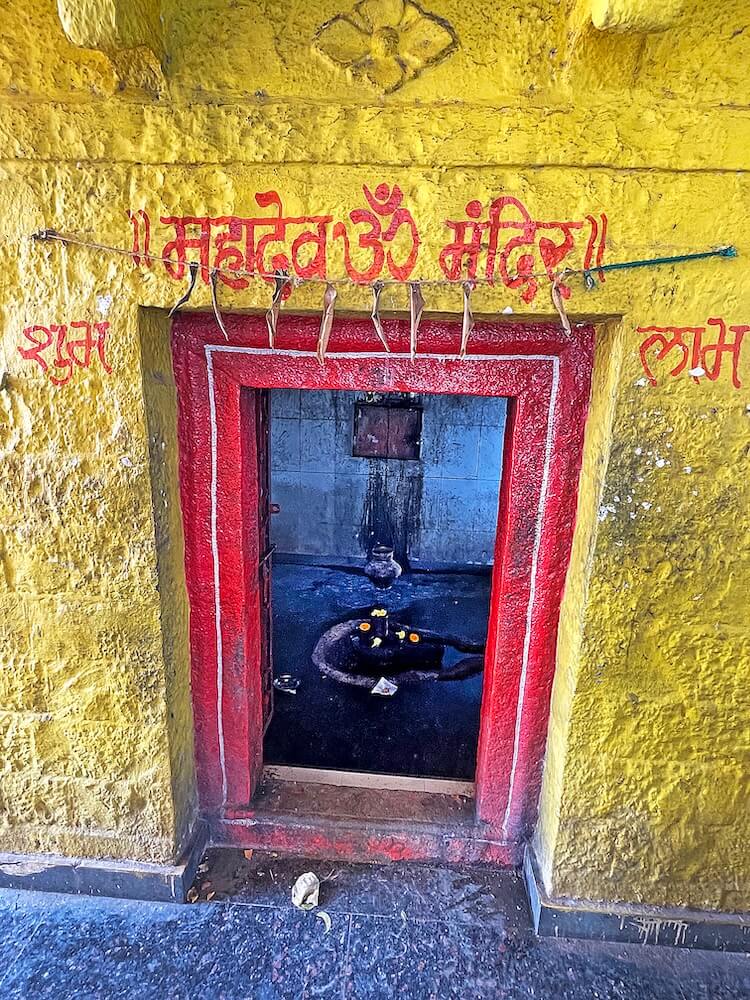
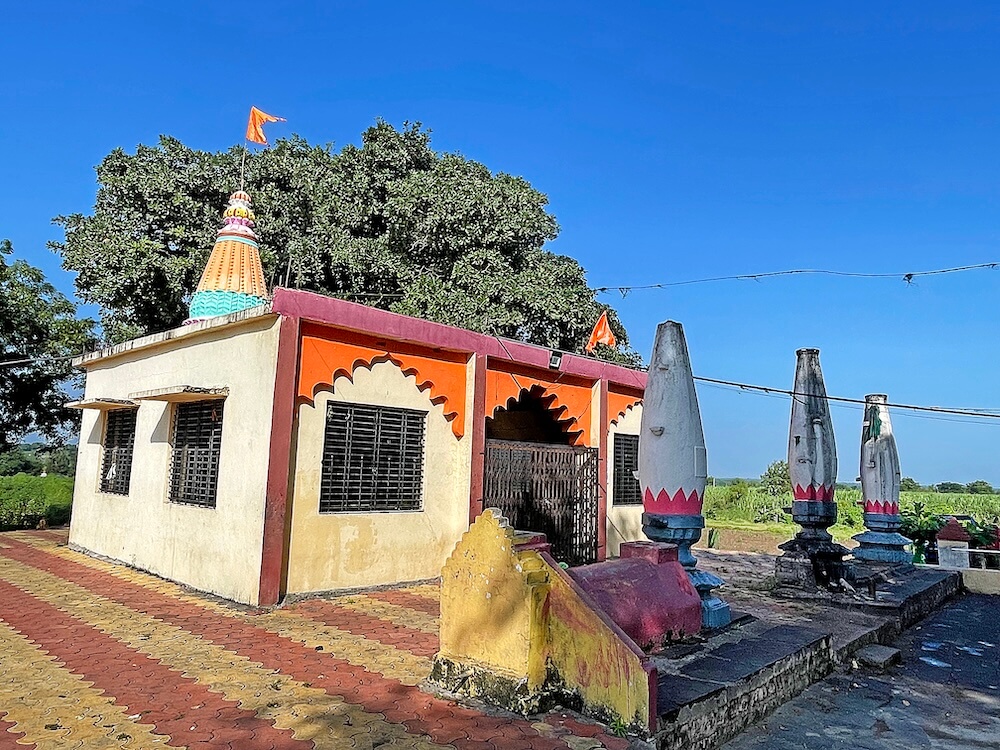
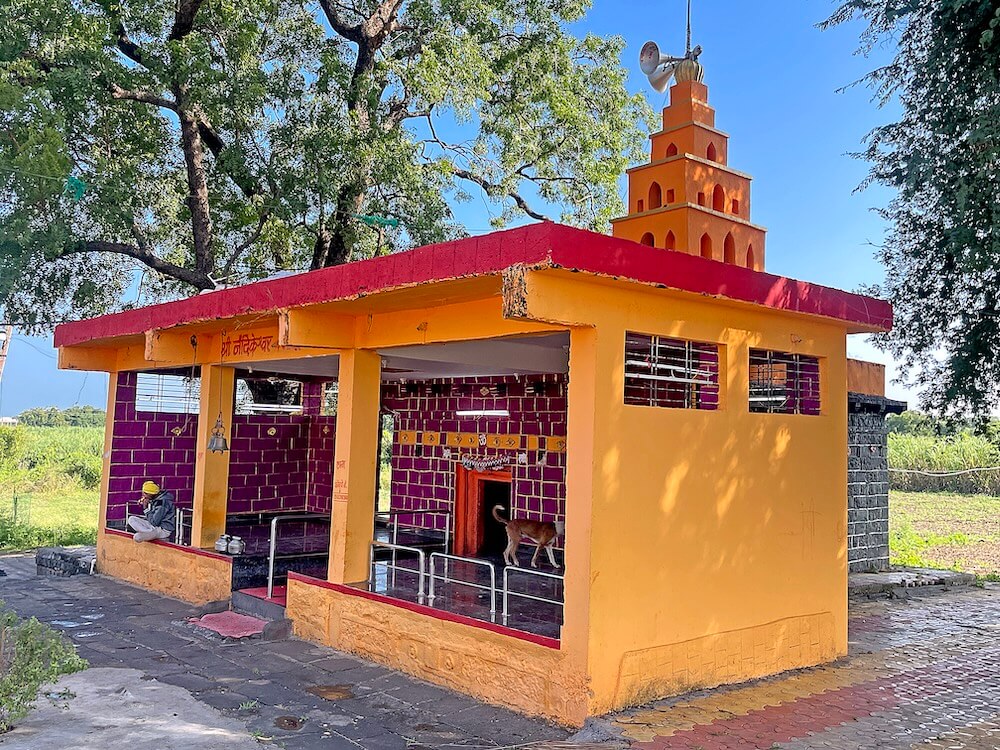
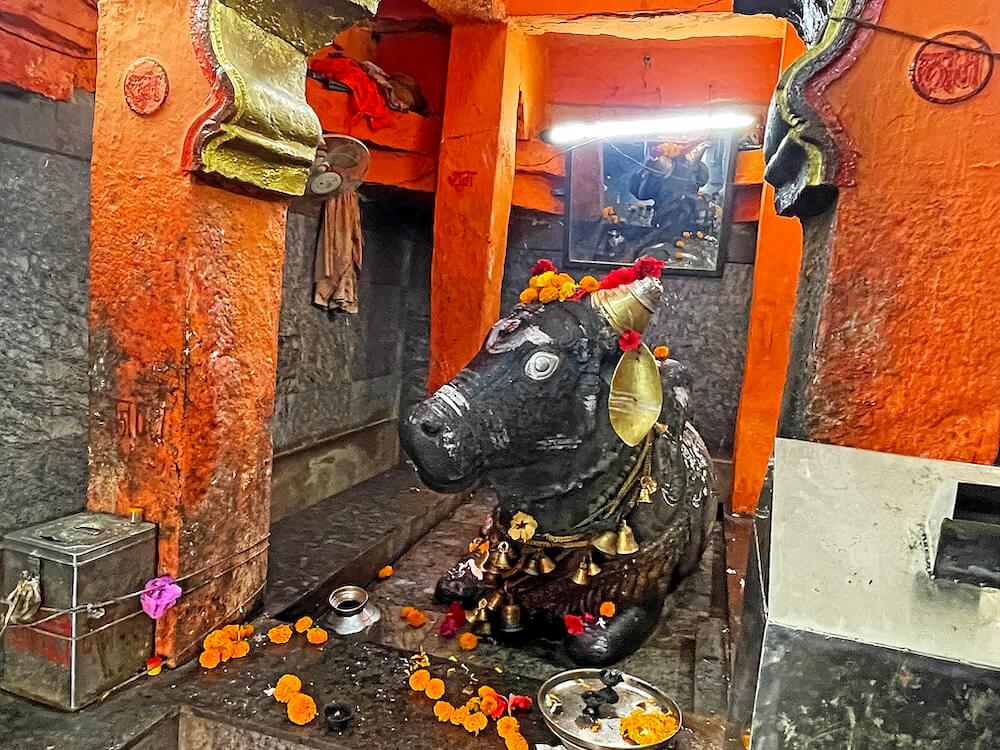
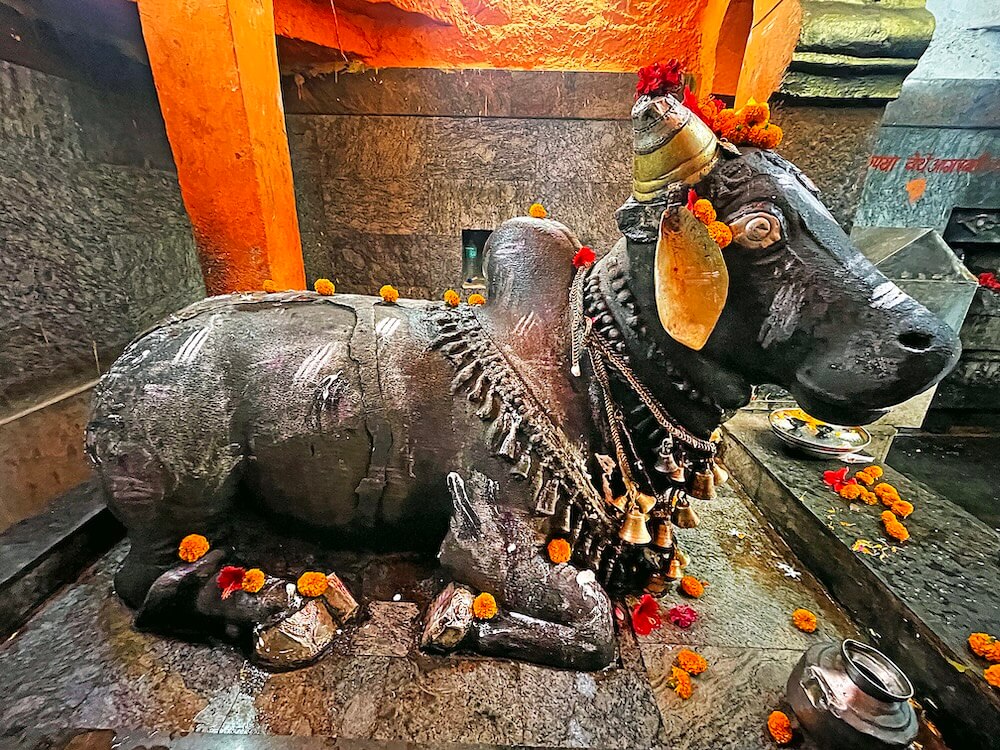
There is a welcome arch on the path leading from the main road to the temple. On both sides, there are square pillars, and the canopy above them features a traditional wedding crown (bashing). In the central niche of this crown, there is an idol of Shiva-Parvati. The temple courtyard is slightly elevated above the road level. A part of the spacious and paved temple courtyard is covered with paver blocks. In the courtyard, in front of the temple, there are three circular lamp pillars (deepstambhas). The base of these lamp pillars is hexagonal. The assembly hall (sabhamandap) of the temple is semi-open. There are high platforms on both sides of the entrance in the assembly hall. Behind these platforms, there are doors on both sides of the sanctum sanctorum to exit the assembly hall. The passage from the entrance of the assembly hall to the entrance of the sanctum sanctorum is about two feet deep. There is a stainless steel railing in the middle of the passage. This creates separate paths for entering and exiting the sanctum sanctorum. Further ahead is the entrance to the sanctum sanctorum. The door frames are adorned with floral carvings, and there is an indistinct sculpture on the lintel. Inside the sanctum sanctorum, there is an idol of Nandi made of black stone placed on a Vajrapitha. The trappings, garlands, and other ornaments on the body of this massive idol are carved in a highly artistic manner. The horns of Nandi are fitted with silver covers, and the ears and eyes are also made of silver. Tripundra and horizontal stripes are carved on Nandi’s forehead. The hump on the back is shaped like a Shiva Linga.
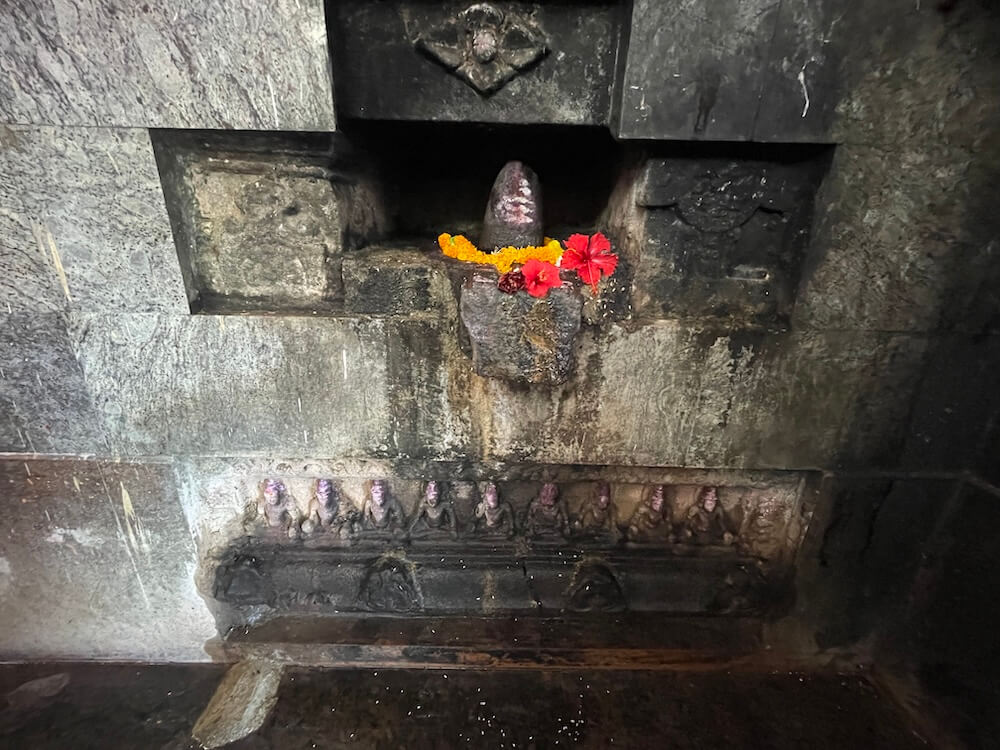
There are square carved pillars on all four sides of the idol. Connected by arched designs, these pillars form a canopy over the Nandi idol. A brass vessel for continuous ritual bathing (abhishek) is hung from the ceiling above the idol. In the niche of the sanctum sanctorum, there is a Shiva Linga and a panel of the Seven Mothers (Saptamatrika). There are lamp niches in the walls of the sanctum sanctorum. The ceiling of the sanctum sanctorum is hexagonal and hollow up to the spire. Windows in the spire provide ventilation and light to the sanctum sanctorum. There is a safety railing around the roof of the temple. The roof of the sanctum sanctorum has a five-tiered, pyramid-shaped Gopura-style spire. There are windows on all four sides of the spire. At the top of the spire is an Amalaka, followed by a finial (kalash). In front of the temple, there is a hall for cultural and social activities.
The main annual fair (yatra) is celebrated with great enthusiasm on Chaitra Vadya Dwadashi. At this time, thousands of devotees come to have darshan of Nandikeshwar. Wrestling matches and bullock cart races are organized on the occasion of the fair. The annual festivals of Shravan month and Mahashivratri are celebrated in the temple with deep devotion. During all festivals, many devotees come for the darshan of Nandikeshwar and to fulfill their vows. On these occasions, devotees whisper their wishes into Nandi’s ears to make new vows. Programs such as Laghurudra, Mahabhishek, Bhajans, Kirtans, Jagaran, and Mahaprasad are organized. As shops selling various items are set up, the area takes on the appearance of a marketplace. Millions of rupees in economic turnover are generated here through the buying and selling of prasad, worship materials, agricultural tools, and household items.
This sacred temple stands as a testament to deep spiritual devotion, ancient architectural grandeur, and rich local cultural traditions.
The sanctum sanctorum houses the divine idol consecrated according to ancient Vedic traditions, surrounded by serene courtyards and traditional temple architecture.
Navratri, Maha Shivratri, Annual Temple Jatra & Deepotsav
Compare and book flights, secure top-rated local hotels near the temple, hire reliable guides, and rent cars instantly.
Extend your pilgrimage by visiting other highly sacred temples located nearby.


Add ₹999 more to unlock FREE SHIPPING!
Your sacred cart is currently empty.
Shop Photo FramesFill in your delivery details below to place your order.
Add comment