
Add ₹999 more to unlock FREE SHIPPING!
Your sacred cart is currently empty.
Shop Photo FramesPanchavati is a renowned pilgrimage site in the city of Nashik. Situated on the banks of the Godavari River in this very area is the Nilkantheshwar Mahadev Temple. It is believed that this is the sacred spot where Lord Mahadev consumed the poison (Halahala). For this reason, the temple holds immense significance. This temple is mentioned in the ‘Nashik Panchavati Goda Mahatmya’ of the Padma Purana. Historical references also indicate that Soyarabai, the wife of Chhatrapati Shivaji Maharaj, used to regularly visit the Nilkantheshwar Temple during her stay in Nashik.
The legend of the temple states that the Devas and Asuras decided to churn the ocean to obtain nectar and precious gems. For the churning, they used Mount Mandara as the churning rod and the serpent Vasuki as the rope. The Devas held the tail end, while the Asuras held the head end of the serpent to churn the ocean. From this churning, fourteen gems emerged: Lakshmi, Kaustubha, Parijata, Sura, Dhanvantari, Chandra, Rambha, Airavata, Amrita, poison, the horse Uchchaihshravas, Kamadhenu, the conch, and Hari-dhanu. However, because the Devas and Asuras used the serpent Vasuki as a rope, Halahala (poison) began to emanate from its mouth. When everyone began to suffer from the heat of that poison, Lord Mahadev came to the Nashik region with the poison and consumed it while sitting on the banks of the Godavari. Consequently, His throat turned blue. The place where Mahadev consumed the poison is the present-day Nilkantheshwar Temple.
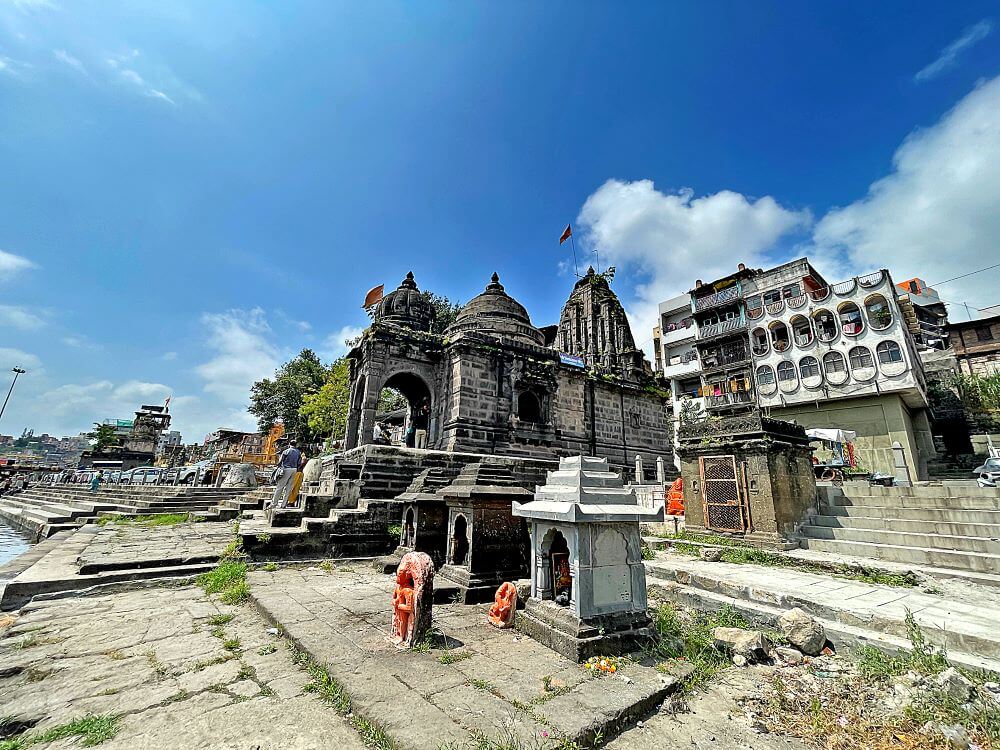
The Nilkantheshwar Temple is located in front of the Dashashwamedh Kund in the bed of the Godavari River in Panchavati. This temple is extremely ancient, and there is no concrete evidence regarding who built it. It is said that the Chandrachud King, who came after the reign of Lord Rama, established this temple. According to another reference, Lakshman Shankar, the brother of Naroshankar Raje Bahadur, built this temple in the year 1747 at a cost of one lakh rupees. During the Mughal era, Aurangzeb’s soldiers attempted to vandalize this temple. Two stone pillars of the temple were damaged in the process, but due to the divine presence of Nilkantheshwar, they ceased their efforts, and the temple remained safe.
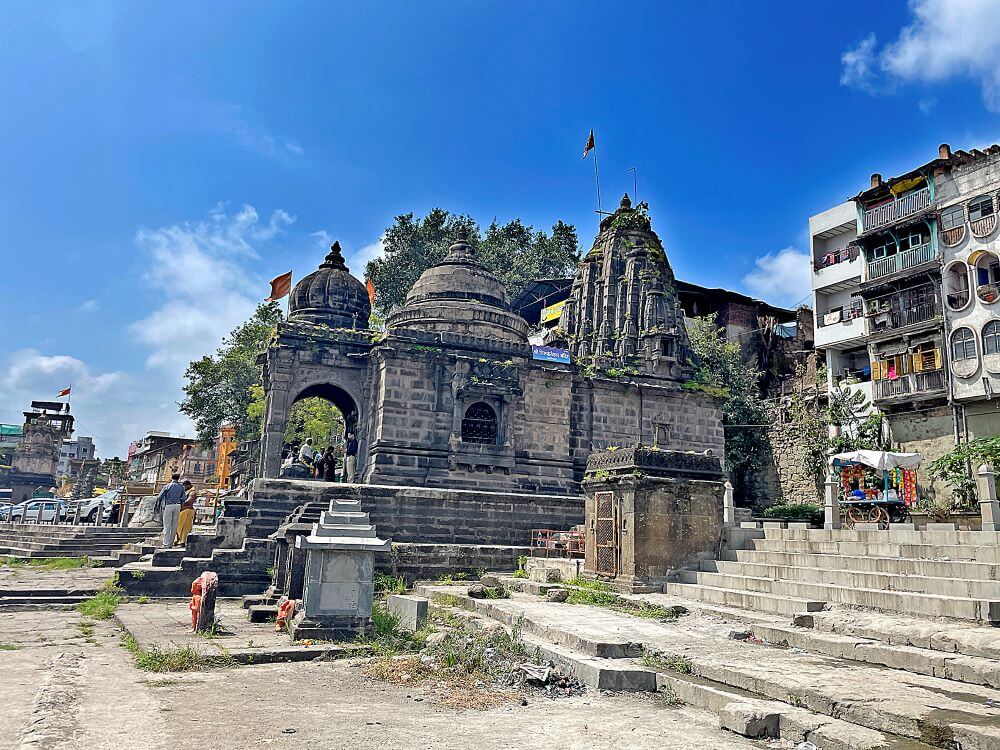
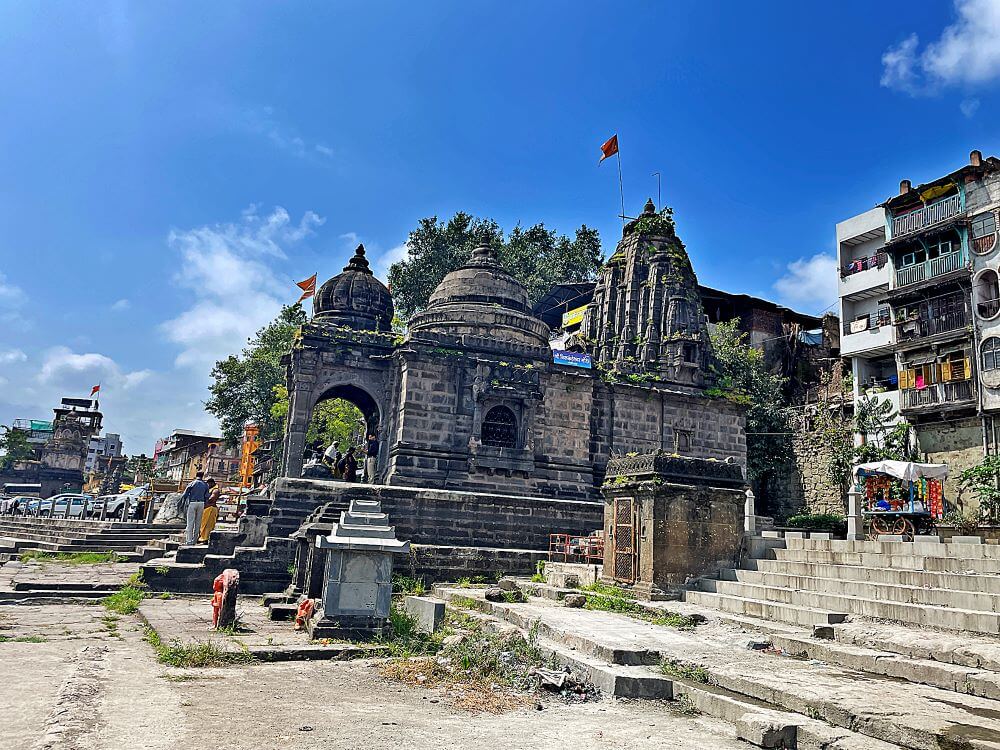
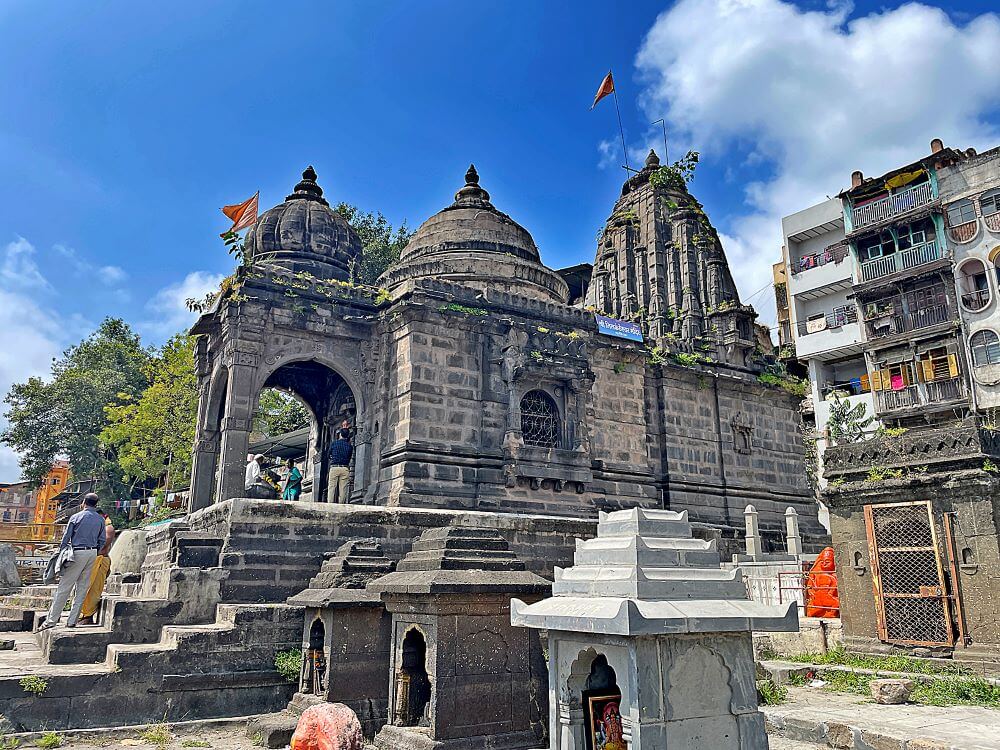
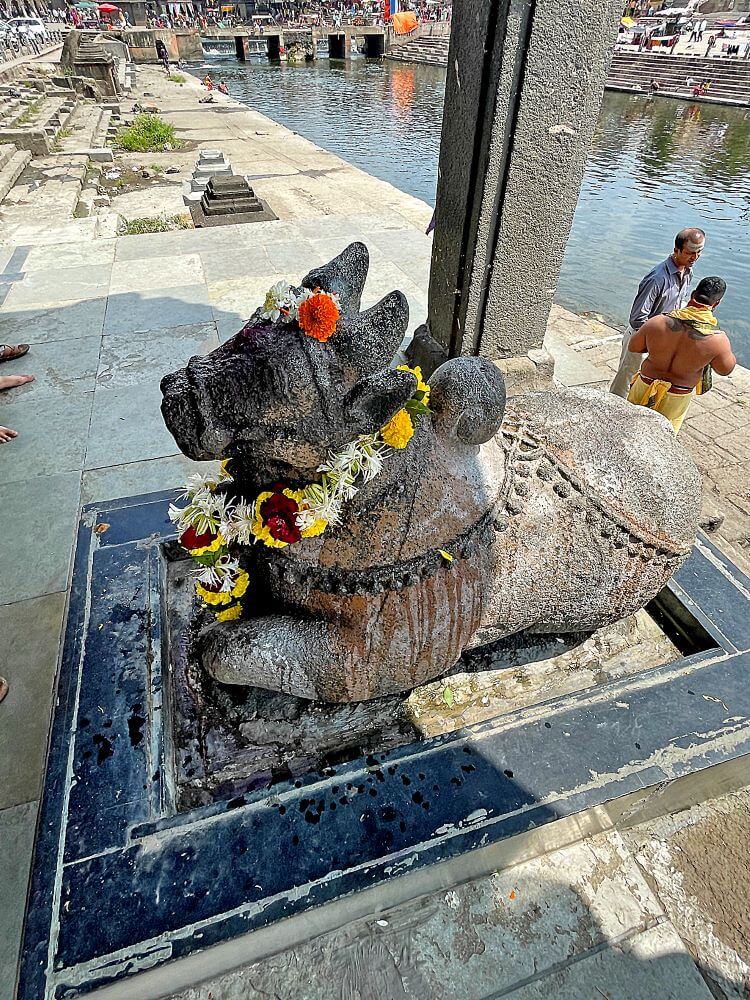
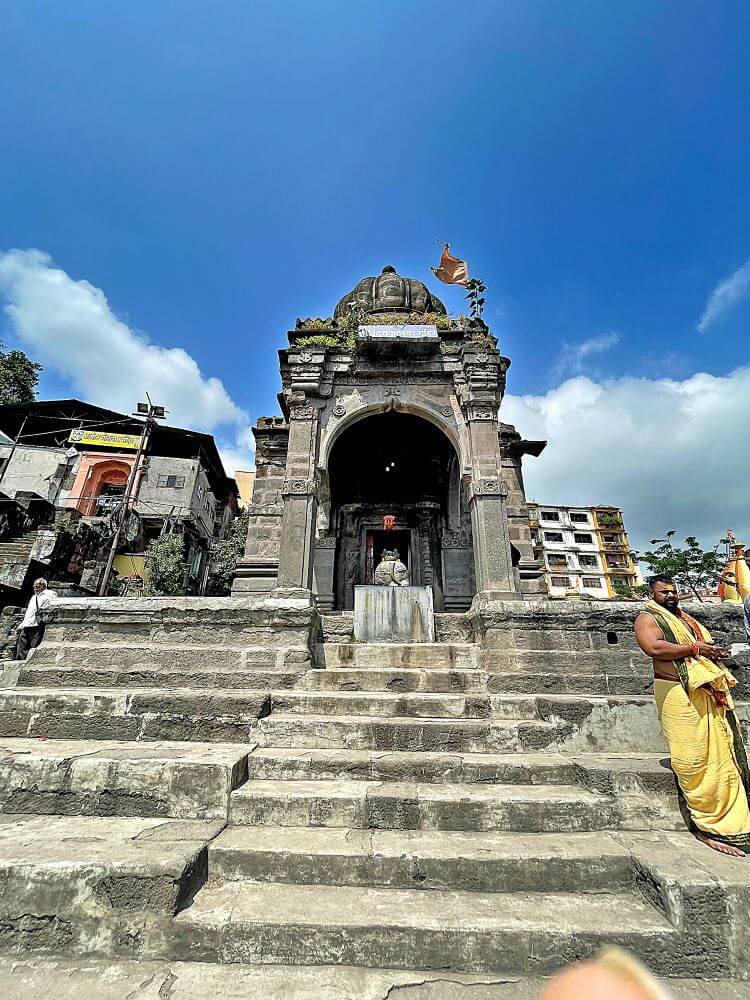
Facing the east, this temple is made entirely of stone. The construction of the temple follows both Hemadpanti and Vesara styles. This style has a significant influence on temples in South India. Outside the main entrance of the temple, there is a unique Nandi carved from a single stone. The entrance features beautiful carvings adorned with various types of flowers. Upon entering the temple, one can see another marble Nandi on a platform in the assembly hall (Sabhamandap). The internal structure of the temple is octagonal. There is intricate craftsmanship throughout the assembly hall, the vestibule (Antarala), and the sanctum sanctorum (Garbhagriha). The walls are decorated with various floral and geometric designs. Upon entering the sanctum, there is a sculpture of Lord Ganesha on the doorframe. The sanctum houses a rare and unique Shiva Linga crafted from both white and black stone. Two windows in the sanctum offer a view of the Godavari riverbank.
Although the entire Panchavati area is bustling, one can experience peace inside this temple. Every wall of the temple features arched niches and windows. While circumambulating the temple, one can observe the arched niches on the outer walls and the craftsmanship on the pillars. Including the sanctum, the temple has two domes, and the shape of the outer entrance hall (Mukhamandap) is also dome-shaped. It is topped with three metal alloy pinnacles (Kalash).
Festivals like Mahashivratri and Tripurari Purnima are celebrated in the temple every year. On Mahashivratri, devotees gather here from midnight onwards. Nilkantheshwar is famous among devotees as a deity who fulfills vows. On Tripurari Purnima, devotees light Tripurari lamps here to fulfill their vows. A grand worship (Mahapuja) is performed every Monday of the month of Shravan. Morning ablutions (Abhishek) and three-time worship (Trikal Puja) are conducted. Laghurudra is performed, and Prasad is distributed. There is also a massive crowd for darshan at this temple during the Simhastha Kumbh Mela. As this temple is ancient, the Maharashtra Department of Archaeology has declared it a protected monument.
This sacred temple stands as a testament to deep spiritual devotion, ancient architectural grandeur, and rich local cultural traditions.
The sanctum sanctorum houses the divine idol consecrated according to ancient Vedic traditions, surrounded by serene courtyards and traditional temple architecture.
Navratri, Maha Shivratri, Annual Temple Jatra & Deepotsav
Compare and book flights, secure top-rated local hotels near the temple, hire reliable guides, and rent cars instantly.
Extend your pilgrimage by visiting other highly sacred temples located nearby.


Add ₹999 more to unlock FREE SHIPPING!
Your sacred cart is currently empty.
Shop Photo FramesFill in your delivery details below to place your order.
Add comment