
Add ₹999 more to unlock FREE SHIPPING!
Your sacred cart is currently empty.
Shop Photo FramesNashik is home to many ancient temples of Mahadeva. Among them, Kapaleshwar is renowned as a ‘Jagrut Devasthan’ (an awakened or spiritually vibrant shrine). A unique feature of this temple is the absence of Nandi in front of the sanctum. It is believed that seeking the blessings of Kapaleshwar, who is recognized as a form of Mahakaleshwar, bestows the same merit as visiting the twelve Jyotirlingas.
The legend behind the absence of Nandi in this temple is as follows: Once, an assembly of the gods (Indra Sabha) was held, attended by all the deities. During this gathering, a dispute arose between Lord Brahma and Lord Mahadeva. In a fit of rage, Mahadeva severed one of Brahma’s five heads, which resulted in Mahadeva incurring the sin of Brahmahatya (the killing of a Brahmin). Following the advice of Sage Narada, Mahadeva came to Someshwar near Nashik to seek liberation from this sin. There, Mahadeva overheard a conversation between a cow and her calf (Nandi) tied in front of a Brahmin’s house. Nandi said, “I will not wear a nose ring. Tomorrow, when that Brahmin comes to put it on me, I will kill him.” His mother (the cow) replied, “If you do that, you will incur the sin of Brahmahatya.” Nandi responded, “I know the remedy for that.” The next day, when the Brahmin came to put the nose ring on Nandi, he was killed in the attack, and Nandi’s body turned black. Curious to see what would happen next, Mahadeva began to follow Nandi. Nandi then bathed in the waters of the Godavari (Ramkund), and his original white color was restored. Seeing this, Lord Shankara also bathed in that Triveni Sangam, and through this, Mahadeva was freed from the sin of Brahmahatya. There was a hill on the banks of the Godavari where Mahadeva went and sat in a cave; Nandi followed him there as well. Mahadeva then said, “Because of you, I have been freed from the sin of Brahmahatya; therefore, from now on, do not sit in front of me. You are like a Guru to me.” This is why there is no Nandi in this temple. However, it is also believed that this Nandi rests at Ramkund.
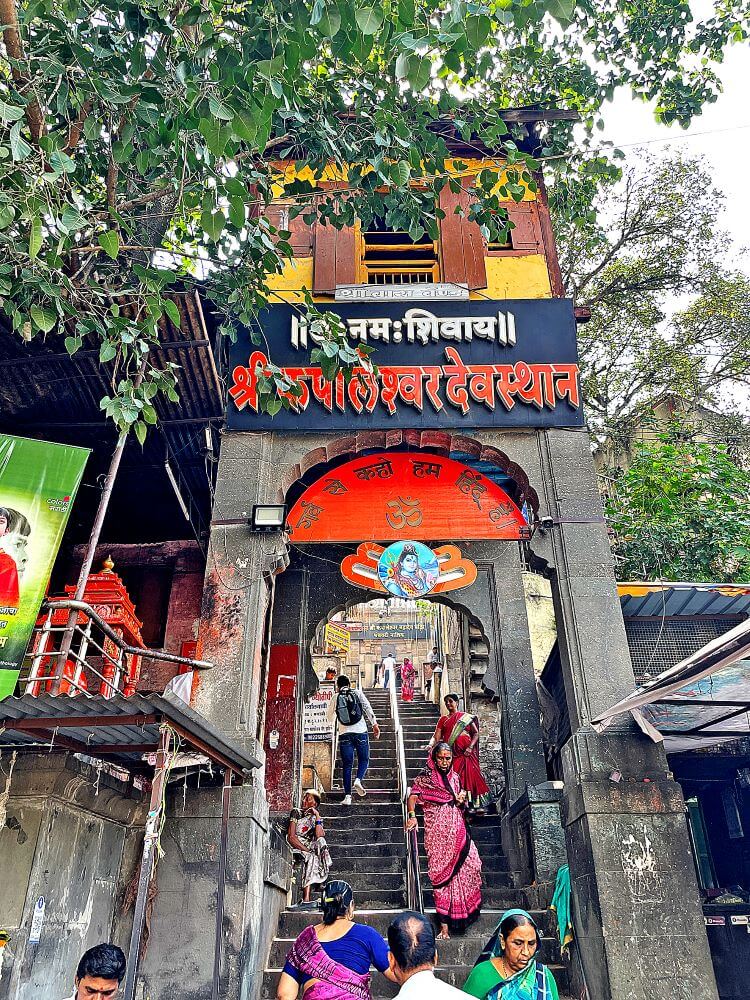
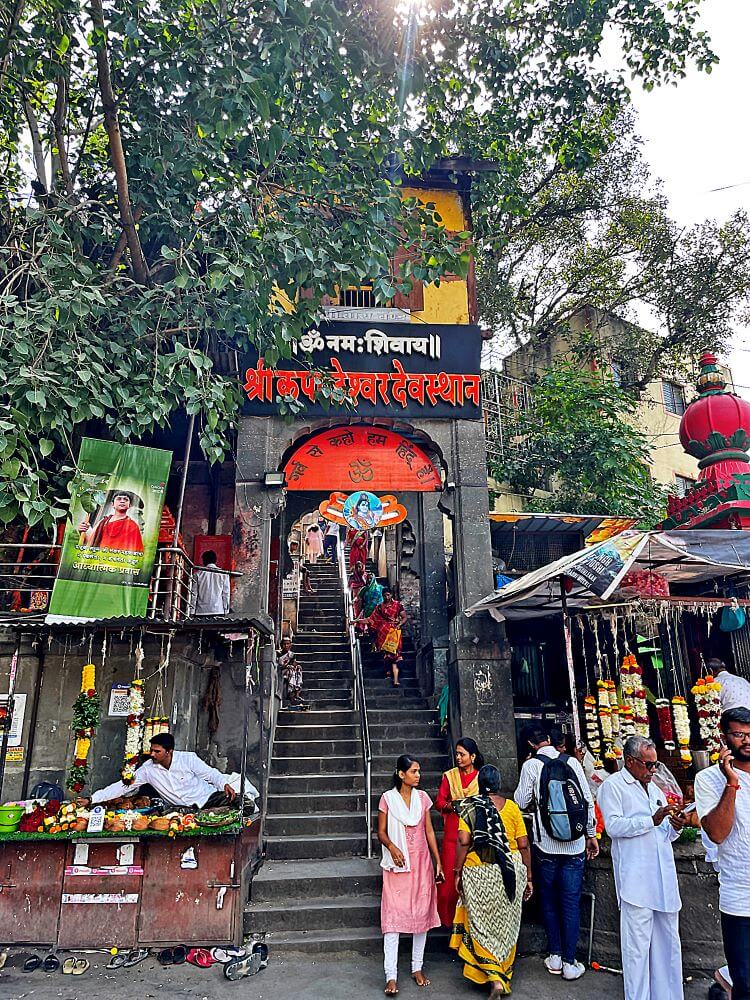
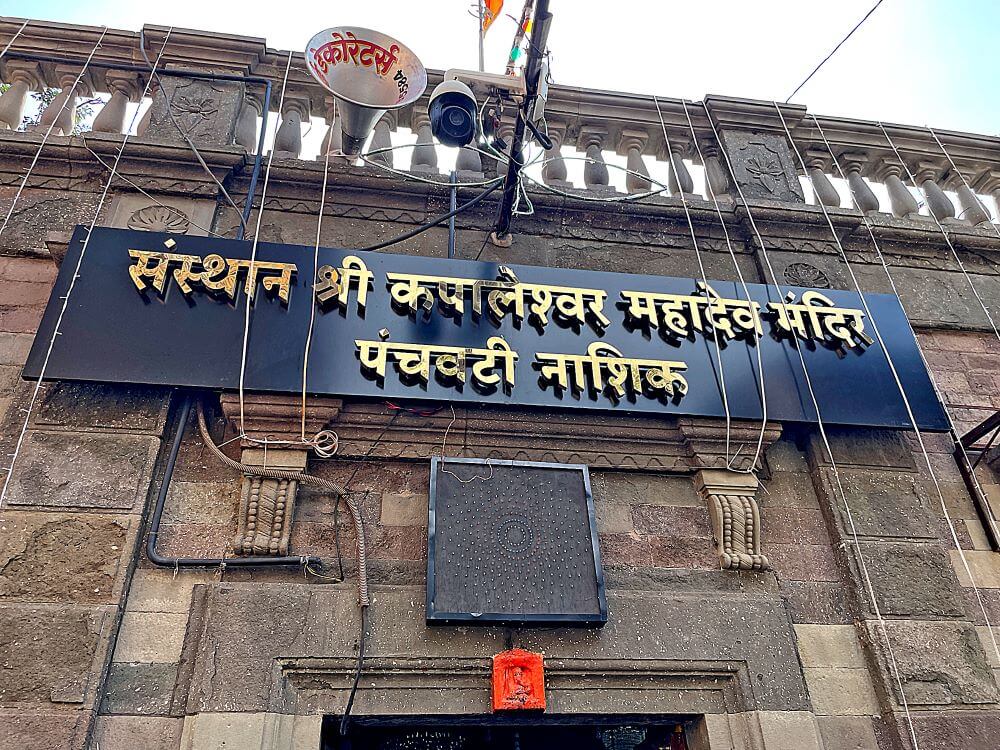
Near the temple spire, there is an inscription in Devanagari script that reads, ‘Shri Ganeshaya Namah Shri Kapaleshwar’. Based on the lettering, it appears to be ancient. In 1100 AD, the then-Gavali king renovated this temple at a cost of five thousand rupees. Later, in 1738 AD, a Koli king carried out further improvements and construction. Some research books mention that this same Koli king appointed Shaiva-Guravs for the management and rituals of the Kapaleshwar temple. Documents also suggest that in 1763 AD, a devotee named Krishnaji Patil-Pawar built the temple steps, while the original Sabha Mandap (assembly hall) was built in the same year by a devotee named Jagjivanrao Pawar. It is also said that the Peshwa regime provided significant assistance for the renovation of this structure.
The temple is situated on a small hill on the banks of the Godavari River, directly opposite Ramkund. It is regarded as a fine example of architecture. The bond between Mahadeva and Nandi is unbreakable, but because Mahadeva considered Nandi his Guru here, he is not seen in front of the temple. This religious aspect is considered a unique feature of this place. The premises also house temples of Lord Vishnu and Hanuman, along with a beautiful Shiva Linga encased in copper.
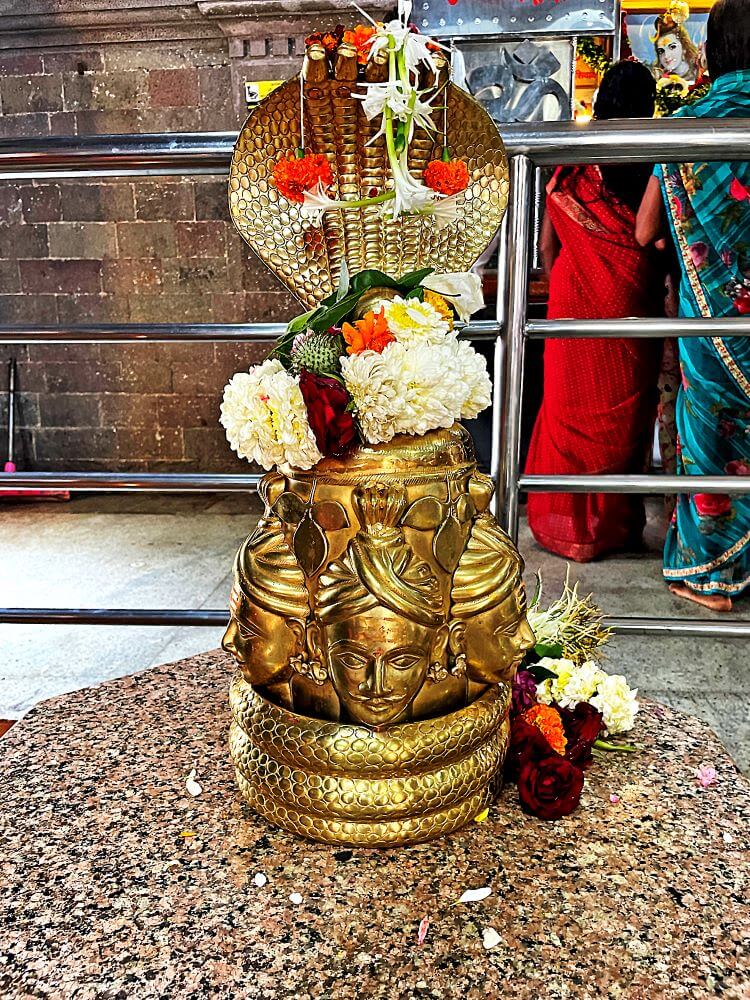
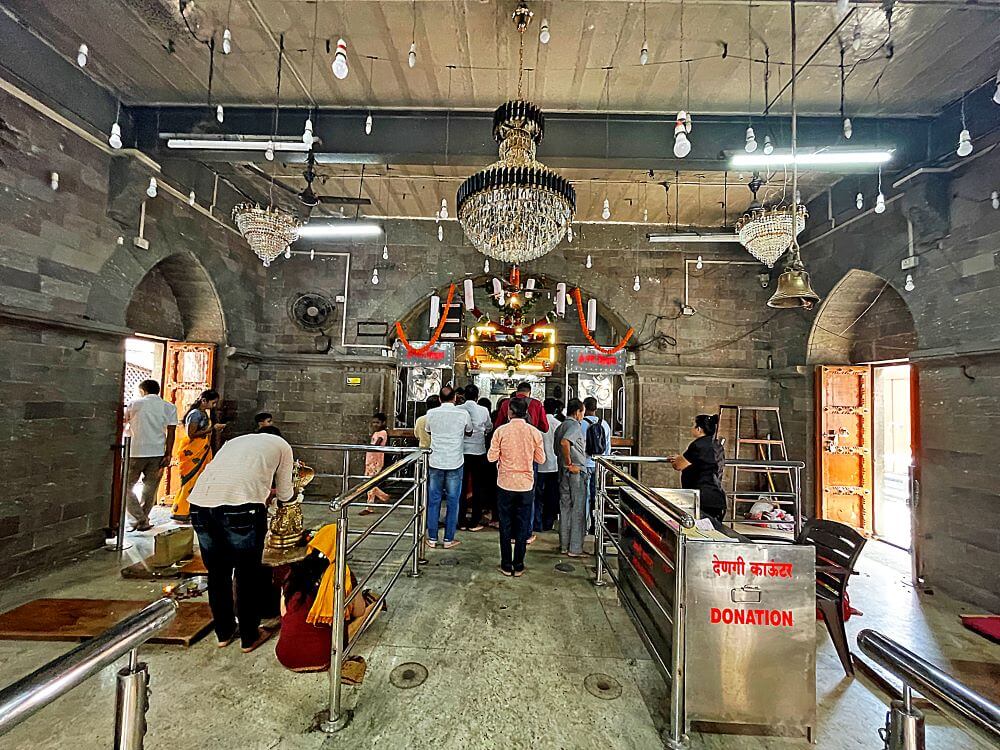
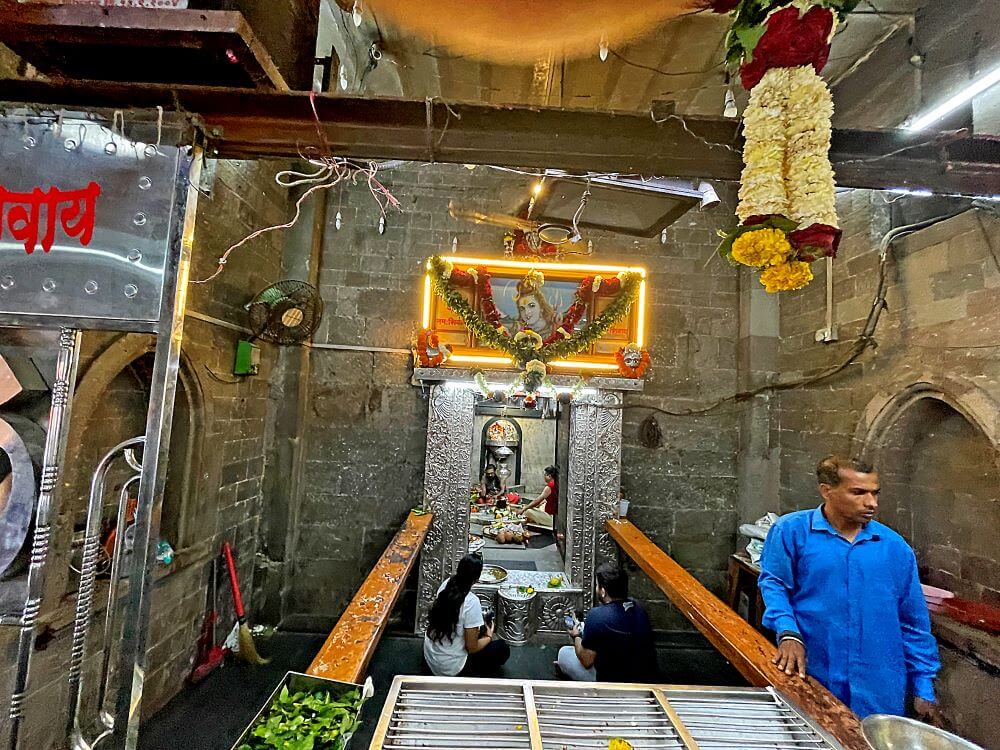
The main entrance of the temple is made of wood and features intricate carvings. The temple consists of two parts: the Sabha Mandap and the Garbhagriha (sanctum). The Sabha Mandap is spacious, and the Garbhagriha is plated with silver, featuring distinctive craftsmanship. There is an image of Mahadeva at the entrance of the sanctum, and the Shiva Linga inside is adorned with a silver mask. Beside it are silver Sheshnaga idols.
During the month of Shravana, a Palkhi (palanquin) procession of Mahadeva is taken out on Mondays and Saturdays. On Mahashivratri, the main festival, the temple sees a massive influx of devotees, giving the area the atmosphere of a fair. Many devotees make vows on this day for the fulfillment of their wishes, and many also come to fulfill their previously made vows.
On the occasion of Dev Diwali, the temple trust organizes various religious programs, the most famous being the ‘Harihar Bhet’ (the meeting of Hari and Hara) ceremony. On this day, worship of Lord Vishnu and Mahadeva is performed, along with the installation of the Navagrahas (nine planets) and the Maha-Vishnu Yaga. The temple premises are beautifully decorated with lights. The masks of Shankara and Vishnu are brought from the Kapaleshwar temple and the beautiful Narayana temple across the Godavari, respectively, to the banks of the river. There, the two deities are brought together for a meeting, followed by a ritual bath in the Godavari. The enthusiasm of the Shiva devotees during this time is boundless.
Devotees can visit the Kapaleshwar temple between 5:00 AM and 11:00 PM. After the temple opens at 5:00 AM, Aarti is performed following the Puja and Abhishekam. Another Aarti is held in the evening at 7:00 PM.
This sacred temple stands as a testament to deep spiritual devotion, ancient architectural grandeur, and rich local cultural traditions.
The sanctum sanctorum houses the divine idol consecrated according to ancient Vedic traditions, surrounded by serene courtyards and traditional temple architecture.
Navratri, Maha Shivratri, Annual Temple Jatra & Deepotsav
Compare and book flights, secure top-rated local hotels near the temple, hire reliable guides, and rent cars instantly.
Extend your pilgrimage by visiting other highly sacred temples located nearby.


Add ₹999 more to unlock FREE SHIPPING!
Your sacred cart is currently empty.
Shop Photo FramesFill in your delivery details below to place your order.
Add comment