
Add ₹999 more to unlock FREE SHIPPING!
Your sacred cart is currently empty.
Shop Photo FramesThere are many instances in history where temples, which have provided peace to society since ancient times, became centers of revolution whenever social, economic, or political unrest arose. The Injubai Devi temple in Gargoti, located in the Bhudargad taluka of Kolhapur district, is one such example. It became a hub for the revolution that sought to overthrow the oppressive British rule. Furthermore, devotees hold a deep faith that the vigilant Goddess here rushes to answer their calls and grants them salvation. The annual fair (Jatrotsav), which lasts for five days starting from Magh Purnima, is considered the most significant festival here.
With Mahatma Gandhi’s ‘Quit India’ call in 1942, a movement against the British began across the country. The flames of revolution were ignited everywhere, and Kolhapur district was at the forefront. At that time, this Injubai Devi temple in Gargoti became a main center for the struggle against British rule. The daring plans to hoist the tricolor on the government office in Gargoti, release imprisoned freedom fighters, loot the government treasury, and blow up the bridge over the Vedganga River at Kur to prevent police reinforcements from reaching Gargoti from Kolhapur were all formulated within this temple. According to information from the Central Government’s ‘Digital District Repository’ website, as planned,
a large crowd set out from the Injubai temple at 2:00 AM on December 13, 1942, to attack the Gargoti office. A fierce battle raged throughout the night. In the ensuing chaos, seven patriots—Karvirayya Swami, Narayan Warke, Tukaram Bharmal, Shankarrao Ingale, Mallu Chougule, Balwant Jabde, and Parshuram Salokhe—were martyred due to indiscriminate firing by a soldier named Jadhav, who was part of the British Magistrate’s security detail. The British government filed a case against 47 individuals in this matter. In memory of these martyrs, a seven-petaled memorial stands in front of the Tehsildar office in Gargoti.
Injubai is a folk deity. She is also known by the names Injai, Injubai, and Injai Dai. Her name appears in the folk songs of Maharashtra, primarily in the grinding songs (ovya) sung by women. The ‘Centre for Co-operative Research in Social Sciences’ has recorded many of these grinding songs. One such song mentions: “The day has set behind the bushes, Mother Injubai is amidst the flowers.” In Chandgad (Chandiya-Manor), the capital of the ancient Gondwana kingdom, there is an ancient temple of Injai Dai, and the village is named Injapur. There are many other temples of Injai elsewhere in the state, where she is also revered as the sister of Khandoba. At Pali, a sacred place of Khandoba, she is worshipped specifically as his sister. In Gargoti, she is enshrined in the form of the Adi Shakti Durga Mata.
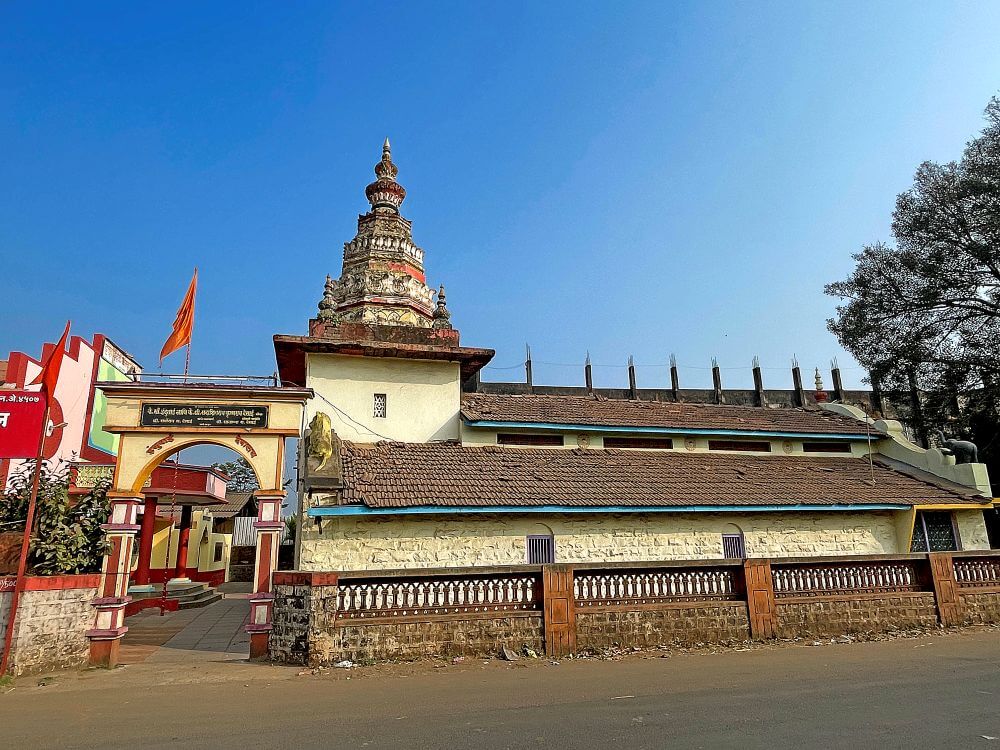
While there is no definitive information regarding how ancient the Injubai Devi temple is, based on its architectural style, it is estimated to be from the 16th century. Scholars believe the black stone idol of the Goddess dates back to the 13th century. This two-story stone temple with a tiled roof is surrounded by a sturdy perimeter wall. One enters the temple courtyard through an arched gateway in this wall. In the courtyard, there is a distinctive lamp tower (Deepmal) on a two-tiered plinth. It appears as though the lamp tower emerges from a lotus flower held by elephants carved at the four corners of its base.
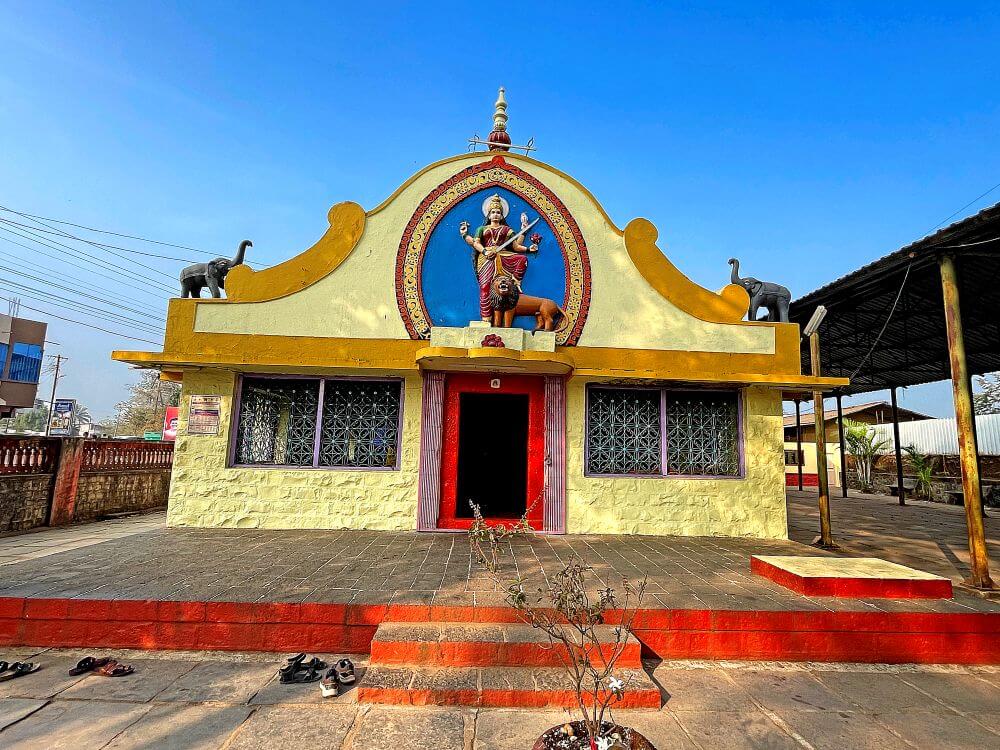
The temple is built on a large, elevated plinth. Its structure consists of a Sabha Mandap (assembly hall) and a Garbhagriha (sanctum sanctorum). The stone door frames of the Sabha Mandap are adorned with intricate carvings. There is an idol of Lord Ganesha on the lintel. Above this entrance is a balcony, and on the wall above it is a relief sculpture of Injubai as Bharat Mata (Mother India) with four arms. The Goddess holds a conch, a discus, a sword, and a lotus flower, with her feet resting on a lion. Given the temple’s connection to the freedom struggle, this form of Bharat Mata may have been incorporated into the idol. Above the image of the Goddess, the roof features an Amalaka topped with a Kalash. At the two upper corners of the entrance, there are two full-sized elephant sculptures. From here, one enters the Sabha Mandap.
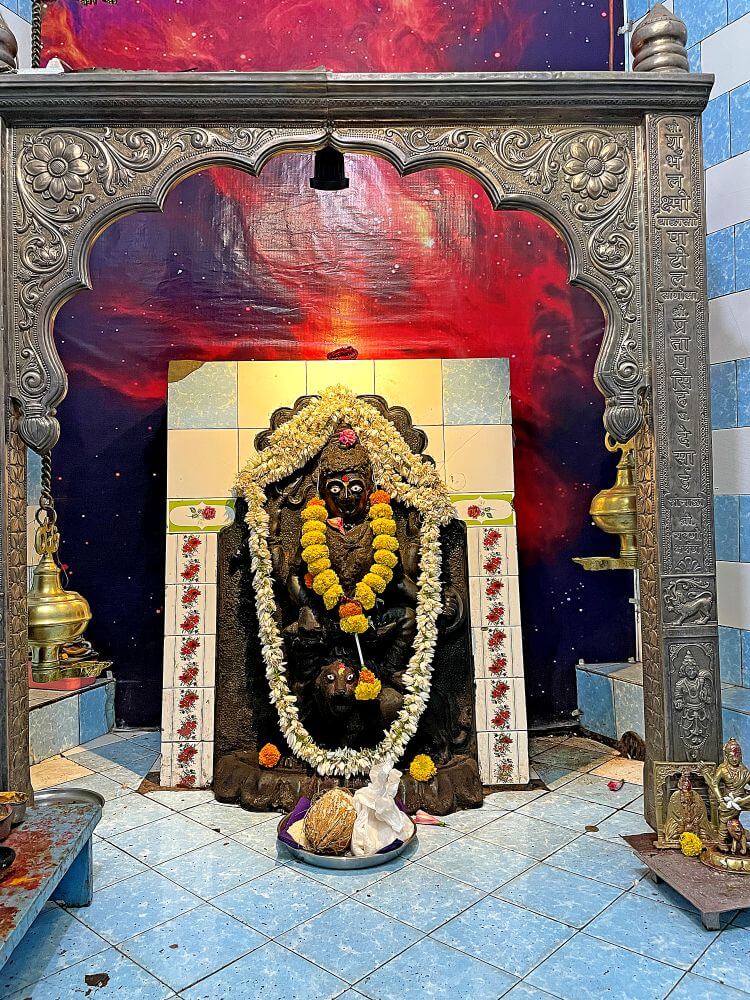
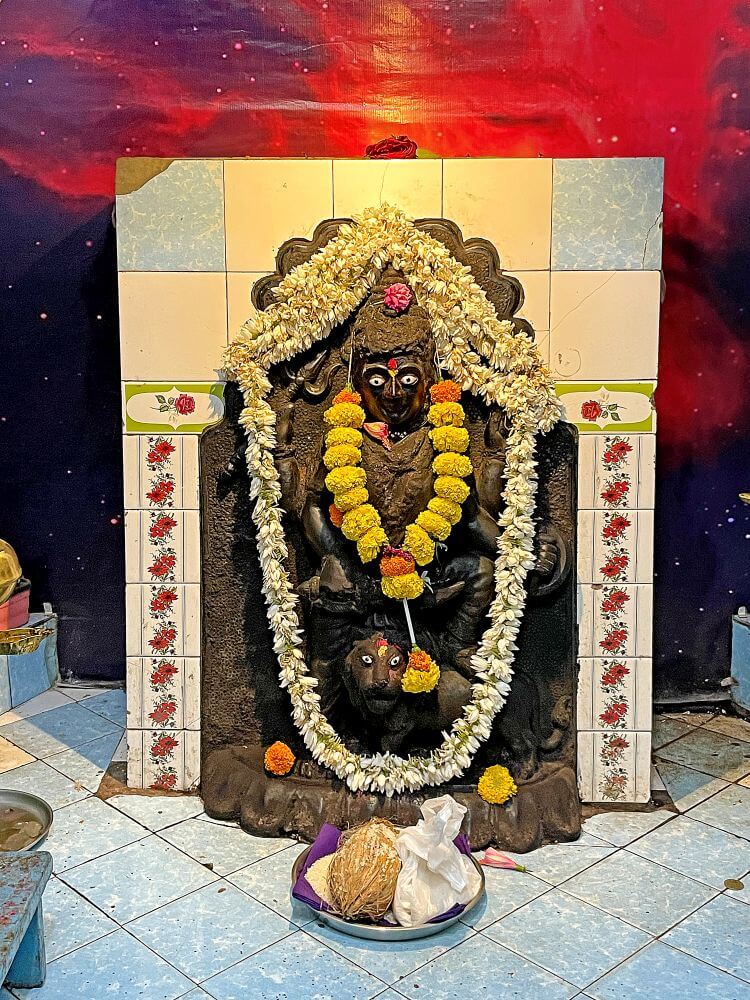
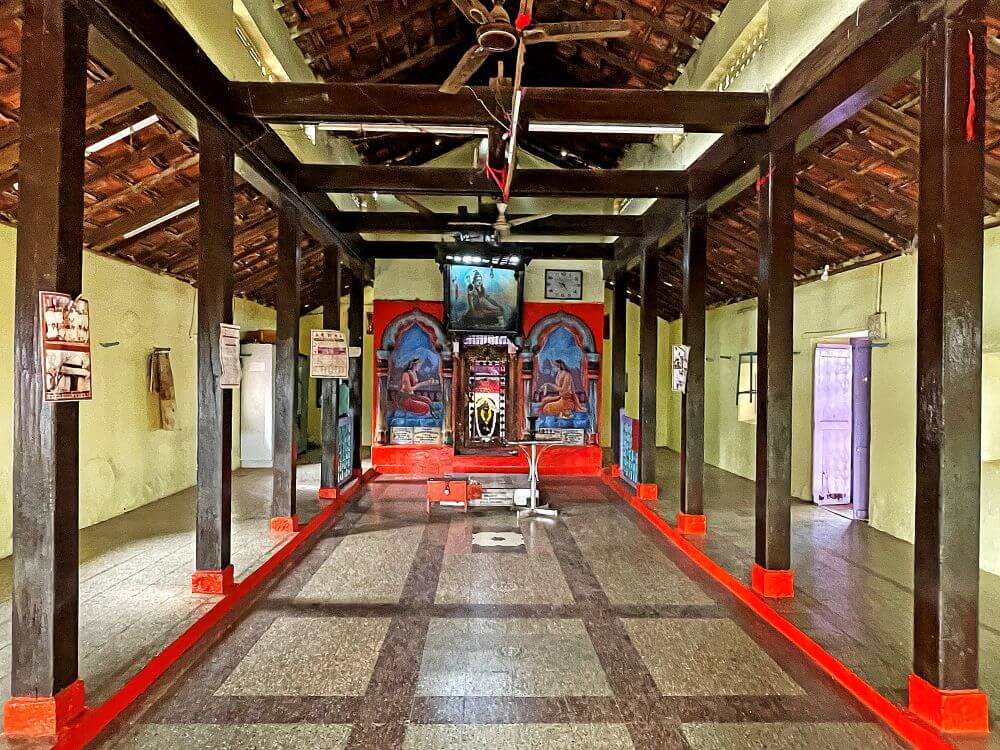
The construction of the rectangular, enclosed Sabha Mandap makes use of wood. There are two rows of six wooden pillars each in the hall. The space between them is slightly sunken, characteristic of Konkani architectural style. The ceiling of the Sabha Mandap is divided into upper and lower sections. The wooden door frames of the Garbhagriha are carved with floral and leaf patterns, with an idol of Ganesha on the lintel. Inside the Garbhagriha, on a Vajrapitha within a silver shrine, stands the four-armed black stone idol of Injubai Devi. The Goddess holds a trident in one hand, a sword in the second, a lotus in the third, and a shield in the fourth. She stands with her feet resting on a lion. The idol is carved with elegant garments and ornaments, and the Goddess wears a crown.
The hexagonal spire (Shikhara) above the Garbhagriha has five tiers. Replicas of lotus flowers are carved into all the tiers. At the top of the spire, there are two Amalakas stacked one above the other, topped with a Kalash. At the four corners of the main spire, there are four smaller spires, each topped with a Kalash. The main annual festivals celebrated here include Chaitra Navratri, Sharadiya Navratri, Dussehra, Diwali, and the five-day Jatrotsav starting from Magh Purnima. On these occasions, many devotees from various parts of Kolhapur district come to seek the blessings of the Goddess. During the annual festival, the Goddess’s palanquin travels to Jyotiba Hill to visit Lord Jyotiba.
This sacred temple stands as a testament to deep spiritual devotion, ancient architectural grandeur, and rich local cultural traditions.
The sanctum sanctorum houses the divine idol consecrated according to ancient Vedic traditions, surrounded by serene courtyards and traditional temple architecture.
Navratri, Maha Shivratri, Annual Temple Jatra & Deepotsav
Compare and book flights, secure top-rated local hotels near the temple, hire reliable guides, and rent cars instantly.
Extend your pilgrimage by visiting other highly sacred temples located nearby.


Add ₹999 more to unlock FREE SHIPPING!
Your sacred cart is currently empty.
Shop Photo FramesFill in your delivery details below to place your order.
Add comment