
Add ₹999 more to unlock FREE SHIPPING!
Your sacred cart is currently empty.
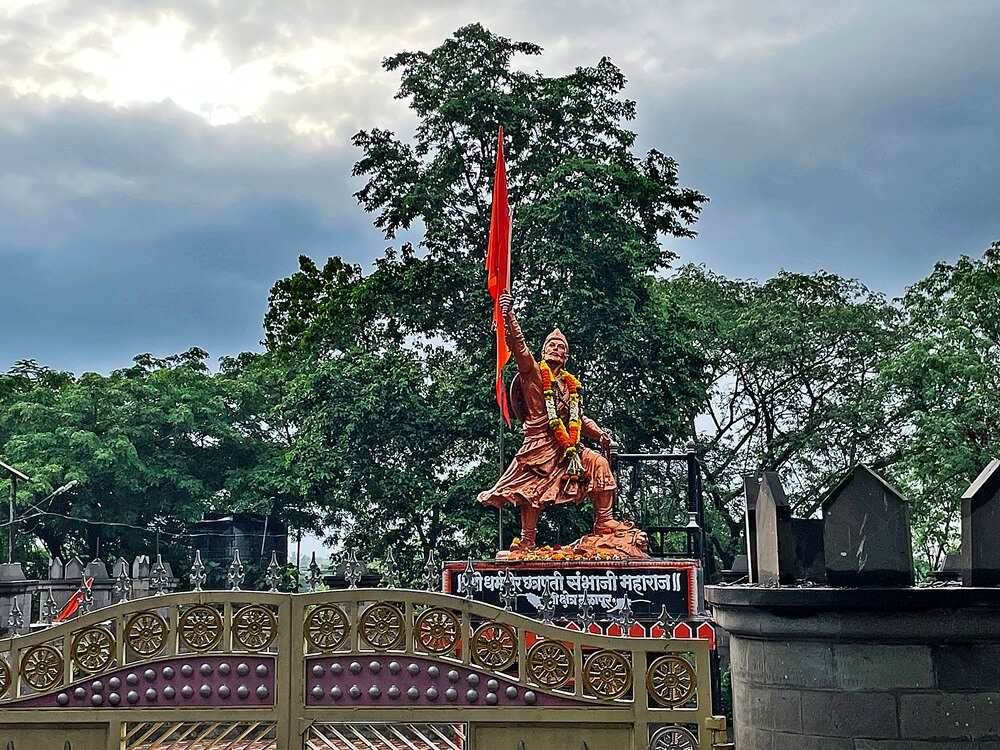
Shop Photo FramesThe Sangameshwar Mahadev Temple at Tulapur is situated at the confluence of the three rivers Bhima, Bhama, and Indrayani. This temple dates back approximately one thousand years and is constructed in the Hemadpanti architectural style. This region is known as ‘Dakshin Kashi’. Chhatrapati Sambhaji Maharaj attained martyrdom here, and it is due to this historical significance that the site has gained immense recognition. A memorial to Chhatrapati Sambhaji Maharaj is located within the temple premises. ‘Shaurya Din’ (Bravery Day) is observed here on Phalguna Amavasya, and on this occasion, thousands of devotees from across Maharashtra arrive for darshan. The Government of Maharashtra has granted this area the status of an ‘A’ grade pilgrimage site.
The historical background of this pilgrimage site is extremely ancient and filled with significant events. Historical references suggest that the original Sangameshwar temple was built during the Yadava period, about one thousand years ago. During the foreign invasions of India in the fourteenth century, this original temple, built in the Hemadpanti style, was destroyed. Subsequently, at the beginning of the seventeenth century, major changes occurred in the history of this village, then known as Nagargaon. Murarpant Jagdev Pandit, an influential minister in the Adilshahi court of Bijapur, was suffering from an incurable ailment. He found no relief even after various treatments. Following the advice of well-wishers, he met the accomplished saint Swami Rudranath Maharaj at Nagargaon, and his health improved completely through the Swami’s treatment. When Murarpant asked the Swami what he desired as a token of gratitude, the Swami requested the restoration of the ruined Shiva temple. Following the Swami’s instruction, Murarpant rebuilt the temple around the year 1633. During this period, a ‘Tuladan’ ceremony took place here, where items equal to the weight of an elephant were donated. To accurately weigh the elephant, Shahaji Raje Bhosale, the father of Chhatrapati Shivaji Maharaj, suggested a clever strategy. He had the elephant stand on a large boat to measure the water level, then removed the elephant and filled the boat with gold and coins until it reached the same water level. After this historic Tuladan, the name of Nagargaon was changed to Tulapur.
Aurangzeb had treacherously captured the second Chhatrapati of Swarajya, Sambhaji Maharaj, and brought him to this very place. Here, he was subjected to immense torture and put to death. Thereafter, the brave Maratha commanders Santaji, Bahirji, and Maloji Ghorpade literally annihilated the Mughal army and the traitors. Subsequently, a Samadhi temple for Chhatrapati Sambhaji Maharaj was erected right next to the Sangameshwar temple. Records of the pilgrimage site of Tulapur are also found from the Peshwa era. To create a rift between Bajirao Peshwa and Mastani, Bajirao’s son Nanasaheb (Balaji Bajirao) had brought Mastani to Tulapur. However, Mastani, deeply in love with Bajirao, could not be separated from her beloved. There is also a record that Nanasaheb Peshwa installed a Banalinga here and carried out construction work on the temple.
The location of Tulapur is considered extremely sacred. Since the three rivers Bhima, Bhama, and Indrayani converge here, the place was named Sangameshwar. According to mythology, Jatayu from the Ramayana era performed severe penance at this Triveni Sangam. Even today, devotees believe in the subtle presence of Jatayu here. Religious texts mention that Saint Dnyaneshwar Maharaj, the crest jewel of the Warkari tradition, performed an Anushthana (ritual) in this temple for three consecutive days before taking Sanjeevan Samadhi at Alandi. This confluence of rivers is given a status equal to the Prayag pilgrimage in North India, and performing Pitru-Shraddha and immersion of ashes here holds great importance.
Tulapur is located 12 km from the pilgrimage site of Alandi. The temple is surrounded by a strong stone fortification. On the right side of the temple, there is a door leading to the Triveni Sangam Ghat, while on the left are the Sanjeevan Samadhi of Shri Rudranath Maharaj and a Shri Ram temple. Behind this temple is the Shri Vishnu Mahaballaleshwar Mahadev temple. Beside it is the Om Koteshwaraya temple. There are also two other Shiva temples in this area. This pilgrimage site, containing five such ancient Shiva temples, is recognized as having a status equal to the pilgrimage sites of Kashi, Gaya, and Prayag. A Bhakta Niwas (pilgrim guest house) equipped with modern facilities is located right by the Ghat.
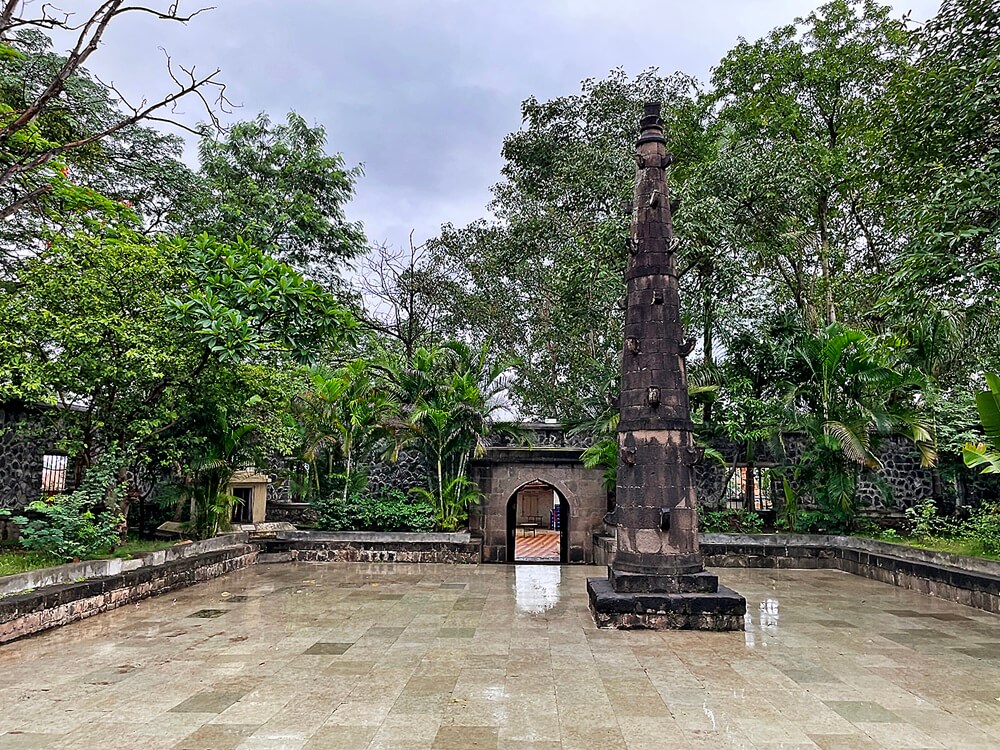
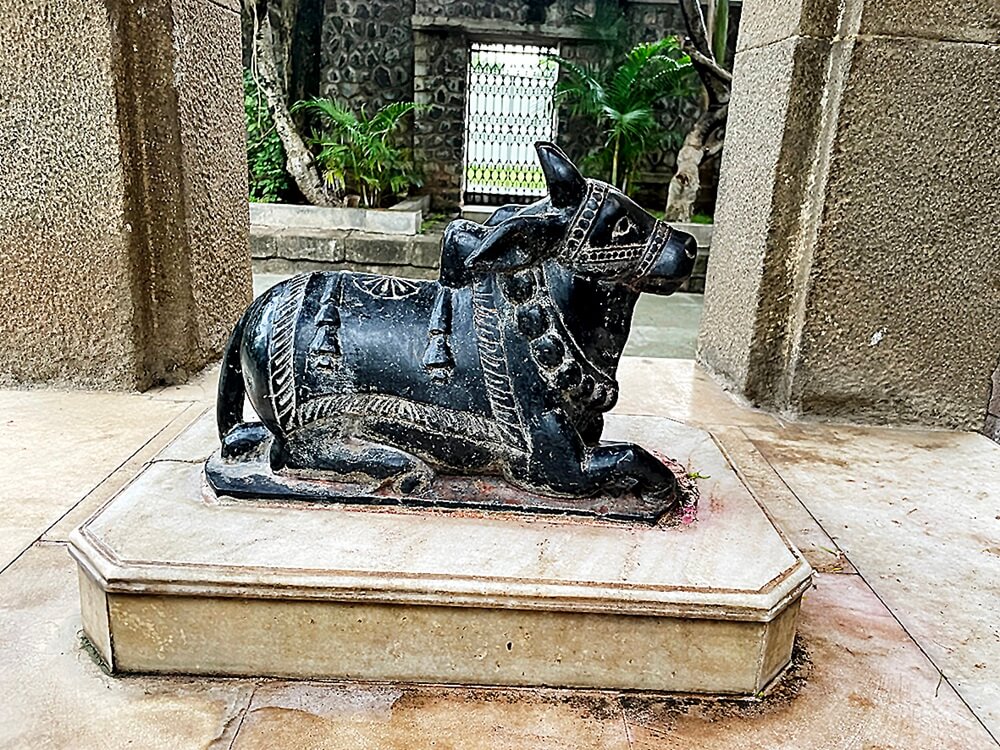
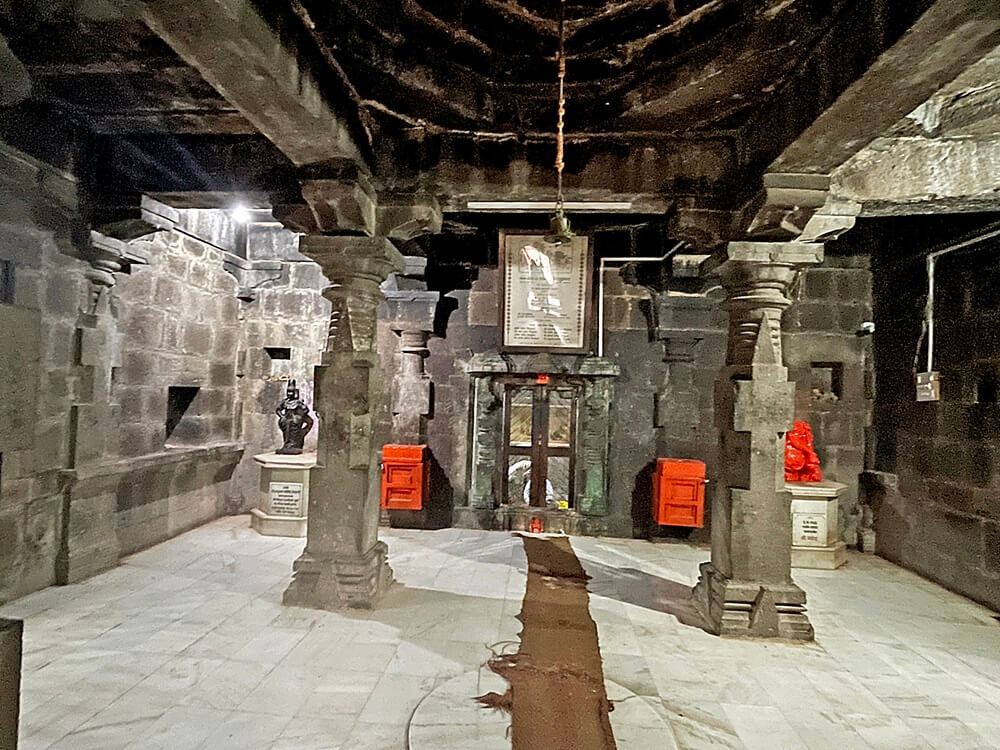
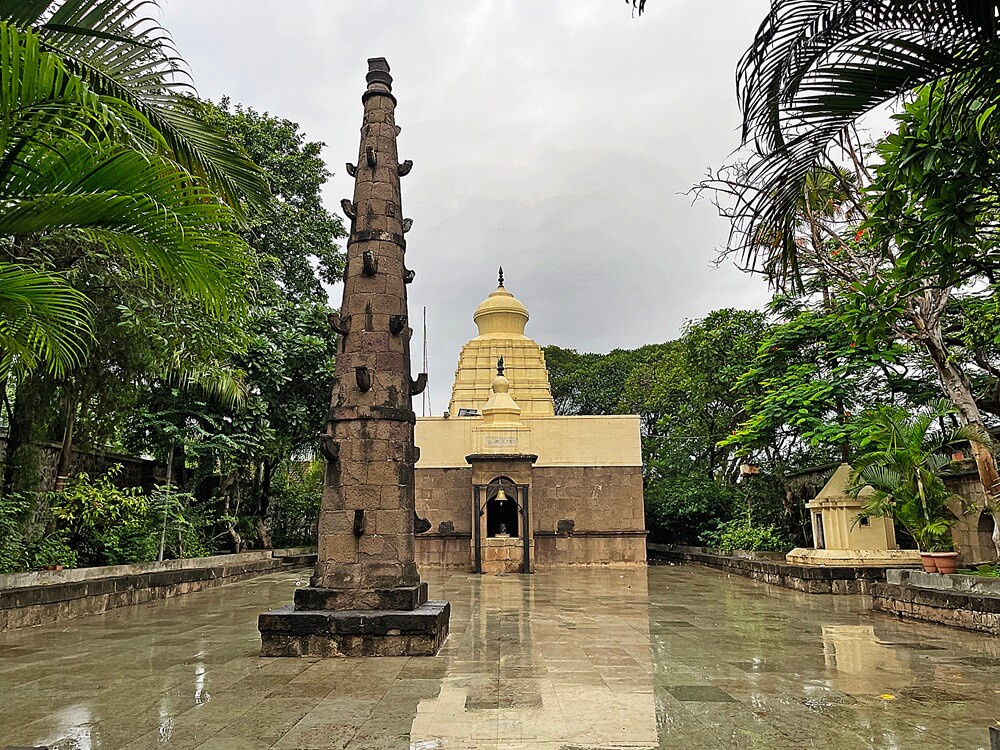
The architectural style of the Sangameshwar temple is considered an excellent example of the Yadava-era Hemadpanti method. One enters the temple courtyard through the main east-facing gateway. Directly in front, in the courtyard, stands a tall stone lamp pillar (Deepmal). Beyond that is a large Nandi Mandap carved from black stone. The carvings of the jewelry and bells on the Nandi in this pavilion are distinctive. The temple is structured with a Sabha Mandap (assembly hall) and a Garbhagriha (sanctum sanctorum). There are stone pillars in the Sabha Mandap. On the platforms adjacent to the front wall of the Garbhagriha, there are idols of Vitthal-Rukmini on the right and Ganpati on the left. On the lintel above the entrance to the Garbhagriha, there is an idol of Ganesha, and there is intricate carving on the door frames. A Swayambhu (self-manifested) Shiva Linga resides in the Garbhagriha. The spire above the Garbhagriha, built with bricks and lime, is in the Maratha temple architectural style.
Next to the temple is the Samadhi of Chhatrapati Sambhaji Maharaj. In this octagonal structure, a bust of Chhatrapati Sambhaji Maharaj stands on a high pedestal. Thousands of history enthusiasts visit this site of inspiration every year. Keeping in mind its religious and historical importance, the Gram Panchayat has paid special attention to the cleanliness and beautification of the area. Due to the Bhakta Niwas, internal roads, and the welcome arch, this place is now also known as an important tourist destination in the district.
Various festivals and celebrations take place in the temple throughout the year. Mahashivratri is considered the biggest festival here. On this day, lakhs of devotees come to bathe at the Triveni Sangam. On this occasion, special Rudra-puja and continuous chanting of the Lord’s name are performed in the temple.
On the day of Tripurari Purnima, the tall lamp pillar in the temple is illuminated. On Phalguna Amavasya, the martyrdom day of Chhatrapati Sambhaji Maharaj is celebrated as ‘Shaurya Din’. On that day, admirers of Chhatrapati Shivaji Maharaj from all over Maharashtra come here to pay their respects. During the month of Shravan, special Abhisheka and religious rituals are performed in the temple every Monday.
The tradition of bringing a Kawad from the riverbed is still preserved here today. The Palkhis (palanquins) heading towards Alandi on Ashadhi and Kartiki Ekadashi halt here. Devotees can have darshan of Mahadev and the Samadhi site between 7:00 AM and 7:00 PM.
This sacred temple stands as a testament to deep spiritual devotion, ancient architectural grandeur, and rich local cultural traditions.
The sanctum sanctorum houses the divine idol consecrated according to ancient Vedic traditions, surrounded by serene courtyards and traditional temple architecture.

Navratri, Maha Shivratri, Annual Temple Jatra & Deepotsav
Compare and book flights, secure top-rated local hotels near the temple, hire reliable guides, and rent cars instantly.
Extend your pilgrimage by visiting other highly sacred temples located nearby.


Add ₹999 more to unlock FREE SHIPPING!
Your sacred cart is currently empty.
Shop Photo FramesFill in your delivery details below to place your order.
Add comment