
Add ₹999 more to unlock FREE SHIPPING!
Your sacred cart is currently empty.
Shop Photo FramesIn the past, Chiplun was a renowned port. Ships laden with goods would travel through the Vashishti River to reach what is now the city of Chiplun. To oversee this port, the Govalkot Fort was built on a small hill along the banks of the Vashishti River. Chhatrapati Shivaji Maharaj captured the Govalkot Fort in the year 1660 and renamed it Govindgad. At the foothills of the fort lies the sacred temple of Lord Someshwar and Goddess Karanjeshwari. During the Shimga festival, the ‘Sherne Kadhne’ ritual held here is famous throughout the district.
The legend of the Goddess states that this area was once filled with Karanji bushes. The Goddess manifested in these bushes, and this site is known as ‘Singasan’. Where the Goddess first appeared, she asked a young girl for turmeric and vermilion. When the girl went to fetch them, the Goddess vanished from that spot and reappeared where the temple currently stands. Later, she appeared in a devotee’s dream and said, “A pearl from my nose ring is stuck in the Karanji bush; go and retrieve it.” The devotee found the pearl exactly where the Goddess had indicated. This confirmed the presence of the Goddess to the villagers. They subsequently built the temple and consecrated the idol of the Goddess. Since she manifested in a Karanji bush, she came to be known as Karanjeshwari.
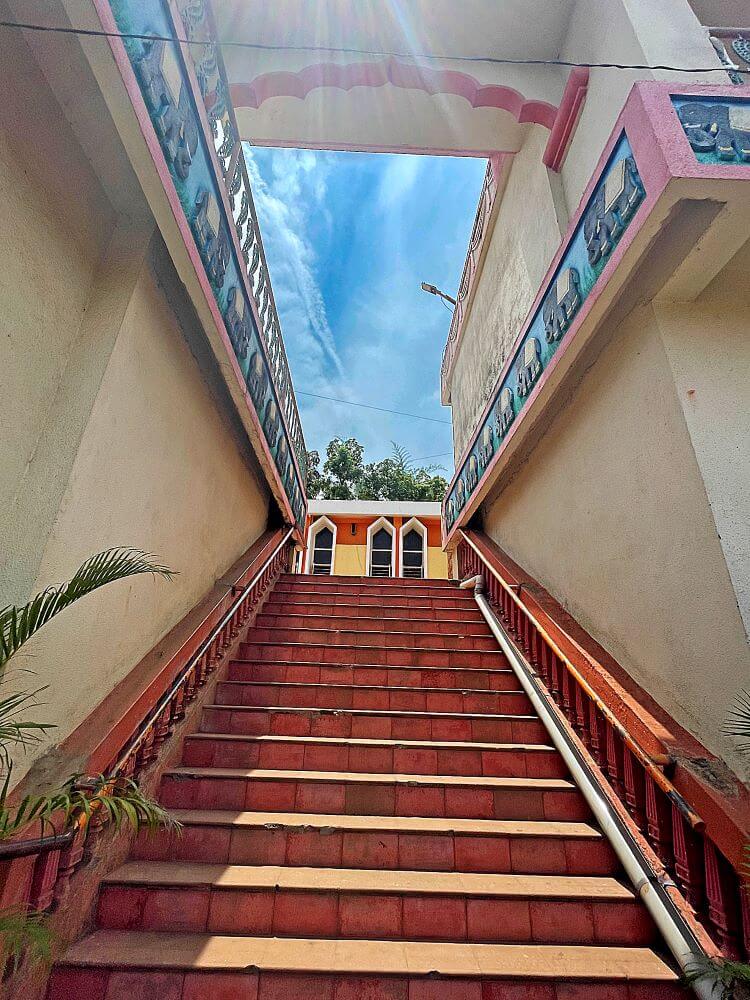
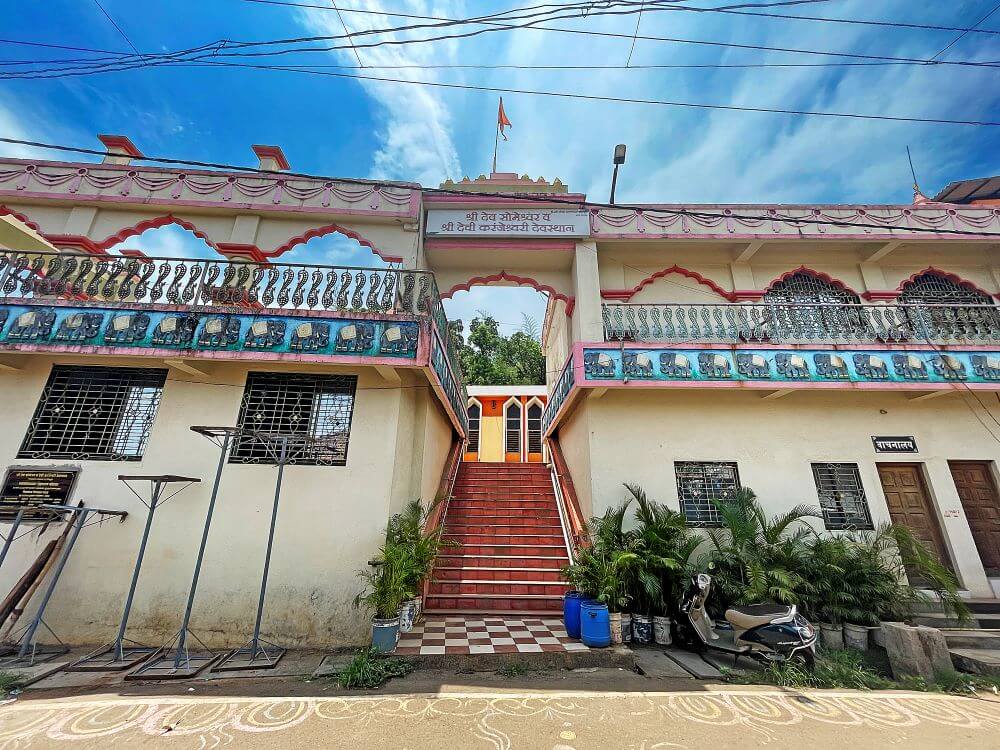
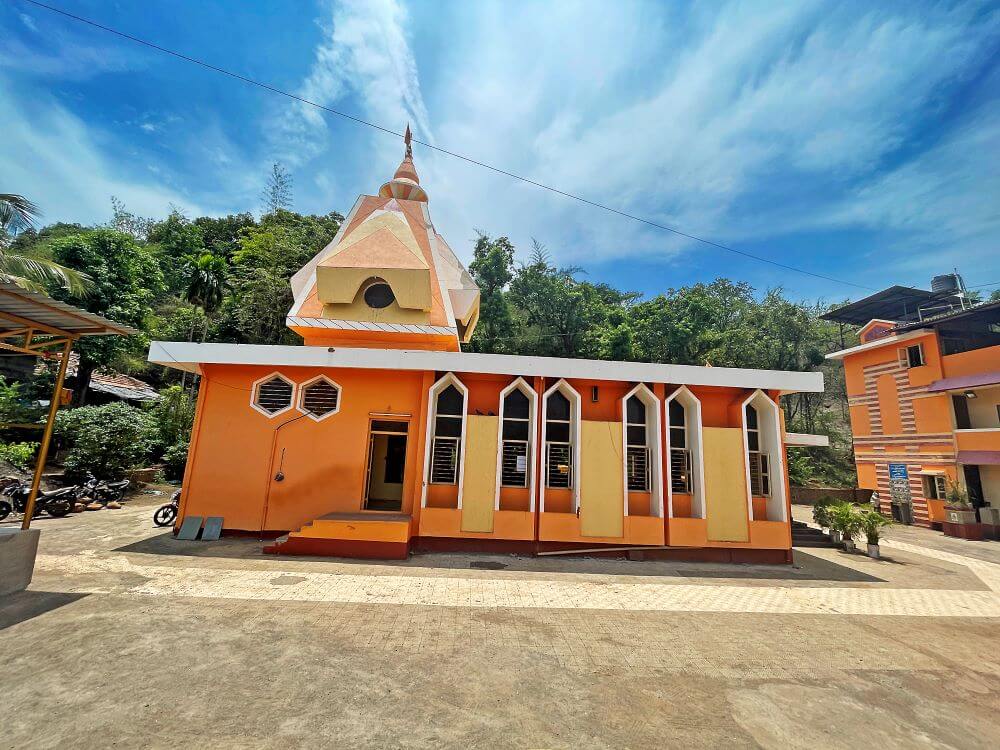
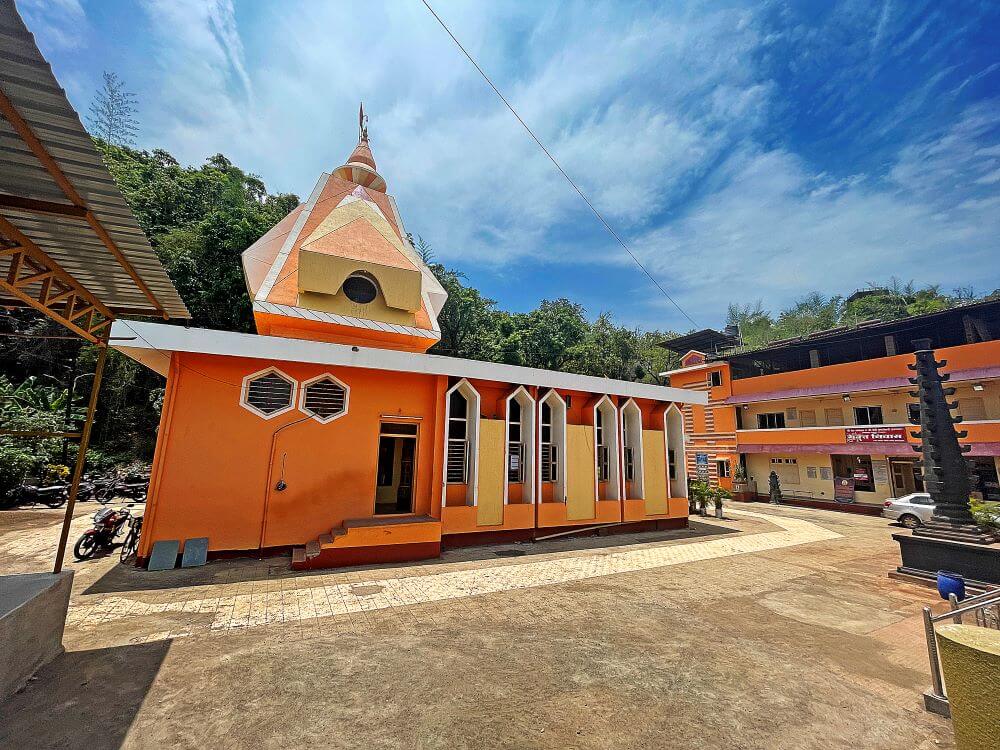
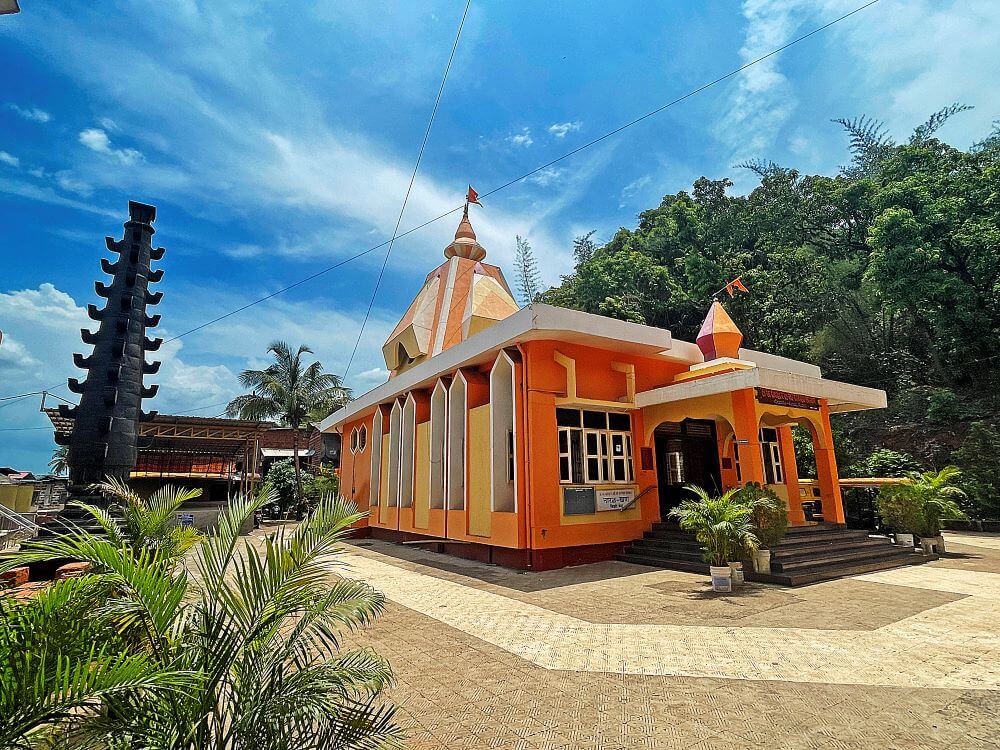
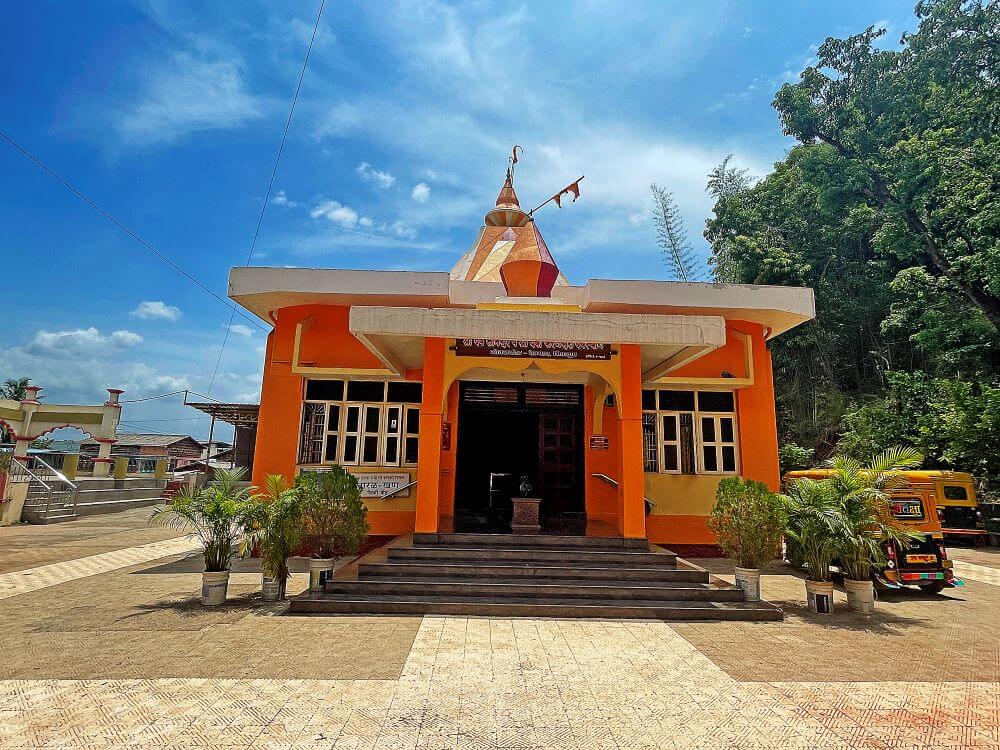
The renovation of this temple was completed on 19 February 1969. This is a powerful, awakened shrine, and devotees believe that worshipping the Goddess fulfills their heart’s desires. She is the family deity (Kuldevata) of the Patwardhan, Gole, Phanse, Dikshit, Puranik, and Deval families of the region, and the village deity (Gramdevata) of the residents of Pethmap and Govalkot. The temple is located a short distance from the Chiplun bus stand, and there is a large archway leading to the temple on the main road. A short distance from here is the beautiful temple of Lord Someshwar and Goddess Karanjeshwari. One enters the temple courtyard after climbing about 18 to 20 steps. There is a large lamp tower (Deepmal) near the temple, and the entire courtyard is paved, giving the area a beautiful appearance.
The temple structure consists of a Darshan Mandap, Sabha Mandap, and Garbhagriha (sanctum sanctorum). The Sabha Mandap is grand and houses the Garbhagriha. The wall in front of the Garbhagriha features attractive carvings. Inside the Garbhagriha, the four-armed Goddess Shri Karanjeshwari is seated on a tiger within a beautiful wooden shrine (Makhar). The Goddess is adorned with various garments and ornaments, and the silver halo behind the idol features exquisite craftsmanship. In front of the Goddess, in the center of the Garbhagriha, is the Shiva Linga of Lord Someshwar. This Linga is also covered with silver plating.
Pethmap is considered the maternal home of Goddess Karanjeshwari, while Govalkot is considered her marital home. On Phalguna Shuddha Trayodashi, the Goddess’s palanquin travels from Govalkot to her maternal home in the Pethmap area. This marks the beginning of the Shimga festival. On Phalguna Shuddha Chaturdashi, the unique ‘Sherne’ festival takes place. In this ritual, devotees who wish to make a vow to the Goddess bury a coconut and a note with their name in the soil of the riverbank field, one day before the ‘Sherne Kadhne’ ritual, i.e., on Phalguna Shuddha Trayodashi, without anyone noticing. The next day, a trident-like standard (Nishan) carried in front of the palanquin of Karanjeshwari and Someshwar searches for the buried ‘Shernes’. It is believed that if one’s ‘Sherne’ is found, the Goddess has accepted the devotee’s vow. Thousands of devotees gather to witness this unique festival, and the area takes on the atmosphere of a fair. Thereafter, on Phalguna Shuddha Purnima, the Goddess’s palanquin returns from her maternal home to her marital home in Govalkot.
There are records of many commanders seeking the Goddess’s blessings before battles. On 17 November 1700, Queen Tarabai sent Kanhoji Jhunjarrao with an army of 7,000 soldiers via the Kumbharli Ghat to Chiplun to fight against the Siddi of Janjira. At that time, Jhunjarrao first sought the blessings of Shri Karanjeshwari. On 4 February 1701, Dadoji Malhar defeated the Siddi of Janjira and visited the Goddess. In March 1781, Parashurambhau Patwardhan descended into Konkan to deal with the British and also sought the blessings of the Goddess. In 1874, the British government granted an annual endowment of 15 Rupees to this temple. Accordingly, the Maharashtra government continues to provide 15 Rupees to the temple annually.
Various festivals are celebrated here, including the temple anniversary on Vaishakha Krishna Chaturdashi, the Jagran of Goddess Karanjeshwari on Shravana Shukla Trayodashi, Narali Purnima, Navratri festival from Ashwina Shukla Pratipada to Ashwina Shukla Dashami, Diwali Padwa, and Tripurari Purnima. Devotees can have Darshan of the Goddess from 6:00 AM to 10:00 PM. There is a well-equipped Bhakta Niwas (pilgrim guest house) for devotees in the temple premises, which provides both accommodation and food facilities. (Contact: Suryakant Sahastrabuddhe, Manager: Mobile 7038234486). There is a path from the temple premises leading to the Govindgad Fort. One can reach the fort by climbing about 300 steps, from where a panoramic view of the entire city of Chiplun can be seen.
This sacred temple stands as a testament to deep spiritual devotion, ancient architectural grandeur, and rich local cultural traditions.
The sanctum sanctorum houses the divine idol consecrated according to ancient Vedic traditions, surrounded by serene courtyards and traditional temple architecture.
Navratri, Maha Shivratri, Annual Temple Jatra & Deepotsav
Compare and book flights, secure top-rated local hotels near the temple, hire reliable guides, and rent cars instantly.
Extend your pilgrimage by visiting other highly sacred temples located nearby.


Add ₹999 more to unlock FREE SHIPPING!
Your sacred cart is currently empty.
Shop Photo FramesFill in your delivery details below to place your order.
Add comment