
Add ₹999 more to unlock FREE SHIPPING!
Your sacred cart is currently empty.
Shop Photo FramesSince the thirteenth century, Maharashtra has been blessed with a rich history of saintly traditions. From Saint Dnyaneshwar to Saint Tukaram, many saints built the foundation of the Warkari tradition, rising from the base to the pinnacle. By discarding many oppressive rules and conditions of religion, these saints granted the right of upliftment to the people at the lowest strata of society. Later, mysticism and various sects were added to this, leading to the emergence of different branches. The name of Saint Tukamai is respectfully taken as a great authoritative scholar of this mysticism. The Samadhi temple at Yehalgaon stands out as unique because it is a Samadhi temple built by a Guru for his disciple. Devotees believe that seeking the blessings of this Samadhi resolves many problems. This Samadhi temple is more than one hundred and fifty years old. Tukaram Maharaj was born in the year १८१२ to Kashinathpant and Parvatibai. From childhood, he had a profound interest in spirituality and a deep longing to know the Divine. He helped the suffering and the needy, and healed the ailments of the sick and the disabilities of the handicapped. Tukamai studied mysticism under the guidance of Swami Chinmayananda of Umarkhed in Yavatmal district. He offered all the Dakshina and donations he received to his Guru. Not only that, but he also donated the land he received to his Guru. Many legends of miracles are told about his life. He had attained high authority in spirituality and was a great ascetic and yogi. Notably, he was the Guru of Brahmachaitanya Gondavalekar Maharaj. He left his mortal body on ३० May १८८७, on the day of Jyeshtha Shuddha Ashtami. It is a rare fact that this Samadhi temple was built by his own Guru, Swami Chinmayananda. That is why one finds ‘Construction by Chinmay Sarkar’ written in many places in the temple. The management of the Samadhi temple is still looked after by the Umarkhed Sansthan today.
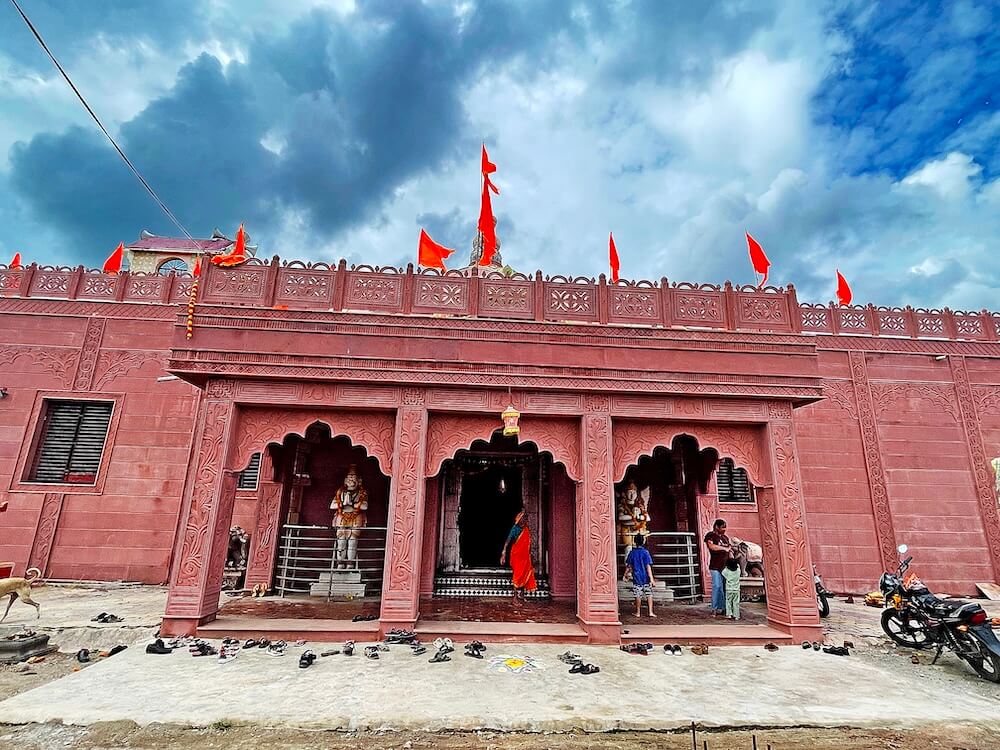
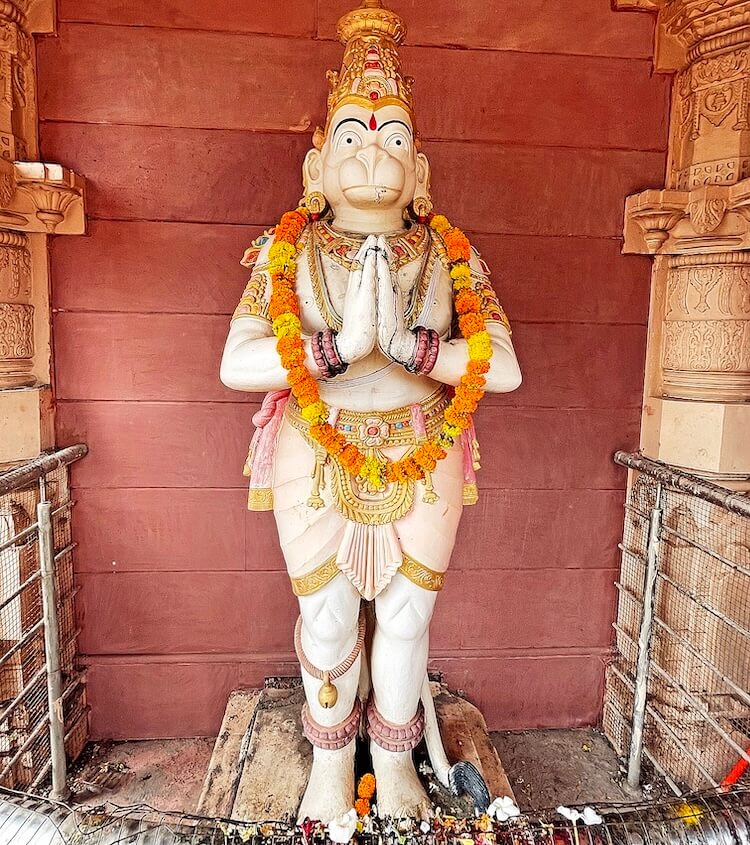
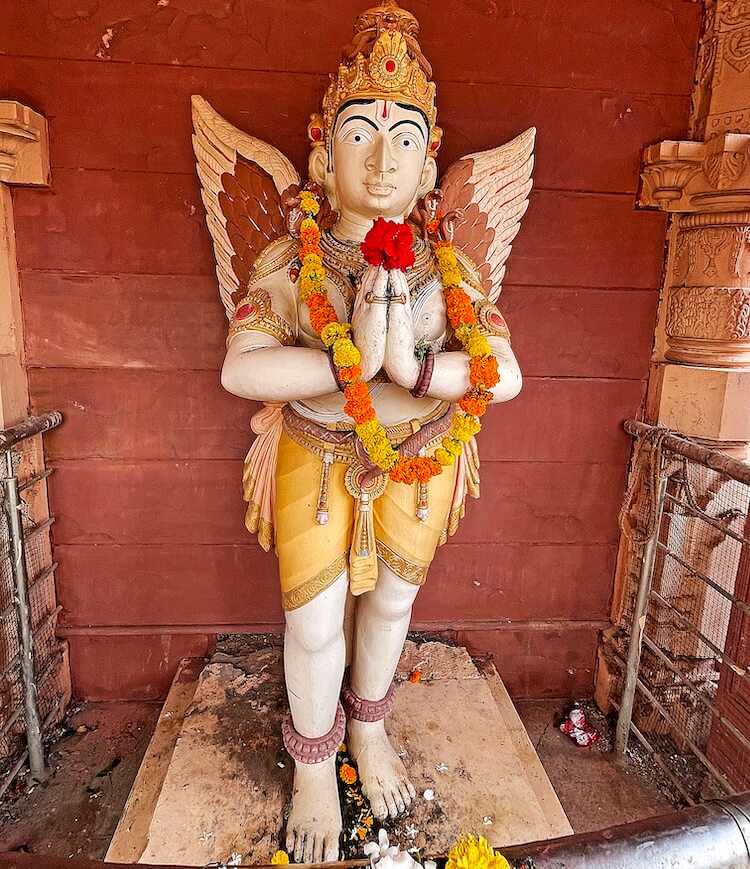
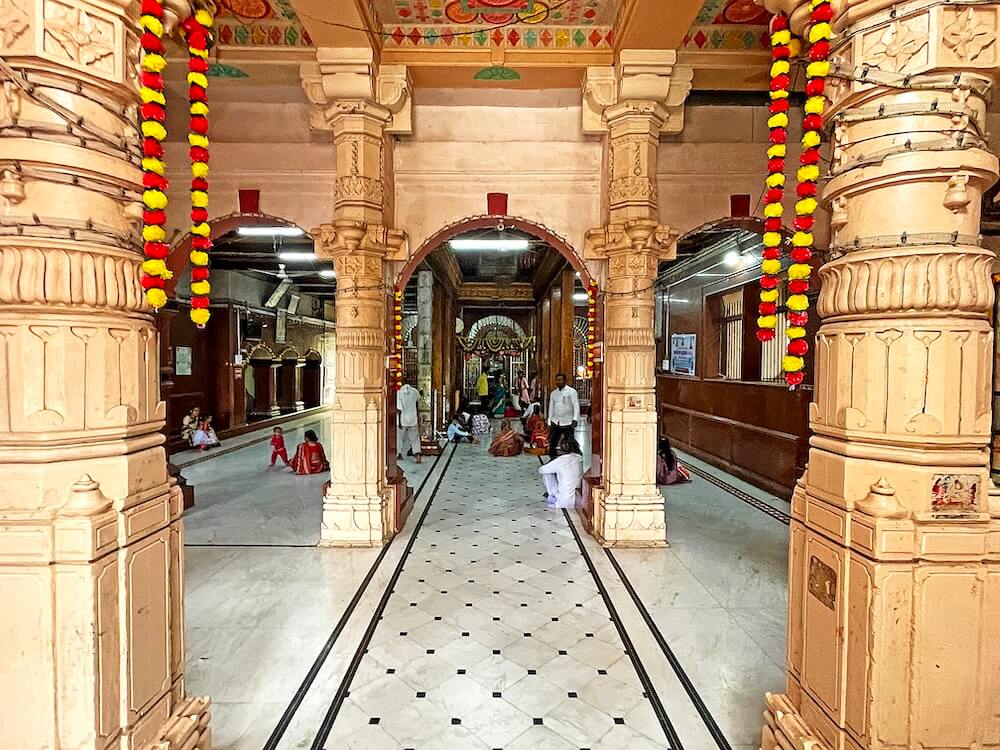
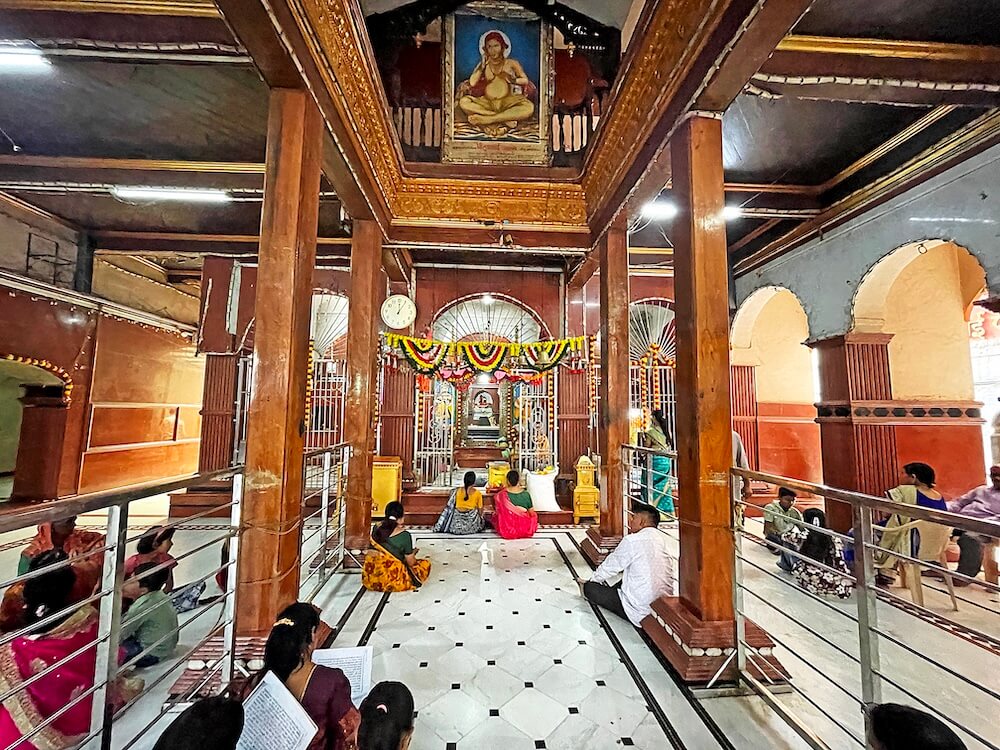
The first welcome arch of the temple is at the village boundary. This welcome arch has an attractive design with a two-story balcony on square pillars. There is a paved road from here to the entrance of the temple, and a spacious parking lot is available in front of the temple. The temple has a strong fortification. Outside the fortification, to the left of the entrance, a Tulsi Vrindavan is visible. There is an entrance gate in the fortification and a Mukhamandapa (main hall) in front of it. The Mukhamandapa has eight square pillars connected to each other by arched toranas. On the roof above them, three dome-shaped spires are visible in a horizontal line. The middle spire is the tallest. At the top of the spires are stupikas and kalashas. In the Mukhamandapa, idols of Garuda and Hanuman are seated on Vajra-peethas on the right and left sides. As soon as one enters through the fortification, one sees a beautiful Samadhi temple with a structure consisting of an Ardhamandapa, a two-story Sabhamandapa, an Antarala, and a Garbhagriha. The Ardhamandapa has twelve ornate pillars. At the top of these pillars, there is a cornice and a roof on the beam above the cornice. Seating arrangements have been made for devotees in the Ardhamandapa. Further ahead lies the semi-open Sabhamandapa.
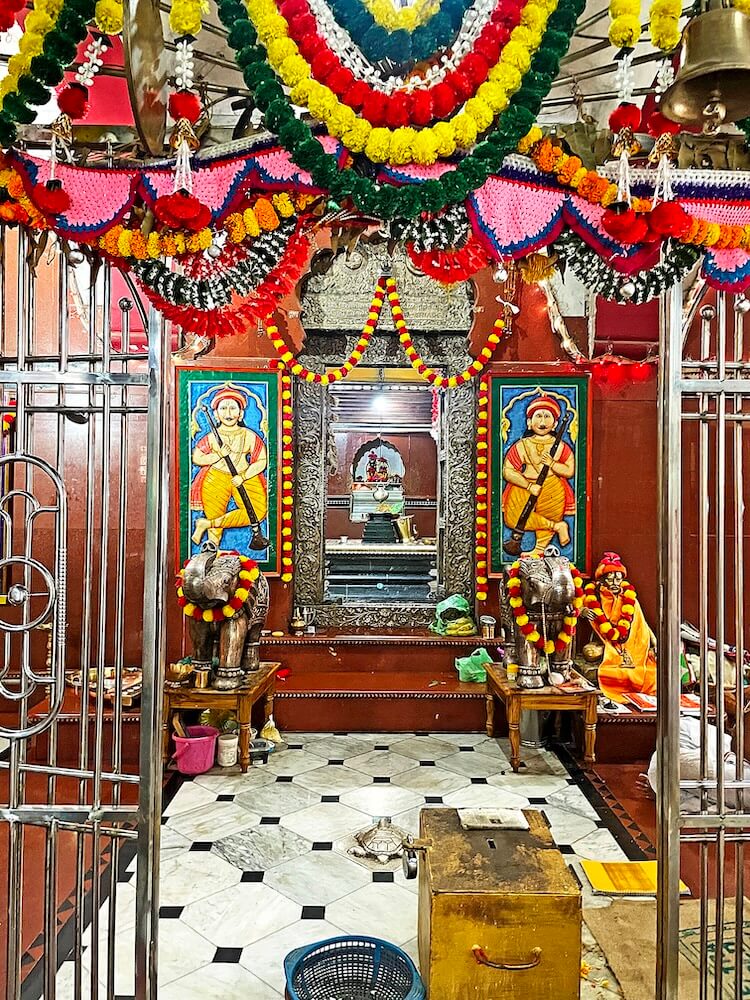
The Sabhamandapa has four rows of pillars, and on the left side, there is a Garuda pillar covered with a silver plate. Sculptures of various gods and goddesses are carved on this pillar. The pillars in the middle two rows of the Sabhamandapa are made of wood, while the outer pillars have semi-circular arches. The Sabhamandapa is managed with stainless steel railings to organize queues. Further ahead in the Antarala, there is a tortoise sculpture on the floor. On both sides of the entrance to the Garbhagriha, there are silver elephant sculptures on wooden tables. Brass festival idols and portraits of Tukaram Maharaj are kept in the Antarala.
The entrance to the Garbhagriha, which is higher than the Antarala, has two steps. Here, the silver-plated ornate door frame, lintel, and torana look magnificent. A Samadhi inscription is carved on the torana. In the Garbhagriha, there is the platform of Tukaram Maharaj’s Samadhi, and on the platform, there is a Shiva Linga. A copper vessel for Abhisheka, dripping water onto the Shiva Linga, is hung from the ceiling. In the niche on the back wall of the Garbhagriha, there are idols of Vitthal-Rukmini. A circumambulation path has been created around the exterior of the temple. On the roof of the Garbhagriha, there is a seven-layered spire. The first layer of the spire is square, containing a total of twenty niches on all four sides. In this layer, there are elephant sculptures on all four corners. The upper six layers of the spire are dodecagonal, with twelve niches in each layer. Idols of various gods and goddesses are installed in all the niches. At the top of the spire, there are two Amalakas placed one above the other, topped with a kalasha. Surrounding the temple, along the fortification, are the residences of the attendants and Mahants, a Bhakta Niwas (pilgrim guest house), an Annachhatra (free food distribution center), the temple office, and other structures.
The Punyatithi festival of Tukaram Maharaj on Jyeshtha Shuddha Ashtami is considered the main annual festival here. Thousands of devotees of the Maharaj participate in this festival. Apart from this, there is a special presence of devotees on Guru Purnima, Dattajayanti, and Mahashivratri. During all festivals, programs like Bhajans, Kirtans, music, and discourses are organized in the temple. Many devotees from the surrounding area come on foot in a Dindi procession to seek the blessings of Tukaram Maharaj’s Samadhi. There is a special crowd of devotees at the temple every Thursday.
This sacred temple stands as a testament to deep spiritual devotion, ancient architectural grandeur, and rich local cultural traditions.
The sanctum sanctorum houses the divine idol consecrated according to ancient Vedic traditions, surrounded by serene courtyards and traditional temple architecture.
Navratri, Maha Shivratri, Annual Temple Jatra & Deepotsav
Compare and book flights, secure top-rated local hotels near the temple, hire reliable guides, and rent cars instantly.
Extend your pilgrimage by visiting other highly sacred temples located nearby.

Add ₹999 more to unlock FREE SHIPPING!
Your sacred cart is currently empty.
Shop Photo FramesFill in your delivery details below to place your order.
Add comment