
Add ₹999 more to unlock FREE SHIPPING!
Your sacred cart is currently empty.
Shop Photo FramesTuljabhavani of Tuljapur, one of the fifty-one Shakti Peethas mentioned in the ‘Devi Bhagavata’ and one of the three-and-a-half Shakti Peethas of Maharashtra, is the Kuladevata (family deity) of Maharashtra. Known in various scriptures by names such as Tvaraja, Turaja, Tvarita, Tulja, and Amba, this Goddess Bhavani is the Kulaswamini (family Goddess) of Chhatrapati Shivaji Maharaj. The ‘Sabhasad Bakhar’ mentions that during the expedition of Afzal Khan, Shri Bhavani of Tuljapur gave a divine manifestation to Shivraya. The replica of this Goddess, who is named Turaja or Tulja because she rushes immediately to the call of her devotees, has been residing in Virahit for about one hundred and fifty years.
The legend regarding the temple here is that one hundred and fifty years ago, a devotee of the Goddess named Kide from this area used to travel regularly to Tuljapur by bullock cart for the darshan of Kulaswamini Tuljabhavani. Due to old age, this journey of about 500 kilometers became impossible for him. Once, after reaching Tuljapur, he bowed his head before the Goddess and expressed his sorrow, saying, “I do not think I will be able to come here again.” That same night, the Goddess gave him a vision, saying, “From now on, you do not need to come to Tuljapur for my darshan. I myself am coming to your village behind you.” However, the Goddess laid a condition that he should not look back on the way. If he did so, she would stop right there. The next day, Kide set out to return to his village.
As he neared the village of Virahit, curiosity arose in Kide’s mind as to whether the Goddess was truly following him, and he could not help but look back. At that moment, the Goddess revealed herself to him. However, since the condition laid down in the vision was not fulfilled, the Goddess immediately disappeared. After the villagers learned of this incident, everyone decided to install the Goddess here. Accordingly, a temple of the Goddess was built here. This Goddess is famous as the Kulaswamini Aai Tulja Bhavani of Vidarbha.
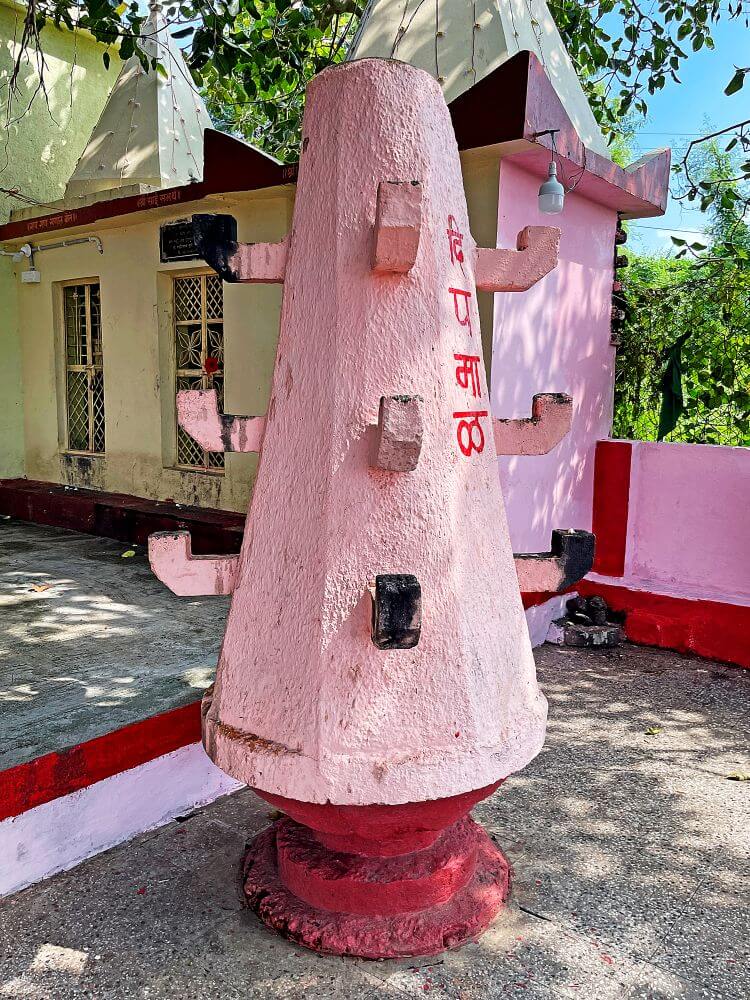
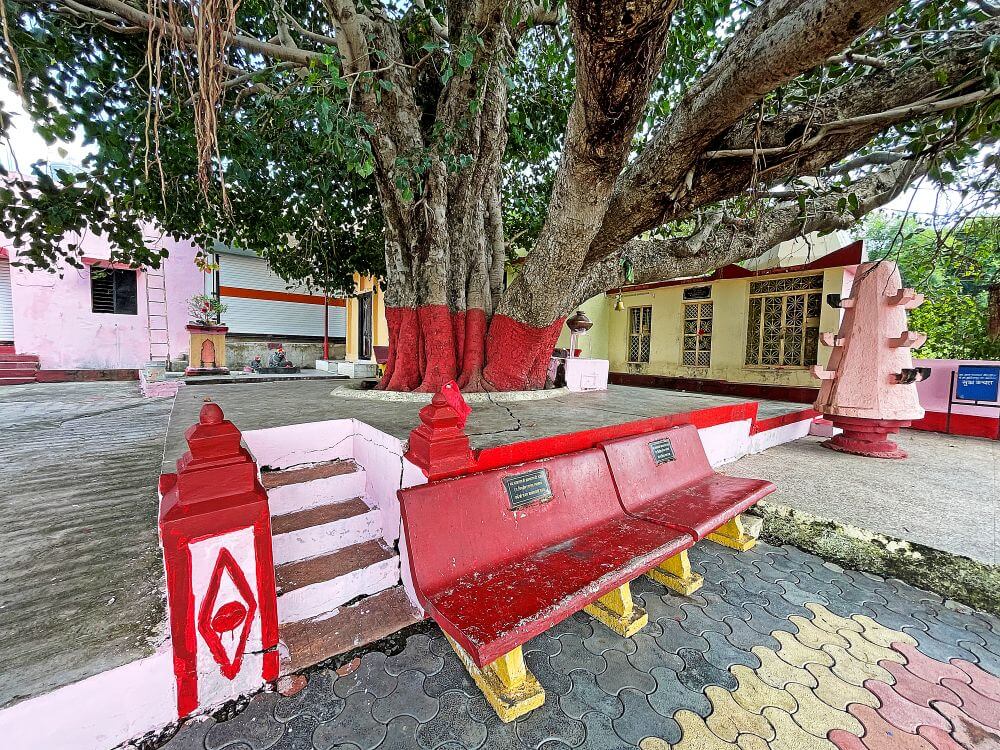
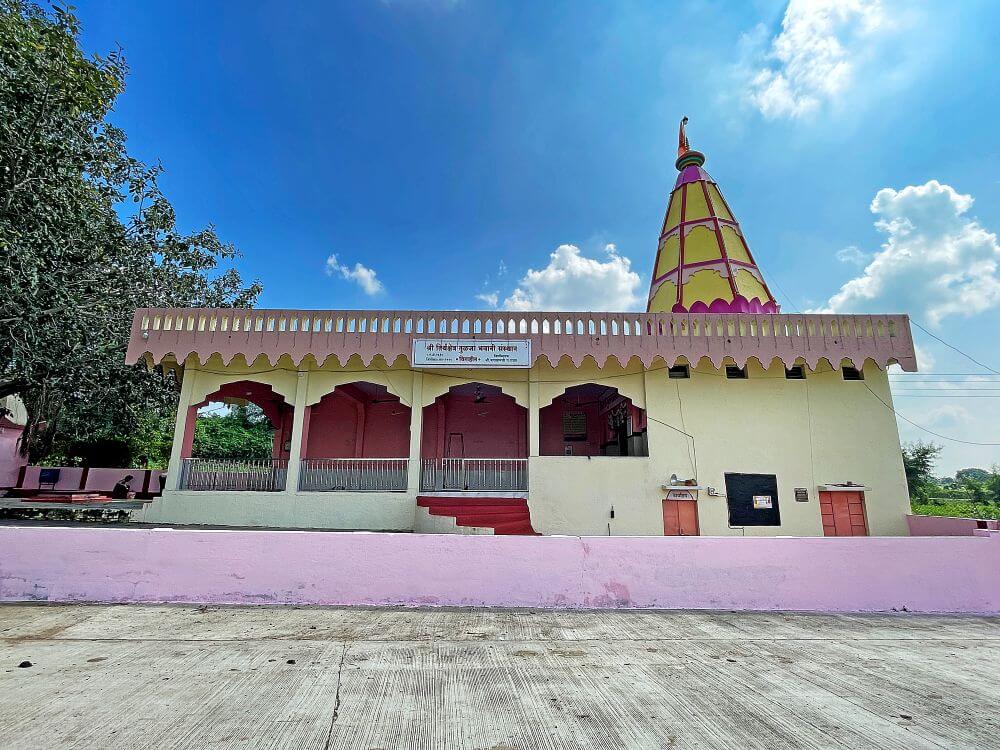
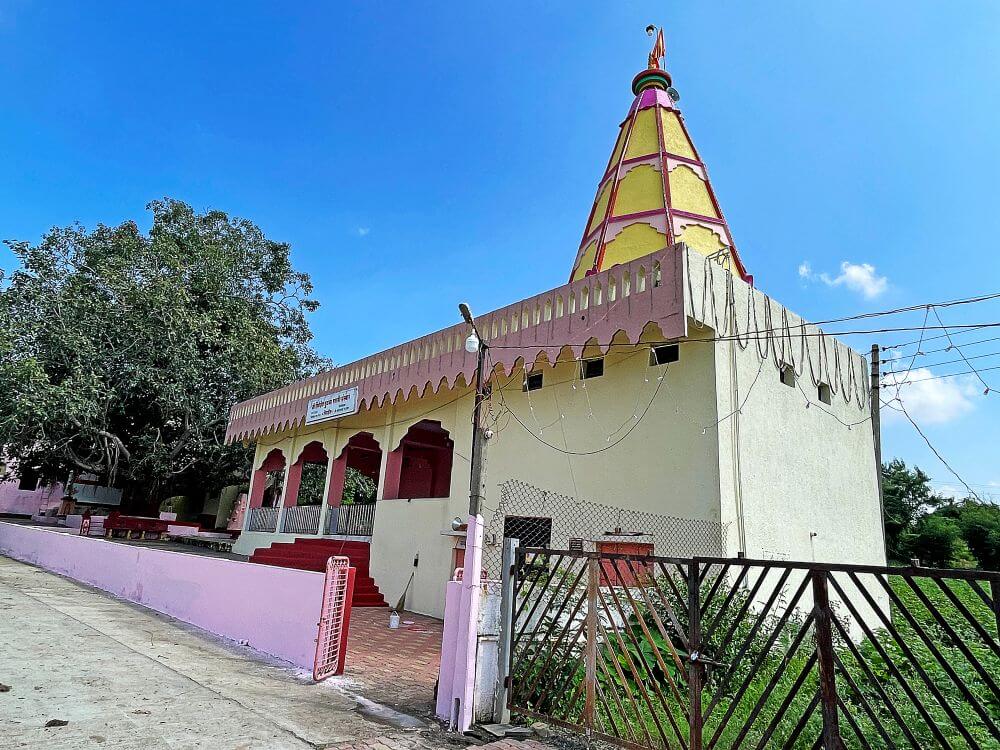
This temple is situated in a picturesque area on the eastern side of the village. One enters the temple courtyard through an entrance gate in the boundary wall along the road. Near the entrance, there are ancient Pindi and Nandi idols near the Tulsi Vrindavan in the courtyard. There is also a small temple of Lord Shiva here. In the sanctum sanctorum of this temple, there is a marble Shiva Pindi in the center, and an idol of Lord Shiva is placed in a decorative arch on a Vajrapitha near the wall in front of it. In front of the main temple, there is a small ancient lamp pillar (Deepmal) in the courtyard. On this lamp pillar, which is about five to six feet high, there are lamp holders on all sides.
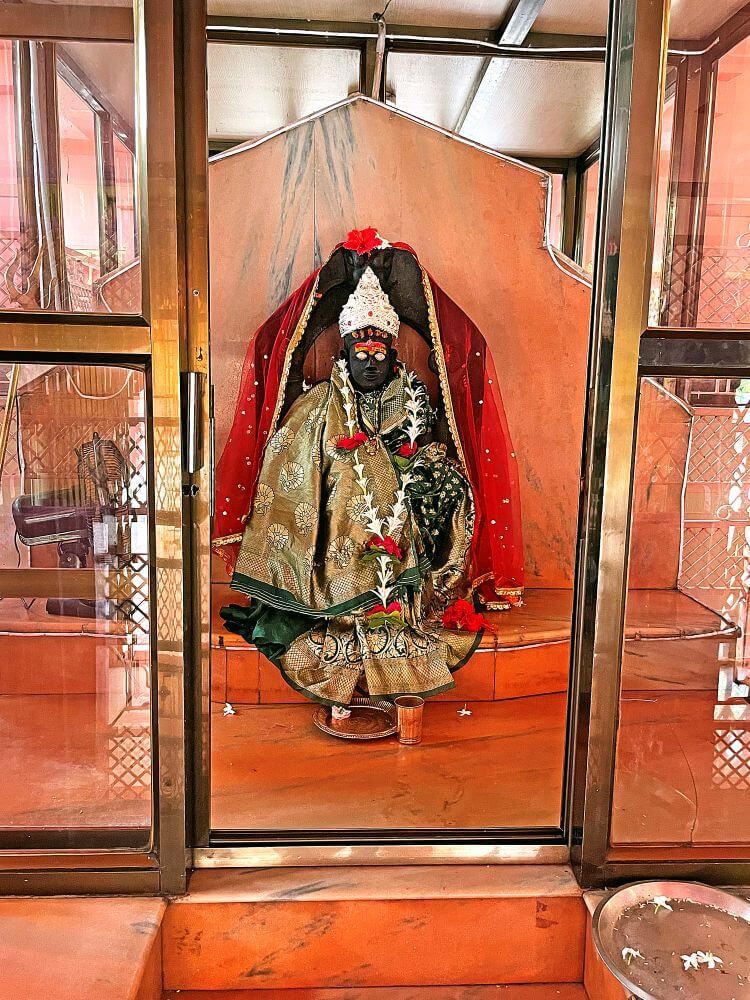
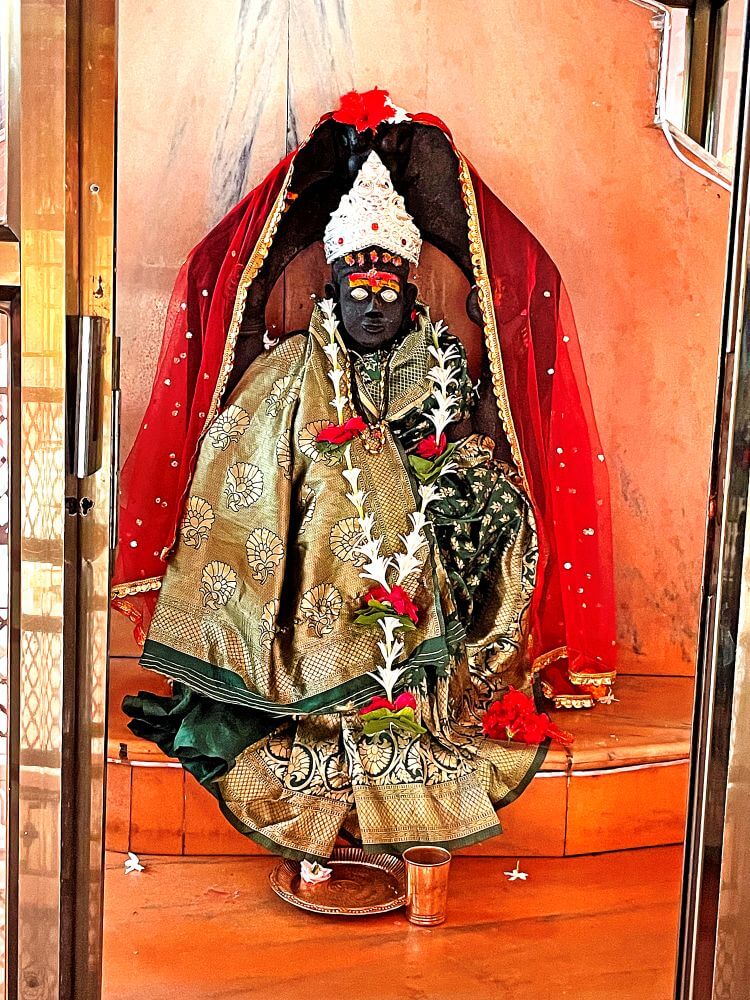
One enters the assembly hall (Sabhamandap) by climbing a few steps of this temple, which stands on a high plinth. In front of this semi-open assembly hall, there is a closed inner chamber and the sanctum sanctorum, leaving a circumambulation path. In the sanctum sanctorum, there is a unique idol of Goddess Tuljabhavani made of black stone on a Vajrapitha. The Goddess, who wears a silver crown, also has silver eyes. Every day, various ornaments and clothes are adorned on this idol. There is a decorative railing on the roof of the temple. There is a three-tiered spire (Shikhar) over the sanctum sanctorum. At the top of this spire is an Amalaka and a Kalash. In the temple premises, there are the Samadhi temple of Shankar Maharaj, and temples of Gajanan Maharaj, Saibaba, Vitthal-Rukmini, and Zholebaba. There is also a rare Triveni tree of Banyan, Pipal, and Audumbar in the premises.
Daily worship is performed in this temple, which is managed by the Shri Kshetra Tuljabhavani Sansthan. Every day from 5 to 7.30 in the morning, Abhishekam and offerings are made to the Goddess. Countless devotees from the surrounding five villages have immense faith in this Goddess. Therefore, the temple premises are always bustling with devotees. Various festivals and celebrations, including Mahashivratri and Tulsi Vivah, are celebrated here. Many devotees come for darshan on the day of Chaitra Purnima. On this day, the Gondhal ritual of the Goddess is also performed. The Sharadiya Navratri festival is the main festival here. On the first day of this festival, Ghatasthapana is performed in the temple. The Goddess is not bathed during the nine days of the festival. During the festival, Aarti is performed in the morning and evening. Religious programs like Bhagavata Katha recitation and Kirtan are organized for all nine days. Previously, there was a practice of sacrificing goats to the Goddess here. However, this practice was stopped sixty years ago. Devotees can take darshan of the Goddess in this temple every day from 5 in the morning until late at night.
This sacred temple stands as a testament to deep spiritual devotion, ancient architectural grandeur, and rich local cultural traditions.
The sanctum sanctorum houses the divine idol consecrated according to ancient Vedic traditions, surrounded by serene courtyards and traditional temple architecture.
Navratri, Maha Shivratri, Annual Temple Jatra & Deepotsav
Compare and book flights, secure top-rated local hotels near the temple, hire reliable guides, and rent cars instantly.
Extend your pilgrimage by visiting other highly sacred temples located nearby.


Add ₹999 more to unlock FREE SHIPPING!
Your sacred cart is currently empty.
Shop Photo FramesFill in your delivery details below to place your order.
Add comment