
Add ₹999 more to unlock FREE SHIPPING!
Your sacred cart is currently empty.
Shop Photo FramesThe Rudra deity of the Rigveda is the very same Shiva who is worshipped in the present day. The epithet ‘Shiva’ for Rudra is found in the Rigveda, the Vajasaneyi Samhita of the Yajurveda, the Atharvaveda, and in literature such as the Aitareya Brahmana and Shankhayana Brahmana. Among the deities widely worshipped in India, the name of Shiva or Shankara stands at the forefront. Shankara is worshipped in three forms: Shiva symbols, the Shivlinga, and idols. In Maharashtra, Shankara is primarily worshipped in the form of a Shivlinga. One such ancient temple is located at Pinjar, where He is worshipped under the name Kapileshwar Mahadev.
Pinjar is a village blessed with historical heritage. Situated 40 km from Akola amidst low-lying rocky hills, the village was once surrounded by strong fortifications and also housed a fort. The remnants of these fortifications and the fort can still be seen today. According to records in the ‘Akola District – Volume 1’ (1910) of the ‘Central Provinces and Berar District Gazetteer’, Pinjar was the headquarters of a pargana in the eighteenth century. At that time, there were about two thousand houses here. The Hemadpanti architectural style of the Kapileshwar Mahadev temple and the ancient stepwell nearby bear witness to the prosperity of Pinjar during that era. It is said that this temple dates back to the Yadava period. However, according to the Gazetteer records, it underwent extensive renovation in the mid-eighteenth century.
Mudhoji Raje, the father of Sarsenasaheb Subha Raghujiraje Bhonsle (II) of Nagpur, imposed a heavy tax burden on Pinjar in 1772, which led to the decline of Pinjar’s economic condition. Consequently, the population began to decrease. According to the Gazetteer, there were 700 houses in 1867, which dwindled to 612 by 1901. Based on this, experts estimate that the Kapileshwar Mahadev temple must have been renovated in the period prior to this. On the platform of the Nandi Mandapa in the temple courtyard, there is an ancient Sanskrit inscription consisting of 17-18 lines. This could have shed light on the history of the temple, but the letters have faded, making it illegible. Researchers have only been able to identify the two words ‘Kirti’ and ‘Prashasti’ on it.
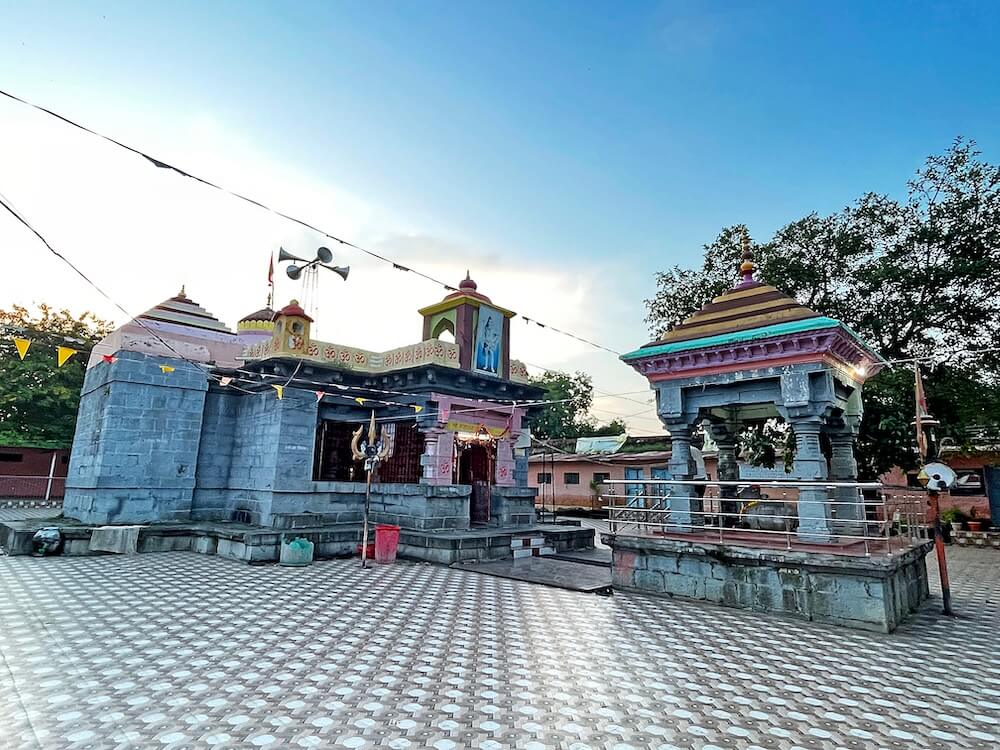
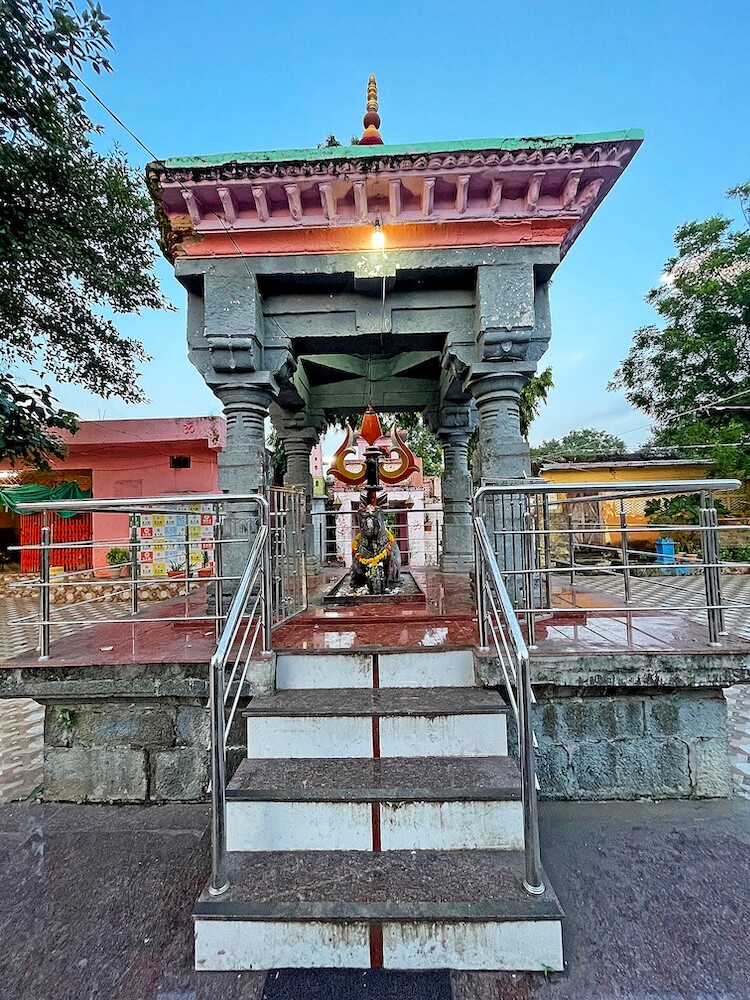
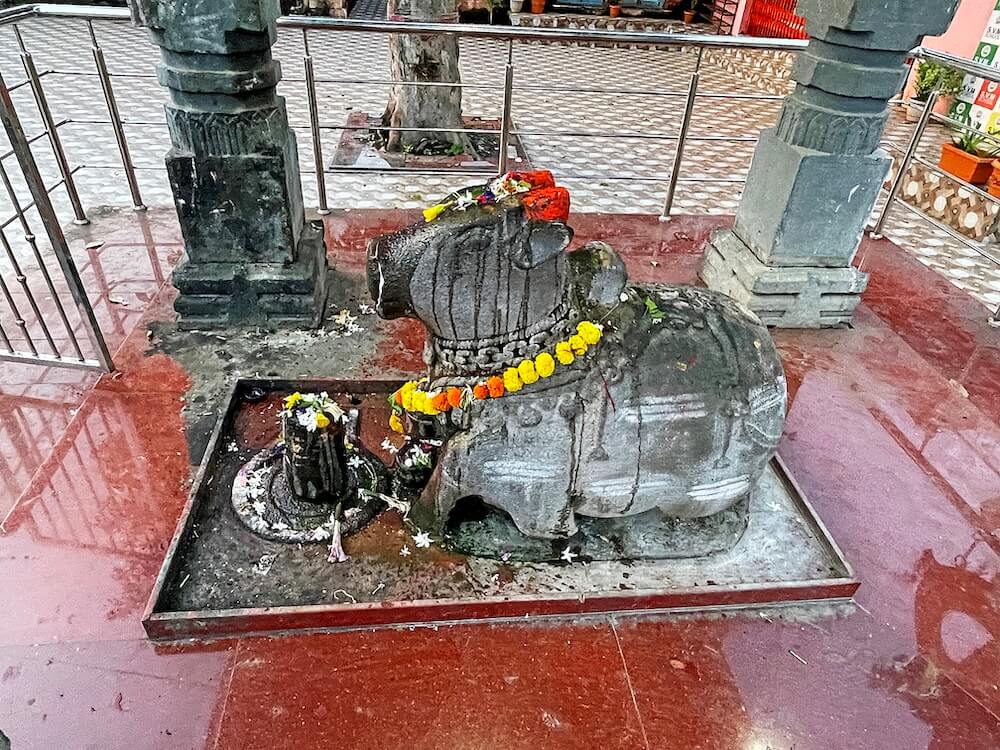
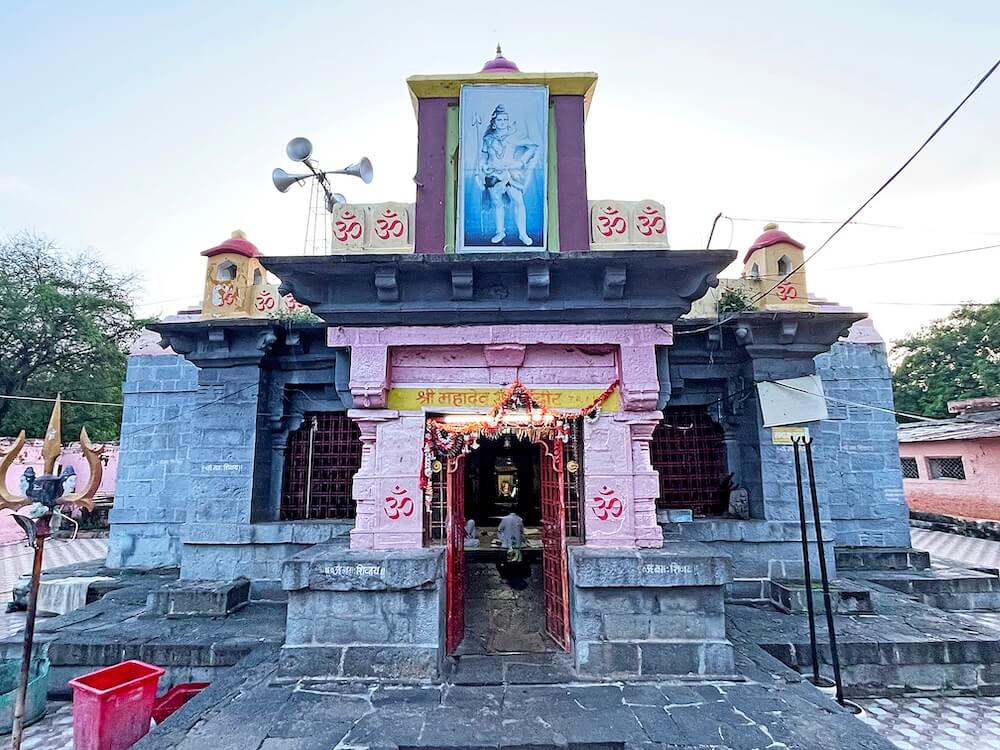
The Kapileshwar Mahadev temple, located in the central part of Pinjar village, is surrounded by a boundary wall. One enters the temple courtyard through a gateway in this wall. To the right of the entrance in the courtyard, there is a bust of Chhatrapati Shivaji Maharaj on a pedestal. In front of the temple, to the right, stands an ancient stone lamp pillar (Deepmal). The structure of this Hemadpanti temple consists of a Nandi Mandapa, Mukhamandapa, Sabhamandapa, Antarala, and Garbhagriha. The Nandi Mandapa, situated on a high pedestal, houses a monolithic Nandi idol between four pillars. The Shivlinga is placed in front of the Nandi. At the base of the Nandi Mandapa platform, there is an ancient inscription and a large trident (Trishul) adjacent to the platform.
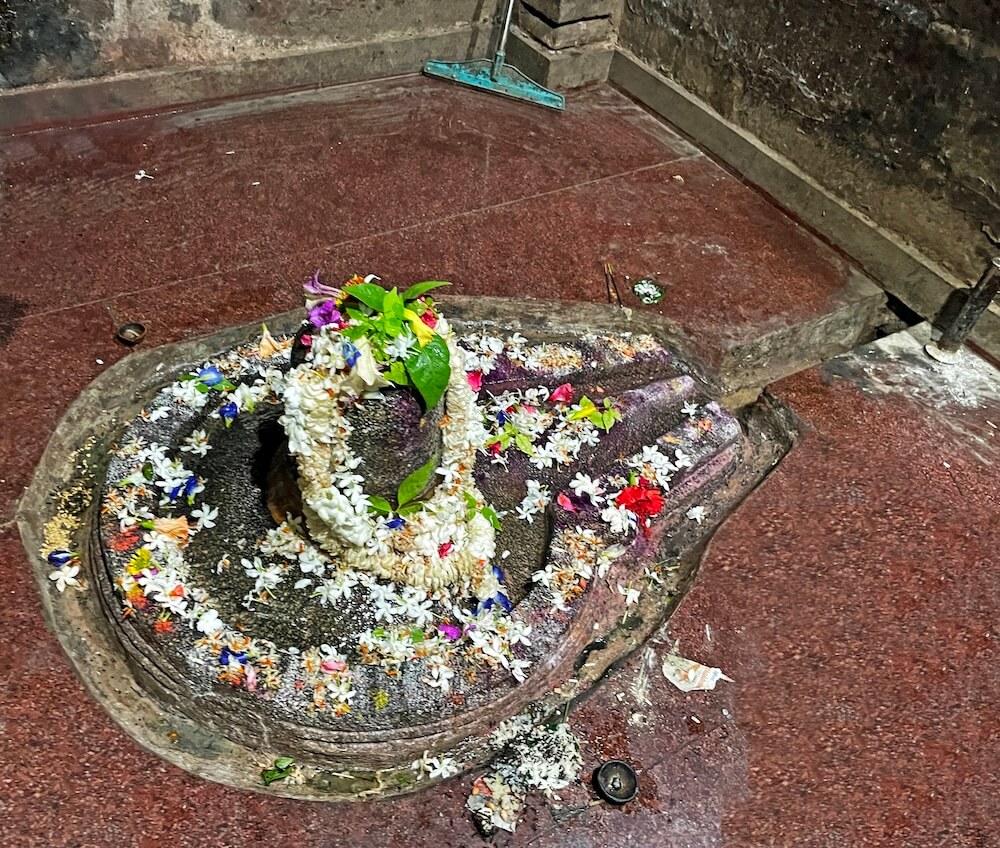
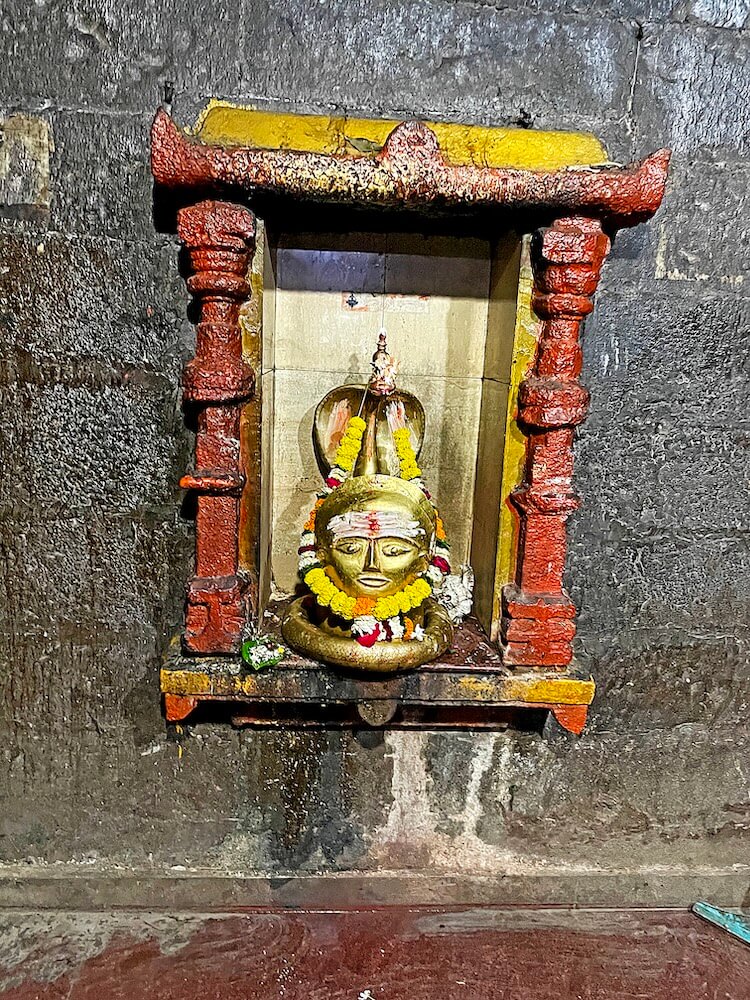
There is a decorative canopy (Meghdambari) above the entrance of the Mukhamandapa. To the right of the Mukhamandapa, there is a large trident. The Mukhamandapa features stone benches (Kakshasanas) on both sides. The niches in the Sabhamandapa contain idols of deities such as Ganpati, Shri Dattatreya, and Radha-Krishna. A Kirtimukha is carved at the lower part of the main Garbhagriha entrance. Above the entrance to the Garbhagriha, there are sculptures of royal elephants on both sides. Inside the Garbhagriha, there is a Shivlinga set in a large base (Shalunka). An abhishek is performed on the Linga through a panchadhatu (five-metal) vessel (Galantika) placed above. In one of the niches of the Garbhagriha, there is a Shiva mask (Shivmukhvuta) with a serpent hood canopying it.
A short distance from this temple is a stepwell known as the ‘Chaubari Vihir’. This grand stepwell, built in the Hemadpanti architectural style, is square in shape and has numerous steps on all four sides, which are still in good condition. Some of the niches here contain idols of deities. This well contains water throughout the year.
The Mahashivratri festival is celebrated with great enthusiasm at the temple every year. During this eight-day festival, many religious programs are organized. Hundreds of devotees come for darshan during the month of Shravan. On the third Saturday of this month, the Kawad Yatra arrives here. On the day before this procession, devotees fill their Kawads with holy water from the Katepurna River. The Kawad Yatra, which moves to the sound of drums and cymbals, also features many tableaux. Hundreds of citizens, as well as practitioners of Aghori Vidya, participate in this yatra, which is organized by various groups including the Gulalshekh Maharaj Sansthan and the Shivshambho Mandal. Police security is maintained to prevent any untoward incidents during the yatra. Once the yatra reaches the temple, the Shivlinga is anointed with the water from the Kawads, followed by the distribution of Mahaprasad to the devotees.
This sacred temple stands as a testament to deep spiritual devotion, ancient architectural grandeur, and rich local cultural traditions.
The sanctum sanctorum houses the divine idol consecrated according to ancient Vedic traditions, surrounded by serene courtyards and traditional temple architecture.
Navratri, Maha Shivratri, Annual Temple Jatra & Deepotsav
Compare and book flights, secure top-rated local hotels near the temple, hire reliable guides, and rent cars instantly.
Extend your pilgrimage by visiting other highly sacred temples located nearby.


Add ₹999 more to unlock FREE SHIPPING!
Your sacred cart is currently empty.
Shop Photo FramesFill in your delivery details below to place your order.
Add comment