
Add ₹999 more to unlock FREE SHIPPING!
Your sacred cart is currently empty.
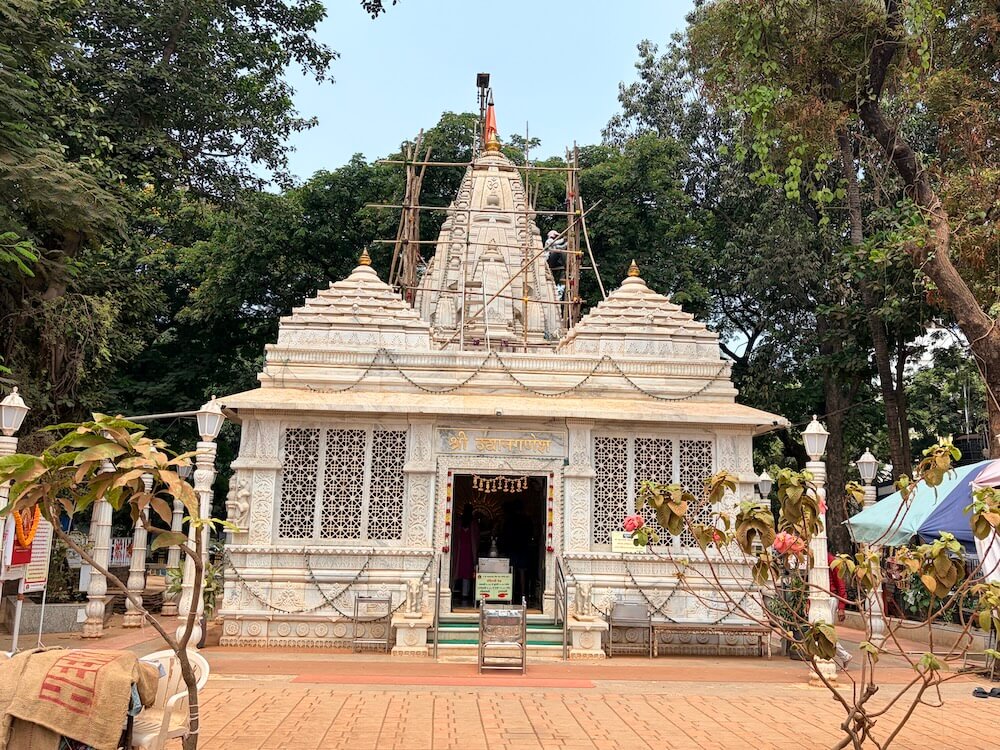
Shop Photo FramesThis temple of Lord Ganesha is situated in Shivaji Park (Chhatrapati Shivaji Maharaj Maidan), a place that holds a significant position in the political and sporting history of modern Maharashtra. Since the temple is located within the grounds, or the garden (Udyan), it is known as Udyan Ganesh. As a sacred site for the devotees of Ganesha in the Shivaji Park area, the Maghi Ganeshotsav is celebrated here every year. Thousands of devotees participate in this festival, and a key feature of this temple is that many devotees visit daily to perform rituals for their new vehicles.
The Shivaji Park ground in Dadar has a long history. King Pratap Bimb, the early ruler of Mumbai, first arrived in the year ११३८ CE on an island known as ‘Baradbet’. Before this, his capital was at Mahim-Kelwe. He bestowed the name of his former capital upon this new capital, which is today’s Mahim. This place was previously known as Mahikavati. According to the ‘Mahikavati chi Bakhar’, edited by the historian V. K. Rajwade, after capturing Mahim, Pratap Bimb established a settlement here. For this settlement, the clans brought by Pratap Bimb from his former capital of Mahim-Kelwe named the local villages and hamlets after their original ones. According to the findings in the book ‘Agnat Mumbai’ by Mumbai historian Nitin Salunkhe, the area of Dadarpada, which existed in the Kelwe-Mahim-Palghar region, was given to a hamlet in Mumbai-Mahim at that time. That same area is known today as Dadar.
During the British era, on १८ September १८९६, the first case of bubonic plague was detected in Mumbai. According to the report published by the Bombay Plague Committee in १८९८, the plague epidemic claimed the lives of २९,०१२ people in Mumbai within the first six months. Discussions were held in the British Parliament in London regarding permanent measures against this epidemic. On १४ February १८९८, Lord Sandhurst introduced the ‘City of Bombay Improvement Bill’. After the British Parliament passed this bill, the ‘Bombay City Improvement Trust’ (BCIT or BIT) was established on ९ November १८९८. Under this trust, the British government began the sanitation of Mumbai. They cleared slums and began building a well-planned city. The areas of Hindu Colony, Parsi Colony, and Five Gardens in Dadar took shape during this time. It was through this plan that today’s Shivaji Park ground in Dadar was created. Prabodhankar Thackeray noted that the concept for this ground was by the then-engineer Dwarkanath Vaidya. In his autobiography ‘Mazi Jeevangatha’, Prabodhankar Thackeray refers to ‘Late Dwarkanath Rajaram alias Balasaheb Vaidya, Architect Engineer’ as the ‘original visionary of Dadar’s Shivaji Park’. At that time, this ground was called ‘Mahim Park’.
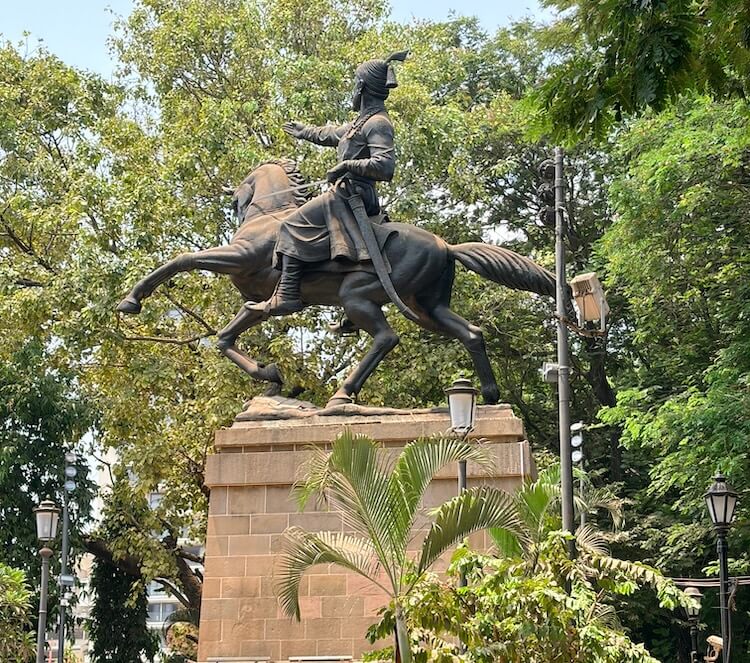
Later, Prabodhankar Thackeray suggested that the ground be named ‘Shivaji Park’. Freedom fighter Avantikabai Gokhale, who wrote the first biography of Mahatma Gandhi in Marathi, was a Congress corporator in the then-Mumbai Municipal Corporation. She moved the resolution for renaming the ground in the corporation. With the approval of this resolution on १० May १९२७, ‘Mahim Park’ became ‘Shivaji Park’. This historic event completes १०० years in the year २०२७. During the Samyukta Maharashtra movement, large meetings were held on this ground. According to the book ‘Jai Maharashtra’ by senior journalist Prakash Akolkar, during the Samyukta Maharashtra movement, Acharya Pralhad Keshav Atre first gave this ground the name ‘Shivtirth’. Later, after the formation of the state of Maharashtra, the equestrian statue of Chhatrapati Shivaji Maharaj was unveiled here in १९६६ by the then-Defense Minister Yashwantrao Chavan. The Udyan Ganesh Temple is situated near this very statue.
According to the history of this temple, an idol of Ganesha was previously seated under a large banyan tree here. People from the surrounding areas used to come to have darshan of this idol. Later, some Ganesha devotees decided to build a large temple here. Public donations were collected for this purpose. Just four years after the installation of the statue of Shivchhatrapati, the inspiring deity of Maharashtra, the Ganesha temple was erected. On Magh Shuddha Chaturthi, Shake १८९१, which is ९ February १९७०, the idol of the Lord was consecrated in this temple. The recent renovation has given the temple its current grand appearance.
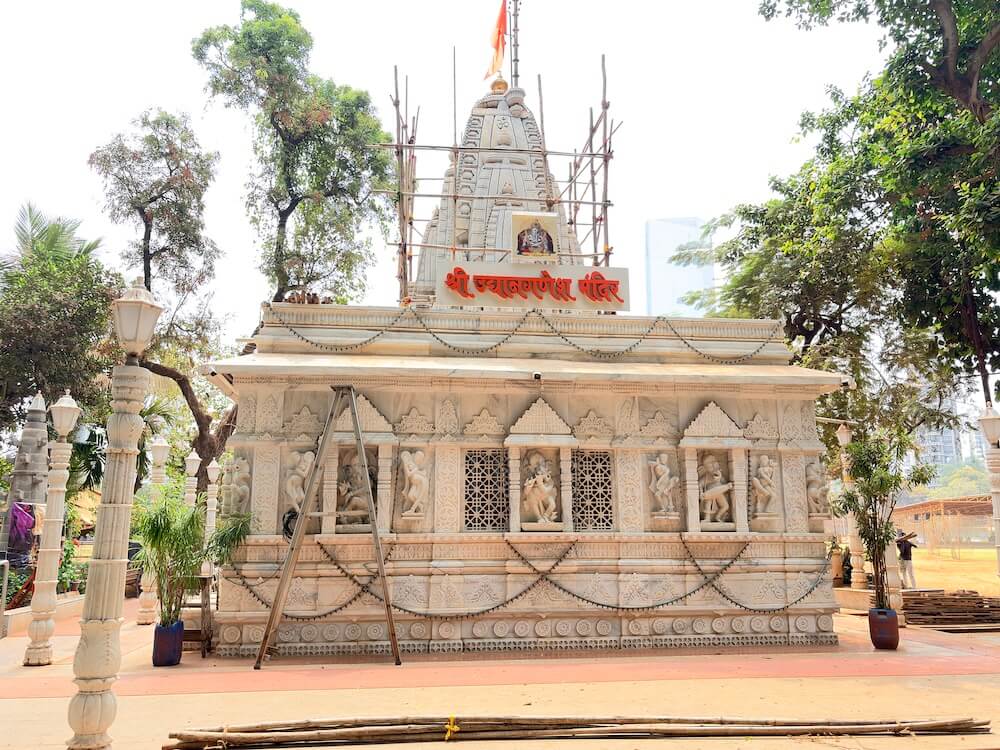
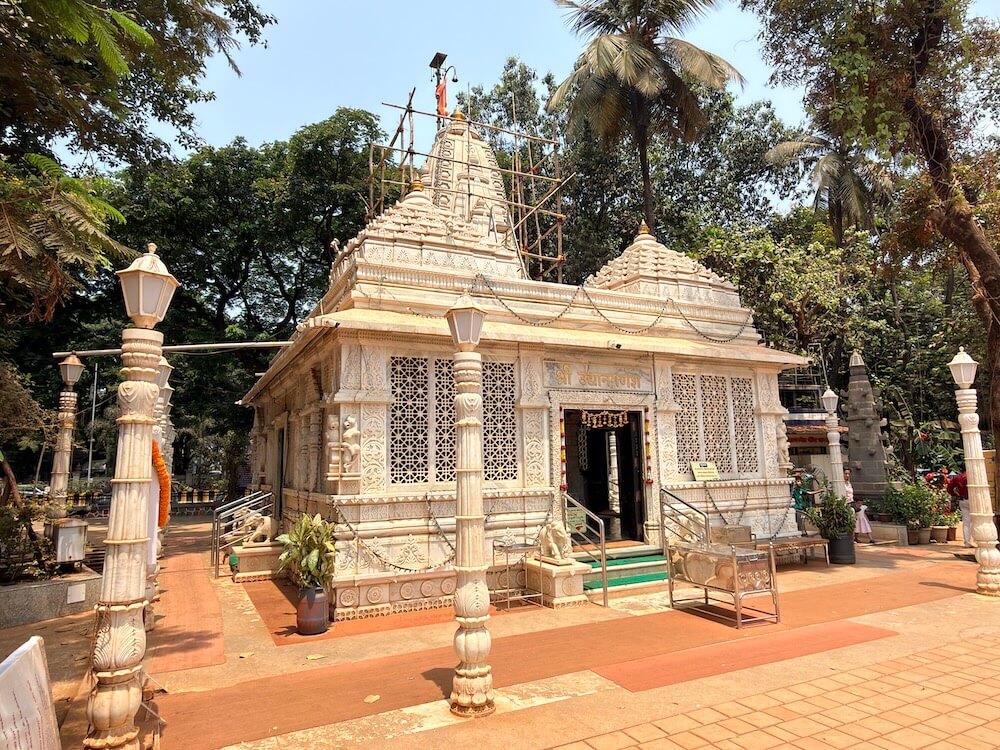
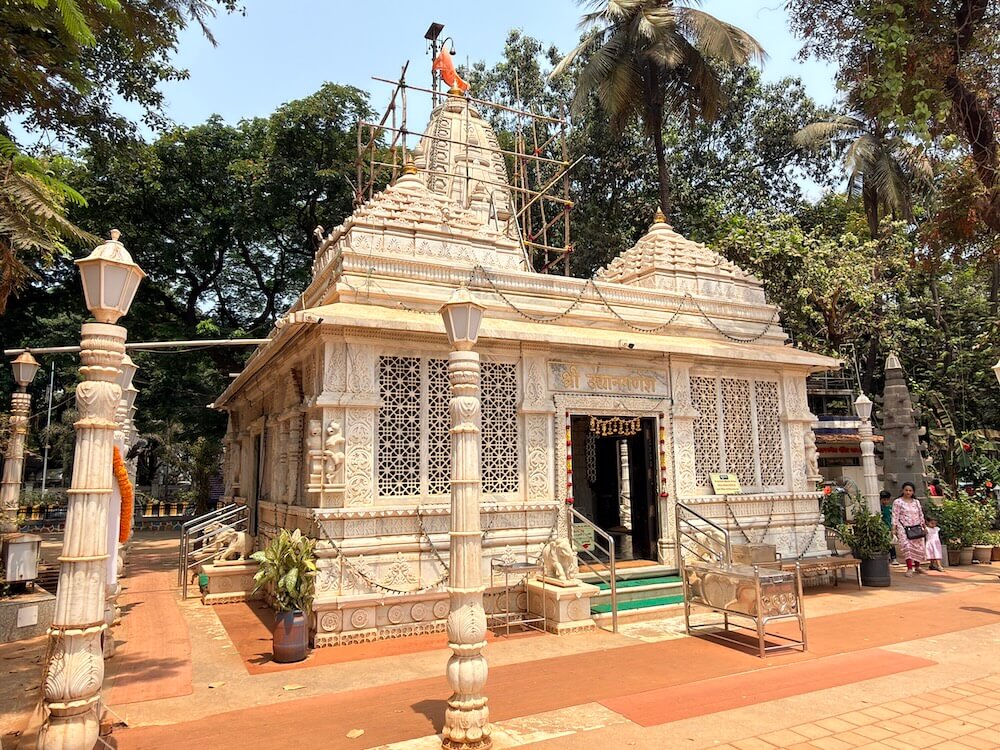
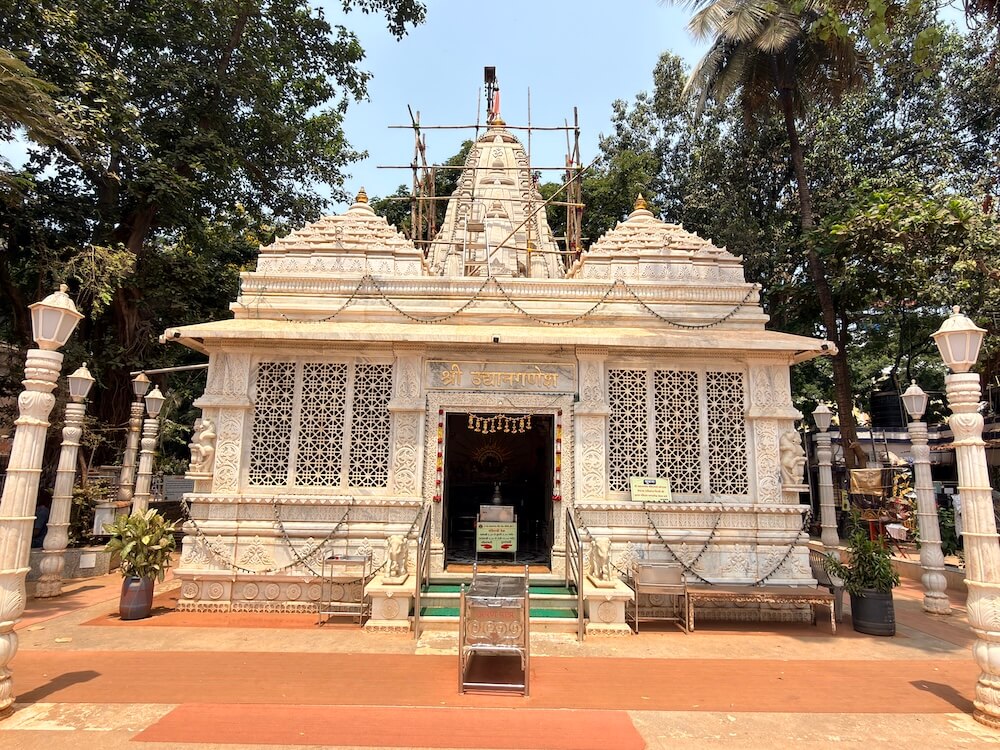
This temple is built entirely of marble stone. The courtyard around the temple is paved. In this courtyard, there are pillars with intricate carvings and electric lamps in all four directions. To the right of the temple is a small garden where arrangements have been made for the rest of the devotees. A large stone lamp tower (Deepmal) has also been erected in this area. The temple is designed with a Sabhamandap (assembly hall) and a Garbhagriha (sanctum sanctorum). The pillars on the outer walls of the Sabhamandap have intricate carvings. There are large latticed windows in the walls of the Sabhamandap. On the roof, there are two low pyramid-shaped spires (Shikharas) topped with Amalakas and Kalashas. The Garbhagriha of the temple has a tall Urushringa-style spire, topped with a circular Amalaka and a golden Kalash.
Built on a high plinth, the temple is accessed by stairs. On the marble platforms beside the stairs are two elephant sculptures. This Sabhamandap has three entrances, and upon entering, one sees the silver Mushakraj (the mouse) seated on a small pillar. Further ahead, the silver idol of Ganraya is installed on a Mushak-asana (mouse throne) atop a high marble pedestal. This throne is covered with golden decorative sheets. The idol, adorned with flower garlands, wears a golden crown on its head. On both sides of the idol are marble statues of Riddhi and Siddhi, adorned with clothes and ornaments. On this main altar, to the left, is a marble statue of Lakshmi-Narayana, while to the right, a small Shiva Linga and a silver Nandi are installed. In the niches on the side and rear outer walls of the temple, various sculptures of Ganraya in dancing and musical poses are carved. Beside these sculptures, figures of Surasundaris are also carved.
In this temple, one can have the darshan of Lord Ganesha from 6:30 in the morning to 2:00 in the afternoon and from 4:30 in the evening to 11:00 at night. The Shodashopachara Puja is performed in the temple at 6:30 in the morning. The Mangala Aarti takes place at 7:20 in the morning. Following this, the Abhisheka commences at 8:00 in the morning. The Satyanarayana and Satyavinayaka Pujas are held here daily at 9:30 in the morning and 5:30 in the evening. The Shodashopachara Puja of the Lord is performed at 7:30 at night. The evening Aarti is held at 8:00 at night. The Maghi Ganeshotsav is celebrated in the temple. During this period, various religious as well as cultural programs such as music and dance are organized here. Magh Shuddha Chaturthi is the foundation day of the temple, and on this occasion, special religious rituals are performed. On the final day of the five-day Ganeshotsav, a grand procession of the Lord is taken out. The Vasantotsav is celebrated here from Vaishakh Shukla Chaturthi to Vaishakh Shukla Ashtami. During this time, scriptural recitations and cultural programs are organized. Through the temple’s Board of Trustees, various cultural, social, educational, health, and sports activities are conducted here. Many people bring their newly purchased vehicles to this temple for worship. Consequently, along with puja materials, the temple office also sells deity idols, garlands, and stickers to be placed in vehicles.
This sacred temple stands as a testament to deep spiritual devotion, ancient architectural grandeur, and rich local cultural traditions.
The sanctum sanctorum houses the divine idol consecrated according to ancient Vedic traditions, surrounded by serene courtyards and traditional temple architecture.
Navratri, Maha Shivratri, Annual Temple Jatra & Deepotsav
Compare and book flights, secure top-rated local hotels near the temple, hire reliable guides, and rent cars instantly.
Extend your pilgrimage by visiting other highly sacred temples located nearby.


Add ₹999 more to unlock FREE SHIPPING!
Your sacred cart is currently empty.
Shop Photo FramesFill in your delivery details below to place your order.
Add comment