
Add ₹999 more to unlock FREE SHIPPING!
Your sacred cart is currently empty.
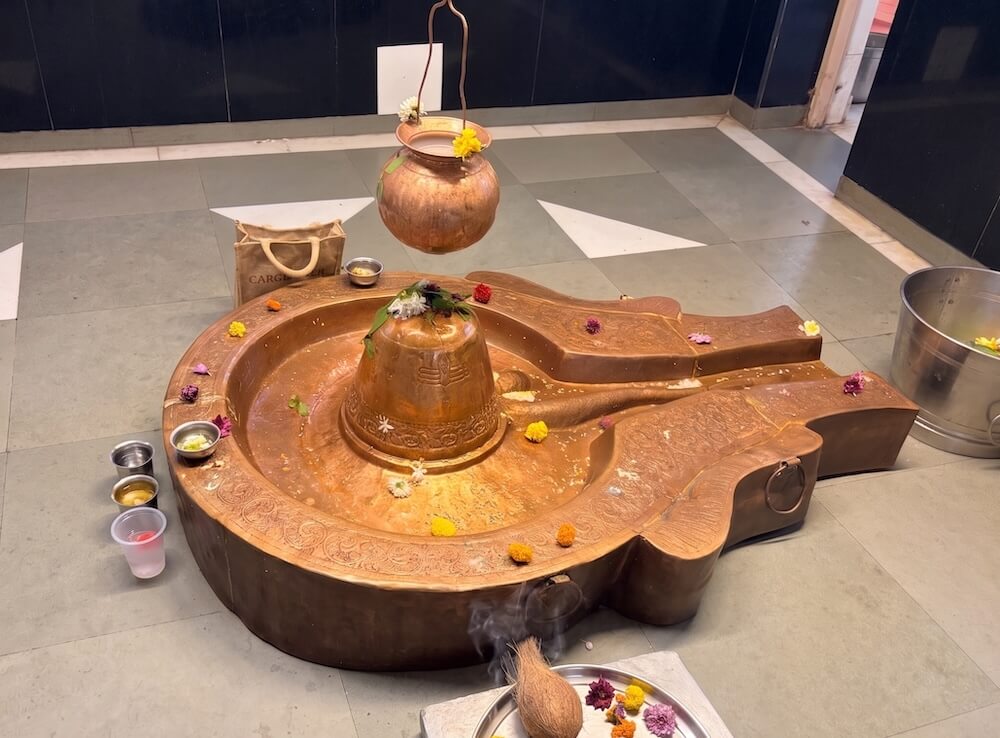
Shop Photo FramesThe area known today as Matunga was once the site of the royal elephant stables of Raja Bimbadev Yadav, the King of Mumbai, and was referred to as ‘Matangalaya’. It is one of the first planned suburbs developed by the British government. In this very Matunga, the temple of Kashi Vishweshwar Mahadev has stood for about two and a half centuries. Known as the ‘Kashi of Mumbai’, this temple was established by the Somvanshi Panchkalshi community. The temple’s architecture, reminiscent of an old Peshwa-era mansion (wada), and the large brass Shiva Linga are considered its main attractions. This temple has been granted the status of a ‘State Protected Monument’.
Until the latter half of the nineteenth century, the Matunga area was a desolate wilderness. Raja Bimbadev, also known as Bhimdev Yadav, the fourth son of Ramdevrao Yadav of Devgiri, ruled here in the thirteenth century. In 1295 AD, he established his capital at Mahim (Bimbasthan). It is said that the king had a large elephant stable in the Matunga area. In Sanskrit, an elephant is also called ‘Matanga’. From this, the area came to be known as Matangalaya. It is believed that the name Matunga evolved from the corruption of the words Matanga or Matunga. According to some, the name Matunga originated because a community of Matangs lived here during the reign of King Bimbadev to look after the elephants. Another etymological theory suggests that according to mythological legends, Sage Matanga resided in this area, from which the name Matunga is derived.
Between 1720 and 1728, the British built the Worli Causeway (Hornby Vellard). This causeway gave Mumbai its current geographical shape. Following the construction of this causeway and the reclamation of the Mahim creek, grain cultivation began in Matunga, along with places like Mahalaxmi, Parel, Worli, and Mahim. There were also salt pans in this area. Around 1720–39, when Mumbai was divided into eight districts (including Mazgaon, Worli, Parel, Wadala, Naigaon, Dharavi, and Colaba), Matunga was also included. Later, around 1771, the then Governor of Mumbai, William Hornby, began major repairs on the Worli Causeway. This work continued until 1785. During this same period, in the year 1783, Narayan Daji Mantri built this grand temple of Kashi Vishweshwar in what was then the small village of Matunga. According to the inscription in the temple, the consecration ceremony (Pranapratishtha) took place on Monday, 17 February 1783 (Shalivahan Shaka 1704, Magh Shukla Purnima). The temple is owned by the Somvanshi Kshatriya (Panchkalshi) community and is managed by the ‘Dadoba Jagannath Religious Trust’. The trust renovated the temple in 2013.
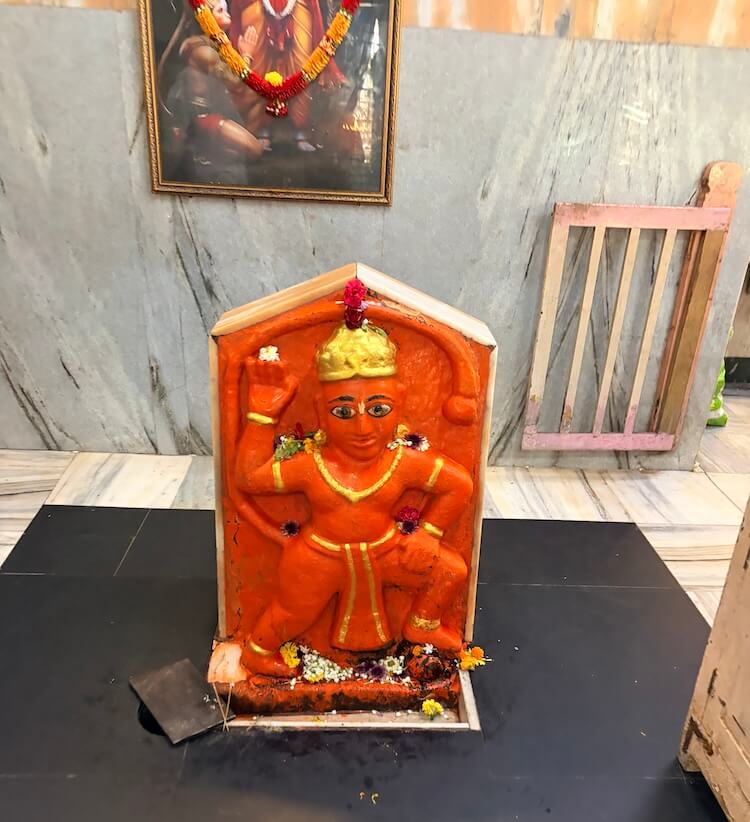
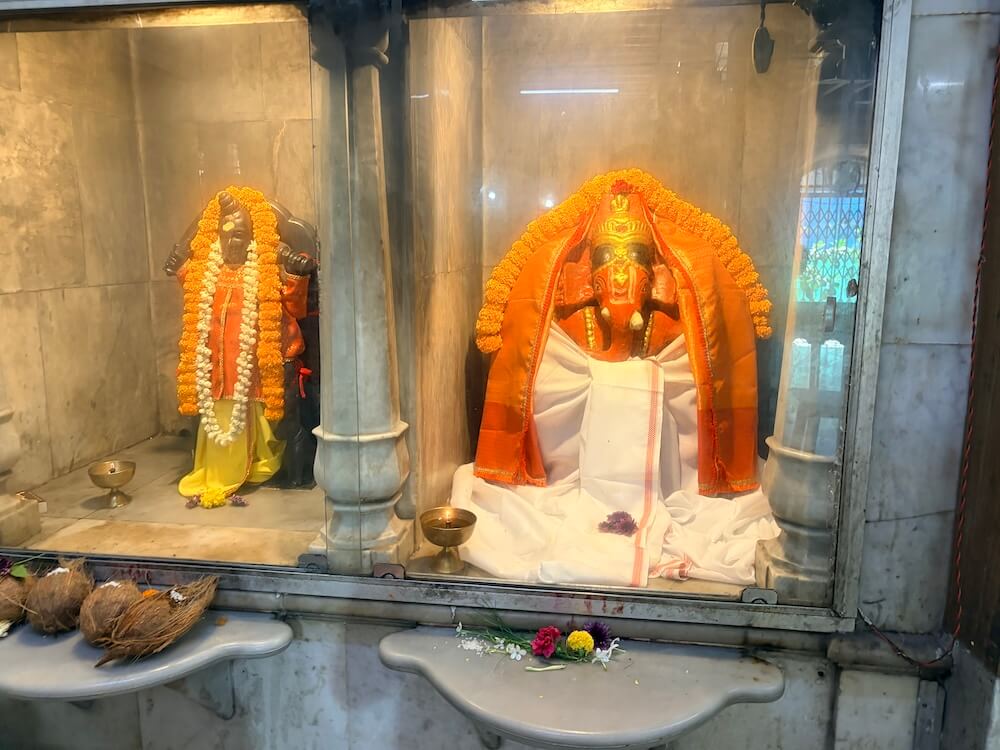
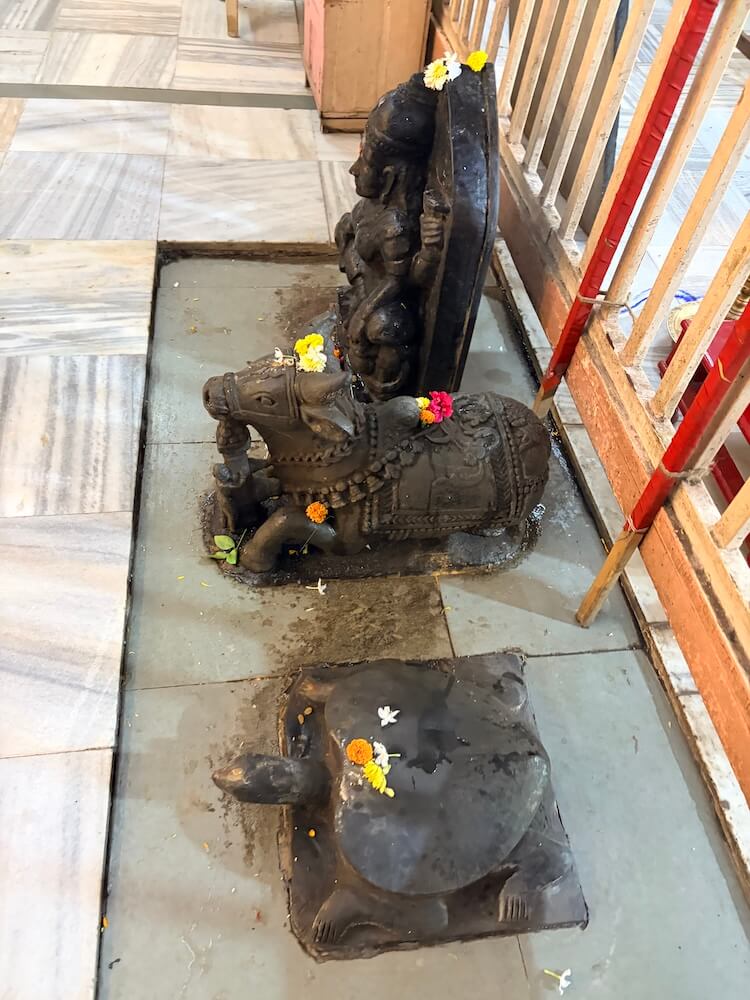
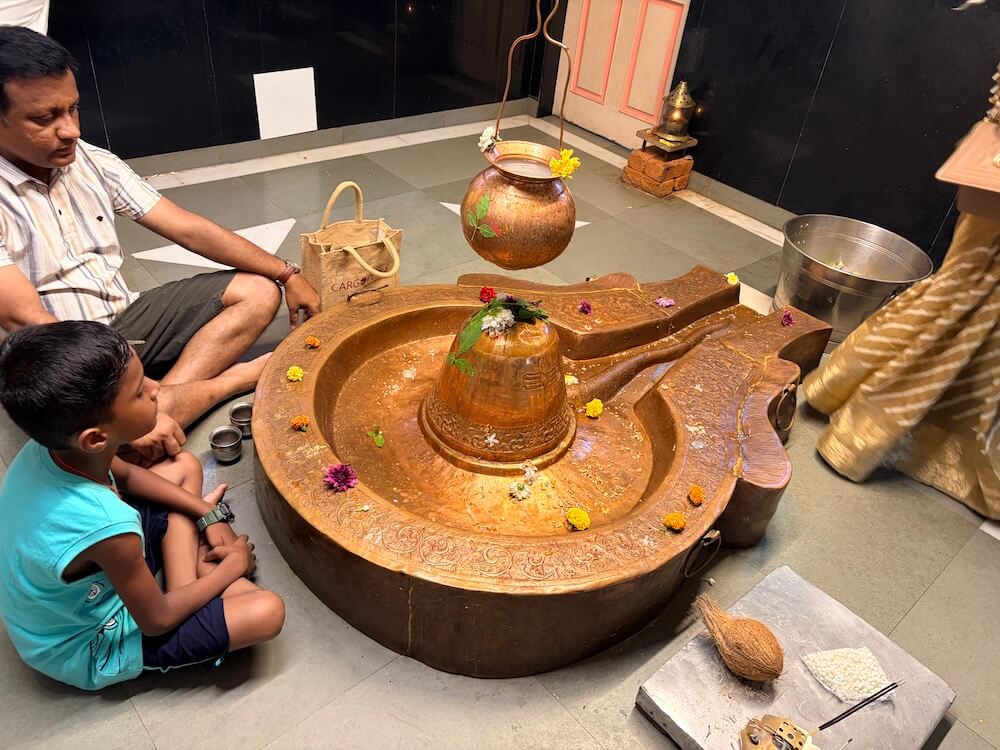
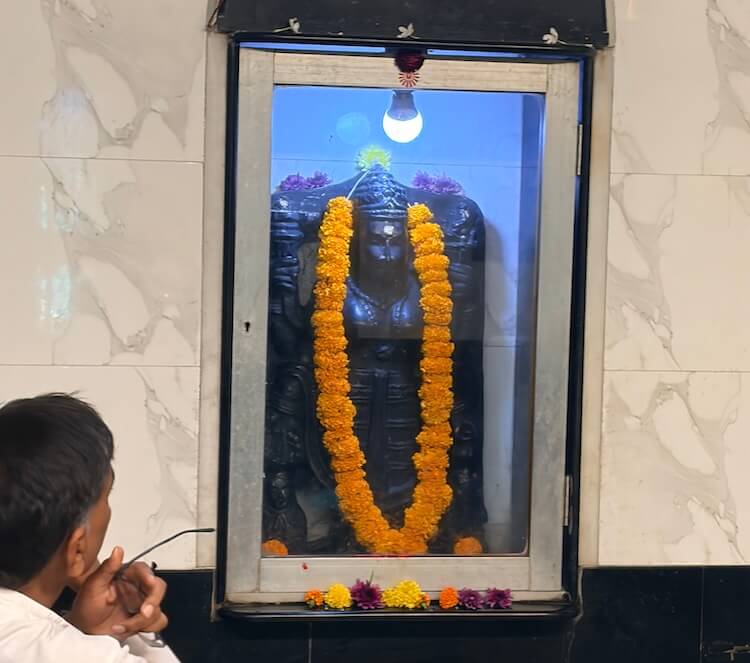
Situated in the bustling area of City Light Market in Matunga, this temple has a small courtyard in front. The temple structure is a tall, two-story building. Its architectural design resembles that of a contemporary Maratha-Peshwa style mansion. One enters the assembly hall (sabhamandap) through a small entrance. The assembly hall is spacious with marble flooring and square pillars. A square-like space has been created in the center, with a wooden balcony (sajja) built on three sides above. In older temples, such balconies were provided so that women from respectable families could listen to kirtans and religious discourses. Upon entering the assembly hall, devotees are captivated by the grand relief sculpture of the Shiva family. This magnificent sculpture is located on the upper part of the front wall of the sanctum sanctorum (garbhagriha). A unique feature of this sculpture, which depicts images of Shankar, Parvati, Ganesha, Nandi, and the mouse, is that Lord Shankar is shown with a beard and mustache. In front of the entrance to the sanctum, there are idols of Nandi and a tortoise. Beside the Nandi idol, an idol of the four-armed Goddess Khadgadharini is enshrined. In the sanctum, decorated with marble tiles, a large Shiva Linga is installed on the floor. The Shalunka (base) of the Linga, as well as the Shiva Linga itself, is covered with an intricately carved brass casing. There is an abhishek vessel above the Linga. The temple niches also house idols of deities such as Dattatreya, Lakshmi-Narayan, Ganesha, Shitala Devi, and Hanuman.
Devotees can visit the Kashi Vishweshwar temple for darshan daily from 6:00 AM to 9:00 PM. The temple sees a large influx of devotees every morning and evening. Since Monday is Lord Shiva’s favorite day, a large number of devotees come for darshan from early morning. There is a huge crowd at the temple on Mondays during the holy month of Shravan, as well as on Mahashivratri. Mahashivratri is celebrated here with great enthusiasm and in full accordance with religious traditions. The temple is illuminated on that day, and many devotees stand in long queues to have darshan of Lord Shankar.
This sacred temple stands as a testament to deep spiritual devotion, ancient architectural grandeur, and rich local cultural traditions.
The sanctum sanctorum houses the divine idol consecrated according to ancient Vedic traditions, surrounded by serene courtyards and traditional temple architecture.
Navratri, Maha Shivratri, Annual Temple Jatra & Deepotsav
Compare and book flights, secure top-rated local hotels near the temple, hire reliable guides, and rent cars instantly.
Extend your pilgrimage by visiting other highly sacred temples located nearby.


Add ₹999 more to unlock FREE SHIPPING!
Your sacred cart is currently empty.
Shop Photo FramesFill in your delivery details below to place your order.
Add comment