
Add ₹999 more to unlock FREE SHIPPING!
Your sacred cart is currently empty.
Shop Photo FramesIt is believed that by bathing in the Kapildhara Tirtha, located in the Igatpuri taluka and known as ‘Matrugaya Tirtha’, one is liberated from the debt to their mother. Because of this, hundreds of devotees visit this place of historical and spiritual significance every day. There is a route to Kavanai from near Ghoti on the Nashik-Mumbai highway. Until the Peshwa era, this was the original site of Nashik’s Sinhastha Kumbh Mela.
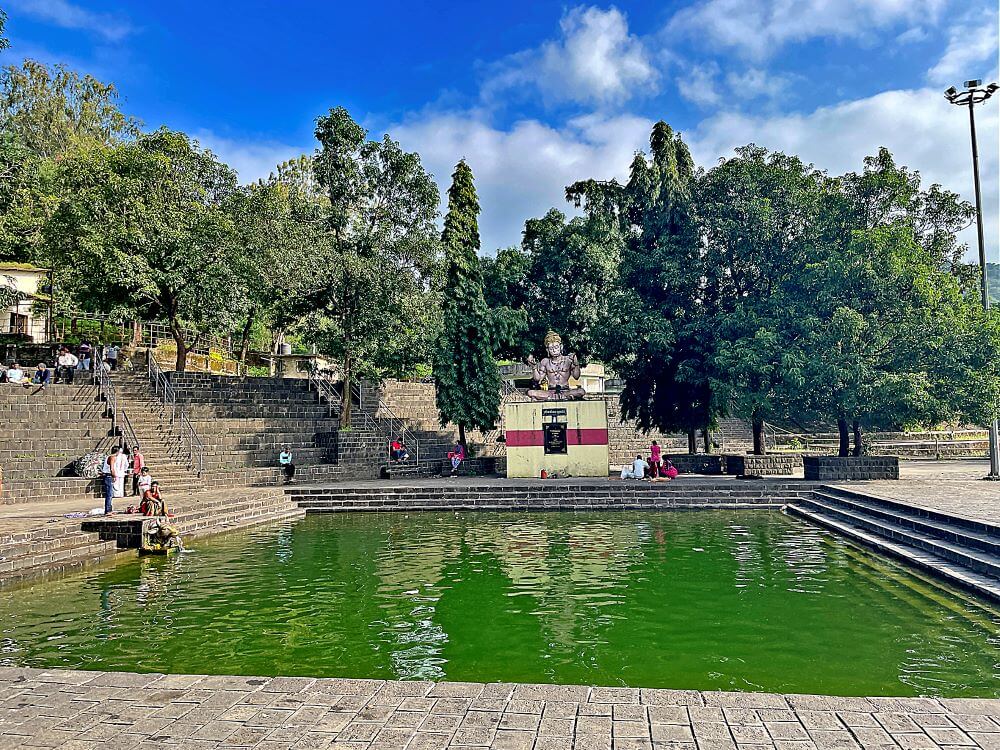
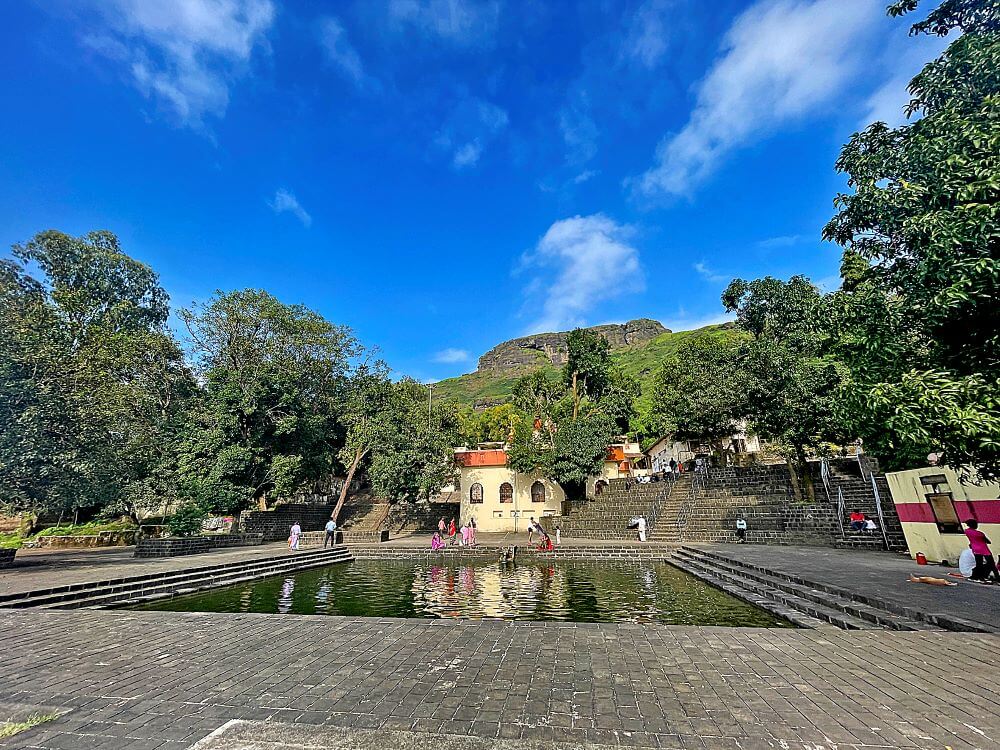
Upon entering the nature-rich Kavanai, one comes across a spiritual center that served as the penance ground for Gajanan Maharaj. It is said that, following the instructions of Samarth Ramdas Swami, Gajanan Maharaj performed penance for 12 years in the nearby Pampa Sarovar area before moving to Shegaon. Close to this is the Kapildhara Tirtha. At Kapildhara Tirtha, there is an eternal spring of pure water. The ‘Kapilopanishad’ mentions that the water from this spring flows through a Gomukh (cow-mouth spout) into a tank, which is why it is named ‘Kapildhara’. There are two water tanks at Kapildhara, with water flowing from the main tank into the second. Both tanks are constructed of stone. Water flows continuously from the Gomukh into these tanks 365 days a year. It is said that there is a hidden spring in the main tank. Historians state that before the British rule, Kavanai was a taluka headquarters. However, the British made Igatpuri the taluka headquarters, and in 1885, all government documents were moved from Kavanai to Igatpuri.
It is said that ‘Kapildhara’ is a very ancient pilgrimage site. This was the original location of the Nashik Sinhastha Kumbh Mela, and a copper plate (Tamrapat) issued by the Peshwas is available here. The Kumbh Mela had been held here since the Satya Yuga. In 1755, a dispute arose between the Shaiva and Vaishnava sects over the first bath, which escalated significantly. Consequently, during the time of Madhavrao Peshwa, the Kumbh Mela was divided into two parts. The Shaivites, who were devotees of Lord Shiva, were sent to Trimbakeshwar, while the devotees of Lord Rama were sent to Ramkund. Even today, here…
In the Satya Yuga, Kapilmuni, one of the 24 incarnations of Lord Shiva, preached the Sankhya Shastra to his mother at the age of five at ‘Kapildhara Tirtha’ and granted her salvation. For this reason, it is also known as ‘Matrugaya Tirtha’. To the south of the ‘Kapildhara’ Tirtha was the ashram of Shukracharya, the guru of the demons. Because he cursed the Dandakaranya forest, it turned into a desert. When Lord Rama arrived here during his exile, the region became lush and green again due to the touch of his feet.
There is a legend that at this very place, Saint Dnyaneshwar and his siblings brought a Brahmin’s deceased son back to life by sprinkling water on him. It is also said that Lord Rama and Lord Shiva met at this location. Furthermore, Samarth Ramdas also gave sermons to Chhatrapati Shivaji Maharaj here.
Regarding Hanuman, there is a legend that during the Ram-Ravana war, when Ravana’s son Meghanada struck Lakshmana with a Shakti weapon, he fell unconscious. Hanuman set out to bring the Sanjeevani herb to revive him. While passing through this pilgrimage site, he was obstructed by the demon Kalanemi, whom Hanuman then killed. This is how the village got the name Kavanai.
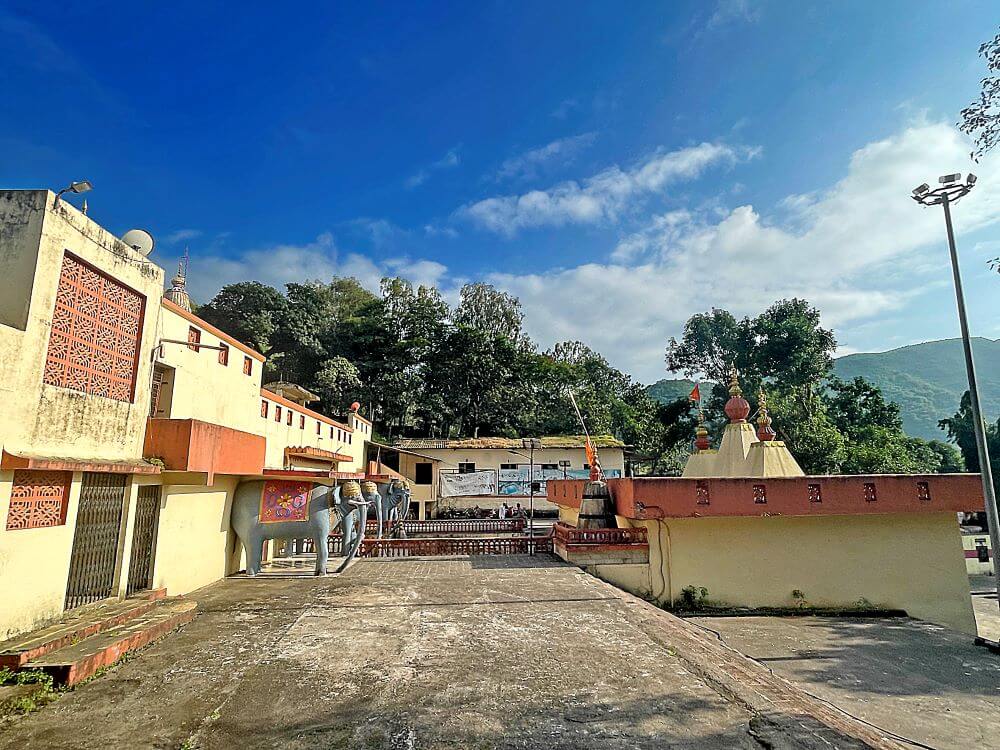
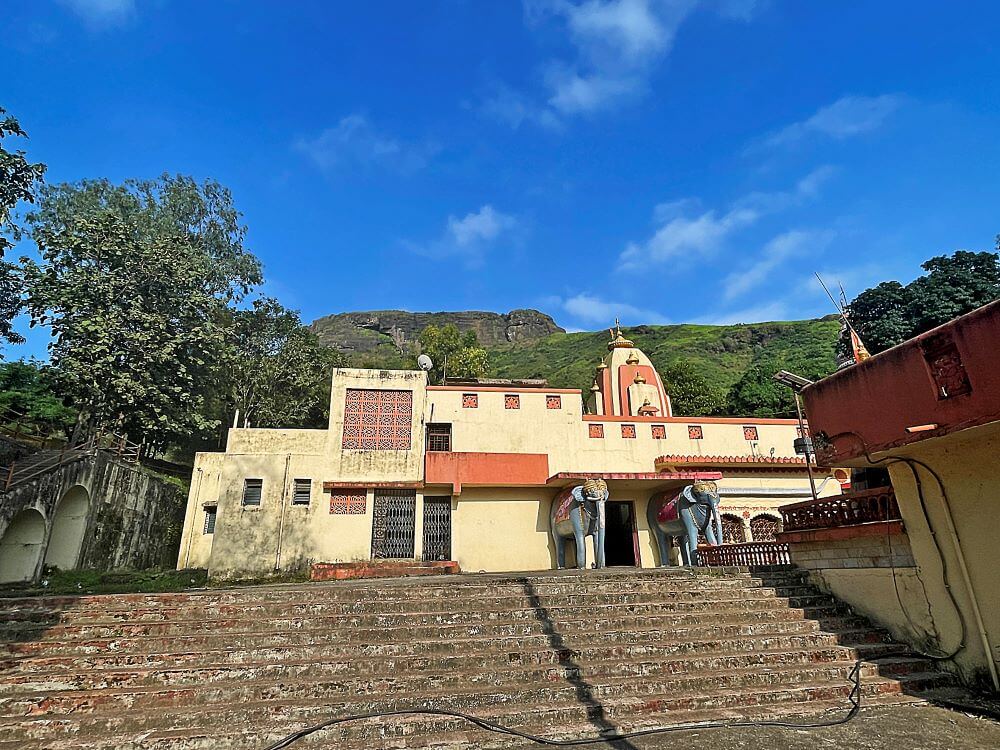
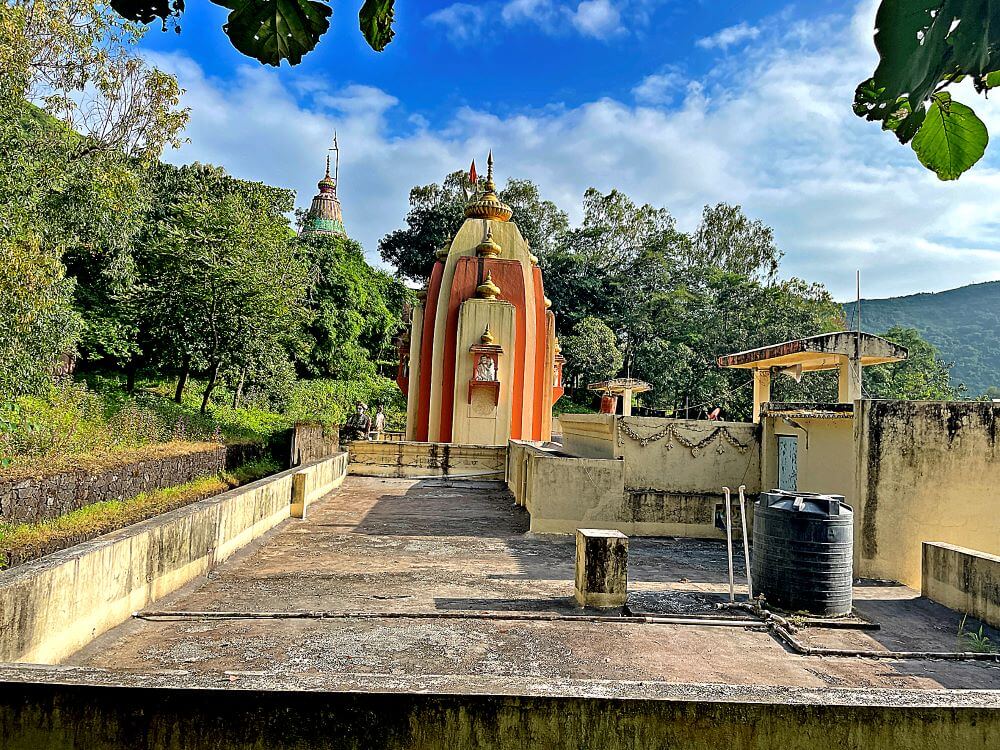
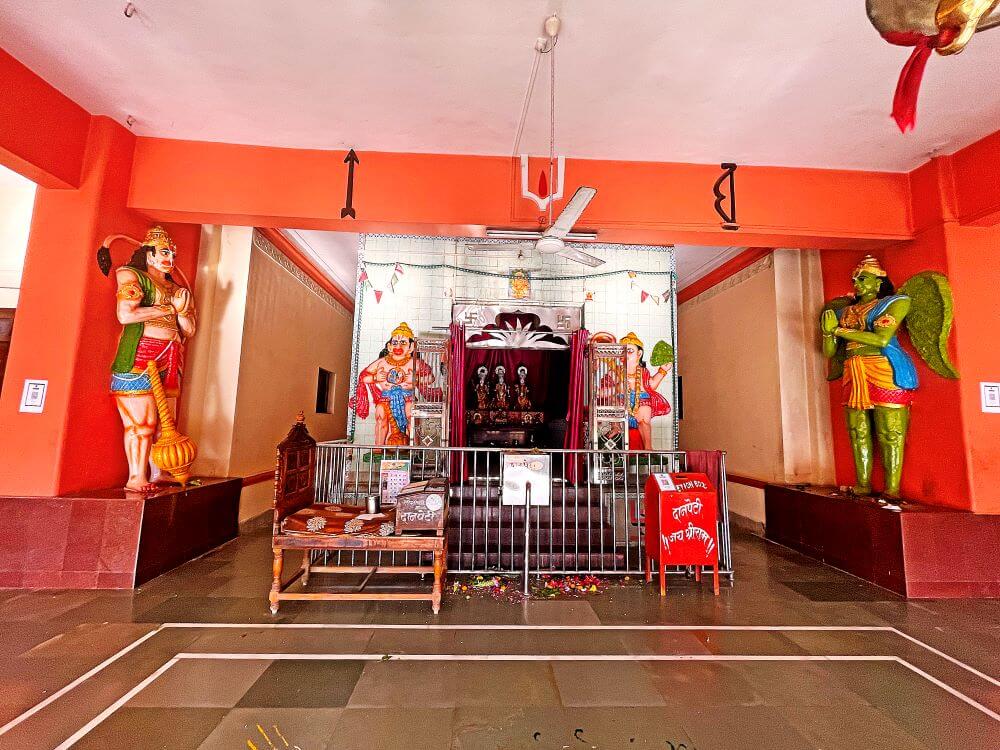
Upon entering through the main gate, one first sees the Kapildhara Tirtha tank. Beside this tank is an idol of Hanuman, who is immersed in devotion to Rama. Climbing the stairs, one sees the main temple of Rama. On the way to this temple, one passes the main tank. To the right of this tank is the temple of Mahadeva, and to the left is the temple of Rama. In front of the Mahadeva temple is a Nandi Mandap, and in the sanctum sanctorum, there is a Swayambhu (self-manifested) Shiva Linga. When entering the Rama temple, there are large elephant sculptures on both sides of the entrance. The temple is structured with a Sabha Mandap (assembly hall) and a Garbhagriha (sanctum). The Garbhagriha houses the idols of Rama, Sita, and Lakshmana. The carvings on the temple spire are unique, featuring sculptures of Hanuman and Mahadeva.
When the world-famous Chinese traveler Hiuen Tsang visited the University of Sankhya Shastra at Kavanai 1,500 years ago, he gifted a plate-like bell, which is kept in the Rama temple here.
This sacred temple stands as a testament to deep spiritual devotion, ancient architectural grandeur, and rich local cultural traditions.
The sanctum sanctorum houses the divine idol consecrated according to ancient Vedic traditions, surrounded by serene courtyards and traditional temple architecture.
Navratri, Maha Shivratri, Annual Temple Jatra & Deepotsav
Compare and book flights, secure top-rated local hotels near the temple, hire reliable guides, and rent cars instantly.
Extend your pilgrimage by visiting other highly sacred temples located nearby.


Add ₹999 more to unlock FREE SHIPPING!
Your sacred cart is currently empty.
Shop Photo FramesFill in your delivery details below to place your order.
Add comment