
Add ₹999 more to unlock FREE SHIPPING!
Your sacred cart is currently empty.
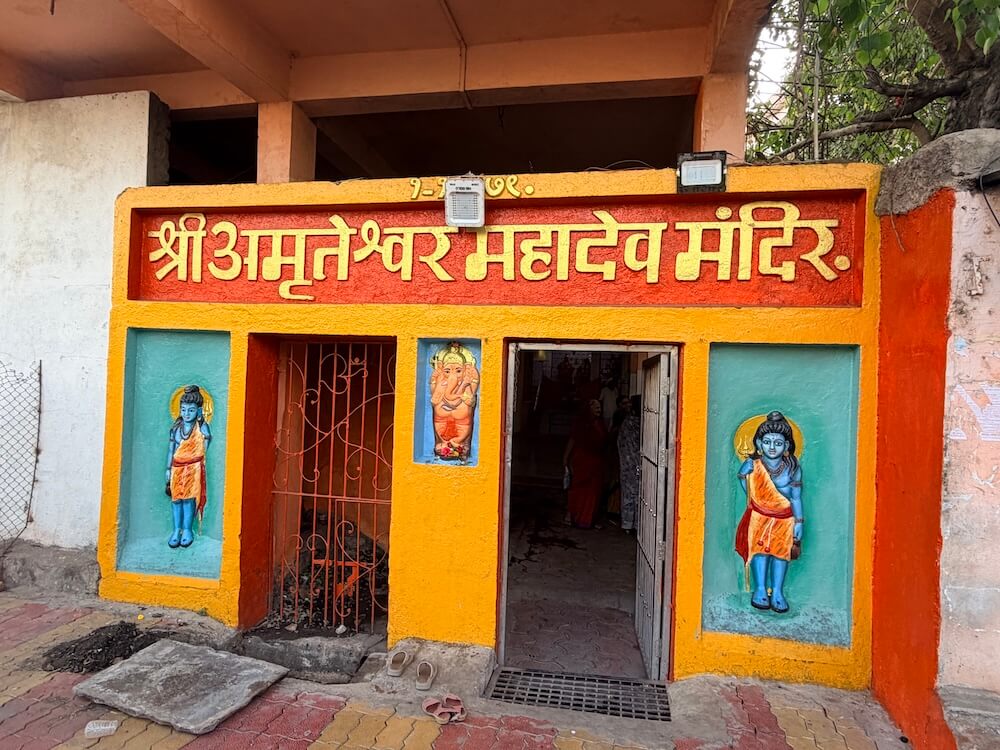
Shop Photo FramesThe Amruteshwar Mahadev Mandir, located in the Juna Jalna area of Jalna city, is revered as a sacred abode by thousands of devotees of Lord Shiva. Situated in the central part of the city, right by the road, this ancient temple is blessed with a unique historical and religious heritage. This temple of Amruteshwar Mahadev, considered a symbol of the water element, is primarily renowned for its ancient and sacred stepwell, known as Amrutteerth. Built approximately two hundred and fifty years ago, this temple has become an integral part of the social and cultural life of the people of old Jalna. Hundreds of devotees visit this temple daily for the darshan of Lord Mahadev. It is the firm belief of the devotees in this region that beholding the awakened Shivlinga here wards off the possibility of an untimely demise.
The history of this temple and the historical stepwell located in its courtyard dates back approximately two hundred and fifty years. According to historians, Yashwantrao Holkar was instrumental in the construction of this temple and the stepwell in front of it. The Holkar dynasty had established numerous water sources by building many temples, ghats, and stepwells across Maharashtra and various other parts of the country. The Juna Jalna area was situated on an ancient trade route. In earlier times, this region experienced severe water scarcity. When Yashwantrao Holkar constructed a stepwell here, it brought a new lease of life to this entire area, which had been suffering from a lack of water. As the water from this stepwell was exceptionally sweet, it was named ‘Amrutteerth’ (Nectarine Holy Water), and the temple of Mahadev situated on its banks came to be known as Amruteshwar Mahadev. Over time, the temple had fallen into disrepair. After its renovation on January 1, 1979, the temple acquired its present form.
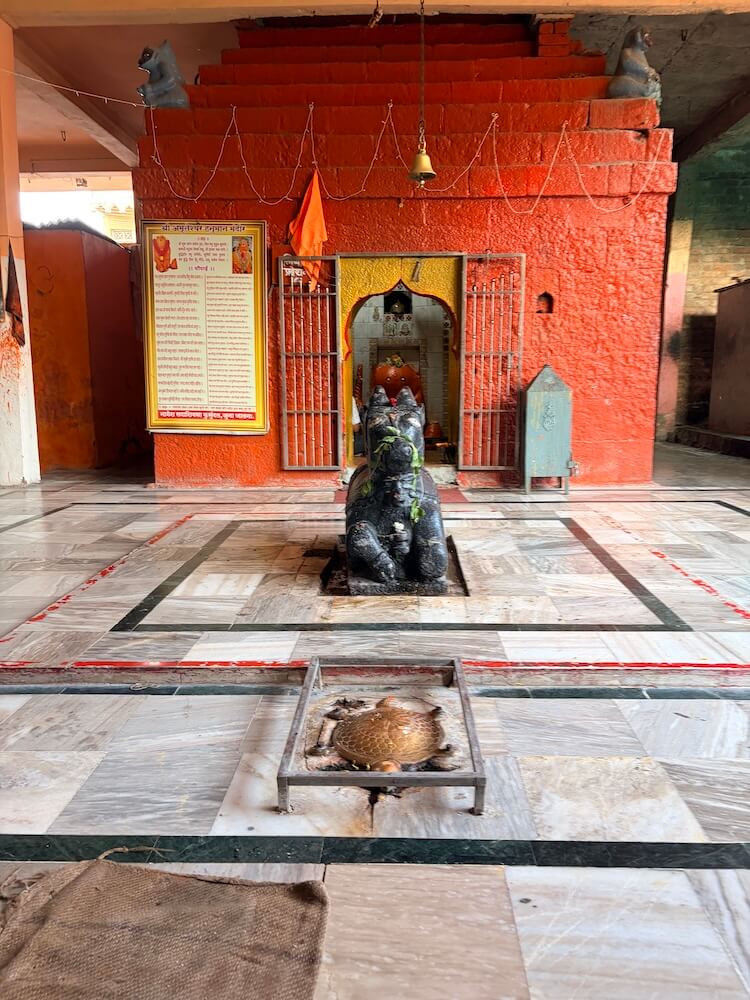
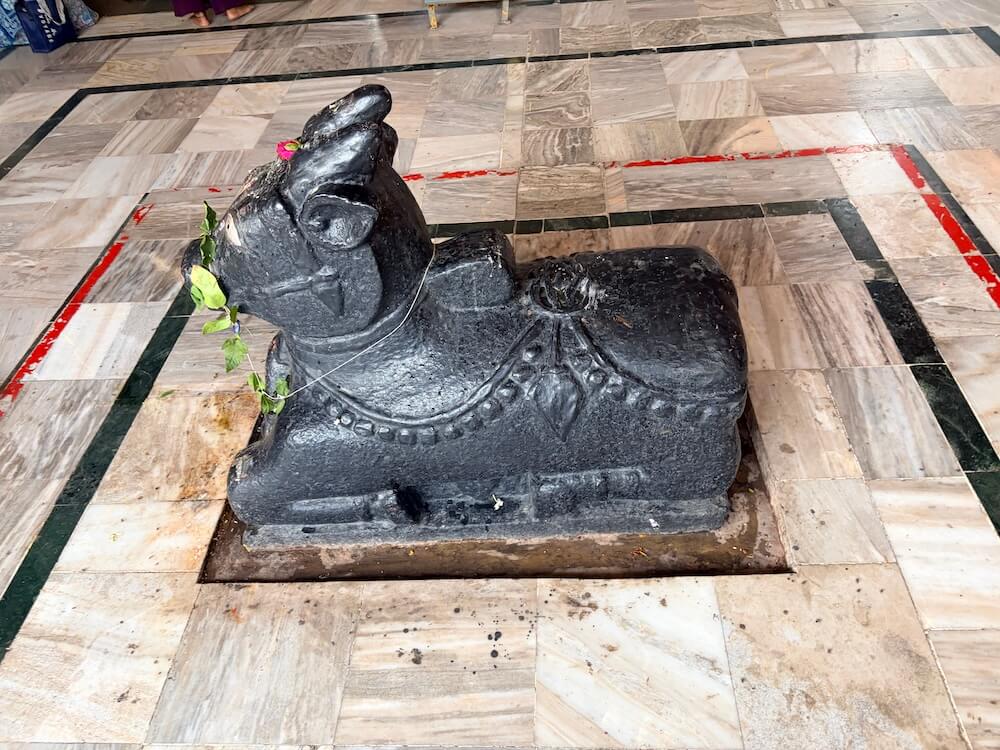
The main structure of the Amruteshwar Mahadev Mandir is encircled by an outer stone fortification. Within this fortification, there are two adjacent entrances for devotees to enter. Carved on a stone pillar situated between these two entrances is a sculpture of Lord Ganpati. To the right and left of this pillar, sculptures of Lord Mahadev are intricately carved. Through these entrances, one steps into the temple courtyard. In front of the main temple, there is a newly constructed open-air mandap (hall). To the right and left of this mandap are two separate garbhagrihas (sanctum sanctorums). The original construction of both garbhagrihas is in the Hemadpanti architectural style. In front of the garbhagriha on the right side of the mandap, an idol of Nandi, carved from black stone, is enshrined upon a high Vajrapeeth (pedestal). Directly in front of the Nandi idol, a beautiful tortoise sculpture is carved into the ground.
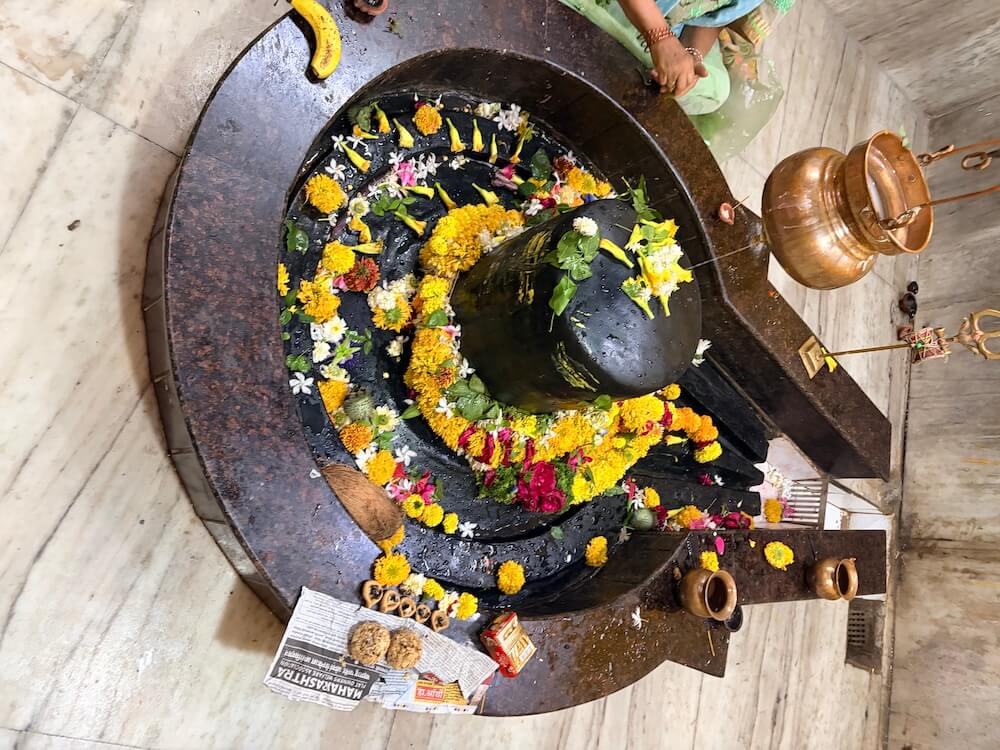
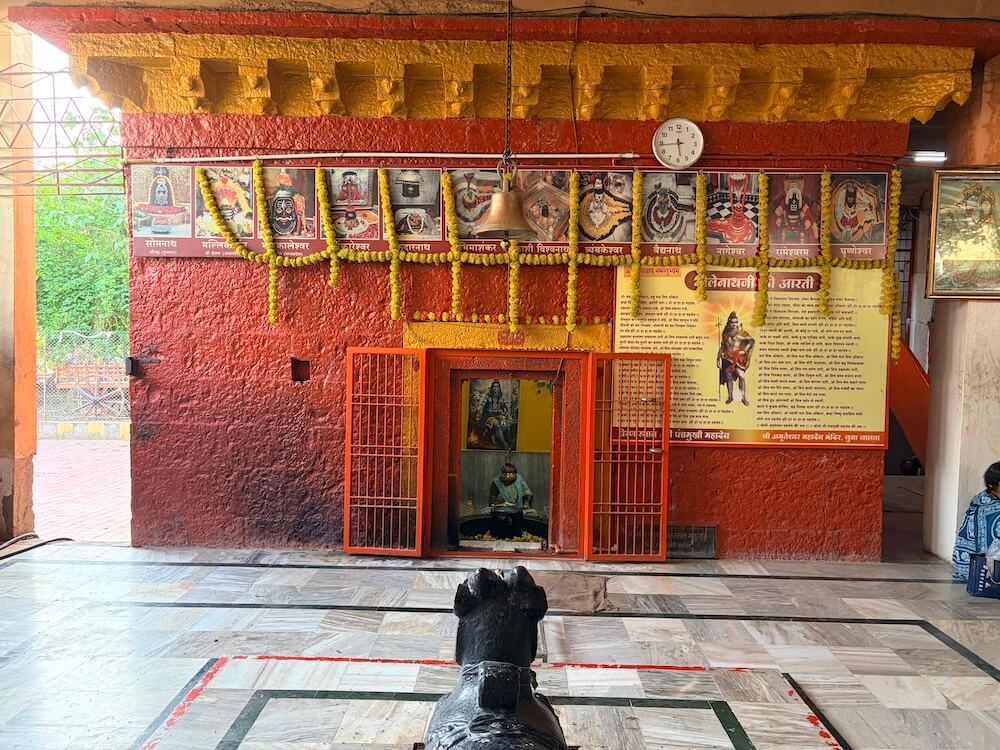
In front of the Nandi idol is the main entrance to Lord Mahadev’s garbhagriha. On the facade walls on both sides of the entrance, deepkoshtake (niches for lamps) have been created. At the center of the garbhagriha is the Shivlinga of Amruteshwar Mahadev. To ensure a continuous water abhishek (ritualistic pouring of water) over the Shivlinga, an abhishek patra (vessel for libation) is suspended from the ceiling, holding a stream of water. Beside the Shivlinga, a large brass Trishul (trident) stands upright. Within the stone walls of the garbhagriha, there are two devkoshtake (deity niches). In one, an idol of Mata Parvati is enshrined, and in the other, an idol of Maruti is seated. Above the garbhagriha is a square shikhara (temple spire) with a pyramid shape and receding steps. At the very top of the shikhara are two amalaks (ribbed stone discs) stacked one upon another, surmounted by a golden kalash (finial).
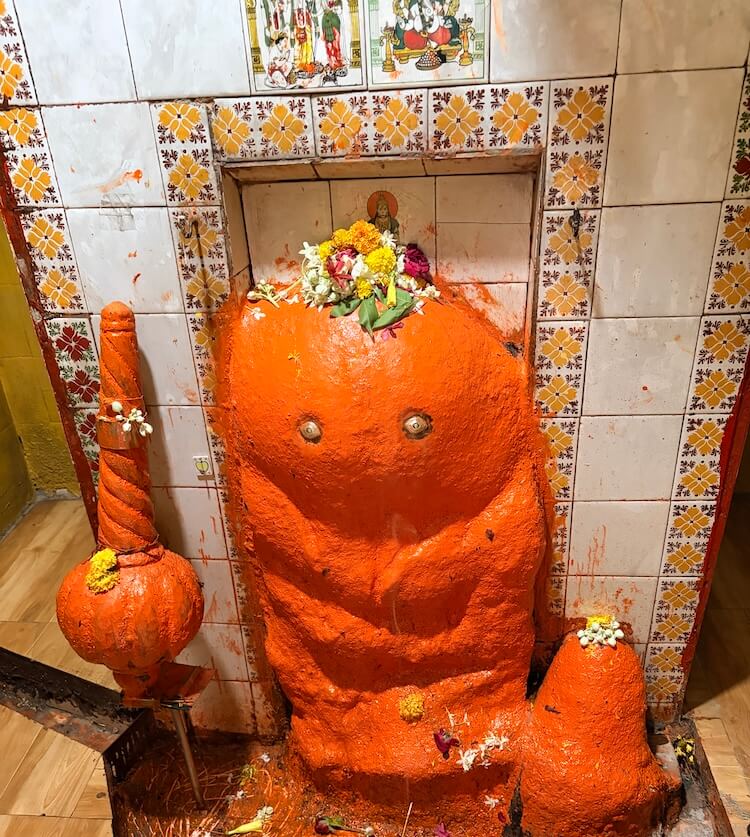
Directly opposite the main garbhagriha, on the other side of the mandap, is the temple’s second garbhagriha. This sanctum is dedicated to Maruti Raya. The entrance to this garbhagriha is somewhat narrow. Inside, an idol of Maruti, adorned with sindoor (vermilion), is enshrined on a Vajrapeeth. A beautiful square shikhara is also built on the roof of this garbhagriha. At the apex of the shikhara, there is a small stupika and a kalash.
Adjacent to the sabhamandap (assembly hall) of the main temple is a two-storied devkaksha (deity chamber). In the ground-floor room, an idol of Rangnath Swami is enshrined on a Vajrapeeth. On the first floor of the devkaksha, idols of Vitthal-Rakhumai are placed on a large Vajrapeeth. Adjoining this, a long row of many small devkakshas has been constructed. These house idols of Santoshi Mata, Durgadevi, Radha-Krishna, Sheetala Devi, Mata Lakshmi, Bhagwan Ganesh, Mata Saraswati, Prabhu Shri Ram, Lakshman, Mata Janaki, Hanuman, Rani Sati Dadiji, Mata Mahakali, and Renuka Devi. Additionally, sacred platforms (chauthare) marking the samadhis (final resting places) of the temple’s departed priests have been built here, along with ancient stones representing some local deities, also kept for worship. Beneath an Audumbar tree in the temple courtyard, a small devli (miniature shrine) or small temple has been constructed, and within this shrine, an idol of Dattatreya is enshrined.
Throughout the year, numerous grand religious festivals are celebrated with immense enthusiasm and tradition at the Amruteshwar Mahadev Mandir. Among the prominent festivals are Mahashivratri, Hanuman Jayanti, and Sharadiya Navratrotsav. Besides these main festivals, during Ashadhi Ekadashi, Kartiki Ekadashi, the entire Shravan month, Nagpanchami, and Makar Sankrant, devotees from Jalna and the surrounding areas visit the temple in large numbers for darshan. During all these festive days, continuous bhajans (devotional songs), kirtans (chanting), and religious discourses are organized in the temple, and Mahaprasad (sacred food offering) is distributed on a large scale to the devotees. During Sharadiya Navratrotsav, special programs of Jagran (all-night vigil) and Gondhal (folk ritual) are organized at night in front of all the deity chambers of the Goddess.
Mahashivratri is considered the largest and most significant religious festival at this temple. This festival is celebrated with great fervor on Vadya Chaturdashi (the fourteenth day of the dark fortnight) of the Krishna Paksha in the month of Magh.
For this auspicious occasion, the entire temple premises are beautifully adorned with various fragrant flowers and attractive electric lights. On the day of Mahashivratri, devotees form long queues outside the temple from as early as four o’clock in the morning to seek the darshan of Lord Amruteshwar.
On this day, the main Shivlinga in the temple is offered Mahapuja (grand worship), special Rudrabhishek (ritualistic bathing with sacred hymns), and Jalabhishek (water libation) accompanied by chanting of mantras. Throughout the night of Mahashivratri, devotees observe Jagran (all-night vigil) in the temple, and bhajan programs by various bhajan mandals (devotional singing groups) are organized. Similar to Mahashivratri, there is a huge gathering for the darshan of Lord Mahadev every Monday during the month of Shravan. Devotees can have darshan at this temple daily from 6 AM to 8 PM.
This sacred temple stands as a testament to deep spiritual devotion, ancient architectural grandeur, and rich local cultural traditions.
The sanctum sanctorum houses the divine idol consecrated according to ancient Vedic traditions, surrounded by serene courtyards and traditional temple architecture.
Navratri, Maha Shivratri, Annual Temple Jatra & Deepotsav
Compare and book flights, secure top-rated local hotels near the temple, hire reliable guides, and rent cars instantly.
Extend your pilgrimage by visiting other highly sacred temples located nearby.


Add ₹999 more to unlock FREE SHIPPING!
Your sacred cart is currently empty.
Shop Photo FramesFill in your delivery details below to place your order.
Add comment