
Add ₹999 more to unlock FREE SHIPPING!
Your sacred cart is currently empty.
Shop Photo FramesSankatmochan Maruti is one of the most popular deities in Indian culture and mythological literature. As the son of Anjani and Vayu, Maruti is considered the bestower of the eight siddhis (spiritual powers) and nine nidhis (treasures). A devoted follower of Shri Rama, Maruti always used his incomparable strength and wisdom for the protection of Dharma. There is a firm belief among the people that this Chiranjeevi (immortal) Pawanputra still rushes to the aid of his devotees in times of distress. In the cultural fabric of Maharashtra, Samarth Ramdas Swami especially instilled the importance of Hanuman in the hearts of the people. To build a strong society and nation, he established Hanuman temples in villages far and wide. One of them, the temple at Waghali, is a place of faith for thousands of devotees.
Samarth Ramdas Swami performed the great task of creating an unprecedented confluence of devotion and strength in Maharashtra. According to Samarth, society would not become strong merely through the chanting of names; for that, both the mind and the body needed to be powerful. That is why he considered Maruti, the symbol of strength and wisdom, as his presiding deity and established temples dedicated to him in every village. During the time of Samarth, society was disheartened due to foreign invasions. To instill vitality in this society, he gave the mantra of ‘Balopasana’ (worship of strength). While presenting the thought that “Power brings the kingdom, and effort through wisdom achieves the goal,” he placed an ideal before society in the form of Maruti—one who, despite being incomparably powerful, was extremely restrained and devoted to his Lord. The ‘Eleven Marutis’ he established in the Satara, Sangli, and Kolhapur regions are a living example of his organizational skills and foresight.
The ‘Bhimrupi Maharudra’ stotra composed by Samarth is still recited in every household across every corner of Maharashtra today. The description of Hanuman’s colossal form and his power in this stotra continues to provide inner strength to the youth even today. Samarth’s vision that the worship of Hanuman should not be merely for personal salvation but for nation-building has become an inseparable part of Marathi culture. It is said that while traveling on foot through Vidarbha, Samarth came to Waghali. He consecrated the idol of Maruti here in the year 1645. Previously, this area was part of a dense forest. Even today, there is no other settlement in Waghali besides this temple. Located in a low-lying area, the temple surroundings were once home to tigers that lived in the dense thickets at night, which is how this place got the name Waghali. Previously, this temple was small. The antiquity of the temple is mentioned in the ‘Central Provinces and Berar District Gazetteers – Akola District, Volume A’ (1910). However, the temple received its current grand form after the renovation carried out in 1987.
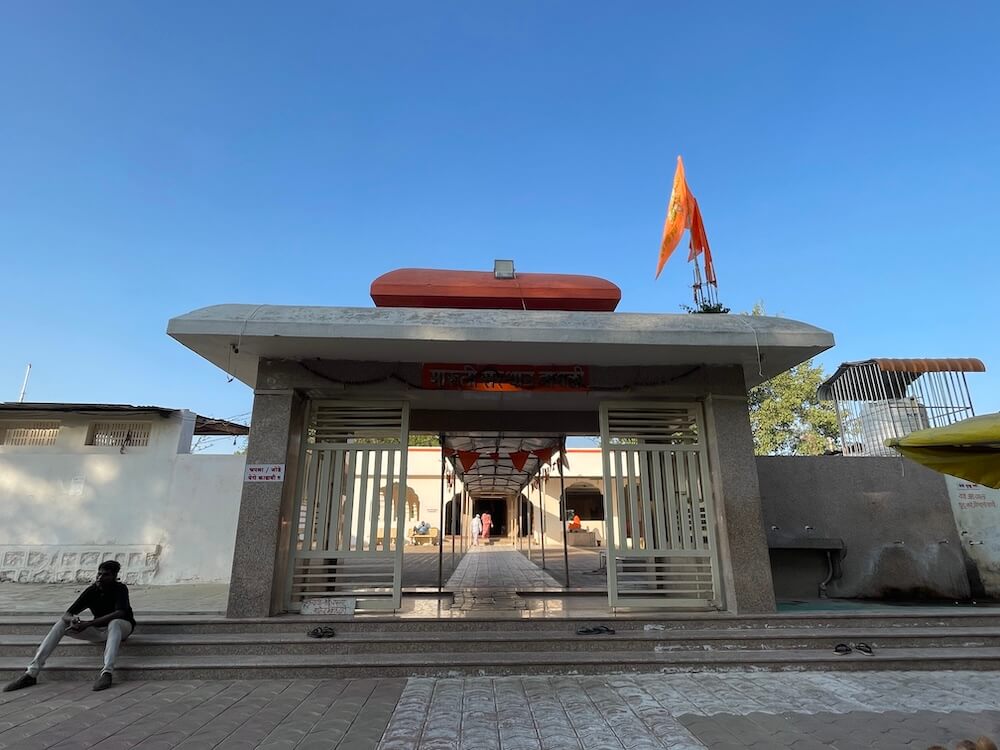
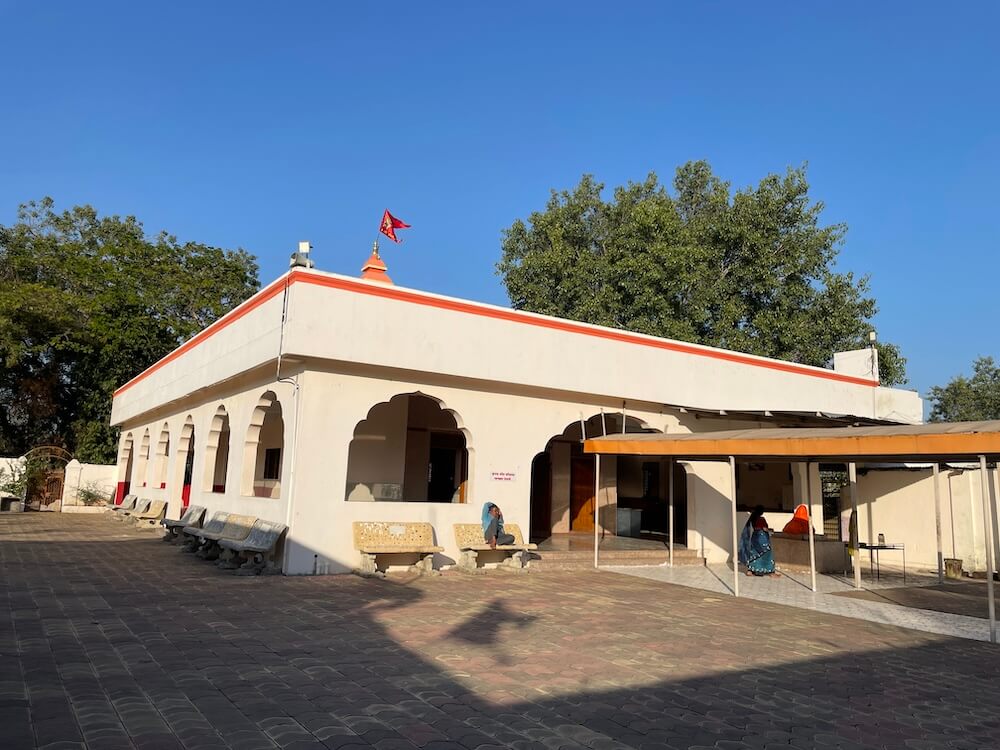
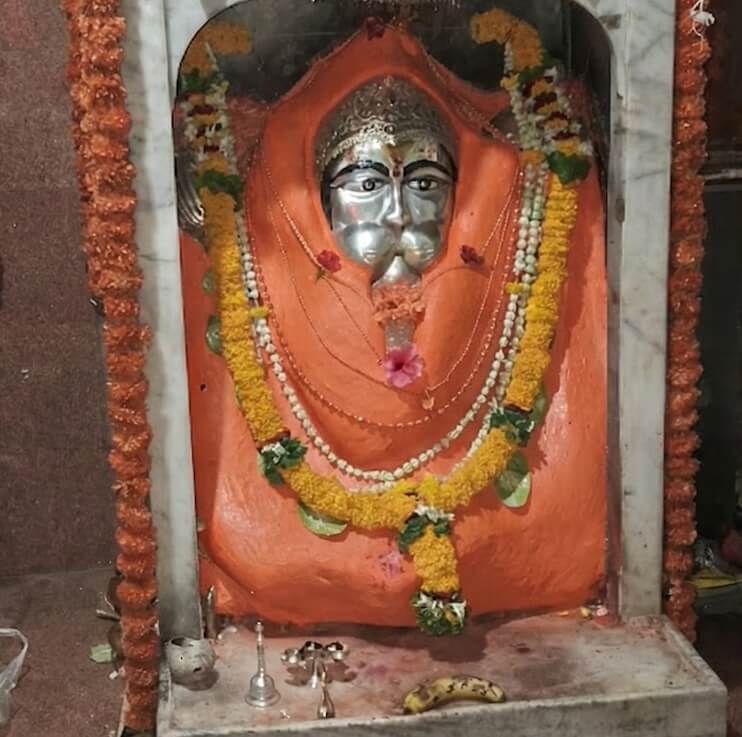
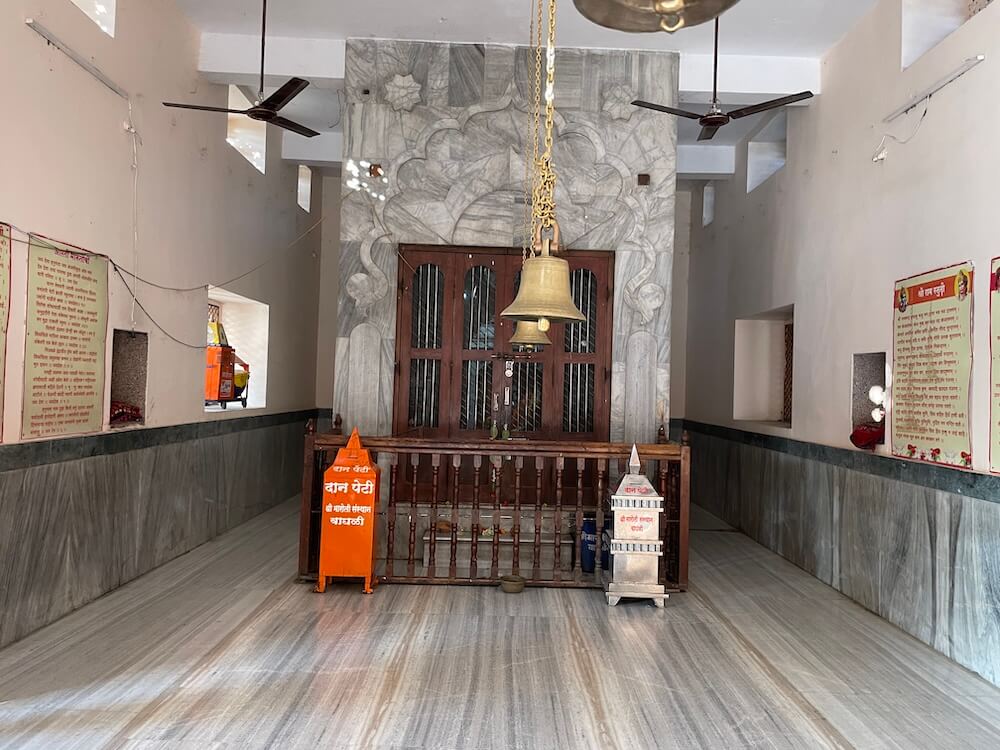
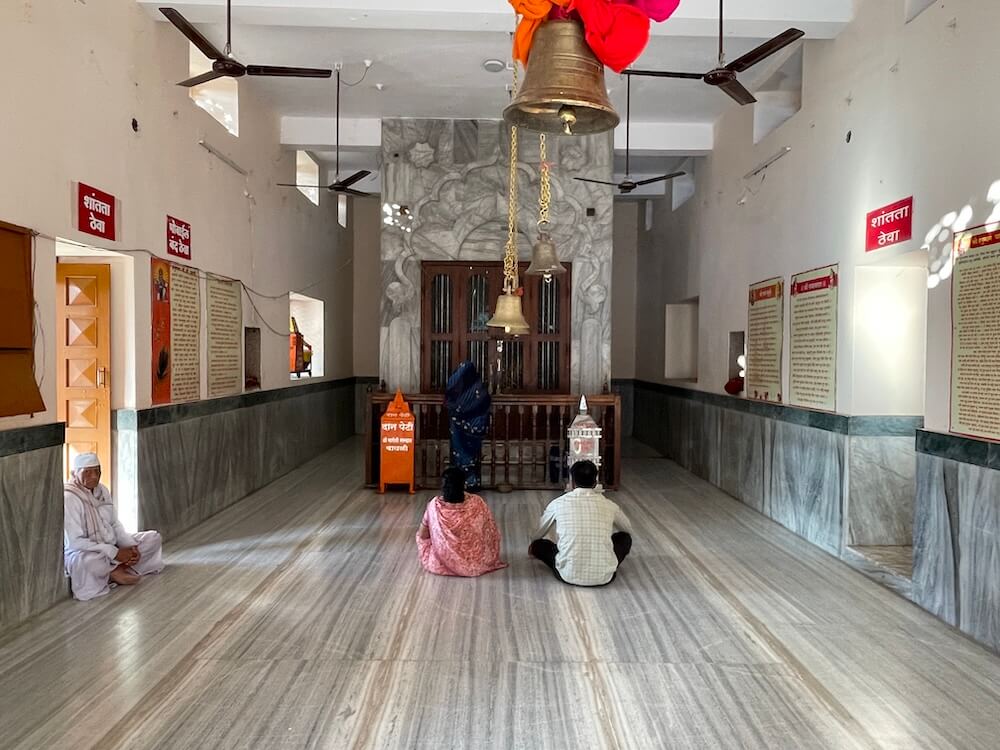
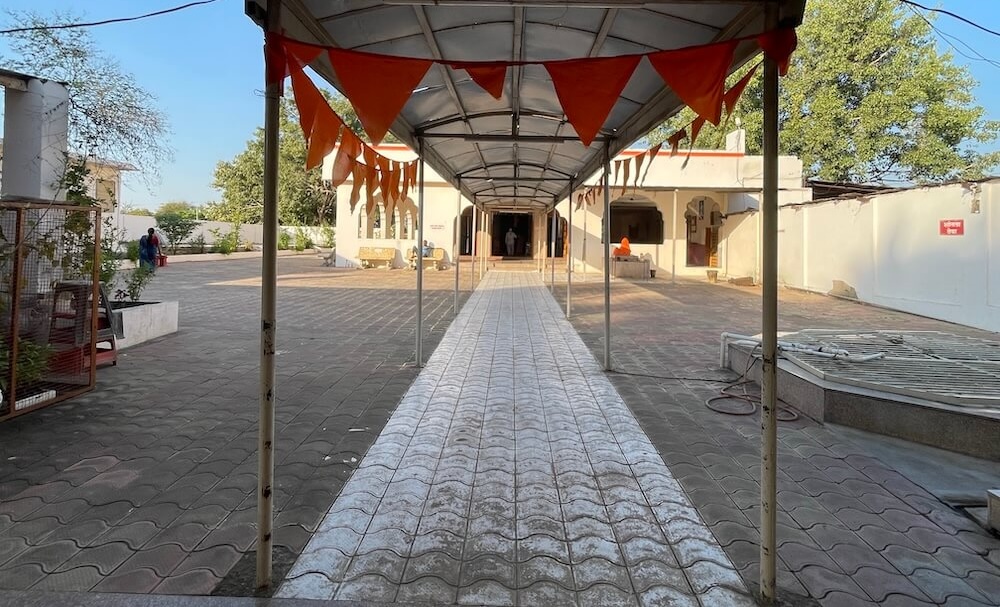
The Waghali temple is located on the Khamgaon-Buldana road. There is abundant greenery in the temple premises. The temple is surrounded by a boundary wall on all four sides. Upon entering the courtyard through an attractive gateway, an ancient well is visible on the right side. The entire courtyard is paved with paver blocks. There are benches for devotees to sit in the courtyard. A tin roof has been installed on the pathway leading from the entrance to the temple. On this pathway, to the right of the temple entrance, there is a platform with a vermilion-smeared stone of Kalbhairav. Devotees offer garlands of Rui leaves and oil to this idol. The structure of the temple consists of a Sabhamandap (assembly hall), a Garbhagriha (sanctum sanctorum), and a Pradakshina Marg (circumambulation path). There is a large pavilion on all four sides of the Sabhamandap. One can perform circumambulation of the temple from this pavilion. Beyond that is the structure of the Sabhamandap and the Garbhagriha. There is an idol of Ganesha on the lintel of the Sabhamandap entrance. A wooden railing has been installed in front of the Garbhagriha, leaving space for the circumambulation path in the Sabhamandap. From here, devotees can have the darshan of Maruti in the Garbhagriha. In the marble niche of the Garbhagriha, the vermilion-smeared idol of Hanuman is seated, and a silver mask is placed on its face. There is a mace in the left hand of the idol. Portraits of Samarth Ramdas Swami and photographs of the old temple are displayed on the walls of the Sabhamandap.
Since there is a belief that the Maruti at Waghali is a wish-fulfiller and a living deity, many devotees from the taluka come here for darshan. The number of devotees is higher every Saturday. The Mahaprasad of eggplant curry and Rodga (a traditional bread) is offered to Hanuman by the devotees, and this prasad is distributed among the devotees. Various festivals and celebrations, including Hanuman Jayanti, Ram Navami, and Gudi Padwa, are celebrated in this temple. A large fair is held in the temple premises on the day after Pola. On the occasion of this fair, various shops selling prasad, flowers, and other items are set up in the area.
This sacred temple stands as a testament to deep spiritual devotion, ancient architectural grandeur, and rich local cultural traditions.
The sanctum sanctorum houses the divine idol consecrated according to ancient Vedic traditions, surrounded by serene courtyards and traditional temple architecture.
Navratri, Maha Shivratri, Annual Temple Jatra & Deepotsav
Compare and book flights, secure top-rated local hotels near the temple, hire reliable guides, and rent cars instantly.
Extend your pilgrimage by visiting other highly sacred temples located nearby.


Add ₹999 more to unlock FREE SHIPPING!
Your sacred cart is currently empty.
Shop Photo FramesFill in your delivery details below to place your order.
Add comment