
Add ₹999 more to unlock FREE SHIPPING!
Your sacred cart is currently empty.
Shop Photo FramesThe Samadhi of Saint Savata Mali, who famously said, “Onions, radishes, and greens, all are my Vitthal,” is located at Aran near Pandharpur. Saint Savata Mali, who taught that performing one’s prescribed duties with dedication is true service to God, never went on the Wari pilgrimage to Pandharpur. Instead, it is said that Pandurang Himself came to Aran to meet him. Even after his Mahasamadhi, the Palkhi (palanquin) bearing his name does not go to Pandharpur; rather, after the Ashadhi Wari, the Palkhi of Lord Pandurang Himself comes to Aran to visit Saint Savata Mali.
Saint Savata Mali, a contemporary of Saint Namdev, was born in the village of Aranbhendi near Pandharpur. Due to the religious atmosphere at home, he developed a love for the path of devotion. However, he did not get entangled in complex rituals, chanting, or austerities. He believed that devotion requires no ostentation; if one follows the trinity of inner purity, righteous conduct, and sincere remembrance of God while performing one’s work diligently, God is surely pleased. He consistently criticized the superstitions, rigid orthodoxy, and hypocrisy prevalent in religious practices.
The word ‘Sava’ in the name Savata Mali means a noble gentleman, and his entire life truly embodied this. Savata Mali married Janai from the Bhanvase Rupamali family and led a virtuous household life. They had two children, Vitthal and Nagatai. Chanting the name of Hari while working in his fields was his only recreation. Like Sena Nhavi and Narhari Sonar, his Abhangs (devotional poems) reflect the vocabulary and idioms of his daily life. “Our caste is that of gardeners. We cultivate the garden. We hold the water-lift and the rope. The water flows to the flowering plants. Peace has blossomed like jasmine. Love has bloomed like jasmine creepers. Savata has made a garden. I have seen Vitthal with my own eyes,”—such Abhangs, which depicted his daily life, were written down by Kashiba Gurav of the village. These Abhangs have enriched Marathi saint literature.
A story is told to illustrate how absorbed Savata Mali was in his garden. It is said that during the time of the Pandharpur Wari, a Dindi (procession) of Varkaris was passing by his field. Savata Mali heard the sound of their Bhajans and the rhythmic beat of the cymbals and drums. He came out of his field and requested the Varkaris to rest there for a while. He offered them water, bread, fruits, and flowers. When the Varkaris were leaving, they urged Savata to accompany them to Pandharpur. Savata Mali replied, “If I come with you, my God will be angry with me.” The Varkaris were confused. Then Savata Mali said, “My Pandurang lives in this field. Working in this garden is His service. Therefore, this garden is my Pandharpur.” He performed his duties as a gardener throughout his life. In the true sense, he cultivated the minds of society. This great saint, who sought divinity in nature, passed away at Aran on Ashadh Vadya Chaturdashi, Shake 1217, which corresponds to the month of July 1295. “The path of religion is simple. Just chant the name of Hari. Cross the ocean of worldly existence,”—the words from his own Abhangs were proven true by him in every sense.
There was originally a small temple at the place where Savata Mali took Sanjeevan Samadhi. This thirteenth-century Samadhi temple has been renovated several times. Today, a large and spacious temple stands there. The garden of Savata, located near the village once known as Aran, was situated in a dense forest. Today, it is right next to the road. The Samadhi temple is also located right by the roadside. Next to the small entrance of the temple by the road, and touching the temple, is a large well. It is said that this well was dug by Savata Mali and his family themselves. Despite digging deep, they could not find water. Then, Savata prayed to Vitthal. Immediately, the layer of stone in the well broke, and a stream of water gushed forth. Savata used the water from this well for his garden. His garden is right next to this temple, and his residence was also nearby. A hall has now been built there as well. One can see his life story depicted through paintings at that site.
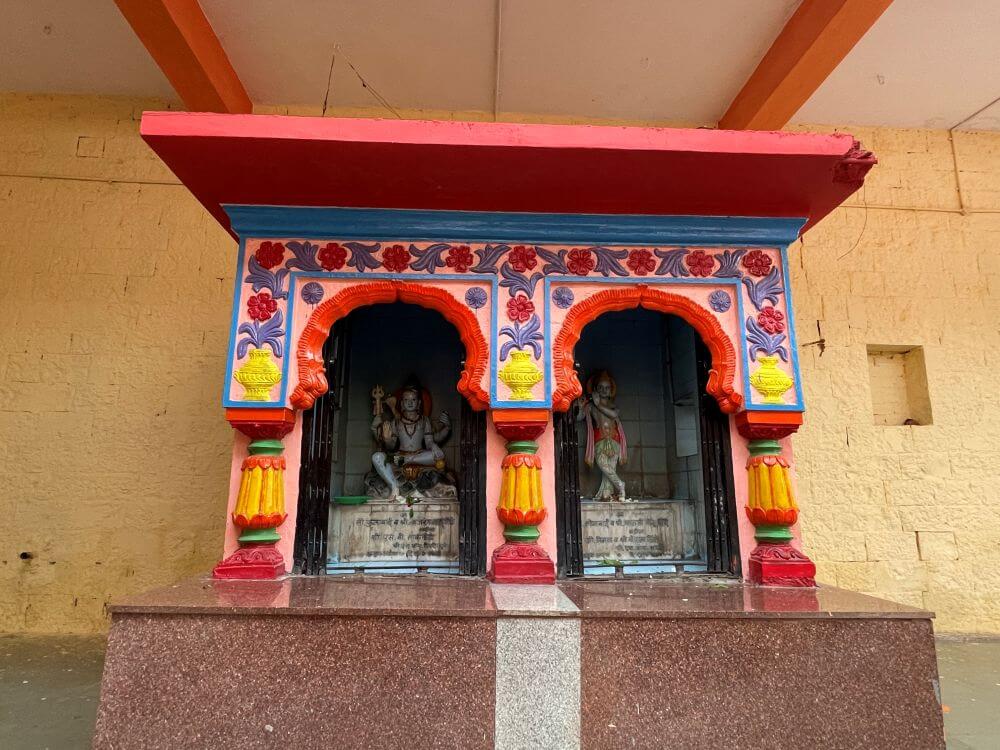
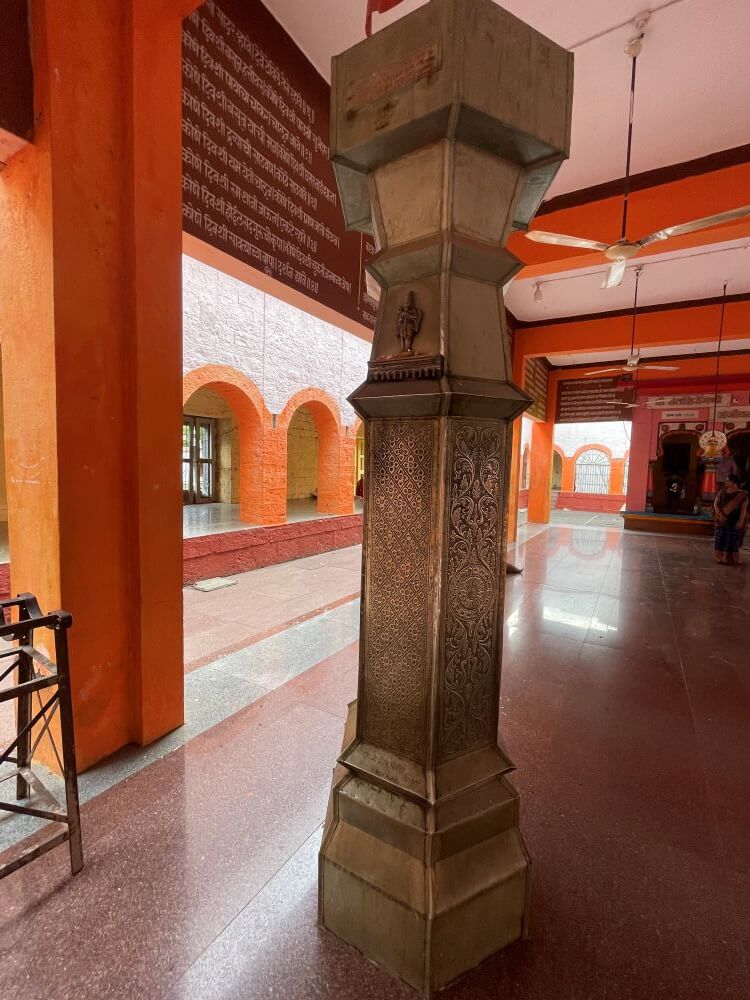
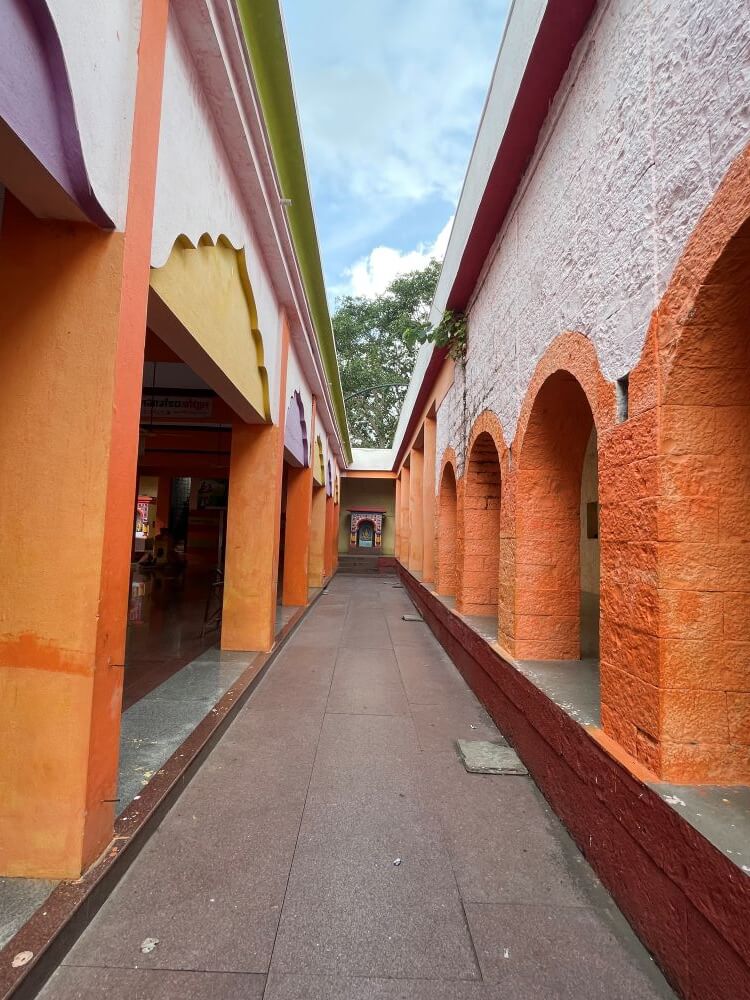
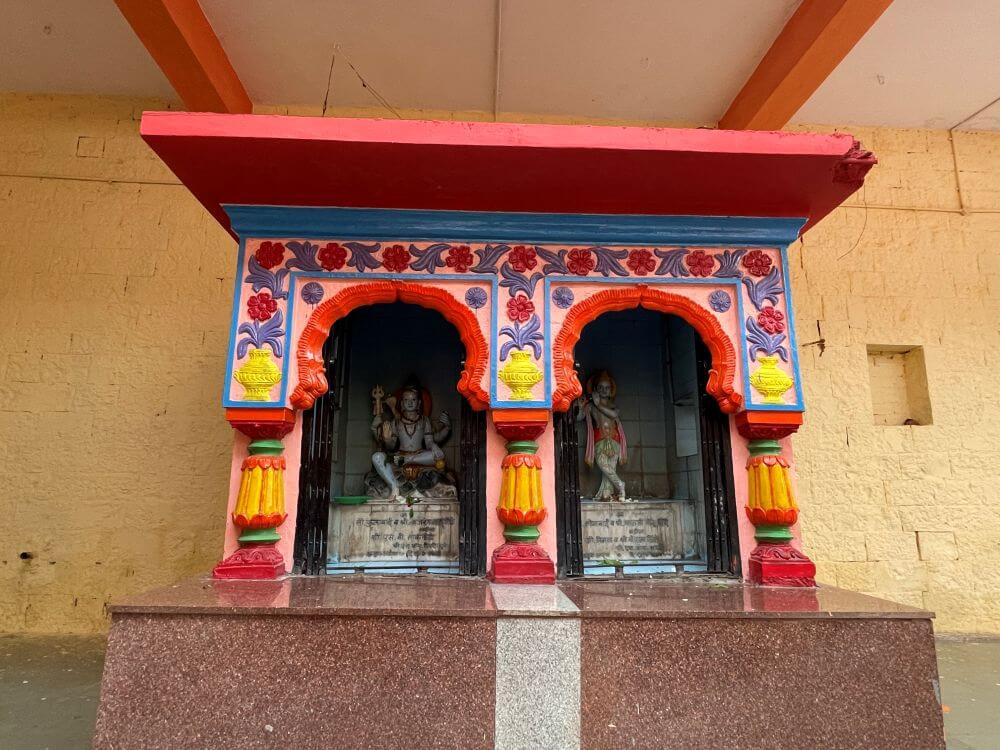
Apart from the door next to this well, the temple has another entrance at the front, known as the Mahadwar. The door frame is covered with metal sheets. An image of Savata Mali is drawn above this door. There is an idol of Ganpati at the lintel. Upon entering through this door, there are two small temples on the left. One houses an idol of Shankar and the other an idol of Krishna. Nearby is a temple of the same size with an idol of Ganpati. In the small temple on the right, there is an idol of Dattatreya. Nearby, in the assembly hall (Sabhamandap), there is a Tulsi Vrindavan and a stone of Hanuman leaning against it. There are spacious corridors on both sides of the assembly hall. The entire premises appear very clean. There is a Garuda pillar in the assembly hall, which is covered with metal sheets. The Abhangs of Savata Mali are written on all sides of the ceiling of the assembly hall.
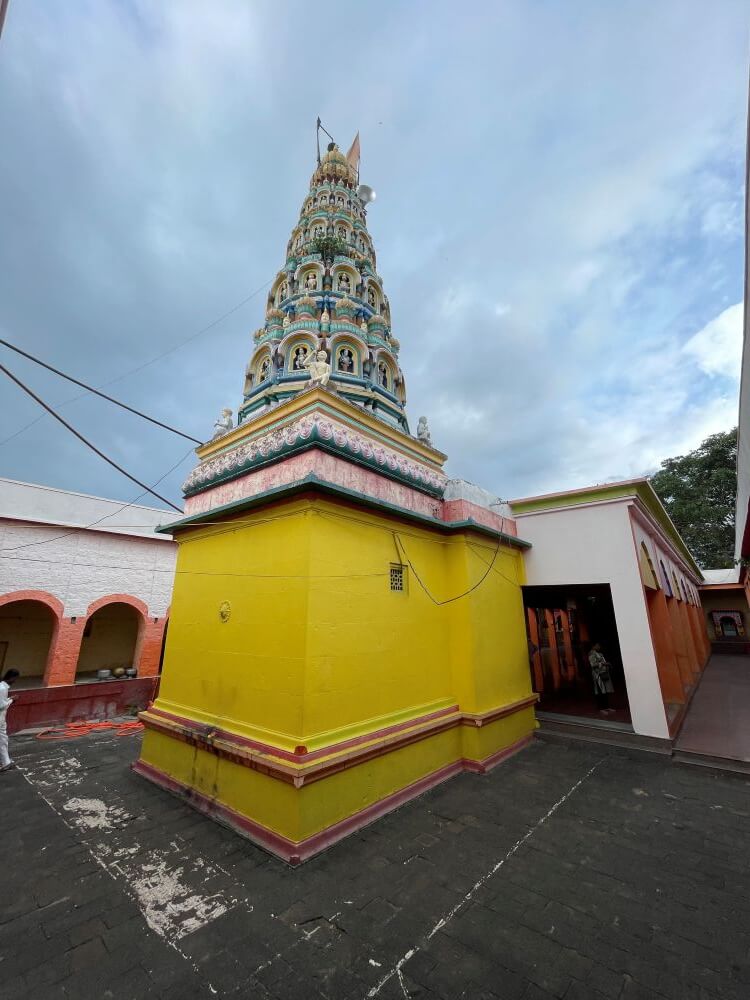
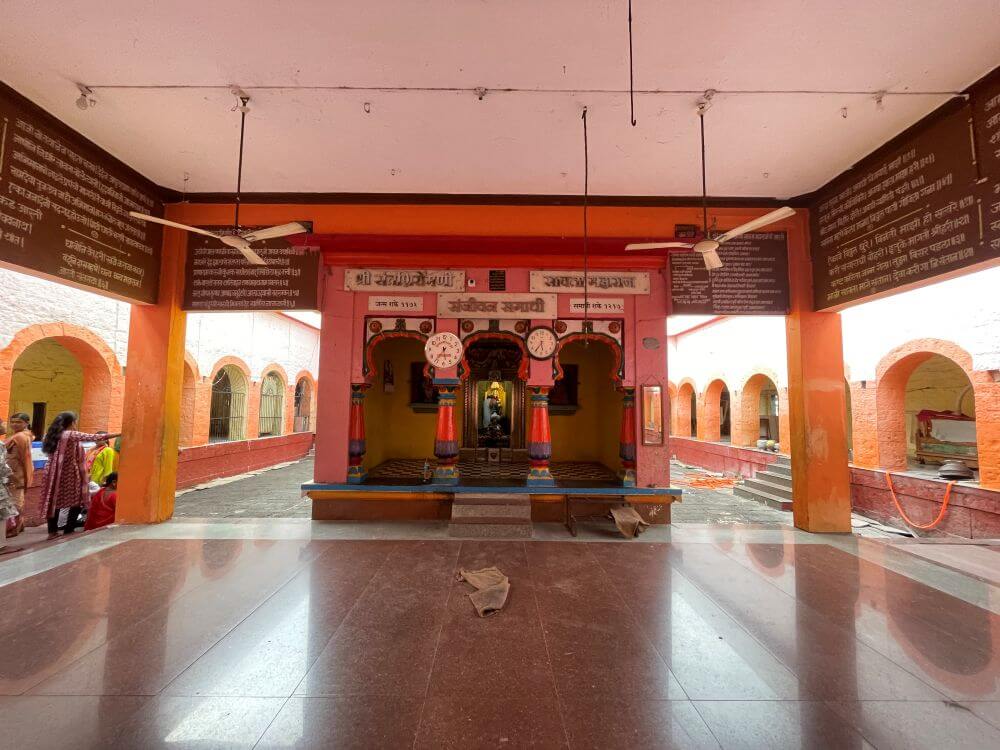
Directly in front of the assembly hall is the Samadhi site of Savata Mali. This original and ancient temple is built of stone. The temple has three small arched doorways. In front of the middle arch, there are two steps. One enters the inner sanctum of the temple by climbing these steps. The door frame of the sanctum (Garbhagriha) ahead is covered with ornate silver sheets. There is an idol of Ganpati in a small niche on the lintel. In the niches on the front walls of the sanctum, there are two idols: Saint Namdev on the left and Saint Dnyaneshwar on the right. Further inside is the Samadhi of Savata Mali. On the pedestal of the Samadhi, there is a silver mask of Savata Mali and an idol of Vitthal behind it. Above the sanctum, there are four saint idols at the four corners, and in the center, there is an ornate five-tiered Shikhara (spire). At the top, there is an Amalaka and a Kalash.
The death anniversary (Punyatithi) of Saint Savata Mali is celebrated in the temple on Ashadh Vadya Chaturdashi. When the Palkhi of Pandurang comes to visit Saint Savata Mali after the Ashadhi Wari, a large crowd gathers at the temple. Even now, some Dindis going to Pandharpur visit the temple of Savata Mali. They take his Darshan and then proceed. When the Palkhi of Pandurang arrives here, a grand festival is celebrated by breaking the Dahi Handi. There is an Annachhatra (free food distribution center) near the temple. Arrangements for meals are made there for Varkaris and other devotees.
This sacred temple stands as a testament to deep spiritual devotion, ancient architectural grandeur, and rich local cultural traditions.
The sanctum sanctorum houses the divine idol consecrated according to ancient Vedic traditions, surrounded by serene courtyards and traditional temple architecture.
Navratri, Maha Shivratri, Annual Temple Jatra & Deepotsav
Compare and book flights, secure top-rated local hotels near the temple, hire reliable guides, and rent cars instantly.
Extend your pilgrimage by visiting other highly sacred temples located nearby.


Add ₹999 more to unlock FREE SHIPPING!
Your sacred cart is currently empty.
Shop Photo FramesFill in your delivery details below to place your order.
Add comment