
Add ₹999 more to unlock FREE SHIPPING!
Your sacred cart is currently empty.
Shop Photo FramesThere are two villages named Shetphal in Solapur district. One is known as Nagobache Shetphal and the other as Siddheshwarache Shetphal. Shetphal Nagobache is in Karmala taluka, while Shetphal Siddheshwarache is in Mohol taluka. Siddheshwar Shetphal is also known as the village with the unique tradition of erecting a massive pavilion for the deity’s festival in just a few minutes. Here stands an ancient temple of Siddheshwar, a form of Lord Shiva. Devotees believe that the Shiva Linga here is self-manifested (Swayambhu) and awakened (Jagrut). Because of this, there is a constant stream of devotees here for darshan. Many devotees make vows to Siddheshwar for the fulfillment of their wishes. The ‘Bhaknuk’ (prophecy) performed during the festival is also a special feature of this place.
In the Shaiva tradition, one who achieves spiritual progress through self-realization, gains control over their consciousness, becomes one with Shiva, and attains divine powers is called a Siddha. Saint Dnyaneshwar referred to the Nath tradition as the Siddha Panth. There are eighty-four Siddhas mentioned in the Nath tradition. The Lord of these Siddhas is Siddheshwar. In the scripture ‘Kalpasamuha Samhita’, it is stated that “where there is Siddheshwar, there is Siddhi.” There are many such temples of Siddheshwar in Maharashtra as well as Karnataka. The Siddheshwar temple at Shetphal is one of them. Here, Siddheshwar is worshipped in the form of a Shiva Linga. Although the exact history of the temple’s establishment is unknown, according to the villagers, this temple was built several centuries ago.
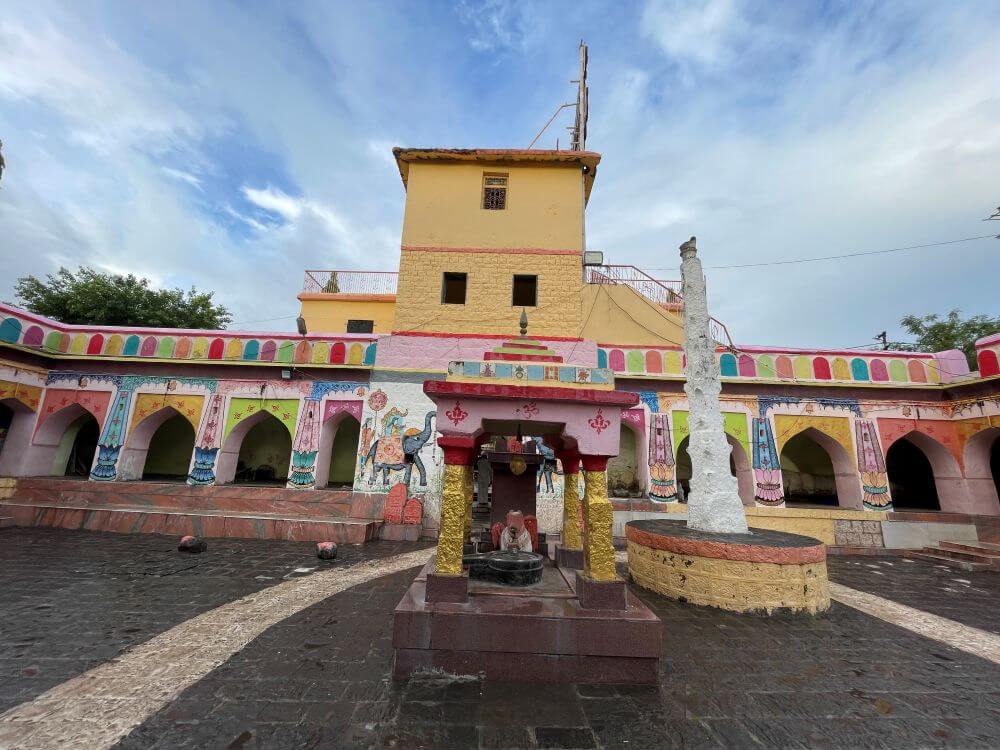
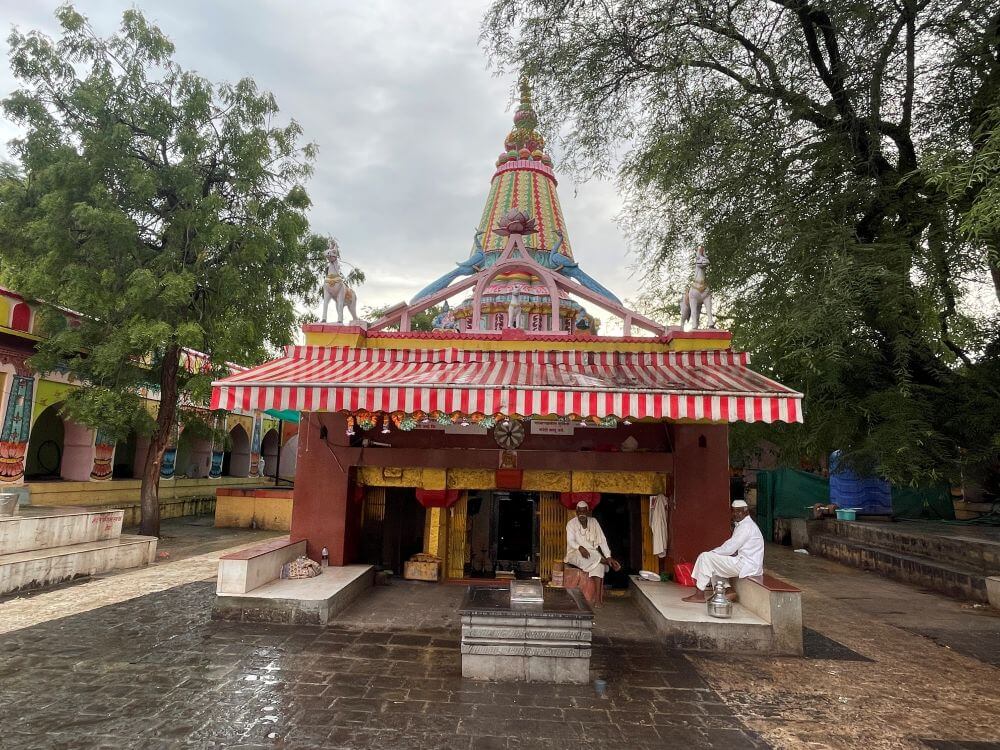
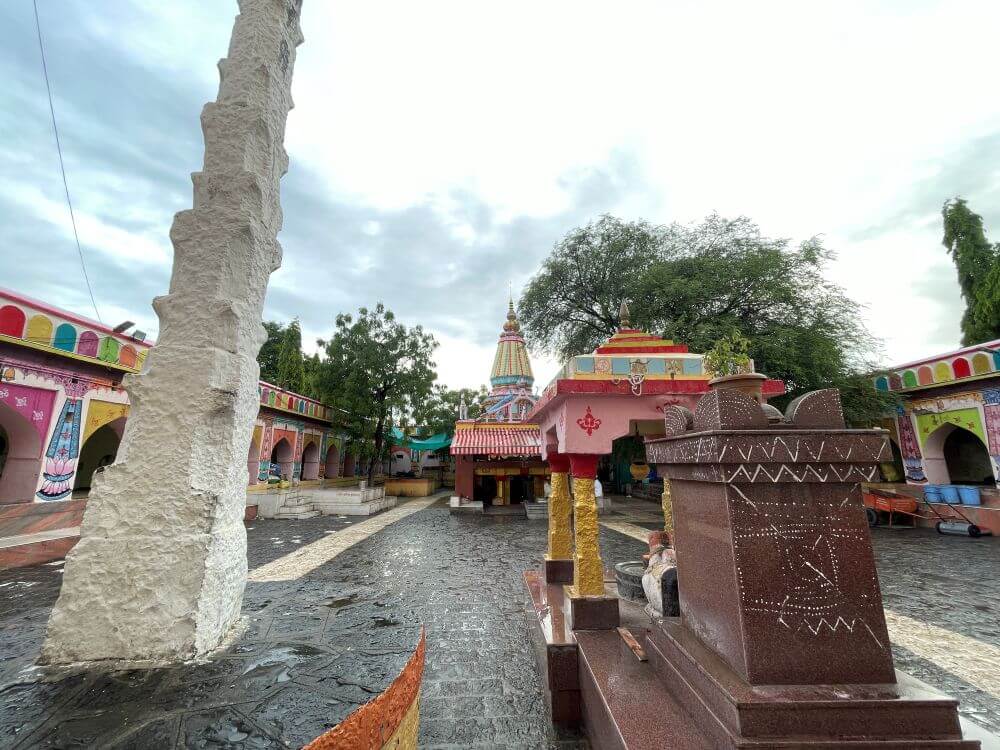
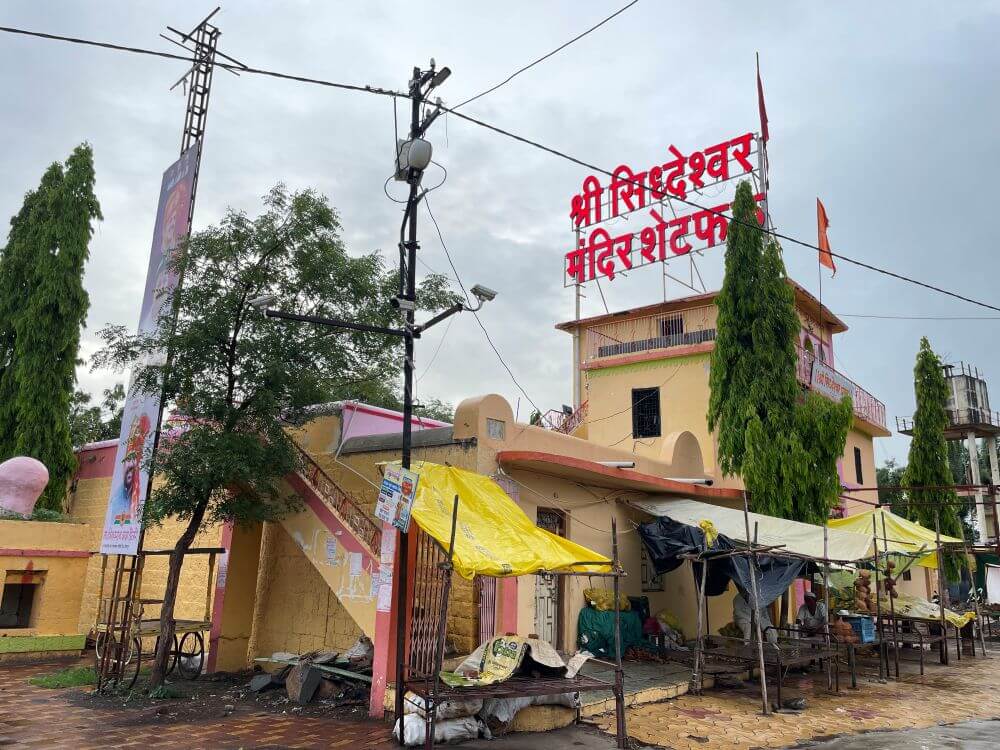
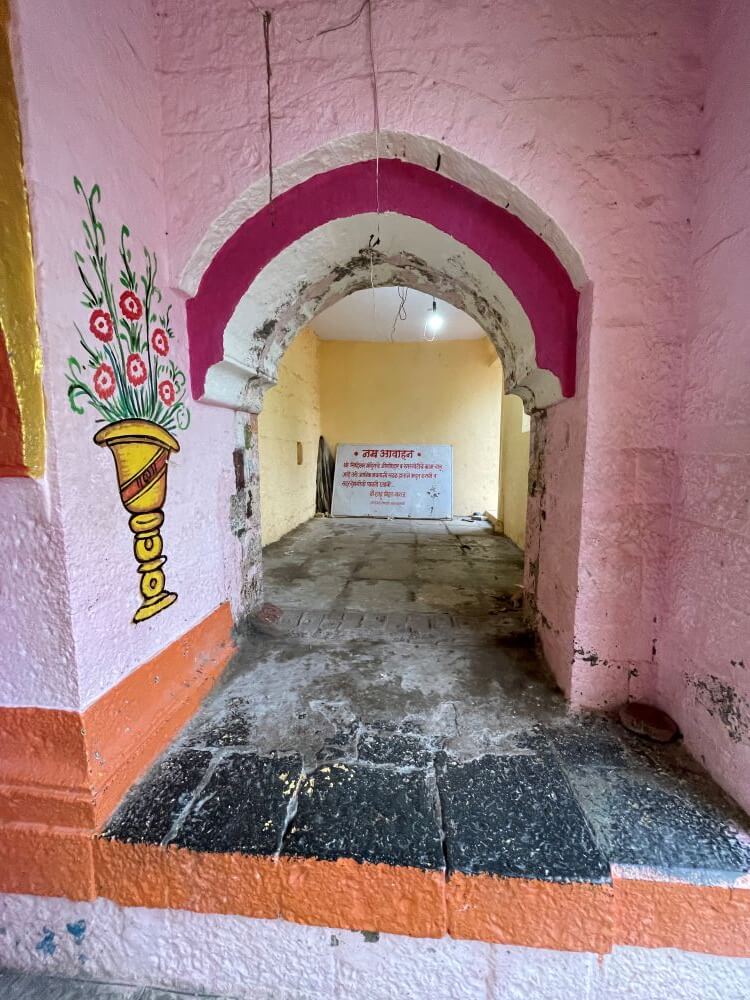
The Siddheshwar temple is situated in the heart of Shetphal village. There is a grand three-story entrance gate within the fortification wall surrounding the temple. There are pillar branches on both sides of the arched entrance. On the second floor of the entrance, there are two rooms on the sides and three window-like structures resembling a ‘Meghadambari’ in the center. On the third floor above it is the ‘Nagarkhana’ (drum house). This Nagarkhana also has three windows on the front side. There are guard rooms on both sides inside the entrance. Through this entrance, one enters the stone-paved courtyard of the temple. There are covered corridors (ovaris) on all inner sides of the fortification. In the courtyard, there is a tall lamp pillar (Deepstambh) on a pedestal in front of the temple. Apart from this, right in front of the entrance on the inside, there is a Tulsi Vrindavan and beyond that a Nandi Mandap. The structure of this temple consists of an open hall (Sabha Mandap), an intermediate chamber (Antaral), and the sanctum sanctorum (Garbhagriha). In the open hall, there are seating platforms on both sides for devotees. Beyond that is the entrance to the Antaral, which is slightly lower. In this temple, except during festivals, devotees are not allowed to enter beyond the entrance of the Antaral. Therefore, devotees have to take darshan of Siddheshwar from the entrance of the Antaral itself. In the Garbhagriha beyond the Antaral is the Pindi of Siddheshwar. On the ceiling of the Antaral, there are sculptures of three horses, which are the vehicle of Siddheshwar—two on the sides and one in the center. Additionally, there are two peacock sculptures and one lotus flower sculpture. The main spire (Shikhara) of the temple is above the Garbhagriha. On this spire, there are small spire images around the Amalaka. The structure of this spire consists of two Amalakas topped with a Kalash. The villagers never take photographs of the Garbhagriha or the idol in this temple, and devotees are also not permitted to do so. Therefore, the form of this Siddheshwar can only be seen by visiting the temple.
Devotees come in large numbers for darshan on Mahashivratri, during the month of Shravan, and every Monday. During the month of Shravan, special programs like Puja, Abhishekam, Rudrabhishekam, Maha Aarti, and Haripath are organized. There is a five-day festival here on Chaitra Purnima. The specialty of this festival is the pavilion that stands in front of the Siddheshwar temple in just a few minutes. A specific tradition of erecting this pavilion is followed here. On the day of the festival, the pillars of the pavilion and the tarpaulin are brought out in the morning. Then they are brought in front of the temple. The honored families of the village—the Bhanges, Dongares, and Khadkes—along with the twelve Balutedars, come and stand by their designated pillars. At exactly 11:05 AM, the construction of the pavilion begins. This task is carried out with such speed and coordination that the 60 by 70 feet wide and 20 feet high pavilion is erected in just five to six minutes. On the fifth day of the festival, a pavilion is erected in the same way at 5:00 PM. Thousands of devotees gather here to witness this miraculous event.
Another specialty of the festival at this temple is the ‘Bhaknuk’, which is a prophecy. Thousands of devotees are present to listen to this prophecy, which is made on the afternoon of the second day of the festival. As part of the Wari tradition of the Bhagwat tradition, a Dindi of village men and women accompanies the Palkhi (palanquin) of Siddheshwar in Shravan. Through the temple, programs like Kirtan, Bhagwat Saptah, discourses, and value-education classes are organized. Volunteer classes are conducted so that the youth can receive religious and social education. Often, the temple committee carries out initiatives like food donation, blood donation, health camps, and environmental conservation.
This sacred temple stands as a testament to deep spiritual devotion, ancient architectural grandeur, and rich local cultural traditions.
The sanctum sanctorum houses the divine idol consecrated according to ancient Vedic traditions, surrounded by serene courtyards and traditional temple architecture.
Navratri, Maha Shivratri, Annual Temple Jatra & Deepotsav
Compare and book flights, secure top-rated local hotels near the temple, hire reliable guides, and rent cars instantly.
Extend your pilgrimage by visiting other highly sacred temples located nearby.


Add ₹999 more to unlock FREE SHIPPING!
Your sacred cart is currently empty.
Shop Photo FramesFill in your delivery details below to place your order.
Add comment