
Add ₹999 more to unlock FREE SHIPPING!
Your sacred cart is currently empty.
Shop Photo FramesSituated on a hill near Virar in Vasai taluka, the shrine of Goddess Jivdani is one of the prominent and major pilgrimage sites in the state. It is said that the Pandavas installed the deity in a cave here during their exile. This Goddess is considered one of the 51 Shakti Peethas. Located at an altitude of about 900 feet above sea level, this Goddess is the presiding deity (Gram-Devata) of Virar as well as the family deity (Kul-Devata) of many Adivasi, Koli, and Agri communities in Thane and Palghar districts. Devotees believe that this is a ‘Jagrut’ (awakened) Goddess who grants their prayers.
A mythological legend regarding this temple is associated with the Pandavas. During their exile, the Pandavas came to Shurparaka (modern-day Nalasopara). This is mentioned in the Tirtha-yatra Parva of the Vana Parva of the Mahabharata. It states: ‘Sa tani tirthani cha sagarasya punyani chanyani bahuni rajan. Krame na gachhan paripurnakamah shurparakam punyatamam dadarsha.. (Chapter 118, Verse 8)’, which means, ‘After visiting the sacred sites related to the sea and many other holy places one by one, the fulfilled King Yudhishthira beheld the most sacred Shurparaka Tirtha.’ The Pandavas did not stop only at Shurparaka; they also visited many other holy sites in this region. (Tirtheshu sarveshu pariplutanga punah sa shurparakamajagama.. Vana Parva, 118.14). These sites include a mention of the Vaitarna River. The Vana Parva of the Mahabharata contains the
reference: ‘Tatastrivishtapam gacchet trishu lokeshu vishrutam. Tatra vaitarani punya nadi papaprashini..’ (Vana Parva, 83.84), which means, ‘Then one should go to the Trivishtap Tirtha, famous in all three worlds. There flows the Vaitarna, the sin-destroying river.’ The Pandavas had stopped for rest on the banks of this sin-destroying river. At that time, they installed the Goddess Jivdani in a cave on this hill near Virar. Since the association of the Pandavas with ancient caves is traditionally held, it is clear that this legend originated from that belief.
Another legend is told about this temple. As recorded in Dr. Deepa Murdeshwar-Katre’s research paper ‘Sand in Our Hands’ in ‘Ruminations – The Adrian Journal of Literature 2017’, many years ago, a cow belonging to a farmer from a village at the foot of this hill would come to graze every day. After staying here from morning till evening, the cow would go up the hill. Once, the farmer followed the cow. The cow stopped at a flat spot on the hill. Suddenly, a radiant woman appeared there. Assuming she was the owner of the cow, the farmer asked her for the grazing fees. Just as the woman was about to place the money in his hand, the farmer told her that he was an untouchable. Upon hearing this, the woman disappeared. The cow let out a loud bellow and jumped into the valley below. Later, a temple of the Goddess was built there, and in memory of the sacrifice made by the cow, the Goddess came to be called ‘Jivdani’—meaning one who gives life.
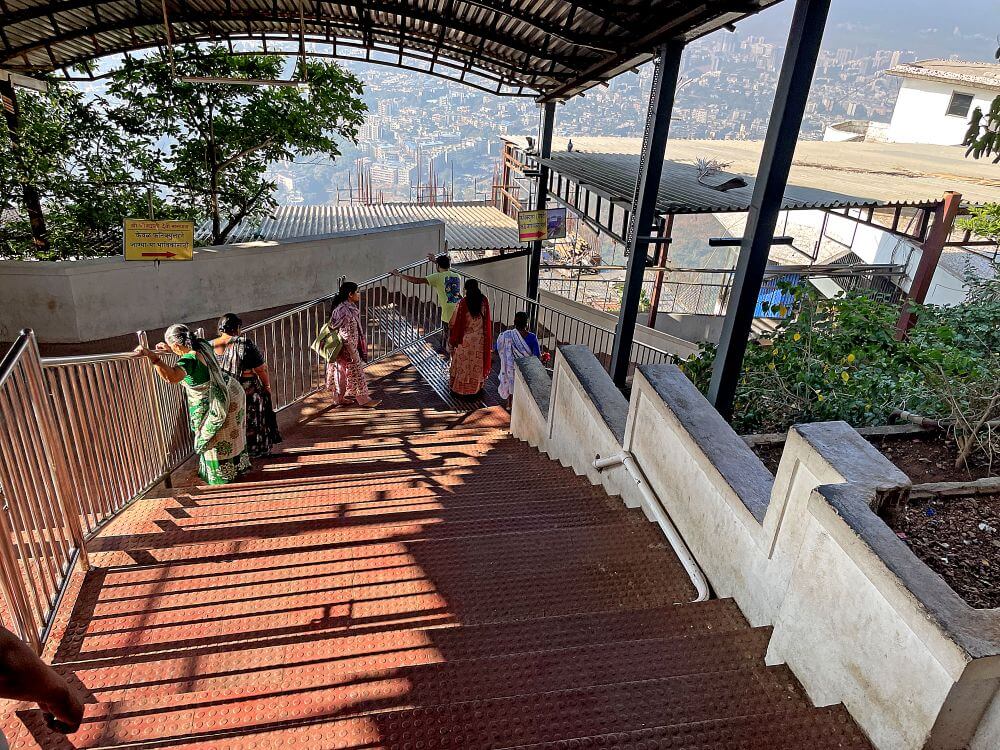
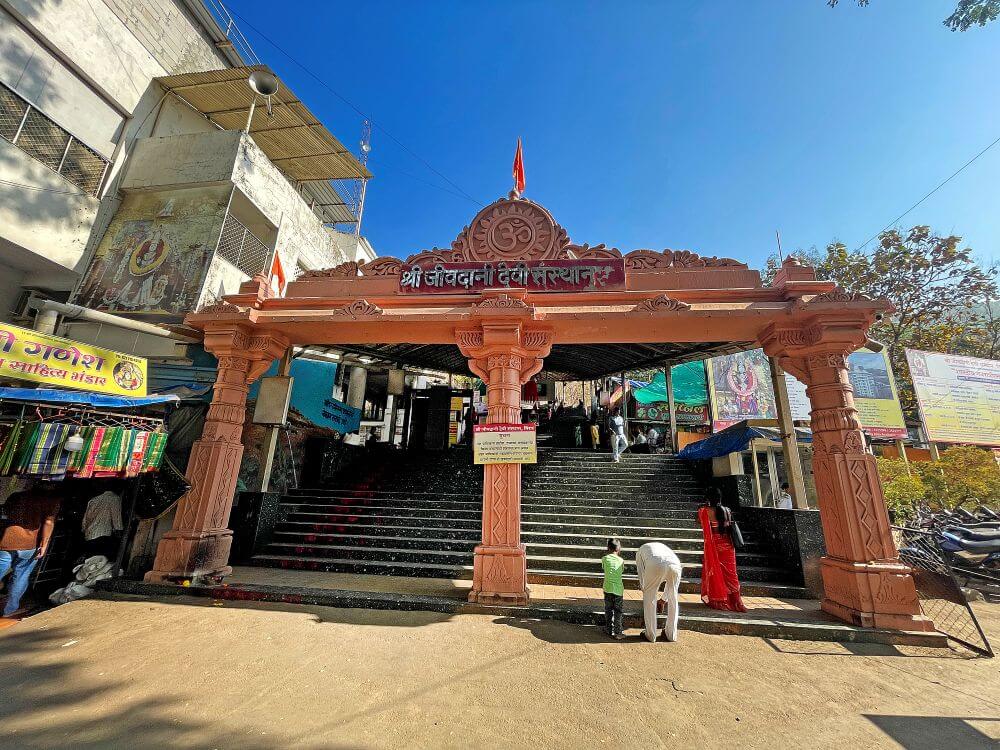
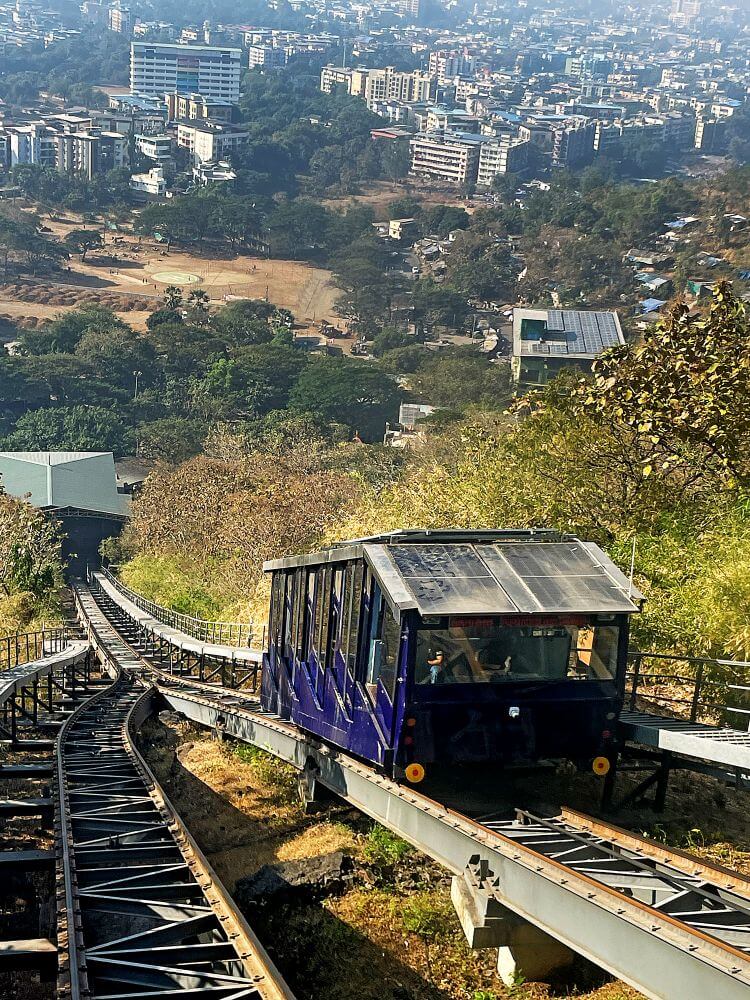
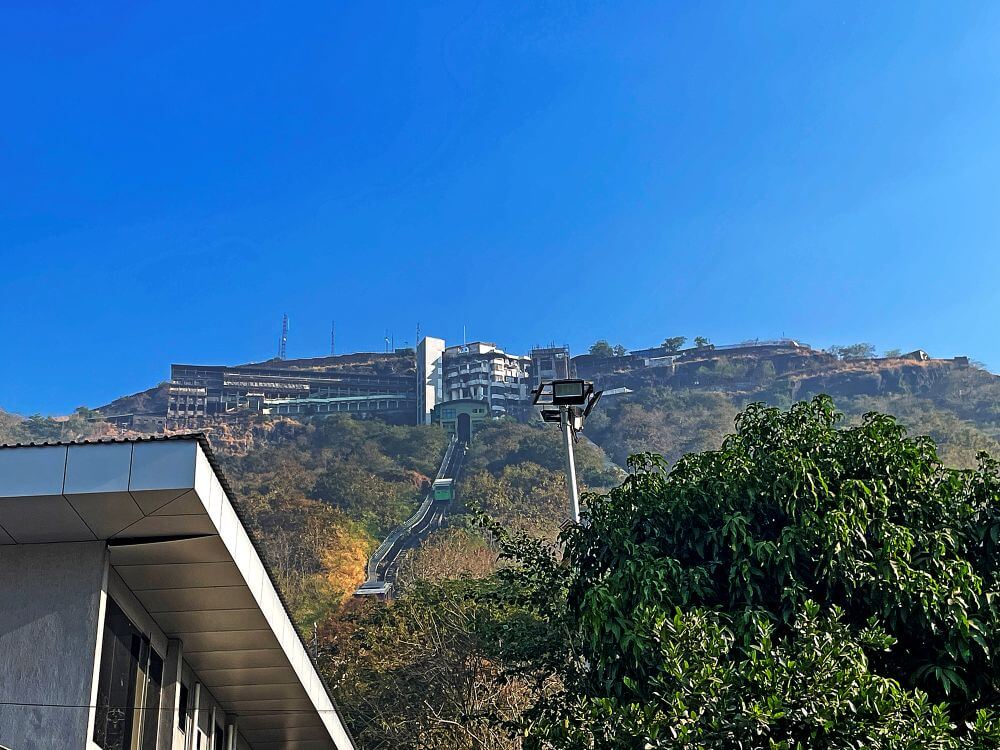
The history of the Jivdani temple states that the temple was built in the seventeenth century. Previously, this temple was very small, and the steps were steep and difficult to climb. Improvements were made over time. After periodic renovations, the current grand temple of the Goddess took shape. Looking from anywhere towards this hill in the east of Virar, the seven-story grand building of the Jivdani temple catches the eye. At the foothills, there are hundreds of shops selling flowers, offerings, and worship materials. One has to climb about 1400 steps to reach the temple from here. Previously, these steps were unpaved and made of stone. Now, cement concrete steps have been constructed from the base of the hill. Recently, a funicular (cable-operated) train facility has also been made available for the convenience of devotees. Through this, one can reach the temple from the base in less than five minutes. Apart from these two routes, many devotees also come to the temple via the old ‘Panch-payari’ (five-step) path.
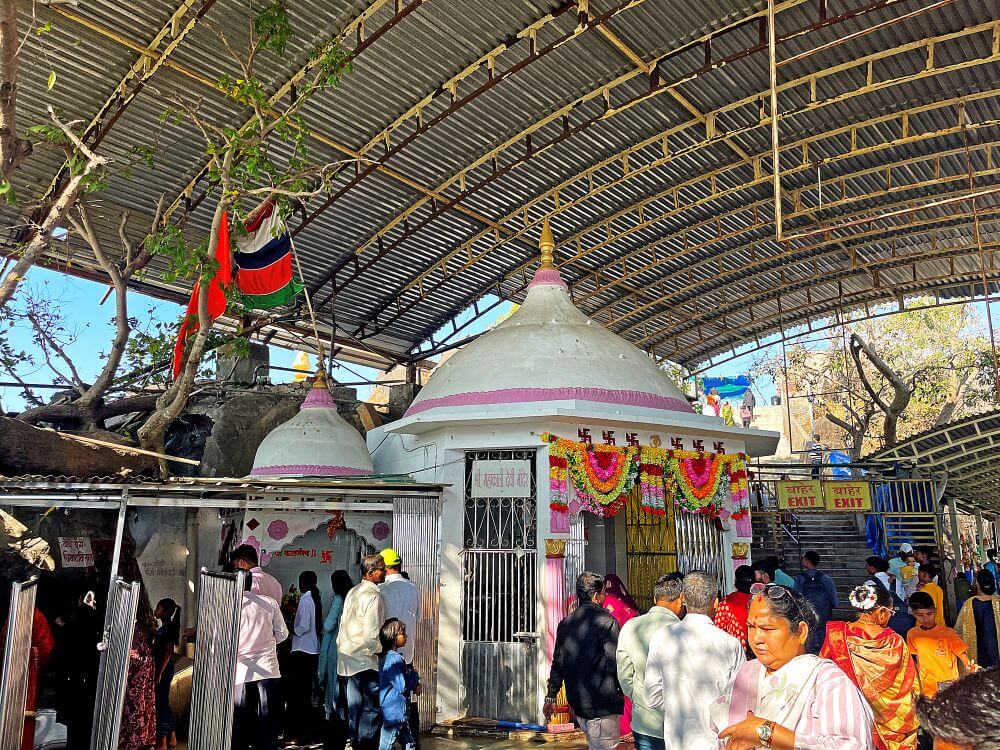
At the beginning of the stairway, there is an entrance arch to the temple. A roof has been built over the steps so that devotees do not suffer from the sun and rain while climbing. After climbing some steps, there is an image of the Goddess in the middle of the path. There are also shops for flowers and offerings at various places along the stairway. Upon reaching the temple after finishing the climb, one can see coins stuck by devotees onto a large rock. Devotees believe that if a coin sticks to this rock, their wishes will be fulfilled. Near this rock is the temple of Kalbhairav. A short distance from here are the temples of Mahakali and Ganpati. There is a large assembly hall (Sabha Mandap) in front of the sanctum sanctorum of the Jivdani Devi temple. The sanctum is carved into a rock about six feet high. Like the Saptashrungi Gad in Vani, this Goddess is situated in a crevice against the hill cliff. According to the information given in the second volume of the book ‘Adishaktiche Vishwaswaroop arthat Devikosh’ by Pralhad Krishna Prabhudesai, there was no idol of the Goddess in this temple earlier. This is because she had disappeared at this very spot. There was a small ‘Tandula’ (aniconic stone) there, which the devotees worshipped. They would drop the coins offered to the Goddess through a hole in the ground. The Jivdani Temple Trust was established on February 23, 1956. In that same year, a new idol carved in stone was consecrated here. The standing Goddess has a golden crown on her head. She holds a lotus flower in her left hand, and her right hand is in a blessing posture. There is a trident beside the idol. Adjacent to the sanctum of the temple is a 12-foot-deep, narrow cave known as the Shri Krishna Cave. It is said that there is a small hole in the rock behind the Goddess. It is not known where the coins go when dropped into this hole, but devotees claim that they can hear the sound of the coins rolling down.
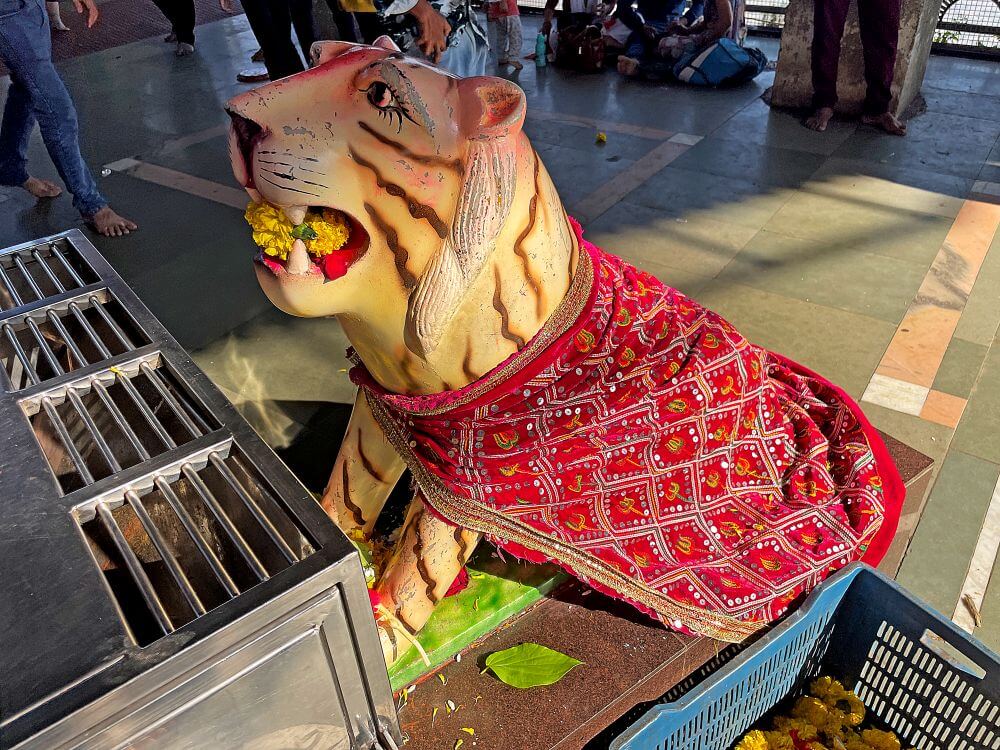
Devotees can have the darshan of the Goddess every day starting from four o’clock in the morning. The Kakad Aarti takes place at 5:30 AM. Following this, the Goddess is bathed in an Abhishekam and adorned with ornaments. The Aarti of the Goddess is performed at 12:00 PM and again at 7:30 PM. Known as a Goddess who fulfills the vows of her devotees, lakhs of pilgrims from across the country come here for the darshan of Jivdani. During Navratri and other festivals, there is a large influx of devotees here. The Temple Trust implements various initiatives for the convenience of the devotees. On the hill to the left of the temple, there are idols of a cow and a calf. It is said that in the past, a cow used to come daily for the darshan of the Goddess, and these are symbols of that. This place is also known as ‘Gaygotha’. Devotees toss coins into a nearby pond. In a crevice above this pond, there is an idol of Mankund Devi. In a square-shaped cave near this pond, there is an idol of a tiger. There is a legend that this tiger also used to come for the darshan of the Goddess.
This sacred temple stands as a testament to deep spiritual devotion, ancient architectural grandeur, and rich local cultural traditions.
The sanctum sanctorum houses the divine idol consecrated according to ancient Vedic traditions, surrounded by serene courtyards and traditional temple architecture.
Navratri, Maha Shivratri, Annual Temple Jatra & Deepotsav
Compare and book flights, secure top-rated local hotels near the temple, hire reliable guides, and rent cars instantly.
Extend your pilgrimage by visiting other highly sacred temples located nearby.


Add ₹999 more to unlock FREE SHIPPING!
Your sacred cart is currently empty.
Shop Photo FramesFill in your delivery details below to place your order.
Add comment