
Add ₹999 more to unlock FREE SHIPPING!
Your sacred cart is currently empty.
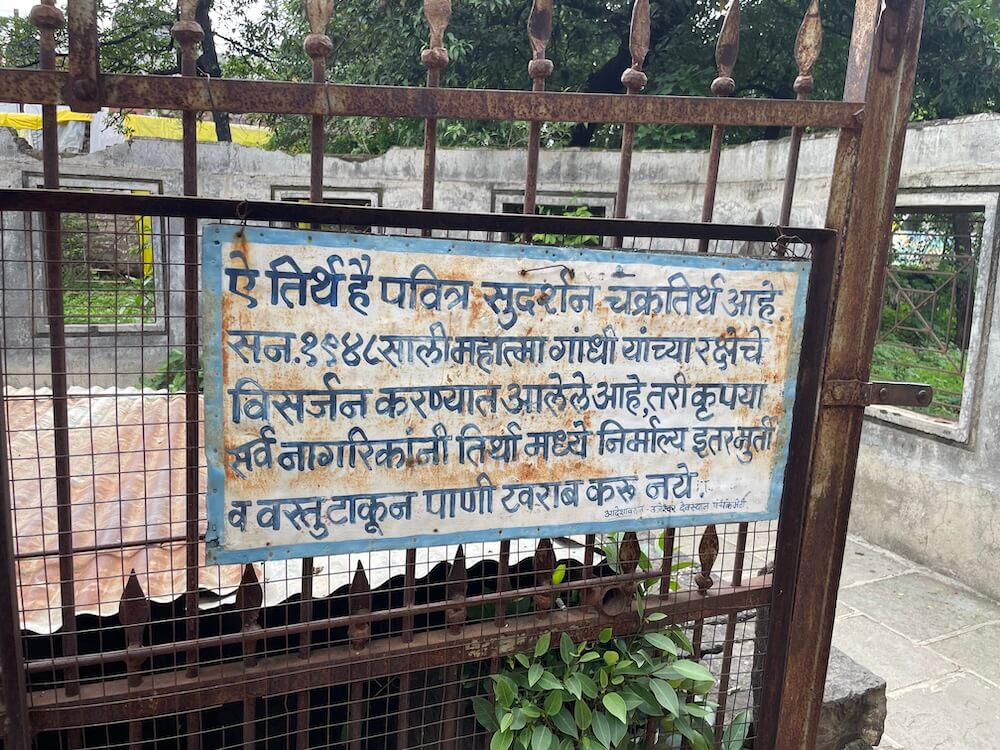
Shop Photo FramesBarshi is an important taluka in Solapur district. Considered the cradle of education, this taluka is known as the gateway to Marathwada as it lies adjacent to Osmanabad district. It is said that this taluka, which possesses a rich history, got the name Barshi because it houses twelve Jyotirlingas. There is a legend that the Uttareshwar temple located here was established by Sage Durvasa. Among the devotees in the city, this temple is known as Mota Mahadev. In the year 1948, the ashes of Mahatma Gandhi were immersed in the sacred pond located at the entrance of this temple.
Barshi city was formerly known as Baras. Baras means Dwadashi, and therefore, this place is recognized as a Dwadashi Kshetra. Long ago, this Dwadashi was the city of King Ambarish. This King Ambarish was a devotee of Lord Vishnu. He had taken a vow to observe the Sadhana Dwadashi Vrata for twelve years, which is one tap. The Sadhana Dwadashi Vrata consists of eating once on Dashami, fasting without food or water on Ekadashi, and breaking the fast at sunrise on Dwadashi. Upon completion of the vow, the King was to attain the position of Indra. Only one Dwadashi remained for the completion of the vow, which was Vaishakh Shuddha Dwadashi. On this day, King Ambarish’s vow was to be completed, and he was to attain the position of Indra. Fearing that his position would be shaken, Indra summoned Sage Durvasa and requested him to break the King’s vow.
As instructed by Indra, Sage Durvasa came to this Dwadashi Kshetra to break King Ambarish’s vow. However, at that very moment, Sage Durvasa saw some Brahmins leaving the palace and assumed that the King’s vow had already been completed. Seeing that his mission was unsuccessful, a demon was born from the matted hair that Sage Durvasa struck in anger. To protect Ambarish from the demon, Lord Vishnu himself appeared here and destroyed the demon by releasing the Sudarshan Chakra. After that, the Sudarshan Chakra pursued Sage Durvasa. After attempts to stop the Sudarshan Chakra proved futile, Durvasa decided to try a different approach. The original master of the Sudarshan Chakra is Mahadev. Pleased by the devotion of Vishnu, Mahadev himself had bestowed the Sudarshan Chakra upon him. Therefore, he immediately began the worship of Lord Shiva there. It is believed that the Shivalinga he established for the worship of Shiva is the one present in the Uttareshwar Mahadev Temple.
It is said that the pond at the main entrance of this temple was created by the Sudarshan Chakra that followed Durvasa. For this reason, it is also called Chakratirtha. However, the original Chakra Kund is located right below the tortoise statue on the floor of the assembly hall. During times of drought, when the water in this Chakratirtha dries up, a path leading into the pond in the assembly hall becomes visible. This path was seen during the drought that occurred in the year 1983. It is claimed that some people went through this path at that time and saw the Chakratirtha there.
It is believed that the first meeting between Saint Namdev and his guru, Saint Visoba Khechar, took place at the Uttareshwar Mahadev Temple. According to the story related to this, Namdev was sent to meet Visoba Khechar because he had become proud, believing that there was no greater devotee of Vitthal than himself. When he arrived at this temple, he saw a person sleeping with his feet placed on the Shivalinga. Angered by this, Namdev asked him to remove his feet. But that person asked Namdev to lift his feet and place them where there was no Shiva Linga. Namdev tried to lift his feet from the Shiva Linga and place them elsewhere, but a Shiva Linga appeared there as well. Wherever he moved the person’s feet, a Shiva Linga was visible. Humbled by this, Namdev held the person’s feet and received the Guru Mantra from him. That person was Saint Visoba Khechar. The Samadhi of Visoba Khechar is also located to the north of the temple.
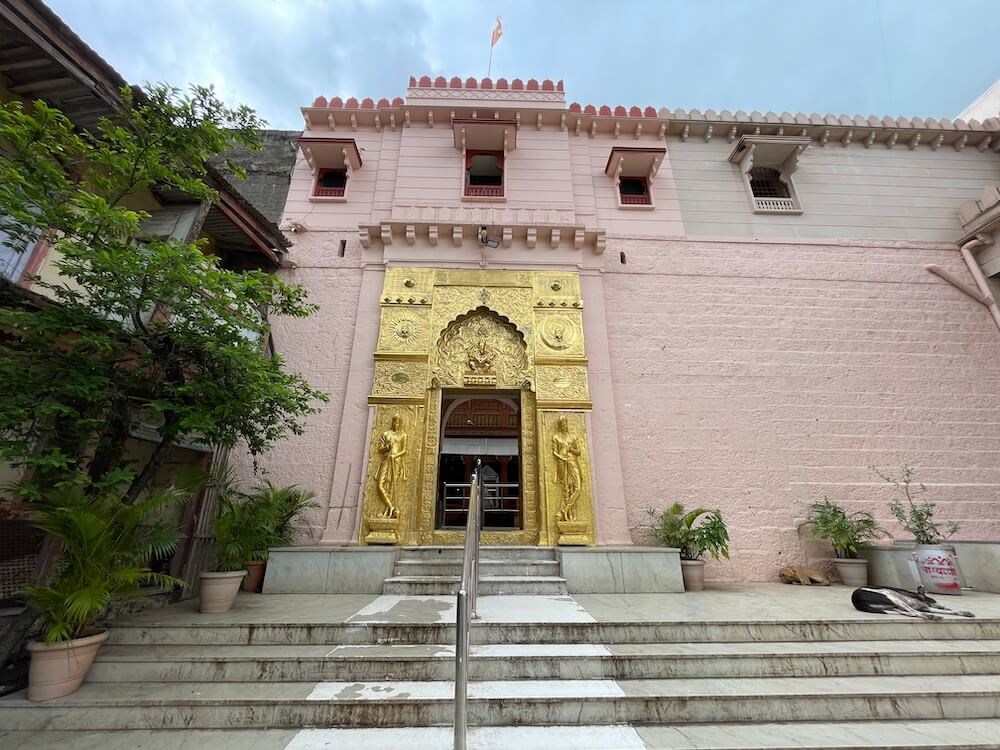
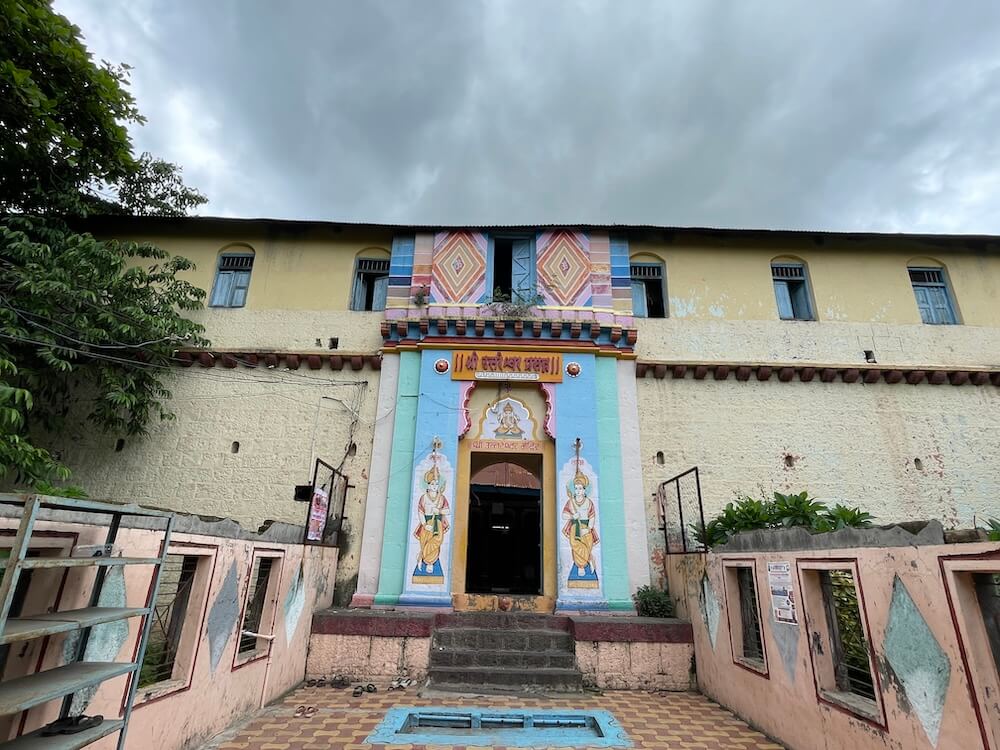
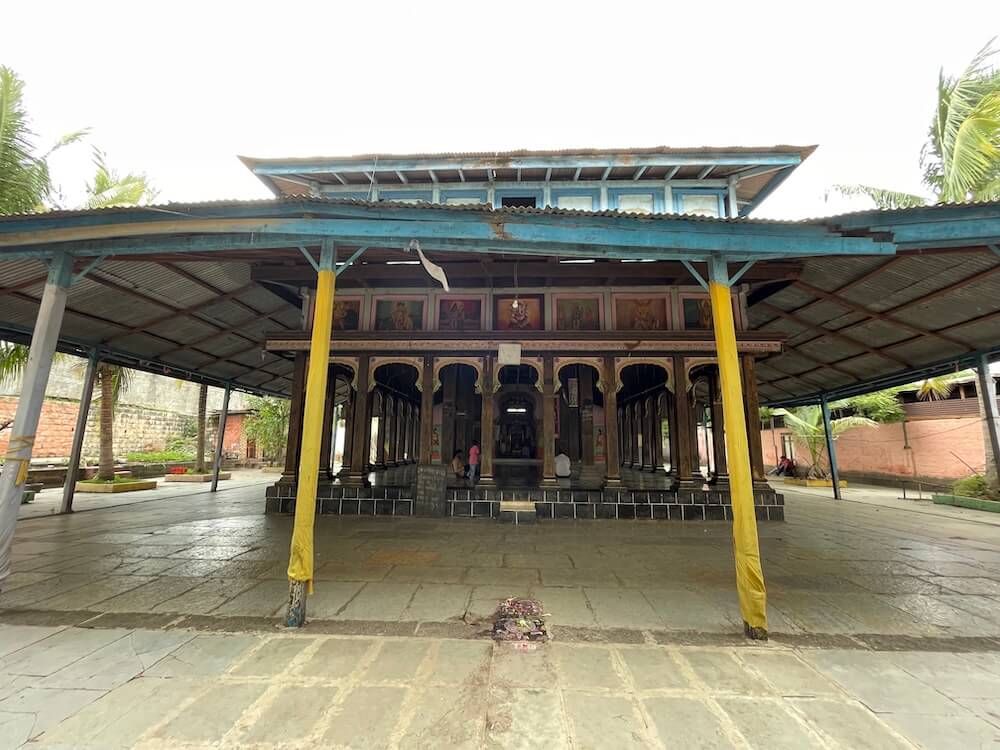
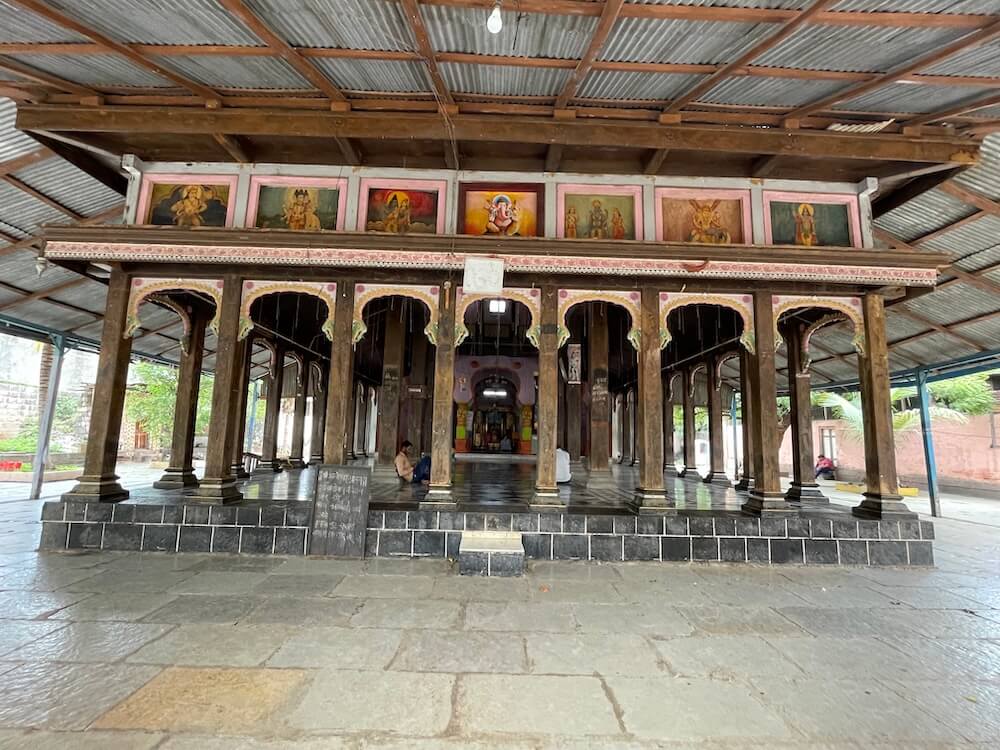
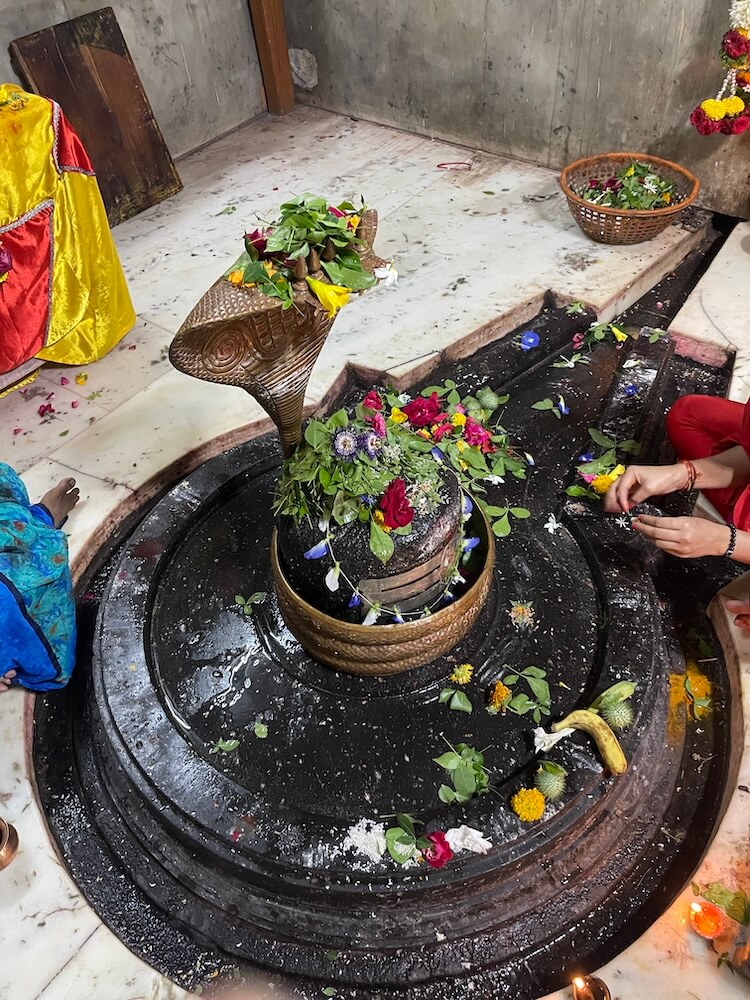
The temple architecture follows the traditional style. On the way to the main entrance, one passes the Chakratirtha, where the ashes of Mahatma Gandhi were immersed. It is now covered by a roof. Opposite this Chakratirtha is the Uttareshwar Temple. One enters the temple courtyard through an entrance located on a high plinth, reached by climbing five steps. On both sides of this entrance are paintings of door guardians, and an image of Lord Ganesha is carved on the lintel. The temple structure consists of a Sabha Mandapa (assembly hall), Antarala (vestibule), and Garbhagriha (sanctum sanctorum). The semi-open Sabha Mandapa has wooden pillars on all sides, connected by arched gateways. There are hooks on the ceiling of the Sabha Mandapa for hanging chandeliers and lamps. The Sabha Mandapa has a balcony. There is a statue of a tortoise on the floor, and it is said that the original Chakratirtha lies directly beneath it. In the Antarala, in front of the Garbhagriha, there is a statue of Nandi on a pedestal. The main entrance, boundary wall, Antarala, and Garbhagriha are constructed of stone. In the Garbhagriha, the Shiva Linga is at ground level. It is believed that this Linga was installed by Sage Durvasa. A metal serpent image surrounds the Linga. Behind the Linga is a brass mask of Lord Shiva, which is used during festivals. Above the Garbhagriha, there are four small spires on the sides and a main spire in the center. The main spire features numerous niches containing idols of various deities.
On the day before Mahashivratri, the Haldi ceremony of Lord Mahadeva takes place in the temple. The next day, after three in the afternoon, Lord Mahadeva is adorned, revealing his Chandrashekhar form. The story behind this is that when Lord Mahadeva’s wedding procession reached Goddess Parvati, she was somewhat frightened by his fierce appearance. At that moment, Lord Vishnu personally adorned Mahadeva. The form that emerged then is known as Chandrashekhar. During the month of Shravan, the temple ceiling is decorated with glass chandeliers and lamps hanging in various places. It is said that all these chandeliers and lamps were brought from Belgium. There is a large crowd of devotees in the temple on all four Mondays of Shravan. The death anniversary of Saint Visoba Khechar is celebrated here on Shravan Shukla Ekadashi. During the month of Shravan, on the third Monday, the Chhabina festival of the Lord is celebrated with great enthusiasm.
The night of Vaikuntha Chaturdashi is considered the night of the devotional union of Shaivites and Vaishnavites. At midnight on this night, a garland of Bel leaves is taken from the Uttareshwar Temple to be offered at the nearby Bhagwant Temple. At the same time, a garland of Tulsi leaves is brought from there for Uttareshwar. According to Puranic legends, Tulsi is forbidden for Lord Mahadeva. On any other day, Tulsi is not offered to Mahadeva. However, as an exception on this day, that Tulsi garland is offered to the Lord. Devotees can have the Darshan of Uttareshwar in this temple every day from 7:30 in the morning until 8:00 at night.
This sacred temple stands as a testament to deep spiritual devotion, ancient architectural grandeur, and rich local cultural traditions.
The sanctum sanctorum houses the divine idol consecrated according to ancient Vedic traditions, surrounded by serene courtyards and traditional temple architecture.
Navratri, Maha Shivratri, Annual Temple Jatra & Deepotsav
Compare and book flights, secure top-rated local hotels near the temple, hire reliable guides, and rent cars instantly.
Extend your pilgrimage by visiting other highly sacred temples located nearby.


Add ₹999 more to unlock FREE SHIPPING!
Your sacred cart is currently empty.
Shop Photo FramesFill in your delivery details below to place your order.
Add comment