
Add ₹999 more to unlock FREE SHIPPING!
Your sacred cart is currently empty.
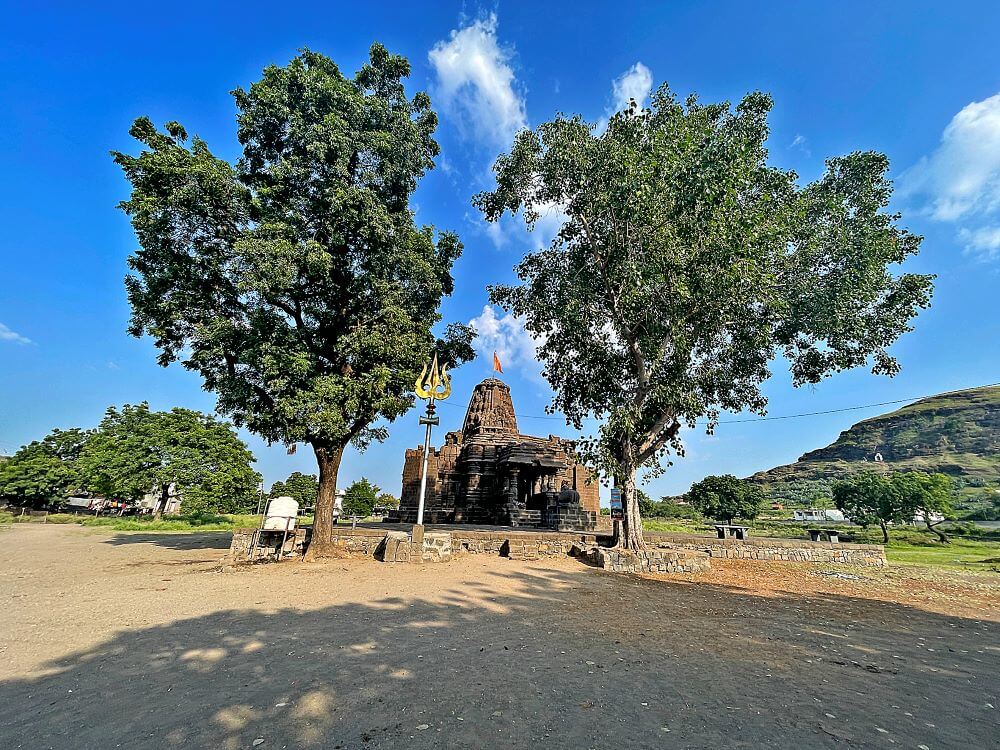
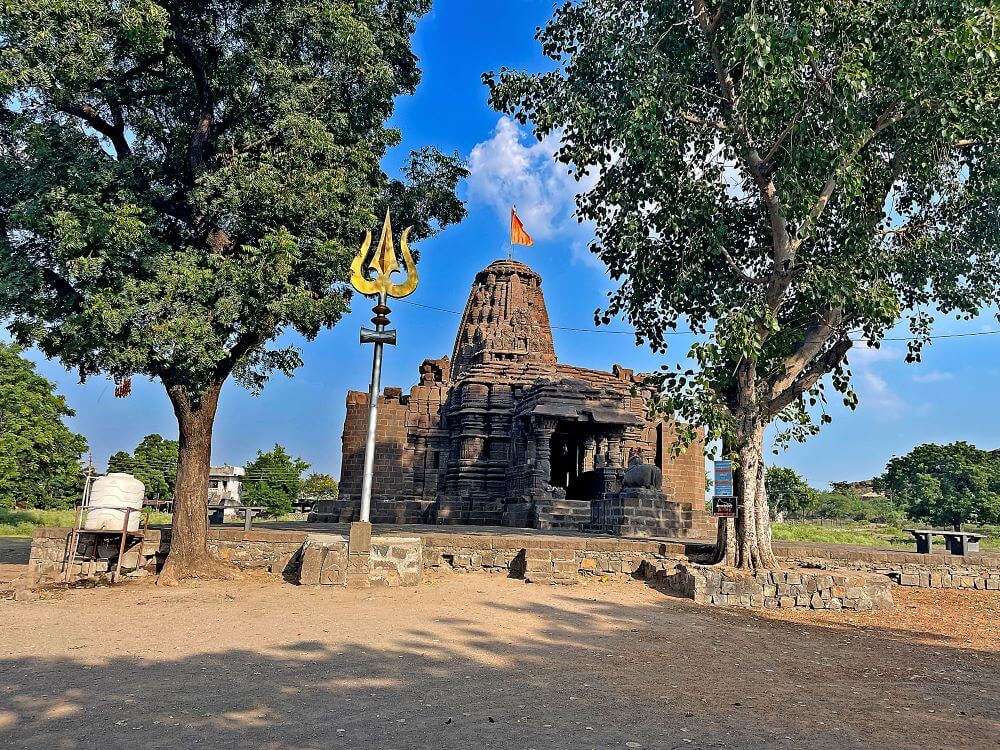
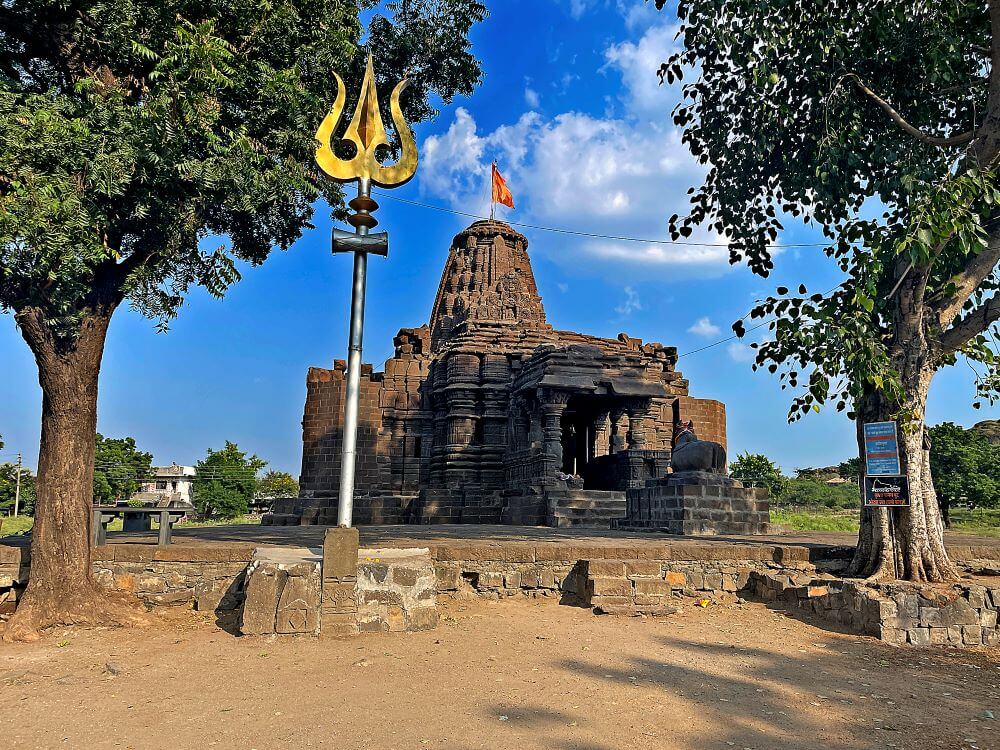
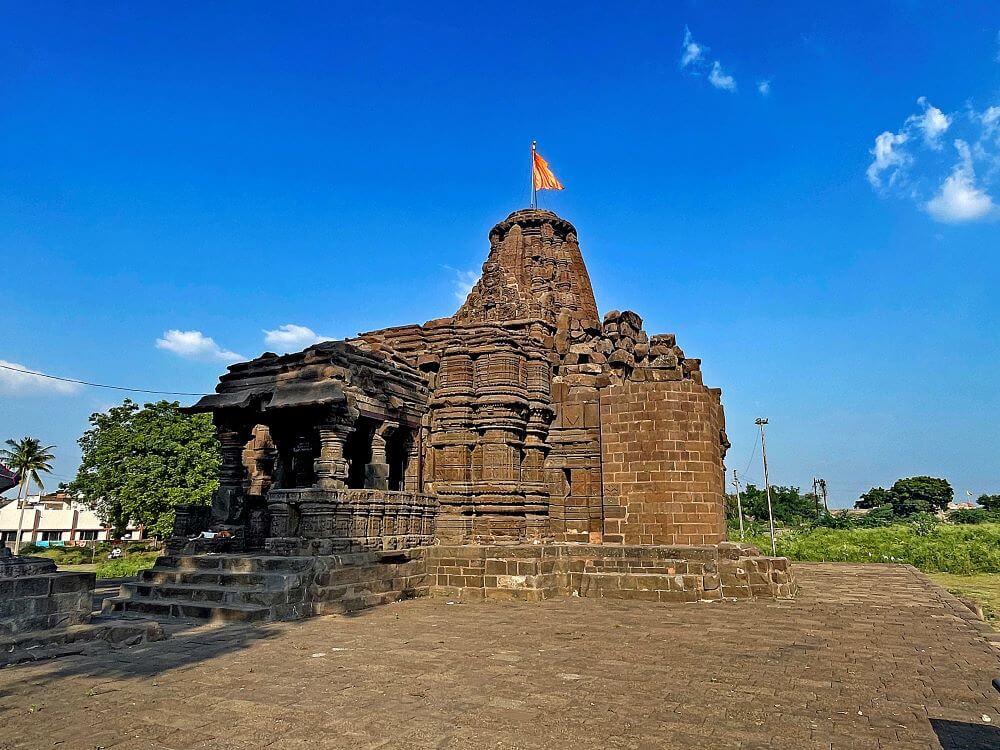
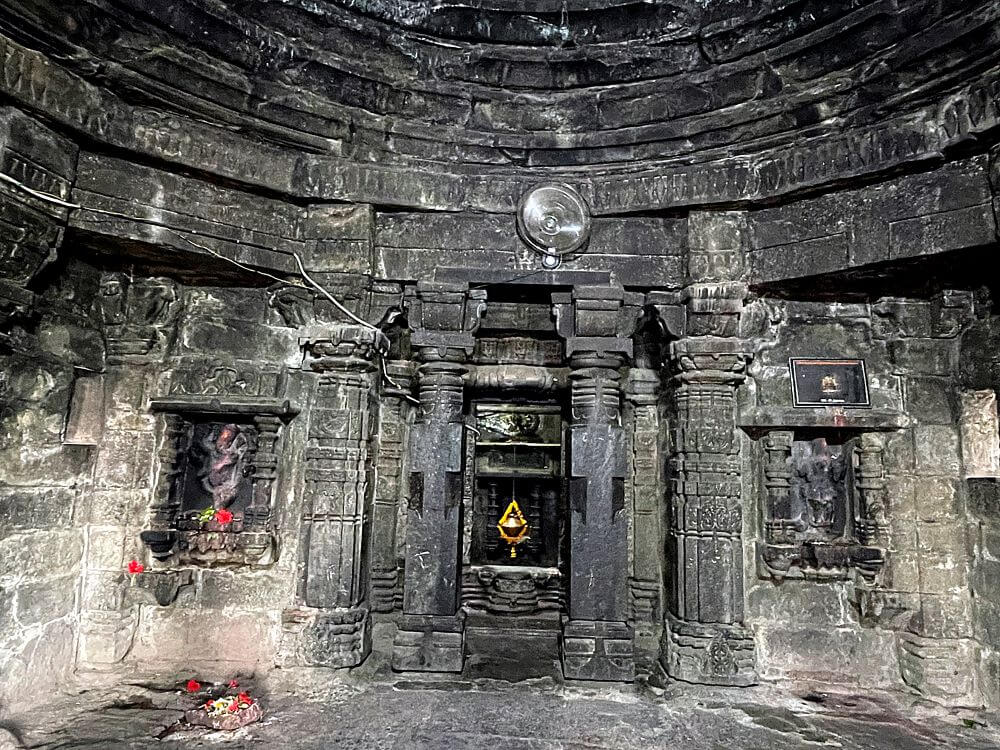
Shop Photo FramesLocated on the border of Nashik and Dhule districts near Malegaon, in the village of Zodga, stands the ancient 13th-century Mankeshwar Mahadev Temple. The exterior architecture and interior walls of this Hemadpanti-style temple are literally filled with intricate carvings. A unique feature of this temple is its ‘Tridal’ (three-part) structure, meaning it consists of a main sanctum along with two additional sanctums. The temple is situated right alongside the Malegaon-Dhule National Highway. It is said that Nathpanthi sages used to reside on the Jhoting hill adjacent to the temple. For them, Hemadri Pandit commissioned this Mankeshwar Temple, a masterpiece of sculptural art. According to historical records, Hemadri Pandit constructed many temples in the Hemadpanti style during the Yadava period, and this is said to be one of them. Locals believe that the village derived its name ‘Zodga’ from the Jhoting hill itself. The Mankeshwar Temple has been declared a protected monument by the Central Government. The temple premises are spacious and enclosed by a fence. An ornate, grand statue of Nandi can be seen on a platform in front of the main entrance. The temple is structured with a Mukhamandapa (entrance porch), Sabhamandapa (assembly hall), Antarala (vestibule), and Garbhagriha (sanctum sanctorum). Facing west, this temple is adorned with hundreds of carved sculptures. Before entering the temple, one can see distinctive sculptures on the Mukhamandapa. There is a ‘Simhavyala’ sculpture here, depicting a lion standing on its hind legs and looking backward. On the inner walls of the Mukhamandapa, one can see carvings of dancing Apsaras, along with musicians playing the Pakhawaj and other instruments.
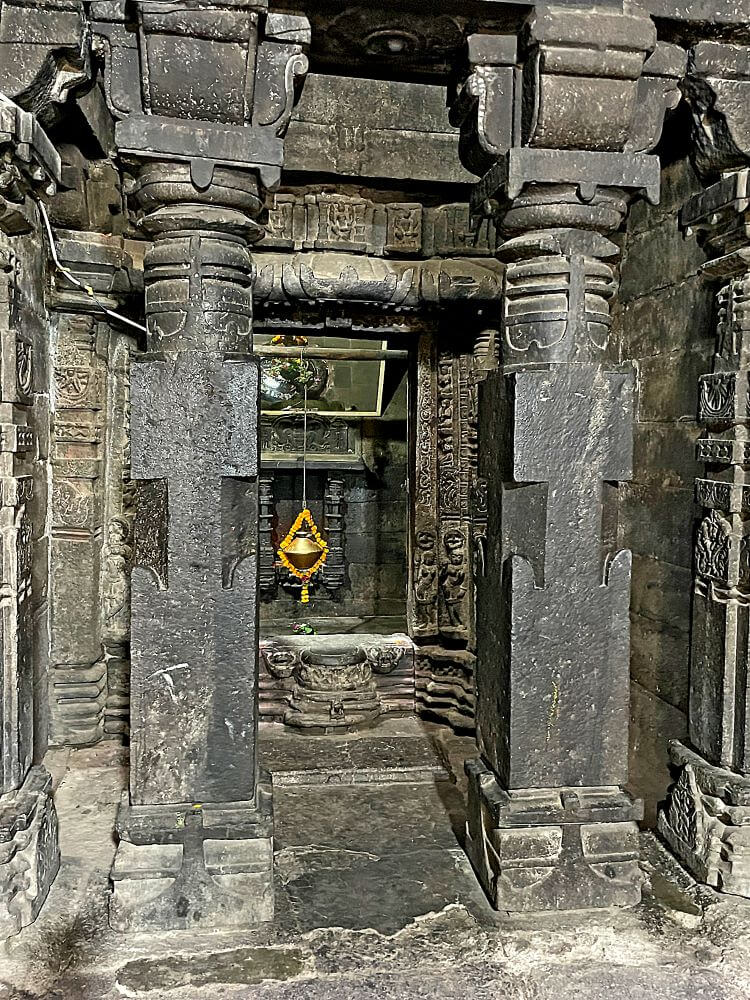
The 12 pillars in the Sabhamandapa feature unique carvings. All these pillars are embedded within the walls. To ensure the temple remains well-lit and ventilated, vertical rectangular windows have been carved into the upper sections on the east and west sides. The ceiling of the Sabhamandapa is also intricately carved, featuring sculptures of Yakshas and dancing Apsaras. There are small rooms on both sides of the Sabhamandapa. In temples with a Tridal structure, there are two such additional sanctums alongside the main one. Some scholars refer to these rooms as ‘Bhogamandapa’. Instead of idols, these rooms were used to store items belonging to the deity or offerings made to the deity. Some scholars believe that these two sanctums may have been built 50 years or more after the construction of the main temple.
One can enter the Antarala and then the Garbhagriha from the Sabhamandapa. The entrance to the Garbhagriha is adorned with carvings of Apsaras, Yakshas, and Kinnaras. There is an idol of Lord Ganesha on the lintel of the doorway. One must descend two steps to enter the sanctum. Upon entering, one finds the Shiva Linga directly ahead. As the temple faces west, for a few days of the year, the rays of the setting sun directly enter the sanctum.
From the outside, the temple appears beautifully decorated from base to spire with exquisite sculptures. As it is a Shiva temple, many idols of Lord Shiva can be seen here. In an outer niche, there is a beautiful sculpture depicting the slaying of Andhakasura. Sculptures of the 10 avatars of Lord Vishnu are also present here, along with idols of other deities. The walls are adorned with many ‘Surasundaris’ (celestial beauties). The temple is decorated with various Surasundaris—some fixing their hair, some lost in adornment, some as Kamayani, some holding a serpent, some acting as spies, some blowing a conch, and others with flowing hair. Additionally, there are several erotic sculptures here as well.
The design of the temple’s spire (Kalash) is also special. The carvings on the spire appear unique and intricate. There are several small holes on the spire that allow the midday sun rays to illuminate the Shiva Linga. One can see replicas of many small spires arranged in descending order. Another feature of this spire is the three Kirtimukhas on it. Intertwined Kirtimukhas of this type are rarely seen in ancient temples.
A large fair is held at this temple on Mahashivratri, during which thousands of devotees arrive for darshan. Along with various religious programs, a wrestling competition held at this time is quite famous. Hundreds of wrestlers display their skills in the arena during this event. On the occasion of Mahashivratri, an Akhand Harinam Saptah is organized here. Every year on Diwali Padwa, the local youth celebrate ‘Deepotsav’ in and around the temple, during which 2500 lamps are lit.
This sacred temple stands as a testament to deep spiritual devotion, ancient architectural grandeur, and rich local cultural traditions.
The sanctum sanctorum houses the divine idol consecrated according to ancient Vedic traditions, surrounded by serene courtyards and traditional temple architecture.
Navratri, Maha Shivratri, Annual Temple Jatra & Deepotsav
Compare and book flights, secure top-rated local hotels near the temple, hire reliable guides, and rent cars instantly.
Extend your pilgrimage by visiting other highly sacred temples located nearby.


Add ₹999 more to unlock FREE SHIPPING!
Your sacred cart is currently empty.
Shop Photo FramesFill in your delivery details below to place your order.
Add comment