
Add ₹999 more to unlock FREE SHIPPING!
Your sacred cart is currently empty.
Shop Photo FramesSaint Dnyaneshwar wrote the ‘Dnyaneshwari’ and vehemently opposed the unholy illusions of discrimination among humans. He laid the foundation of the Bhagwat Dharma of Vitthal devotion. Later, Saint Tukaram placed the pinnacle on this edifice of Vitthal devotion. Although Pandharpur, the ancestral home of all these saints, is the original seat of Lord Vitthal, today there are about four hundred to five hundred sub-seats and countless temples known as Prati-Pandharpur across the country. One such famous Vitthal Mandir is located at Dashera Maidan in Dhule. It is the faith of the Warkaris that by having the darshan of Vitthal here, one attains the merit of the Pandhari Wari.
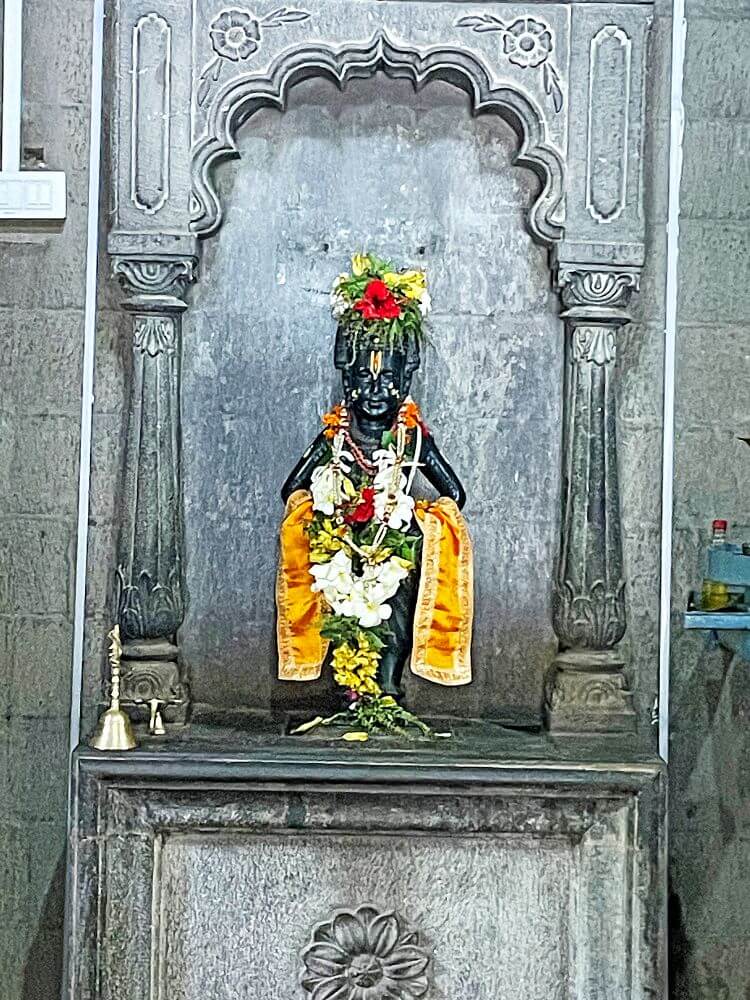
The history of this temple is that Tryambak Ganesh Ganu of Dhule city was a Vitthal devotee famous by the name Sachchidanand Swami. It was his wish that there should be an independent and beautiful temple for his Lord in Dhule. With this in mind, he called stone masons and sculptors and began building the temple on his private land. Stones for the temple were specially brought from the mines at Chekarwadi. The idol of Vitthal was carved in black marble by the Shiralkar brothers, sculptors from Mumbai. Sachchidanand Swami completed the construction of this temple at his own expense for his daily worship on the day of Vijaya Dashami in the year 1966. Later, hundreds of Vitthal devotees from the surrounding area began to come here for the darshan of the Lord. Seeing this, Sachchidanand Swami opened this temple for everyone.
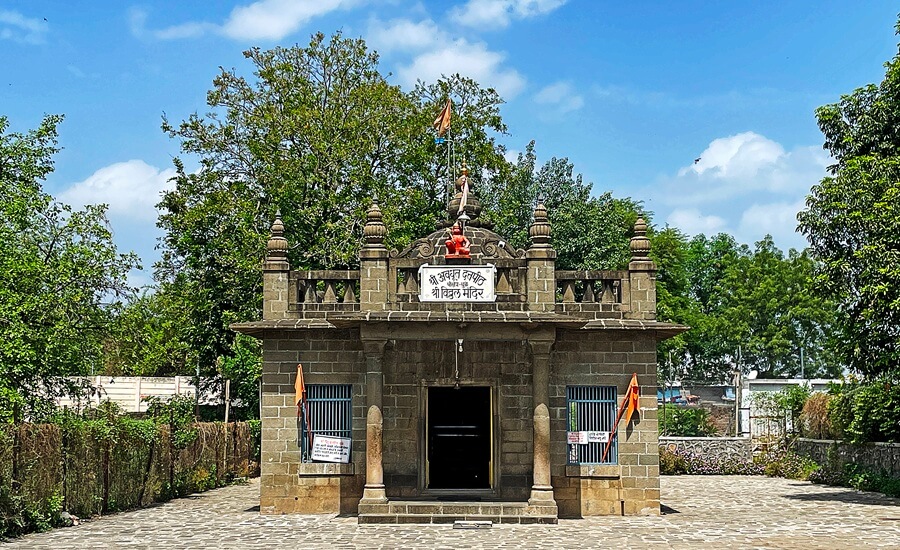
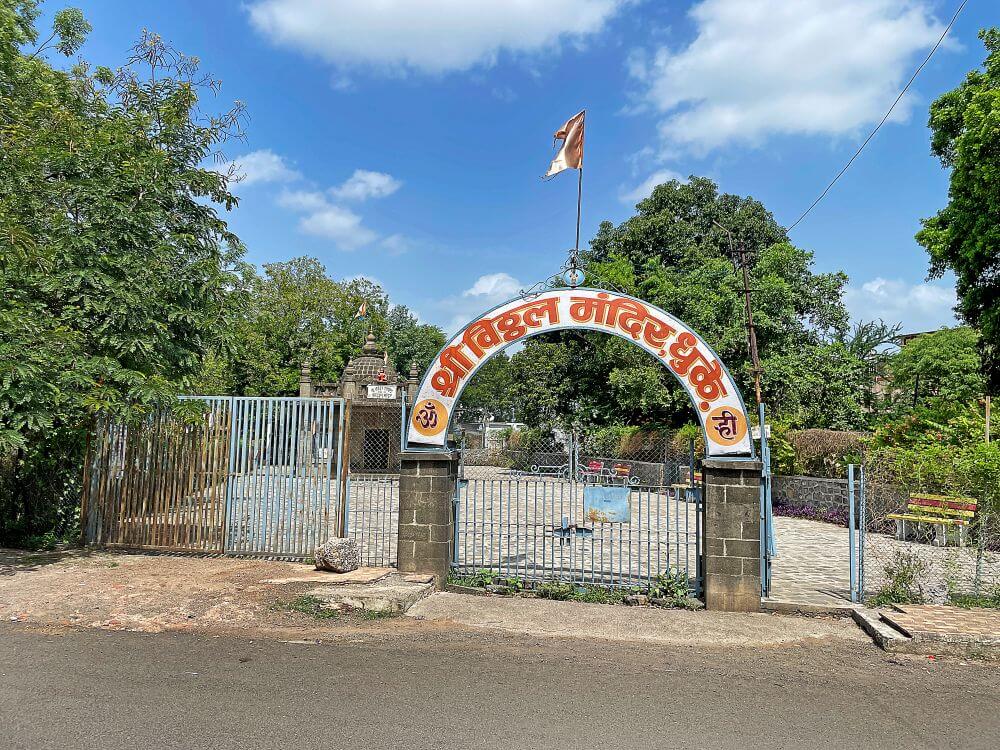
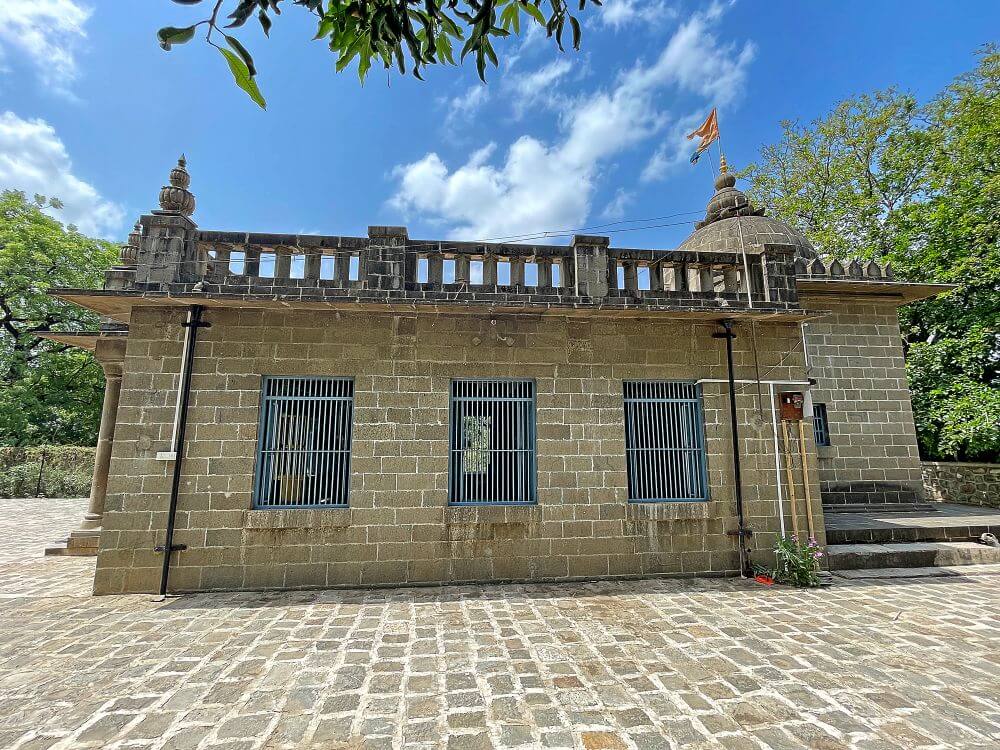
This temple, located along the main road, is surrounded on three sides by a stone boundary wall. In the front, there are three entrances with iron grilled gates. On both sides of the middle entrance are two square pillars topped by a semi-circular iron arch. In the stone-paved courtyard of the temple there are seats for devotees to sit around. There are many trees along the fortification. The structure of the temple consists of a Mukhamandapa (front hall), Sabhamandapa (assembly hall), and Garbhagriha (sanctum sanctorum). In the Mukhamandapa, two circular pillars stand on square bases at the front. There are beams over the pillars, and a roof over the beams. A brass bell is hung from the ceiling. The back side of the ceiling rests on the wall of the Sabhamandapa.
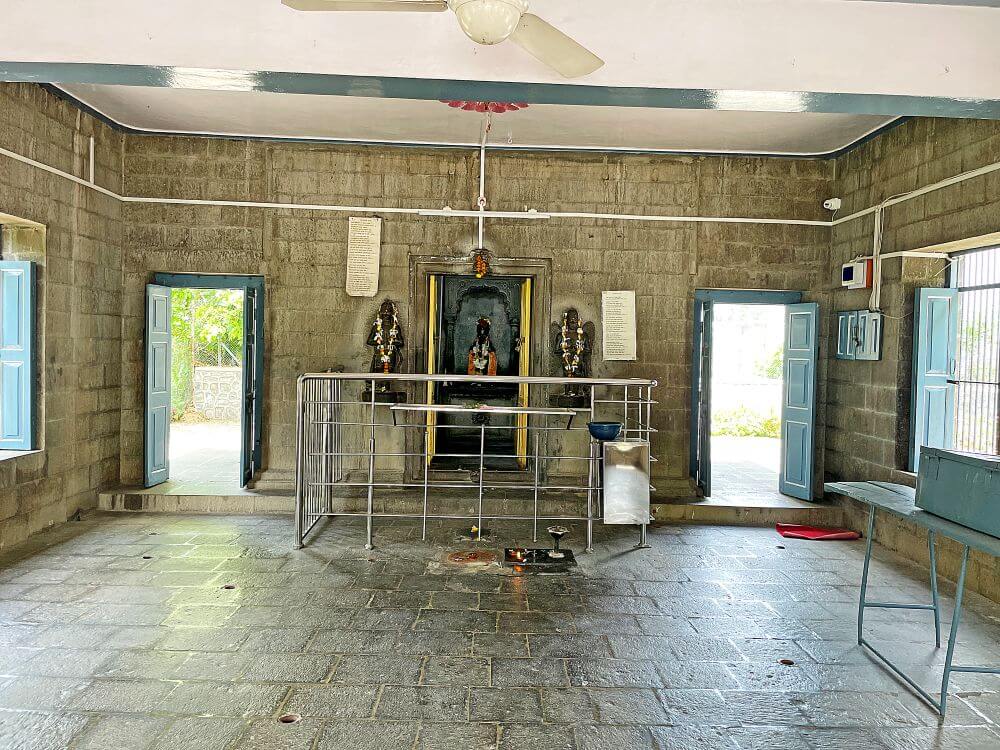
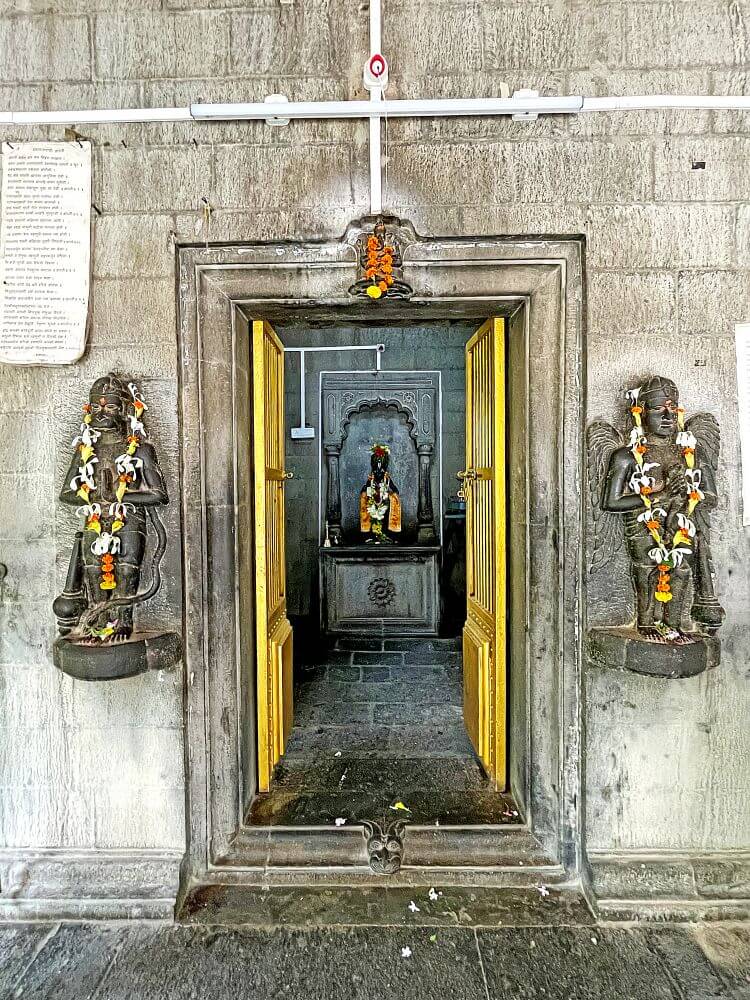
The door frames and the lintel of the Sabhamandapa entrance have vertical edge carvings. The enclosed Sabhamandapa (Gudhamandapa) has windows for light and ventilation. There is a tortoise sculpture (Kurmashilpa) in the stone-paved Sabhamandapa. The Sabhamandapa also has two entrances on the left and right sides of the Garbhagriha. The Garbhagriha of this temple is a few inches higher than the Sabhamandapa. On the front wall of the Garbhagriha, to the left of the entrance, is an idol of Hanuman in a salutation posture, and to the right is an idol of Garuda. The door frames of the Garbhagriha have vertical edge carvings. There is an idol of Ganpati on the lintel and a tiger face (Vyaghramukha) on the architrave. Inside the Garbhagriha, on a Vajrapitha (diamond pedestal), is the idol of Vitthal with hands on his hips (Kati-hasta). Clothes and ornaments are carved on the idol. On the Vajrapitha, on both sides of the idol, are ornate pillars with an arched canopy above them. There are ventilators in the Garbhagriha for light and air. There is a circumambulation path (Pradakshina Path) on the outer side of the Garbhagriha.
There is a safety railing on all sides of the roof of the Mukhamandapa and Sabhamandapa. In the middle of the railing on the roof of the Mukhamandapa is an idol of the mace-wielding Veer Maruti. On both sides of the railing, there are Amalakas on semi-pillars, and pinnacles (Kalash) on the Amalakas. In the front railing of the Sabhamandapa roof, there are Amalakas on semi-pillars at both corners, with pinnacles on top. There is a dome-shaped Shikhara in the center of the Bashingi railing on the roof of the Garbhagriha. At the top of the Shikhara are two Amalakas placed one above the other, topped by a pinnacle.
The main annual festivals of Ashadhi and Kartiki Ekadashi are celebrated here with great enthusiasm. At this time, thousands of devotees from the surrounding area come for the darshan of the Lord. The festival begins with the Maha-Abhishek of the Lord in the temple. Throughout the day, programs such as Bhajans, Kirtans, discourses, music, and Mahaprasad are organized in the temple. There is a special crowd of devotees in the temple on every Ekadashi and Pradosh day. Devotees can have the darshan of this Vitthal daily from 9 in the morning to 7 in the evening.
This sacred temple stands as a testament to deep spiritual devotion, ancient architectural grandeur, and rich local cultural traditions.
The sanctum sanctorum houses the divine idol consecrated according to ancient Vedic traditions, surrounded by serene courtyards and traditional temple architecture.
Navratri, Maha Shivratri, Annual Temple Jatra & Deepotsav
Compare and book flights, secure top-rated local hotels near the temple, hire reliable guides, and rent cars instantly.
Extend your pilgrimage by visiting other highly sacred temples located nearby.


Add ₹999 more to unlock FREE SHIPPING!
Your sacred cart is currently empty.
Shop Photo FramesFill in your delivery details below to place your order.
Add comment