
Add ₹999 more to unlock FREE SHIPPING!
Your sacred cart is currently empty.
Shop Photo FramesIt is believed that Yamai Devi is a form of Renuka Devi, the mother of Parashurama and wife of Jamadagni. The original seat of Yamai Devi is at Aundh in Satara district, where the Goddess is known as Moolmaya. There are many temples of Yamai Devi across Maharashtra, Andhra Pradesh, and Karnataka. Among these, a famous, ancient, and spiritually awakened (Jagrut) temple is located in the village of Mahalung. This is considered the second seat of Yamai after Aundh. Yamai is regarded as the Gramadevata (village deity) of Mahalung. She is worshipped here as the Mother who protects the village from calamities.
The legend of Yamai Devi is mentioned in the ‘Kedarvijay’ scripture. ‘Kedarvijay’ was originally a Sanskrit text, which was brought into Marathi by Hari Angarpurkar in 1779. This scripture consists of 36 chapters, with the story of Yamai Devi appearing in the 27th chapter. It narrates that Kedarnath undertook the task of re-establishing Lakshmi, who had been exiled from Karvir due to the havoc caused by the demon Kolhasur. During this southern expedition, Yamai Devi assisted Kedarnath. She slew the demon Aundhasur, a member of Kolhasur’s demonic army, thereby clearing the path for Kedarnath in the south. The place where this occurred came to be known as Aundh, a village in Satara district. To defeat Aundhasur, Yamai Devi manifested on the Kanthagiri hill near Aundh. Since Yamai is the primordial Maya, Kanthagiri later came to be known as Moolgiri, which is the original abode of Yamai Devi.
There is a seat of Yamai Devi at Chafeban in Wadi Ratnagiri, Kolhapur district. Similarly, the seat of Yamai Devi at Mahalung is also considered significant. The legend regarding the Yamai Devi here states that in ancient times, a demon used to torment the villagers. The Goddess destroyed him and protected the village, which is why the villagers accepted her as their Gramadevata. According to local history, the Yamai temple here was built approximately 700 years ago during the Yadava period. The State Archaeology Department has declared it a ‘State Protected Monument’. Built of black stone, the temple’s architectural style shows Hemadpanti influence.
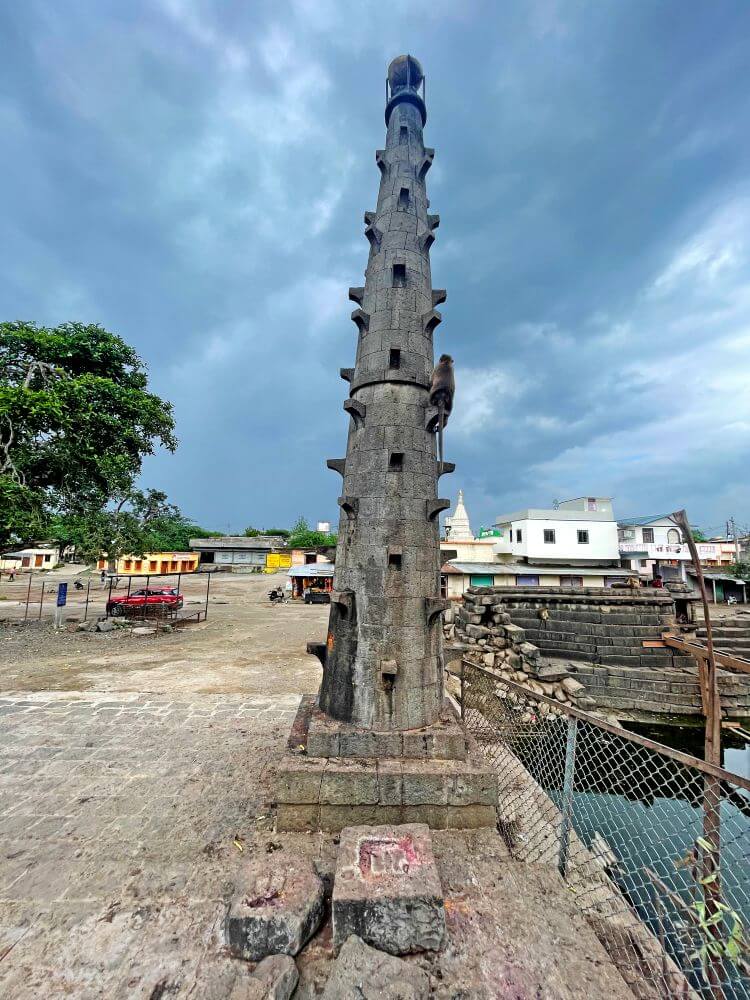
On the path from the parking lot to the entrance of this temple, located at the outskirts of Mahalung village, there are shops selling worship materials on both sides. Near the temple entrance, on the right, stands a three-tiered lamp tower (Deepmal). The bottom tier of the lamp tower is hexagonal, while the upper two tiers are circular. On the lintel of this entrance is an image of Ganpati, and on the architrave is a Kirtimukh. Upon entering, there are steps leading down into the temple courtyard. In this stone-paved courtyard, there is a Tulsi Vrindavan and a stone platform around a large tree. On this platform stands an ancient four-armed (Chaturbhuj) idol of Vishnu. Near the feet of this idol are images of Padmavati and Lakshmi. Next to the idol are some Naga-shilas (serpent stones) and Shiva Lingas.
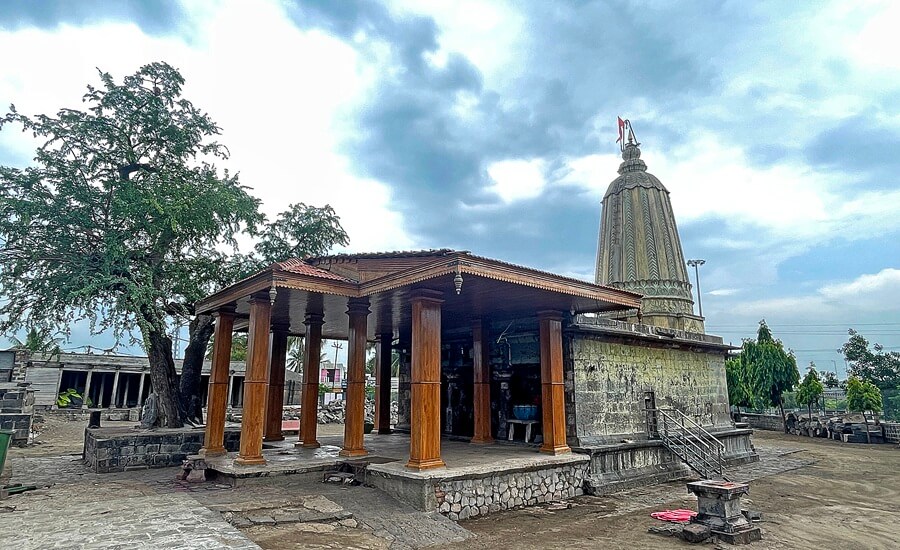
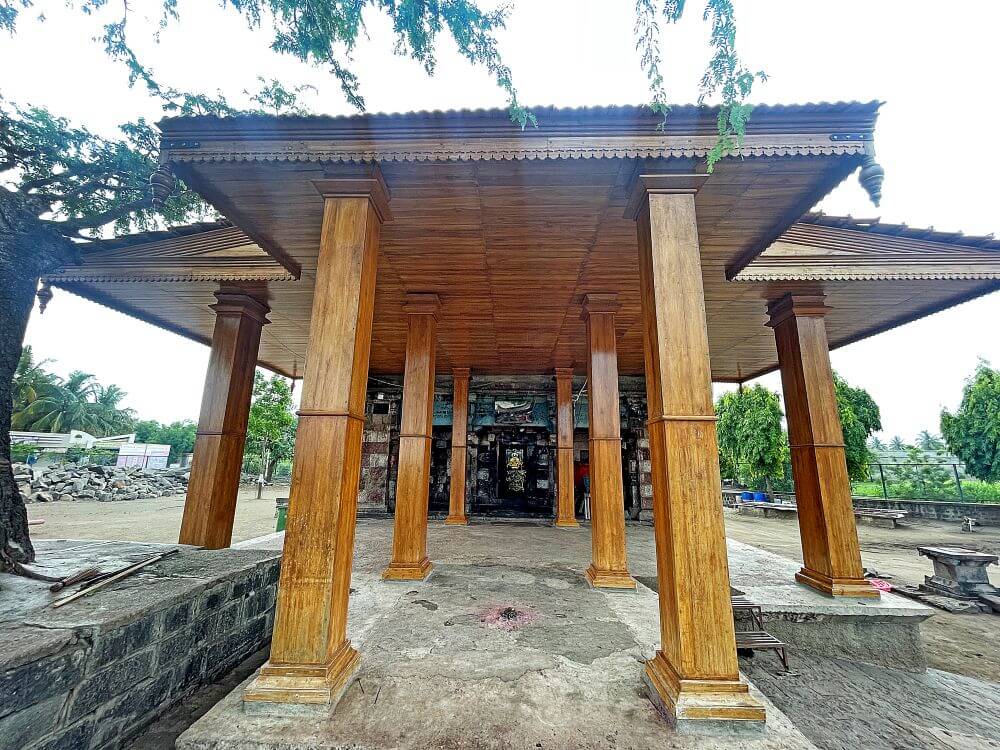
A Darshan Mandap has been constructed in front of the temple in recent times. Beyond it lies the ancient temple, which features an Ardhamandap (half-hall), Sabhamandap (assembly hall), Antarala (vestibule), and Garbhagriha (sanctum sanctorum). Ancient drums (Nagare) are kept in the Ardhamandap. The Ardhamandap has eight square pillars, and the ceiling features circular carvings. The front walls of the Sabhamandap have niches for lamps. On the lintel of the Sabhamandap entrance is an image of Ganesha, and on the architrave is a Chandrashila.
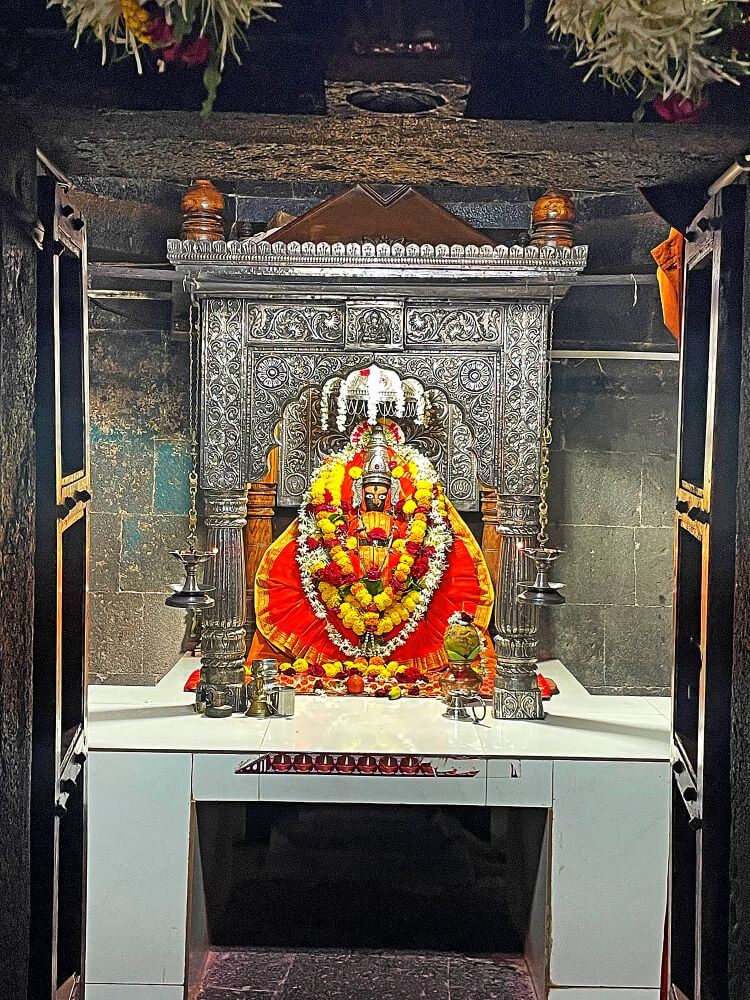
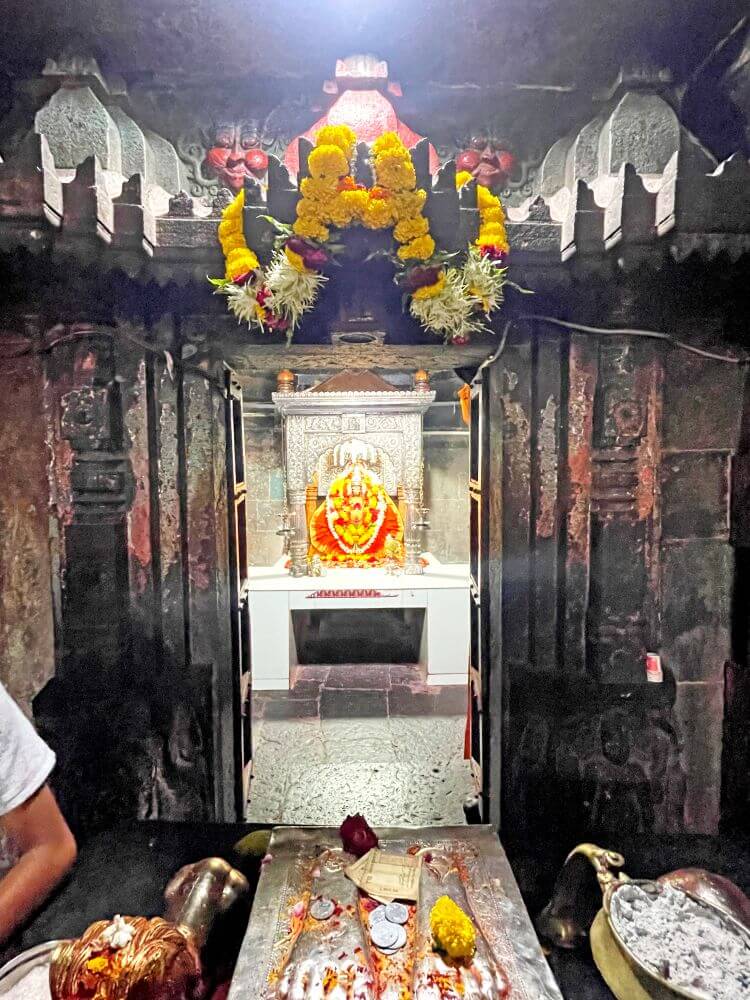
The Sabhamandap has four rows of three ornate pillars each. Standing on square bases, these pillars feature various geometric shapes such as hexagons, octagons, and circles. At the top of the pillars are brackets, followed by beams and the ceiling. The ceiling features circular carvings. This Sabhamandap is of a closed type (Gudhamandap) and has windows for air and light. In front of the Sabhamandap is a narrow Antarala. There are two doors on the right and left sides to exit from the Antarala. Beyond the Antarala is the five-branched entrance to the Garbhagriha. The door frames are decorated with leaf, flower, and pillar carvings. The lintel features an image of Ganpati, and the arch contains pinnacle sculptures. Inside the Garbhagriha, on a Vajrapitha (thunderbolt-shaped pedestal), is the black stone idol of Yamai Devi housed in an ornate silver shrine (Makhar). Adorned with rich garments and jewelry, the Goddess wears a silver crown on her head.
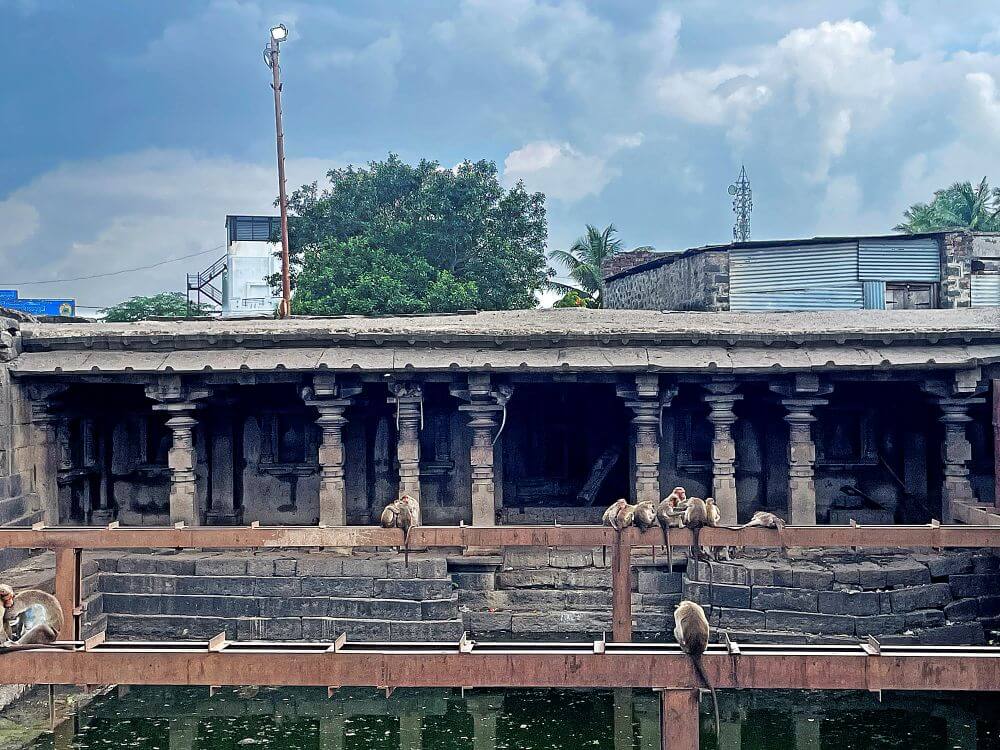
The roof of the Garbhagriha features a circular, tapering Shikhara (spire). At the top of the Shikhara is a Stupika, topped with a Kalash and a flag. The lower part of the Shikhara has serpent-hood rings, and the upper part has pillar carvings. In the temple courtyard, there are small temples of local deities. At the back, there is a freshwater pond. There are built-in steps on all four sides to descend into the pond. Beside the pond is a high platform with arched corridors (Ovris), which are used by devotees for rituals and accommodation.
This sacred temple stands as a testament to deep spiritual devotion, ancient architectural grandeur, and rich local cultural traditions.
The sanctum sanctorum houses the divine idol consecrated according to ancient Vedic traditions, surrounded by serene courtyards and traditional temple architecture.
Navratri, Maha Shivratri, Annual Temple Jatra & Deepotsav
Compare and book flights, secure top-rated local hotels near the temple, hire reliable guides, and rent cars instantly.
Extend your pilgrimage by visiting other highly sacred temples located nearby.


Add ₹999 more to unlock FREE SHIPPING!
Your sacred cart is currently empty.
Shop Photo FramesFill in your delivery details below to place your order.
Add comment