
Add ₹999 more to unlock FREE SHIPPING!
Your sacred cart is currently empty.
Shop Photo Frames
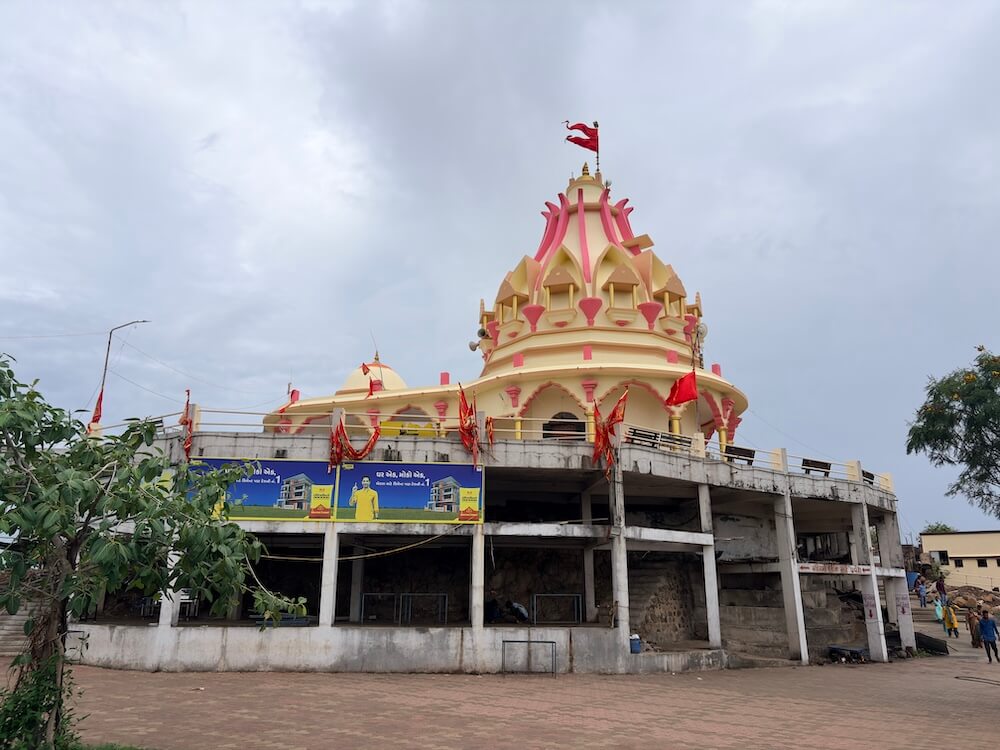
The Chamunda Mata Temple stands atop the historic Parnera Fort on Parnera Hill, near Valsad. Rising 499 feet above sea level, the hill also houses shrines dedicated to Chandika, Ambika, Navadurga, Sheetala Mata, Lord Hanuman and Rameshwar Mahadev. During the reign of Chhatrapati Shivaji Maharaj, this fort formed part of the ‘Hindavi Swarajya’. Consequently, the site attracts not only devotees and tourists but also a large number of history enthusiasts. During Navratri, a grand fair is held at the temple on the day of Ashtami.
The Par River flows close to the village of Parnera. In ancient times, the suffix ‘ner’ was commonly added to place names to denote a village or town. It is therefore believed that the settlement on the banks of the Par River came to be known as Par-ner and the hill acquired the name Parnera. The precise date of the fort’s construction remains unknown. According to local tradition, it was built by a Hindu ruler. The documented history of the fort begins in the fifteenth century, when it is said to have been under the control of the Koli ruler of Ramnagar. Towards the close of the fifteenth century, Sultan Mahmud Begada captured the fort. The Portuguese attacked it twice, in 1558 and again in 1568.
On one occasion, when the Portuguese attacked Daman, its Habshi Governor sought refuge in this fort. The Portuguese pursued him here and, during the assault, demolished the fortifications. Thereafter, the fort remained in a dilapidated condition for many years. Following the coronation of Chhatrapati Shivaji Maharaj, a campaign was launched under the leadership of his Peshwa, Moropant Pingle, against the rulers of Ramnagar and Jawhar. In April 1676, Moropant Pingle captured the fort and repaired its fortifications. This event is recorded in the ‘Factory Records’. A letter sent by an English official at Surat on 26 April 1676 states: ‘Shivaji’s force of 10,000 cavalry has reached Kalyan. He intends to occupy the hill called Parner near Daman, about thirty-six hours from Surat, fortify it and establish a strong position close to Surat.’ Thereafter, the fort remained under Maratha control for nearly a century.
Chhatrapati Shivaji Maharaj launched two famous expeditions against Surat, in 1664 and again in 1670, to challenge the authority of Emperor Aurangzeb. According to local tradition, during one of these campaigns he visited this fort to seek the blessings of Goddess Chamunda. Another legend relates that while returning from Surat, Shivaji Maharaj halted at the fort and was confronted by the Mughal army. During the ensuing battle, he is said to have leapt from a window in the fort known as ‘Nakabari’, mounted on horseback and escaped the siege. These stories, however, are regarded as popular legends rather than authenticated historical events.
On 30 April 1751, Damaji Gaekwad of the Baroda State was imprisoned by the Peshwas during an internal Maratha conflict. Thereafter, Raghobadada Peshwa was sent to Gujarat to launch a campaign against the Gaekwad territories and the fort came under Peshwa control. According to local tradition, the Peshwas performed formal worship of the Goddess here and built a temple in Her honour.
Another local legend concerning the deity states that this hill was once the common abode of five goddesses—Chandika, Ambika, Navadurga, Sheetala and Kalika. For reasons unknown, Goddess Kalika became distressed and one day withdrew into a cave. Since then, her abode has remained in a cave on Parnera Hill, where she has continued to receive worship through the centuries.
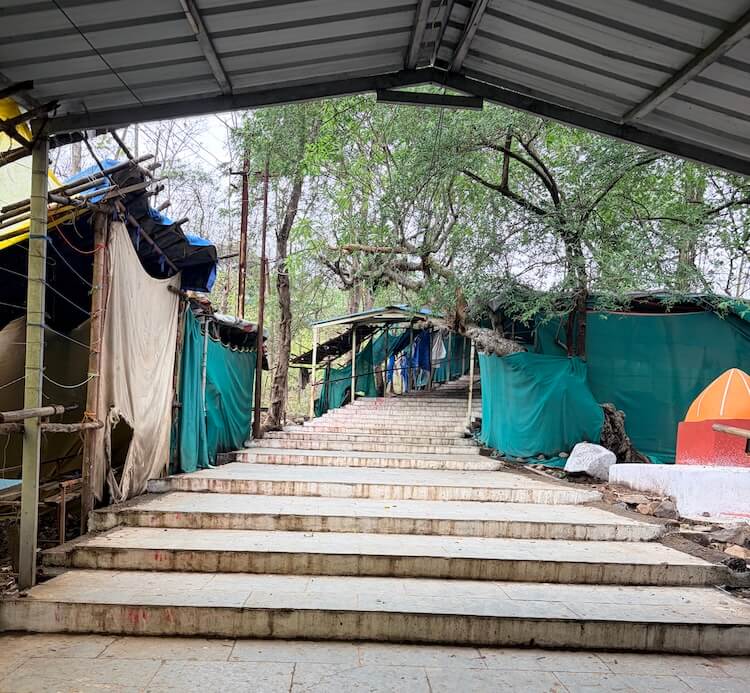
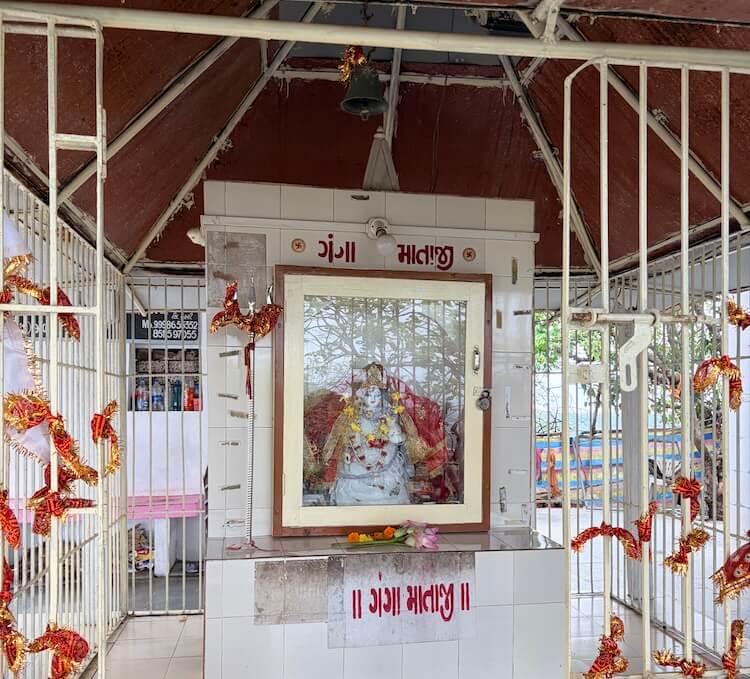
As the temple stands at the summit of Parnera Fort, devotees have to climb approximately 600 steps to reach it. The stone staircase begins at the entrance gateway situated at the foot of the hill. Numerous shops selling offerings and prasad line both sides of the pathway. After ascending about 500 steps, devotees reach, on the right, the self-manifested shrine of Rameshwar Mahadev, perched upon the hillside. Within the courtyard of this shrine stands a small temple dedicated to Goddess Ganga. A beautiful white marble image of the Goddess is installed upon a vajrapitha. Beyond it stands the Rameshwar Mahadev Temple. It consists of an assembly hall and a sanctum, within which a Shivalinga is installed at floor level.
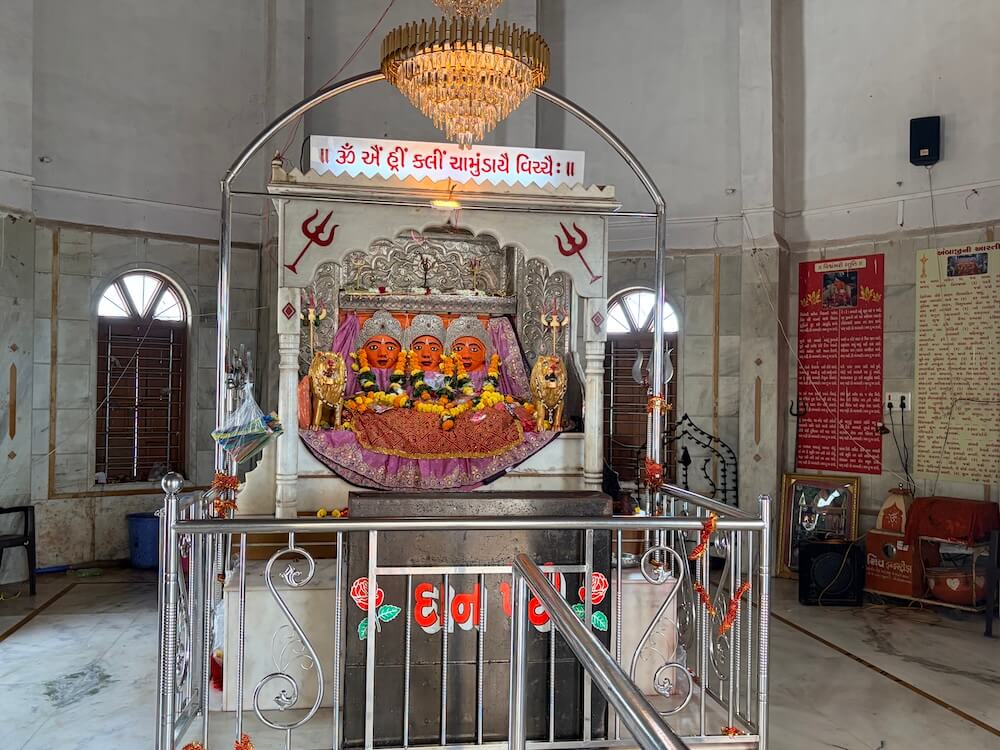
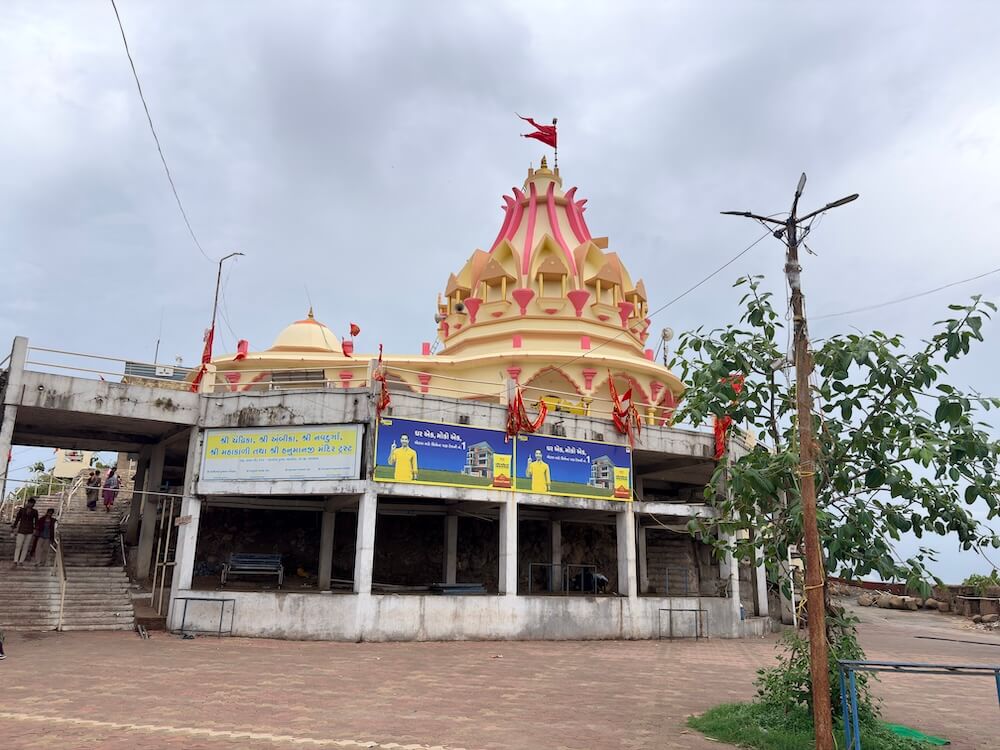
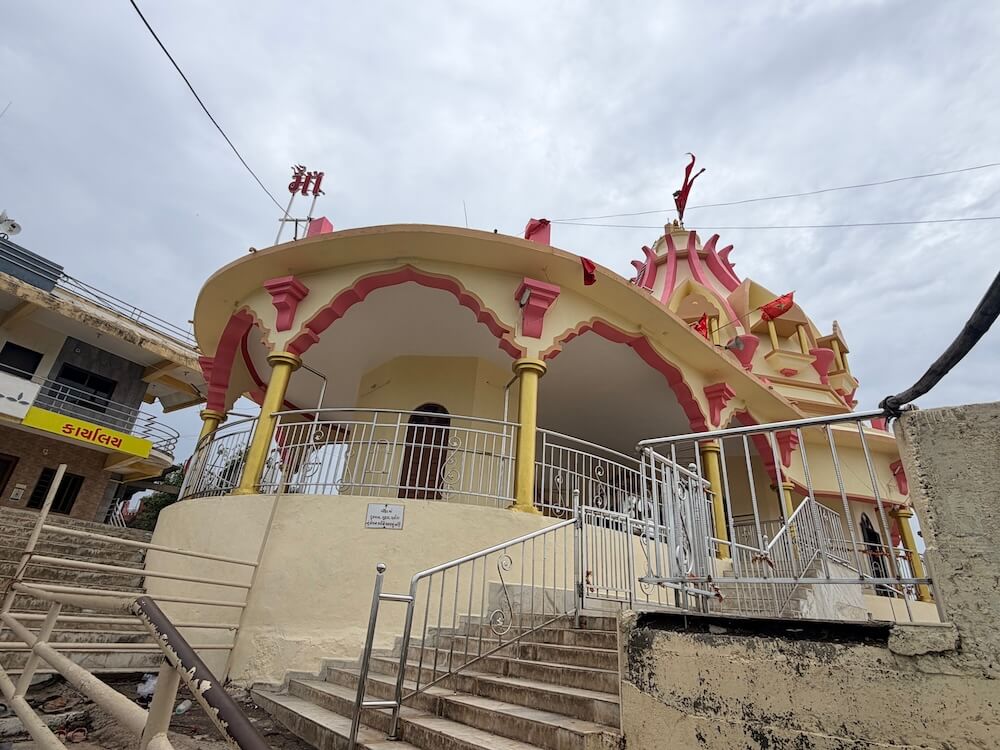
After climbing another hundred steps, visitors enter the precincts of the Chamunda Mata Temple within the fort. Built upon a massive rock outcrop, the temple consists of an assembly hall and a sanctum. At the centre of the semi-open assembly hall stands an octagonal shrine dedicated to Lord Hanuman. Within it, an image of Hanuman, richly anointed with vermilion, is installed in a marble makhar set against the wall. At the entrance to the sanctum stands a large sculpted lion, the sacred mount of the Goddess. Beyond it is the octagonal sanctum. At its centre, upon a marble vajrapitha, is the three-faced image of Chamunda Devi, representing the combined forms of Chamunda, Ambika and Navadurga. Sculpted lions flank the deity on either side. The ornate back panel behind the image is covered with finely worked decorative metal sheeting. A niche in one of the sanctum walls contains an image of Goddess Sheetala.
The temple’s spire is particularly distinctive. Circular in the form of a lotus and gradually tapering towards the top, it contains niches for deities on all sides. Owing to its commanding position on a lofty hill, both the temple and its spire are visible from a distance of eight to ten kilometres. The temple complex also offers sweeping panoramic views of numerous villages across Valsad district.
At the Chamunda Mata Temple, the Aarti is performed every day at 6.30 a.m. and again at 6.30 p.m. On every full moon day (Purnima), a sacred fire ritual (Homa-Havan) is conducted. On this occasion, Mahaprasad is served to nearly 2,000 devotees. Many worshippers visit the temple on full moon days to fulfil or make vows before the Goddess. Navratri is the temple’s grandest annual celebration. A large fair is held on Ashtami and Navami, accompanied by Garba performances and a variety of religious programmes. During the nine days of Navratri, thousands of devotees visit the shrine to seek the blessings of the Goddess. The temple remains open for darshan daily from 6.00 a.m. until 7.00 p.m.
This sacred temple stands as a testament to deep spiritual devotion, ancient architectural grandeur, and rich local cultural traditions.
The sanctum sanctorum houses the divine idol consecrated according to ancient Vedic traditions, surrounded by serene courtyards and traditional temple architecture.
Navratri, Maha Shivratri, Annual Temple Jatra & Deepotsav
Compare and book flights, secure top-rated local hotels near the temple, hire reliable guides, and rent cars instantly.
Extend your pilgrimage by visiting other highly sacred temples located nearby.


Add ₹999 more to unlock FREE SHIPPING!
Your sacred cart is currently empty.
Shop Photo FramesFill in your delivery details below to place your order.
Add comment